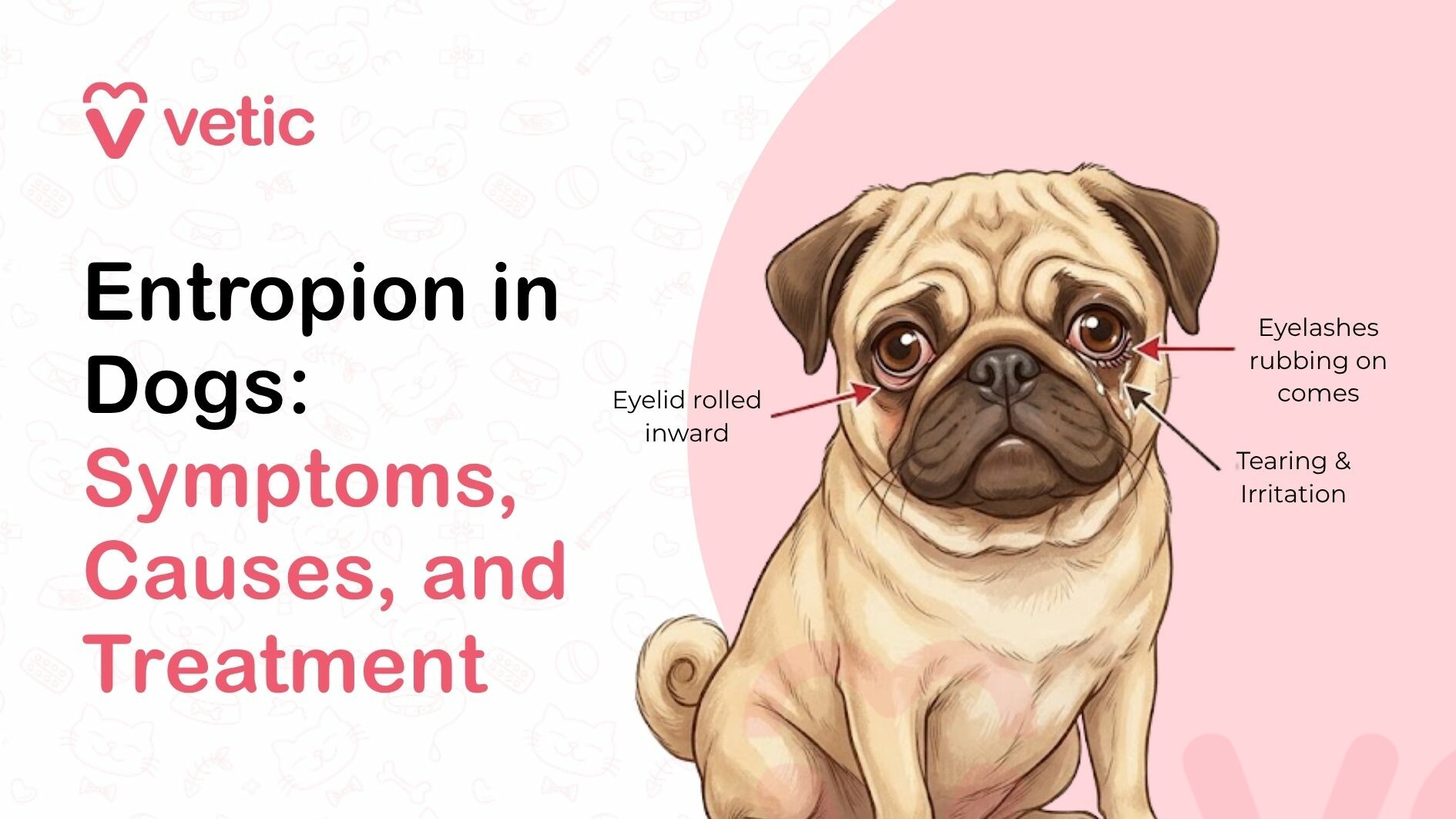
• Entropion is an inward rolling of the eyelid causing eyelashes to rub against the cornea – it causes constant pain, excessive tearing, and corneal ulceration.
• Breeds like Chow Chows, Shar-Peis, Bulldogs, and Golden Retrievers are most prone – it can be congenital or acquired from eye infection and injury.
• Surgical correction (eyelid tacking or permanent repair) is the definitive treatment – untreated entropion leads to corneal scarring and blindness; consult a Vetic vet promptly.
Entropion is a common yet often underestimated eye condition in dogs. It occurs when the eyelid rolls inward. This causes the eyelashes and surrounding hair to rub against the eye’s surface. This constant friction can lead to vision damage, pain, irritation, and redness in the dog’s eye if not treated in time.
This blog explains what entropion is, why it happens, how to recognize symptoms early, treatment options, surgery costs, and recovery expectations, so you can act quickly and protect your dog’s eye health.
What Is Entropion in Dogs and How Does It Affect Your Dog’s Eyes
Entropion is a condition where the eyelid folds inward instead of resting normally. Eyelashes and skin rub against the cornea (eye surface). This results in chronic irritation, corneal damage, and an increased risk of ulcers and infections. It can affect:
- One or both eyes
- Upper eyelids, lower eyelids, or both
Because the cornea is highly sensitive, even mild inward rolling can cause significant discomfort, excessive tearing, and progressive damage over time.
What Are the Symptoms of Entropion Eyes in Dogs?
Symptoms of entropion are primarily related to eye irritation and progressively worsen if untreated.
What Are the Early Signs of Entropion in Dogs?
Early signs are often subtle but indicate ongoing corneal irritation. You may notice:
- Watery eyes (tear overflow)
- Frequent blinking or squinting
- Thick or mucous-like discharge
These signs are often mistaken for minor eye infections but require proper evaluation.
What Are the Signs of Advanced Entropion in Dogs?
As the condition progresses, more severe signs of pain and corneal damage develop.
- Red or inflamed eyes
- Sensitivity to light
- Frequent pawing or rubbing of the eyes
- Holding the eye partially closed
Persistent irritation can lead to corneal ulcers, which are painful and require urgent treatment.
What Are the Types of Canine Entropion?
Entropion in dogs can be classified by cause and duration, which helps guide treatment decisions.
- Primary (congenital) entropion is present from a young age and is usually related to breed-specific facial structure.
- Secondary entropion develops due to pain, infection, or trauma affecting the eye.
- Spastic entropion is temporary and caused by eye pain, leading to muscle spasm.
Identifying the type is important because secondary cases, as well as those caused by muscle stiffness or nerve-related problems, may improve with treatment of the underlying cause.
What Are the Causes of Entropion in Dogs?
Entropion in dogs develops due to structural, genetic, or secondary factors affecting the eyelid.
Which Dog Breeds Are More Prone to Entropion?
Certain breeds are genetically predisposed due to facial conformation and skin folds. Commonly affected breeds include Shar Pei, Chow Chow, Bulldog, Labrador Retriever, and Rottweiler.
Features such as loose skin, deep-set eyes, or heavy facial folds increase the risk of eyelid inversion.
Suggested Read: Understanding the Traits and Average Lifespan of Dogs: 15 Popular Dog Breeds of India
Can Injury or Infection Cause Canine Entropion?
Yes, entropion in dogs can develop secondary to eye pain or inflammation. Common causes include:
- Eye injuries or trauma
- Chronic eye infections
- Inflammation, causing eyelid muscle spasm
- Age-related changes in eyelid structure
In such cases, treating the primary issue may partially or completely resolve the entropion eyes in dogs.
How Vets Diagnose a Dog’s Eye Entropion Accurately?
Diagnosis is based on clinical examination and assessment of corneal damage. Veterinary evaluation includes:
- Visual inspection of eyelid position and corneal health
- Fluorescein staining to detect corneal ulcers or abrasions
- Assessment of tearing, discharge, and irritation
Your vet may also differentiate between primary and secondary entropion to guide treatment.
What Are the Treatment Options for Entropion in Dogs?
Canine entropion treatment depends on the severity, the dog’s age, and the presence of corneal damage.
Can Mild Entropion Be Managed Without Surgery?
Yes, mild or temporary cases can sometimes be managed medically.
- Lubricating eye drops to protect the cornea
- Antibiotic ointments if infection is present
- Pain relief medications to reduce discomfort
In puppies, the best dog doctor may use temporary tacking sutures to hold the eyelid in place while the face develops.
When Is Surgery Required for Entropion in Dogs?
Canine entropion surgery is recommended when entropion causes persistent irritation or corneal injury. Indications include:
- Symptoms are persistent
- Corneal damage is present
- The condition does not resolve with conservative care
Most moderate-to-severe cases of canine entropion require surgery for permanent correction.
How Is Canine Entropion Surgery Performed?
Entropion surgery in dogs, known as blepharoplasty, corrects the eyelid position to prevent it from rolling inward. The procedure involves:
- Removing a small strip of skin near the eyelid
- Reshaping the eyelid margin to restore normal alignment
It is performed under general anaesthesia and is considered a routine ophthalmic surgery in veterinary practice. In growing dogs, a second corrective procedure may sometimes be required as facial structures mature.
What Is the Cost of Entropion Surgery for Dogs in India?
The cost of entropion surgery in India varies based on the severity, clinic facilities, and required expertise. In India, the cost typically ranges between Rs. 15,000 to Rs. 40,000+.
What Factors Affect Canine Entropion Surgery Cost
Several clinical and logistical factors influence the total cost.
- Number of eyelids affected
- Severity of corneal damage
- Need for specialist care, such as a veterinary ophthalmologist
- Pre-surgical diagnostics and medications
- Follow-up visits and post-operative care
- Geographic location
Bilateral or complicated cases of canine entropion typically have higher costs due to increased surgical time and care.
Suggested Read: Dog Has Red Eyes: What Bloodshot Eyes in Dogs Mean?
What Is the Recovery Process After Dog Entropion Surgery?
The recovery process after dog entropion surgery is generally smooth with proper post-operative care and monitoring.
What Care Is Required After Surgery?
After dog entropion surgery:
- Use an Elizabethan collar (E-collar) to prevent rubbing
- Administer prescribed eye drops or medications
- Limit the physical activities of your dog for 10-14 days
What Signs Indicate Normal Healing or Complications?
Most dogs show rapid improvement after surgery. Normal recovery signs of recovery are:
- Reduced tearing and redness
- Improved comfort and eye-opening
- Healing of incision within 1-2 weeks
Warning signs of surgical complications are:
- Swelling or discharge
- Persistent squinting
- Signs of infection, such as high temperature
Any abnormal signs should be evaluated promptly by a veterinarian.
What Happens If Entropion in Dogs Is Left Untreated?
Untreated entropion leads to progressive and potentially irreversible eye damage. Complications include:
- Corneal ulcers
- Chronic eye infections
- Scarring of the cornea
- Vision loss
Early treatment significantly reduces the risk of permanent damage.
Can Entropion Be Prevented in Dogs or Managed Long-Term?
Prevention of entropion in dogs depends on the cause:
- Genetic cases cannot be prevented, but can be managed early
- Avoid breeding affected dogs
- Regular eye checks in predisposed breeds
With proper treatment, long-term outcomes are excellent.
When to See a Veterinarian for Entropion Symptoms in Dogs?
Seek veterinary care at the nearest dog clinic if your dog shows these eye symptoms:
- Persistent eye watering
- Squinting or light sensitivity
- Eye redness or discharge
- Pawing at the eyes
Early intervention prevents complications and reduces the need for more complex treatment.
How Do You Choose the Right Treatment for Entropion in Dogs?
Treatment decisions are based on clinical findings and the dog’s overall condition. Factors to consider:
- Age of the dog
- Severity of the condition
- Presence of corneal damage
Mild cases may be managed conservatively, but most dogs benefit from surgical correction for lasting relief.
Final Takeaway: About Entropion in Dogs
Entropion in dogs can seriously affect vision and comfort if ignored. But with early diagnosis and proper treatment, especially surgery when needed, most dogs recover completely and live pain-free lives. Recognizing the signs early and seeking timely veterinary care makes all the difference.
Frequently Asked Questions: About Entropion in Dogs
Is entropion painful for dogs if left untreated?
Yes. It can cause continuous discomfort due to constant friction on the eye surface.
Can puppies outgrow canine entropion naturally?
Some mild cases improve as the face develops, but many still require temporary or permanent correction.
How successful is entropion surgery in dogs?
Surgery has a very high success rate, especially when performed early and correctly.
How long does recovery from dog entropion surgery take?
Most dogs recover within 2-3 weeks, with noticeable improvement in a few days.
What is the typical cost of entropion surgery for dogs in India?
Costs usually range from Rs. 15,000 to Rs. 40,000+, depending on complexity and location.
References
Gelatt, K. N. (2024, September 17). Disorders of the eyelids in dogs. MSD Veterinary Manual. https://www.msdvetmanual.com/dog-owners/eye-disorders-of-dogs/disorders-of-the-eyelids-in-dogs
Hamor, R. E. (2024, September 17). Eyelids in animals. MSD Veterinary Manual. https://www.msdvetmanual.com/eye-diseases-and-disorders/ophthalmology/eyelids-in-animals
Lavallée, G., Curto, E. M., & Gratzek, A. T. (2023). Long-term success rate of entropion surgery is equivalent in juvenile and adult dogs. AVMA, 262(2), 1–5. https://avmajournals.avma.org/view/journals/javma/262/2/javma.23.05.0273.xml
Lundgren, B. (n.d.). Entropion in dogs and cats. VIN. https://veterinarypartner.vin.com/default.aspx?pid=19239&id=4952708 Read, R. A., & Broun, H. C. (2006). Entropion correction in dogs and cats using a combination Hotz–Celsus and lateral eyelid wedge resection: results in 311 eyes. Veterinary Ophthalmology, 10(1), 6–11. https://pubmed.ncbi.nlm.nih.gov/17204122/