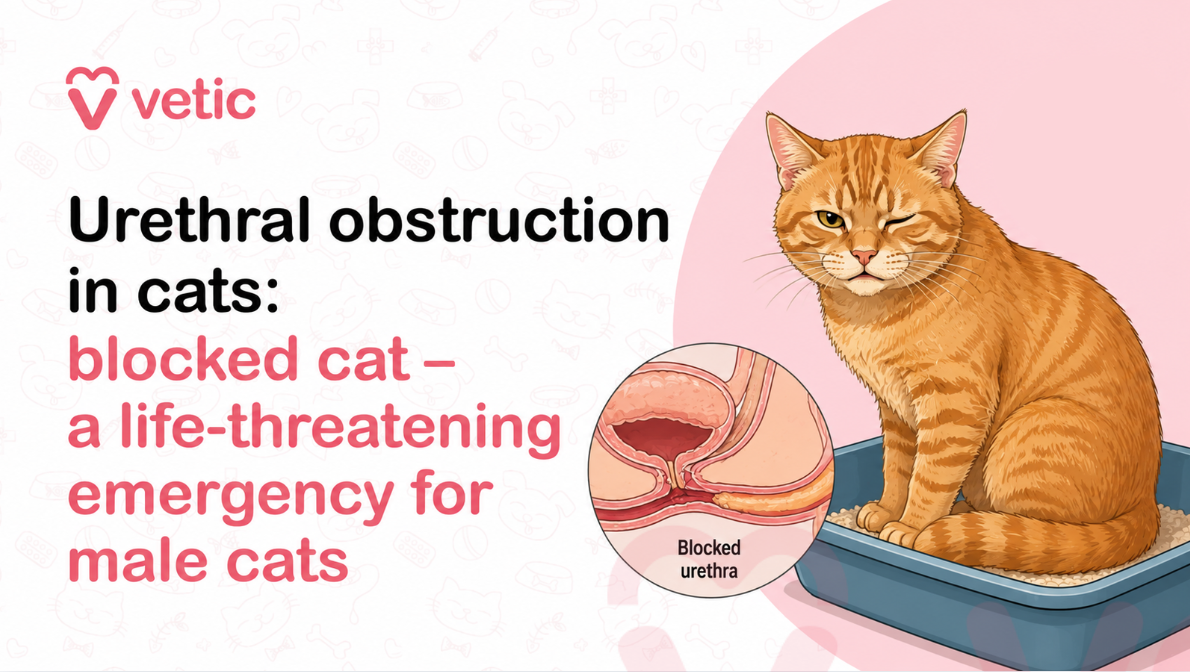
Urethral obstruction in cats commonly called a “blocked cat” is one of the most dangerous conditions your cat can face. It can turn fatal within 24 to 48 hours if not treated.
Every cat owner, especially those with male cats, needs to recognize the warning signs. Fast action can mean the difference between life and a fatal outcome.
Why a Blocked Cat Is a Medical Emergency That Cannot Wait
When a cat’s urethra (the tube that carries urine out of the body) gets blocked, urine backs up in the bladder affecting the health and function of their kidneys directly. The bladder has nowhere to drain.
Here is why this becomes life-threatening so fast:
- Toxins build up in the blood. Urine contains waste products. When urine cannot leave the body, those toxins flood the bloodstream. This is called uremia.
- Potassium levels spike dangerously. High potassium in the blood called hyperkalemia disrupts the heart’s rhythm.
- The heart can stop. Irregular heartbeat (arrhythmia) caused by hyperkalemia can be fatal without emergency intervention.
- The kidneys begin to fail. When urine backs up, it damages the kidneys. This is called post-renal acute kidney injury (AKI).
- The bladder can rupture. A severely distended bladder can tear, spilling urine into the abdomen.
A blocked cat is not a “wait and see” situation. It is a veterinary emergency. Go to an emergency vet immediately even in the middle of the night.
How Urinary Blockage Happens in Cats, Especially Males
The urethra is the tube that runs from the bladder to the outside of the body. In cats, this tube can become partially or completely blocked.
- Partial blockage Urine still trickles through, but not normally. The cat strains and produces little or no urine.
- Complete blockage No urine can pass at all. The bladder fills and fills with no outlet.
The blockage itself is usually made up of:
- Uroliths Stones or crystals. The most common types in cats are struvite and calcium oxalate crystals.
- Urethral plugs A soft, paste-like mix of mucus, crystals, proteins, and cellular debris that clumps together and blocks the urethra.
- Urethral spasm Sometimes the urethra goes into a sudden, painful muscle spasm (called a functional obstruction). There is no physical object blocking it, but the muscle tightening prevents urine from passing.
- Inflammation and swelling Severe inflammation of the urethral lining can narrow the tube enough to block flow.
Suggested Read: How to Collect a Urine Sample from Your Cat at Home
Early Warning Signs of Urethral Obstruction in Cats
Catching a blockage early gives your cat the best chance. These early signs are easy to miss but knowing them can save your cat’s life.
Watch for:
- Frequent trips to the litter box your cat goes in often but produces little or no urine.
- Straining to urinate you may see your cat squatting and pushing hard with nothing coming out.
- Crying or vocalising in the litter box urination is painful. Some cats cry, howl, or meow in distress.
- Licking the genital area excessively this is a response to discomfort or pain in the lower urinary tract.
- Small spots of urine only tiny dribbles of urine are produced, sometimes with blood (pink or red-tinged).
- Urinating outside the litter box your cat may associate the litter box with pain and try other spots.
- Restlessness or hiding your cat seems uncomfortable, cannot settle, or suddenly becomes withdrawn.
Important: These early signs look very similar to feline idiopathic cystitis (FIC), a common bladder inflammation in cats. You cannot tell the difference at home. Always have your vet check your cat if you notice these signs.
Severe Symptoms That Indicate a Complete Blockage
If the blockage has progressed, you will see more alarming signs. These indicate a full, life-threatening emergency.
Rush to an emergency vet immediately if you see:
- No urine at all for more than 12 hours despite straining and trying.
- Crying out in pain louder, more distressed vocalisations.
- Complete loss of appetite your cat refuses food entirely.
- Vomiting toxins building up in the blood cause nausea and vomiting.
- Lethargy, your cat is weak, limp, or unresponsive. This is called depression in veterinary terms, a serious decline in alertness and energy.
- Collapse your cat can no longer stand or walk normally.
- Laboured or open-mouth breathing a sign that the body is in severe distress.
- Hypothermia is a dangerously low body temperature. Your cat feels cold to the touch.
- Pale or blue-tinged gums should be pink and moist. Pale, white, or bluish gums mean the body is in shock.
These are signs of a critically ill cat. Do not wait for morning. Go to an emergency animal hospital now.
What Causes Urethral Obstruction in Cats
Several underlying conditions can lead to a blocked cat:
- Feline Idiopathic Cystitis (FIC) –The most common cause. “Idiopathic” means the exact cause is unknown. Stress, diet, and genetics all play a role. FIC causes inflammation that creates mucus plugs.
- Urinary crystals and stones (uroliths) – Struvite crystals form in alkaline urine. Calcium oxalate crystals form in acidic urine. Both can clump and block the urethra.
- Urethral plugs – A soft, sticky mix of debris that is the most common cause of blockage in male cats.
- Strictures – Scar tissue from a previous blockage or injury can narrow the urethra permanently.
- Tumours – Rare, but cancerous or benign growths can compress or invade the urethra.
- Bladder or urethral inflammation – Chronic inflammation causes swelling that narrows the urethral opening.
Known risk factors include:
- Indoor-only lifestyle (less exercise, more stress)
- Overweight or obese body condition
- Dry food (kibble-only) diet with low water intake
- Stress and anxiety (multi-cat households, changes in routine, new pets or people)
- Genetic predisposition in certain breeds
Why Male Cats Are at Higher Risk of Urinary Blockage
Both male and female cats can develop urinary problems. But male cats are far more likely to become blocked, and here is why:
- The male urethra is much narrower and longer than the female’s. This makes it far easier for crystals, plugs, or debris to get stuck.
- The penile urethra, the section inside the penis is the narrowest point. This is where most blockages occur.
- Female cats have a shorter, wider urethra that is easier for debris to pass through without causing a complete blockage.
Any male cat with urinary symptoms is a potential blocked cat until proven otherwise. Treat it as an emergency.
What to Do Immediately If You Suspect a Blocked Cat
Do not wait. Do not try home remedies.
Here is exactly what to do:
- Stay calm. Your cat needs you to act, not panic.
- Do not press on the abdomen or bladder. You could rupture the bladder.
- Do not give any medications including human pain relievers like ibuprofen or acetaminophen. These are toxic to cats.
- Call your vet or the nearest emergency animal hospital immediately. Describe the symptoms clearly: “My cat is straining to urinate and producing no urine.”
- Transport your cat carefully. Use a carrier to keep him calm and contained. Minimise stress during the journey.
- Tell the front desk immediately when you arrive. A suspected blocked cat should be triaged as an emergency.
How Vets Diagnose Urethral Obstruction in Cats
When you arrive at the vet, the team will work quickly. Here is what the diagnostic process typically looks like.
Physical Examination
- Palpate (feel) the abdomen to check for a distended (enlarged, firm) bladder.
- Assess mucous membranes (gums), heart rate, respiratory rate, and overall neurological status.
- A firm, painful, baseball-sized bladder is a classic finding in a blocked cat.
Diagnostic Tests
- Blood tests (complete blood panel) To check BUN (blood urea nitrogen) and creatinine (kidney function markers), potassium levels (hyperkalemia is life-threatening), and other electrolytes.
- Urinalysis Once the blockage is relieved, urine is analysed for crystal type, blood, protein, bacteria, and pH.
- Urine culture To check for bacterial infection (urinary tract infection, or UTI).
- X-rays (radiographs) To look for bladder or urethral stones. Some stones are visible on X-ray; others need ultrasound.
- Ultrasound Provides a detailed image of the bladder wall, contents, kidneys, and urethra.
- Electrocardiogram (ECG or EKG) If potassium is dangerously high, the vet may monitor heart rhythm to detect arrhythmias.
Emergency Treatment for Feline Urinary Obstruction
Treatment begins immediately. Every minute matters.
Step 1: Stabilisation
- IV (intravenous) catheter placement A small tube is placed in a vein (usually the leg) to deliver fluids and medications.
- IV fluid therapy Fluids dilute toxins, correct dehydration, flush the kidneys, and lower potassium.
- Pain management Urethral obstruction is extremely painful. Analgesics (pain medications) are given immediately.
- Treatment for hyperkalemia If potassium is critically high, specific medications (like calcium gluconate, dextrose, or insulin) protect the heart.
- Sedation or anaesthesia Required to allow safe, pain-free catheter placement.
Step 2: Relieving the Blockage
- Urethral catheterisation A thin, flexible tube called a urinary catheter is gently passed through the urethra into the bladder to relieve the obstruction and drain urine.
- Retrograde hydropulsion If a plug or crystal is stuck, the vet flushes sterile saline (salt water) through the catheter backwards to dislodge it.
- Manual expression Sometimes gentle pressure on the bladder helps push debris out. Done carefully and only when appropriate.
Step 3: Monitoring and Ongoing Care
- A urine collection bag is attached to measure output closely.
- The catheter is usually left in place for 24 to 72 hours depending on severity.
- IV fluids continue to support kidney function and flush the system.
- Blood work is repeated to monitor kidney values and potassium levels.
- Cardiac monitoring may continue if arrhythmias were detected.
What Happens After the Blockage Is Relieved
Once the blockage is cleared, your cat is not immediately out of danger.
Post-Obstructive Diuresis
This is a very important phase. After prolonged blockage, the kidneys have been under pressure. Once free, they often over-produce large amounts of urine sometimes for 24 to 48 hours in an attempt to flush out accumulated toxins.
- During this time, your cat needs aggressive IV fluid support to replace what is being lost.
- Electrolytes (potassium, sodium) can drop rapidly and must be closely monitored.
- Without proper fluid management, your cat could become dangerously dehydrated or develop hypokalemia (low potassium) , the opposite problem.
Urethral Spasm
After catheterisation, the urethra is often irritated and inflamed. This can cause muscle spasms that mimic re-blockage.
- Urethral relaxants (like prazosin or phenoxybenzamine) are often prescribed to reduce spasm.
- Anti-inflammatory medications help reduce swelling of the urethral lining.
Recovery, Monitoring, and Risk of Recurrence
Hospital Stay
Most cats spend 2 to 5 days in the hospital, depending on how sick they were. Severely affected cats may need longer intensive care.
Going Home
Your vet will send your cat home with:
- Prescription urinary diet therapeutic food formulated to dissolve struvite crystals or prevent calcium oxalate formation.
- Urethral antispasmodics medications to prevent spasm as the urethra heals.
- Pain medications to manage discomfort during recovery.
- Possibly antibiotics if a bacterial infection was identified.
- Anti-anxiety medications if stress was identified as a trigger (especially for FIC).
Monitoring at Home
In the first 1 to 2 weeks after discharge, watch carefully for:
- Straining to urinate
- Little or no urine produced
- Crying in the litter box
- Return of lethargy or vomiting
- Refusal to eat
If any of these return, go back to the vet immediately. Do not wait even a few hours.
Risk of Re-Blockage
- Up to 35 to 40% of cats who have one blockage will block again.
- Re-blockage can happen within days, weeks, or months of the first episode.
- The more episodes a cat has, the higher the risk becomes.
- Some cats develop urethral strictures (permanent scar tissue narrowing) from repeated catheterisations.
Long-Term Management to Prevent Urinary Blockage
Prevention is possible and essential. Here is what long-term management looks like.
Diet Changes
- Switch to a wet food (canned) diet. Cats on wet food drink far more water. Dilute urine means fewer crystals and less chance of blockage.
- Use a prescription urinary diet as recommended by your vet. These are formulated to adjust urine pH and restrict minerals that contribute to crystals.
- Avoid over-the-counter urinary diets without veterinary guidance. The wrong diet for the wrong crystal type can make things worse.
Hydration
- Provide multiple fresh water sources throughout the home.
- Using a cat water fountain many cats prefer moving water and drink more from fountains.
- Consider adding water to wet food to further increase fluid intake.
Stress Reduction
- Maintain a consistent daily routine (feeding times, play times, sleeping spots).
- Provide vertical space (cat trees, shelves) and hiding spots for security.
- Use synthetic feline pheromone diffusers (like Feliway) to reduce environmental stress.
- In multi-cat households, ensure enough resources one litter box per cat, plus one extra.
- Consider a veterinary prescription for anti-anxiety medication if stress is severe.
Perineal Urethrostomy (PU Surgery)
For cats with recurrent or severe blockages, a surgical procedure called perineal urethrostomy (PU) may be recommended:
- The surgeon creates a new, wider urethral opening.
- This eliminates the narrow penile urethra, the most common blockage site.
- It significantly reduces, but does not eliminate, the risk of future blockages.
- It is considered when a cat has blocked 2 or more times, or has a urethral stricture.
- It is a major surgery with a recovery period, but for the right candidates, it is life-changing.
When to Rush Your Cat to the Vet Without Delay
Use this as a quick reference checklist. Go to the vet immediately if your male cat shows:
- Straining in the litter box with little or no urine produced
- Crying, howling, or vocalising in the litter box
- Visiting the litter box repeatedly and coming out without urinating
- Blood in the urine (pink, red, or orange-tinged)
- Vomiting combined with straining to urinate
- Complete loss of appetite
- Weakness, collapse, or inability to walk properly
- Open-mouth breathing or laboured breathing
- Pale, white, or bluish gums
- Your cat feels cold to the touch
When in doubt, go. It is always better to have a vet tell you your cat is fine than to wait too long.
Final Thoughts: Acting Fast Can Save Your Cat’s Life
Urethral obstruction is terrifying. But with fast action, the majority of cats who receive prompt treatment survive and recover fully.
Here is what to remember:
- Male cats are at much higher risk. Know the signs.
- A blocked cat can deteriorate fatally within 24 to 48 hours without treatment.
- Do not wait. Do not try home remedies. Go to the vet immediately.
- After one blockage, work closely with your vet on prevention diet, hydration, stress reduction, and regular follow-up.
- Some cats benefit from PU surgery if blockages keep recurring.
You are your cat’s first line of defence. The fact that you are reading this means you are already taking steps to protect him.
FAQ: Urethral Obstruction in Cats
How long can a cat survive with a urinary blockage?
A cat with a complete urinary blockage can deteriorate rapidly within 24 to 48 hours without treatment. Here is the timeline:
- Within 12 to 24 hours: toxins (uremia) begin building in the blood. Potassium rises.
- Within 24 to 48 hours: the heart is at serious risk from hyperkalemia. Kidney failure progresses rapidly.
- Beyond 48 hours: collapse, cardiac arrest, and complete organ failure become likely.
With a partial blockage, a cat may survive a little longer, but the condition will progress. There is no safe amount of time to delay treatment.
Can a cat urinary blockage resolve on its own?
In rare cases, a very mild or partial blockage caused by urethral spasm may temporarily resolve on its own. However, you cannot determine this at home, and waiting is extremely dangerous.
- Even if a cat appears to urinate a small amount, a blockage can still be present.
- Partial blockages almost always progress to complete blockages.
- The underlying cause (crystals, plugs, inflammation) will remain untreated and will recur.
Never assume a blockage has resolved on its own. If your cat has any urinary symptoms, see a vet that same day.
What are the first signs of a blocked cat?
The earliest signs are often subtle. Look for:
- Frequent trips to the litter box with little or no urine
- Straining and squatting for long periods
- Vocalising or crying in the litter box
- Licking the genital area more than usual
- Small pink or blood-tinged urine spots in the box
- Urinating in unusual places outside the box
These early signs can look exactly like a simple bladder infection or cystitis. Do not try to guess. Have your vet examine your cat to rule out obstruction.
How is urethral obstruction treated in cats?
Treatment involves several steps:
- Stabilisation IV fluids, pain relief, and emergency medications to correct dangerous potassium and toxin levels.
- Sedation or anaesthesia To allow safe catheter placement.
- Urethral catheterisation A thin tube is passed through the urethra to relieve the blockage and drain the bladder.
- Flushing Sterile saline is used to clear any remaining debris.
- Hospitalisation Usually 2 to 5 days with IV fluids, monitoring, and the catheter in place.
- Discharge medications Including urethral antispasmodics, pain relief, and a prescription diet.
In recurrent cases, perineal urethrostomy (PU surgery) may be recommended to create a permanently wider urethral opening.
Can urinary blockage in cats happen again?
Yes and this is one of the most important things for cat owners to understand.
- 35 to 40% of cats who have one blockage will experience another at some point.
- Re-blockage can happen within weeks of the first episode.
- Each blockage increases the risk of urethral stricture (permanent scarring).
- Cats who block 2 or more times may be candidates for PU surgery.
Strict long-term management – wet food or prescription diet, increased water intake, stress reduction, and regular vet check-ups is essential to reducing the risk of recurrence.
References: