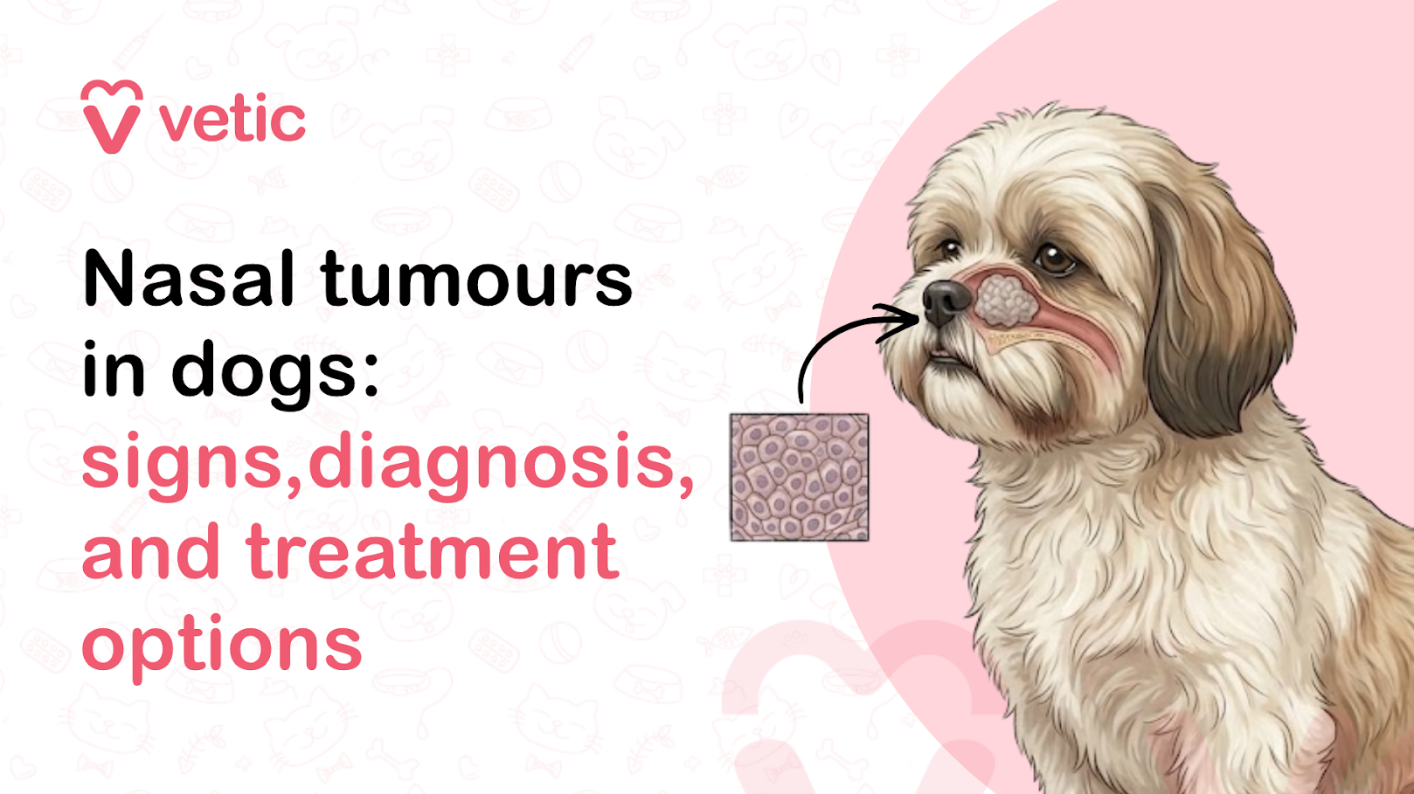
Nasal tumours, often referred to as nose cancer in dogs, are uncommon but serious conditions that affect the nasal passages and surrounding structures. Because early symptoms can resemble simple infections or allergies, diagnosis is often delayed. However, recognising persistent or unusual nasal signs early can make a significant difference in treatment outcomes and quality of life.
This blog explains how nasal tumours develop, the signs to watch for, how they are diagnosed, and the available treatment options.
What Is Nose Cancer in Dogs and How Does It Develop?
Nose cancer in dogs refers to abnormal growth of cells within the nasal cavity or surrounding sinus structures.
These tumours originate from tissues lining the nasal passages, such as epithelial cells, connective tissue, or bone. Over time, the canine nasal tumour grows locally, often invading nearby structures such as the sinuses and bone, and sometimes even the eye or brain.
Unlike some cancers that spread early, nasal tumours in dogs tend to be locally aggressive. This means they cause significant damage in the head region before spreading to distant organs. Because of their location, even small growths can interfere with breathing and normal nasal function.
What Are The Types of Nasal Tumours in Dogs?
Nasal tumours in dogs are classified based on whether they are non-cancerous or cancerous and on the type of tissue from which they arise.
What Are Benign vs Malignant Nasal Tumours in Dogs?
Most canine nasal tumours are malignant, meaning they are cancerous and capable of aggressive growth.
Malignant tumours include carcinomas, which arise from epithelial cells, and sarcomas, which develop from connective tissues. These tend to grow invasively and may eventually spread to other parts of the body. However, metastasis is less common than local invasion.
Benign tumours are less common and grow more slowly without spreading. However, even benign growths can cause significant problems by obstructing a dog’s nasal passages.
Understanding the type of tumour in dogs is essential for determining treatment and prognosis.
Also Read: Osteosarcoma in Dogs: Symptoms, Causes, Treatment Options, and Life Expectancy Guide
What Causes Nasal Cancer in Dogs?
The exact cause of nose cancer in dogs is not always clear, but environmental and genetic factors are believed to play a role.
Exposure to airborne irritants such as cigarette smoke, pollution, or certain chemicals has been associated with an increased risk. Long-nosed breeds such as Rough Collies, German Shepherds, Labrador Retrievers, and Golden Retrievers may be more predisposed, possibly due to greater exposure of nasal tissues to environmental factors.
Age is also a factor, with most cases occurring in middle-aged to older dogs. In many cases, however, no single cause can be identified.
What Are The Early Signs and Symptoms of Nose Cancer in Dogs?
Early signs of nose cancer in dogs are often subtle and can resemble common respiratory conditions.
One of the first symptoms is usually a persistent nasal discharge, which may initially be clear but can become thick or blood-tinged over time. Sneezing, mild nosebleeds, and noisy breathing may also occur.
At this stage, dogs often appear otherwise normal, which can delay a canine vet checkup. Because these symptoms overlap with infections or allergies, they are sometimes treated symptomatically before further investigation.
Suggested Read: Early Signs of Cancer in Dogs You Should Watch Out For
How Symptoms Progress in Dogs with Nose Cancer?
As canine nasal tumours grow, symptoms become more severe and localised.
Nasal discharge often becomes unilateral, affecting only one nostril, and may more frequently contain blood. Breathing may become laboured, and dogs may develop visible facial swelling or deformity as the tumour expands.
In advanced cases, the tumour may invade nearby structures, leading to eye-related symptoms such as tearing, swelling, or vision changes. Neurological signs, such as behavioural changes or seizures in dogs, can occur if the tumour extends toward the brain.
When Should You Be Concerned About Nasal Symptoms in Dogs?
You should be concerned if nasal symptoms persist, worsen, or fail to respond to routine treatment.
Chronic nasal discharge lasting more than a couple of weeks, especially if it is one-sided or contains blood, should not be ignored. Repeated nosebleeds, facial swelling, or breathing difficulty are particularly concerning signs.
A same-day vet checkup is important because a timely diagnosis allows for more treatment options and better outcomes.
How Veterinarians Diagnose Nose Cancer in Dogs?
Diagnosis of canine nasal cancer involves confirming the presence of a mass and determining its type and extent. Vets begin with a detailed history and physical examination, focusing on nasal airflow, discharge, and facial symmetry.
Which Tests Are Used to Confirm Canine Nasal Cancer?
A combination of imaging and tissue sampling is used to confirm nose cancer in dogs.
Advanced imaging, such as CT scans or MRI, is the most effective way to evaluate the size and spread of the tumour. These scans provide detailed information about bone involvement and invasion into surrounding structures.
Rhinoscopy, a procedure using a small camera inserted into the nasal passages, allows direct visualisation and biopsy of the tumour. A biopsy is essential to determine whether the tumour is benign or malignant.
Additional tests may include blood work and chest imaging to assess overall health and check for spread.
What Are The Treatment Options for Nasal Tumours in Dogs?
Radiation therapy is the most commonly recommended treatment for nasal tumours in dogs. Radiation is effective at reducing tumour size and controlling local disease, especially for malignant tumours. It can significantly improve breathing and reduce symptoms.
Surgery is less commonly performed due to the complex anatomy of the nasal cavity and difficulty in removing the entire tumour. However, it may be considered in selected cases.
Supportive care, including medications to manage symptoms, is an important part of management, particularly when curative treatment is not possible.
How To Manage Pain and Breathing Issues in Affected Dogs?
Managing discomfort and maintaining airway function are key priorities in dogs with nose cancer. Anti-inflammatory medications can help reduce swelling and improve airflow. Pain management is important, especially in advanced cases where tissue invasion causes discomfort. Humidified air, a calm environment, and avoiding irritants can also help ease breathing difficulties.
What Is The Prognosis of Dogs with Nasal Tumours?
The prognosis of nose cancer in dogs depends on tumour type, stage at diagnosis, and treatment approach.
Which Factors Affect Survival and Treatment Outcomes?
Several factors influence how well a dog responds to treatment and how long it can live with the condition. Dogs receiving radiation therapy often have improved survival times compared to those receiving only supportive care.
Tumour type also matters, with some cancers responding better to treatment than others. Advanced disease involving surrounding structures tends to carry a more guarded prognosis.
What Does Long-Term Care After Treatment Involve?
Long-term care involves monitoring for recurrence and maintaining comfort.
Dogs undergoing treatment require regular follow-up visits to assess response and detect any progression. Some symptoms may persist, but many dogs experience improved breathing and reduced discomfort after therapy.
Ongoing supportive care, including medications and environmental management, helps maintain quality of life.
Can Nose Cancer in Dogs Be Prevented?
There is no guaranteed way to prevent nose cancer in dogs, but reducing exposure to environmental irritants may lower the risk.
Avoiding cigarette smoke, limiting exposure to pollutants, and maintaining overall health may be beneficial. Regular veterinary check-ups also help detect problems early.
Because many cases have no clear cause, early recognition remains the most effective approach.
Final Thoughts: About Nose Cancer in Dogs
Nasal tumours in dogs often begin with mild symptoms but can progress into serious conditions if not identified early. Persistent nasal discharge, especially when one-sided or blood-tinged, should always be evaluated. With early diagnosis and appropriate treatment, many dogs can experience improved comfort and extended quality of life. Being attentive to subtle changes and seeking timely veterinary care can make a meaningful difference.
FAQ: About Nose Cancer in Dogs
What are the first signs of nasal tumours in dogs?
Early signs include persistent nasal discharge, sneezing, and occasional nosebleeds.
Is nose cancer in dogs treatable?
Yes, treatment options such as radiation therapy can help control the disease and improve quality of life.
How is canine nasal cancer diagnosed?
Diagnosis involves imaging (CT/MRI) and biopsy to confirm tumour type.
What is the life expectancy of dogs with nasal tumours?
Survival time varies, but treatment can significantly extend lifespan compared to no treatment.
Can nasal tumours in dogs be cured?
A complete cure is rare, but treatment can effectively manage the condition and improve the quality of life.
References
Barreau, P. (2026). Nasal Cavity Tumours. VIN. https://www.vin.com/apputil/content/defaultadv1.aspx?id=3866532&pid=11268&print=1
Kristensen, A. T. (2017). Canine Nasal Cavity Tumors: Latest Information. VIN. https://www.vin.com/apputil/content/defaultadv1.aspx?pId=20539&id=8506199
Kuehn, N. F. (n.d.). Cancers and Tumors of the Lung and Airway in Dogs. MSD Veterinary Manual. https://www.msdvetmanual.com/dog-owners/lung-and-airway-disorders-of-dogs/cancers-and-tumors-of-the-lung-and-airway-in-dogs
McEntee, M. C. (2015). Nasal Neoplasia in the Dog and Cat. VIN. https://www.vin.com/apputil/content/defaultadv1.aspx?id=3844036&pid=11131 Tonozzi, C. C. (2022, February 9). Neoplasia of the Respiratory System in Dogs and Cats. MSD Veterinary Manual. https://www.msdvetmanual.com/respiratory-system/respiratory-diseases-of-small-animals/neoplasia-of-the-respiratory-system-in-dogs-and-cats