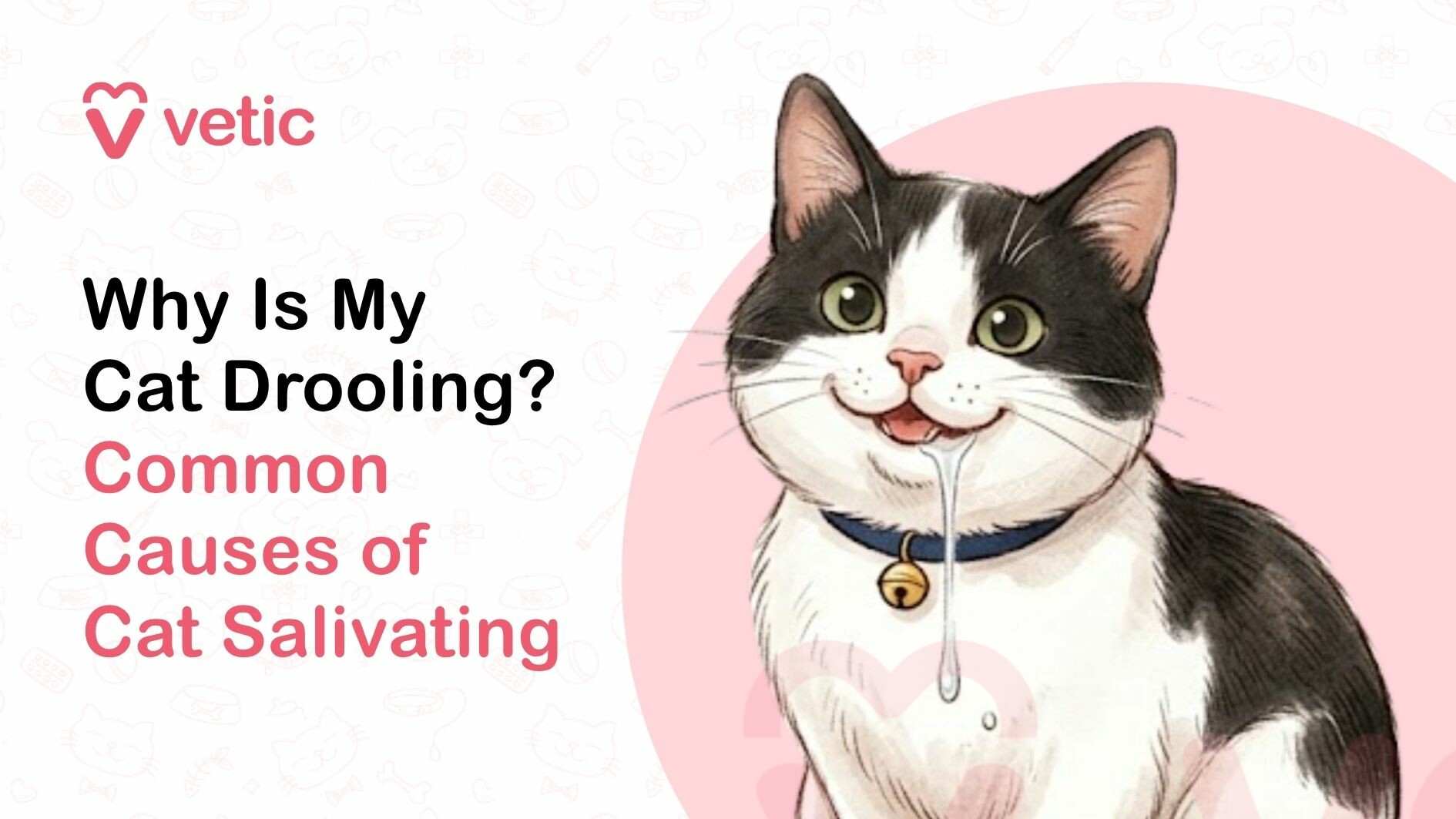
• Cats occasionally drool when relaxed or kneading – this is normal; sudden, excessive, or new-onset drooling is abnormal and always needs investigation.
• Causes include dental disease, oral ulcers, nausea, toxin ingestion, foreign body, or neurological disease – the most common is dental pain.
• A drooling cat that is also not eating or pawing at its mouth needs same-day veterinary attention – visit Vetic for an oral examination.
Drooling in cats is also known as hypersalivation or ptyalism. It can range from completely harmless to a sign of a serious medical condition, such as dental disease, poisoning, oral infections, or kidney diseases in cats. While many cat parents are surprised to see their feline companion drool, it’s not always something to panic about. Understanding why cats drool, what’s normal, and when to seek veterinary help is essential for keeping your pet healthy and comfortable.
Do Cats Drool Normally, or Is It Always a Sign of a Problem
Unlike dogs, cats don’t commonly drool. However, small amounts of feline drooling can be normal in specific situations.
Normal drooling may occur when:
- Your cat is deeply relaxed or purring
- They are enjoying petting or affection
- They are sleepy or content
This type of drooling is mild, occasional, and not associated with other symptoms. Any frequent, excessive, sudden, or heavy drooling should be considered abnormal. It could indicate an underlying health issue that requires a primary health check and urgent care.
Why Is My Cat Drooling? The Common Causes of Excess Saliva
Cat drooling can result from behavioural, digestive, oral, or serious medical causes. Identifying the underlying cause is essential for proper treatment.
Can Cats Drool Due to Relaxation or Happiness?
Yes. Some cats drool when they feel safe, comfortable, and emotionally content. This is often seen during lap time, gentle petting, and deep sleep.
It’s similar to a “happy response” and usually not a concern.
Can Stress or Anxiety Cause Feline Drooling?
Stress can trigger drooling in cats, especially in situations that cause fear or anxiety. Common triggers include:
- Travel or car rides
- Vet visits
- Loud noises or unfamiliar environments
In these cases, feline drooling may be accompanied by hiding, trembling, and vocalisation. This type of drooling in cats is usually temporary and resolves once the stressor is removed.
Does Nausea or Digestive Upset Cause Drooling in Cats?
Yes. Cats may drool when they feel nauseated. Possible causes of cat drooling saliva are:
- Indigestion
- Hairballs
- Gastrointestinal upset
- Motion sickness
You may also notice lip licking, reduced appetite, and vomiting in cats.
Are Dental Problems a Common Cause of Drooling in Cats?
Yes, dental and oral diseases are among the most common causes of chronic feline drooling. Common conditions include:
- Gum disease (gingivitis)
- Tooth decay or fractured teeth
- Oral ulcers
- Infections
Clinical signs include bad breath, difficulty eating, and pawing at the mouth.
Can Poisoning Cause Sudden Drooling in Cats?
Yes. Cat saliva coming out of the mouth can be an early and serious sign of poisoning. Common toxins include:
- Household cleaners
- Certain plants (like lilies)
- Human medications
- Insecticides and pesticides
This is often accompanied by vomiting, weakness, and tremors. It requires immediate veterinary care at the nearest animal hospital.
Can Serious Illnesses Cause Excessive Drooling in Cats?
Yes. Systemic and neurological conditions can also cause excessive cat drooling. This includes:
- Heatstroke in hot weather conditions
- Viral or bacterial infections
- Neurological disorders (such as nerve damage, brain tumours, or seizures)
- Tumours/cancer of the mouth/jaw
These cases require immediate attention.
What Signs Indicate That Drooling in Cats Is Serious?
Seek urgent care if excess cat saliva is sudden and accompanied by:
- Heavy and continuous salivation
- Refusal to eat or drink
- Vomiting or diarrhoea
- Lethargy or weakness
- Swelling of the face or mouth
- Difficulty breathing
These signs often indicate a medical emergency.
Suggested Read: Why is Your Cat Vomiting
What Are the Common Medical Conditions Linked to Cats and Excessive Drooling
Excessive cat salivation is most commonly caused by dental disease, kidney disease, oral injuries, toxin exposure, infections, and foreign objects lodged in the mouth or throat. Identifying the underlying condition is essential for accurate diagnosis and timely treatment.
How Do Dental Diseases Cause Chronic Feline Drooling?
Dental disease causes inflammation and pain, leading to increased saliva production.
- Cats may avoid eating hard food
- Gums may appear red or bleeding
- Drooling may become chronic
How Does Kidney Disease Cause Drooling in Cats?
In kidney disease, toxin accumulation can lead to oral ulcers and increased salivation in cats. This is usually accompanied by weight loss, increased drinking, and reduced appetite.
Can Foreign Objects Cause Drooling in Cats?
Yes. Cats may drool if something is lodged in their mouth, such as bones, string or thread, and small objects. Cats may show gagging, pawing at the mouth, or sudden distress.Do not attempt to pull objects like string or thread. Seek veterinary care immediately.
How Veterinarians Diagnose the Cause of a Cat Salivating Too Much?
Diagnosis depends on identifying the underlying cause through clinical examination and tests. Your vet may:
- Perform a detailed oral examination
- Check for injuries or foreign objects
- Perform blood tests to assess systemic health
- Use imaging, such as X-rays, if needed
A thorough history provided by the pet parent helps in an accurate diagnosis.
Suggested Read: Wound Care for Cats: How to Safely Care for Your Cat During Recovery
What Are the Cat Drooling Treatment Options?
Treatment for excess saliva in cats depends entirely on the underlying cause identified during diagnosis.
What Medical Treatments Are Commonly Used?
Common treatments include:
- Antibiotics for infections
- Dental procedures such as cleaning or tooth extraction
- Anti-nausea medications
- Pain relief
When Is Emergency Treatment Required?
Emergency care is needed in cases of poisoning, severe infection, or systemic illness.
- Immediate detoxification may be required
- Intravenous fluids and supportive care may be needed for stabilisation
- Hospitalisation in severe cases
What to Do at Home if Your Cat Is Drooling Excessively?
If your cat suddenly starts drooling, initial home care should focus on safety and observation rather than treatment.
- Check the mouth gently if the cat allows
- Remove any visible foreign object (only if it is easy and safe)
- Keep your cat calm and hydrated
- Avoid giving human medications
Monitor closely for additional symptoms and changes in behaviour.
When to See a Vet for Excess Saliva in Cats and Mouth-Watering Issues?
Contact the nearest top cat clinic whenever drooling is persistent, unexplained, or associated with other symptoms. Seek care if:
- Drooling lasts more than 24 hours
- There is no clear cause
- Your cat stops eating or drinking
- There are signs of pain or illness
Immediate care is needed if poisoning is suspected.
How to Prevent Excessive Drooling in Cats?
Preventive care focuses on maintaining oral health and reducing exposure to risk factors.
- Maintain regular dental hygiene
- Schedule routine veterinary checkups
- Keep toxic substances out of reach
- Provide a stress-free environment
- Monitor eating and grooming habits
Early monitoring helps detect problems before they become serious.
Final Takeaway: About Cats and Drooling
Cat drooling can range from a harmless sign of relaxation to a warning of serious illness. The key is to observe the context, frequency, and accompanying symptoms. When in doubt, it’s always safer to consult a veterinarian. Early action can make a significant difference in your cat’s health and comfort.
Frequently Asked Questions: About Cat Drooling
Why does my cat drool when I pet him?
This is usually a sign of relaxation and contentment. Some cats drool when they feel safe and happy.
My cat is drooling but acting normal; should I worry?
If it’s occasional and mild, it may be normal. Persistent or excessive drooling should be evaluated.
What causes sudden excessive drooling in cats?
Common causes include poisoning, dental issues, nausea, or a foreign object in the mouth.
Is a cat’s mouth watering a sign of poisoning?
Yes, excessive drooling in cats can be an early sign of toxin exposure and requires immediate veterinary attention.
References
MSD Veterinary Manual. (n.d.). Causes of Excessive Salivation in Cats. MSD Veterinary Manual. Retrieved March 22, 2026, from https://www.msdvetmanual.com/multimedia/table/causes-of-excessive-salivation-in-cats
Mulherin, B. L. (n.d.). Salivary Disorders in Small Animals. MSD Veterinary Manual. https://www.msdvetmanual.com/digestive-system/diseases-of-the-mouth-in-small-animals/salivary-disorders-in-small-animals
Purina. (2021). Why Do Cats Dribble? https://www.purina.co.uk/articles/cats/behaviour/understanding-cats/why-do-cats-dribble
Purina. (2025). Stomatitis In Cats. https://www.purina.co.nz/care-and-advice/cat/health/stomatitis-in-cats Reiter, A. M. (n.d.). Disorders of the Mouth in Cats. MSD Veterinary Manual. https://www.msdvetmanual.com/cat-owners/digestive-disorders-of-cats/disorders-of-the-mouth-in-cats