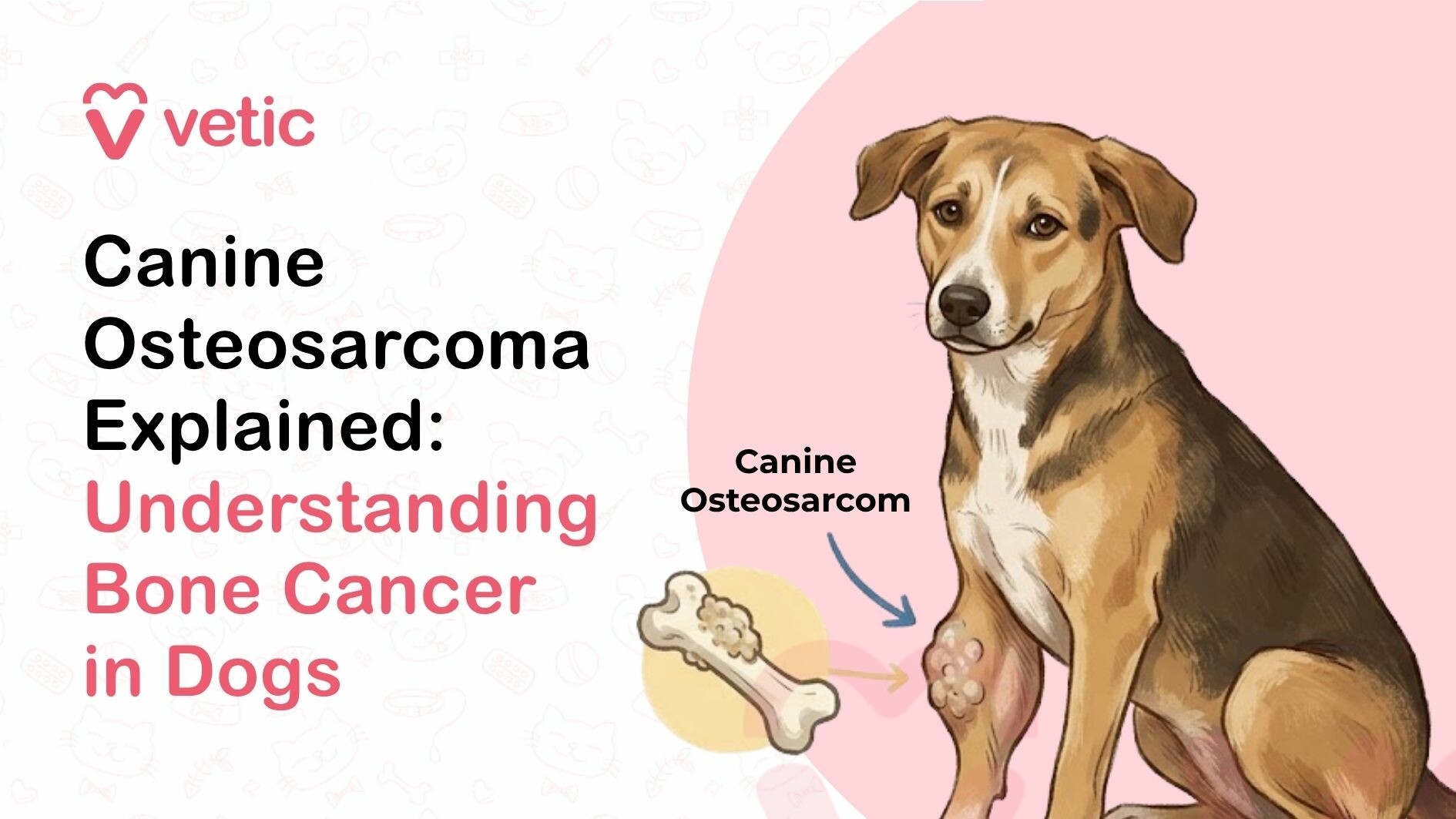
• Osteosarcoma is the most common bone cancer in dogs – large and giant breeds like Rottweilers, Great Danes, and Greyhounds are at highest risk.
• Signs include persistent limb lameness (often dismissed as injury), localised swelling, and pain – X-ray reveals the characteristic ‘sunburst’ pattern at the tumour site.
• Amputation combined with chemotherapy offers the best survival – consult a Vetic oncologist immediately if a young large-breed dog shows persistent lameness.
Osteosarcoma is the most common type of bone cancer in dogs, and, sadly, also one of the most aggressive. It often develops silently and progresses quickly, making early recognition and timely treatment crucial. For many pet parents, the diagnosis can feel overwhelming. But understanding the condition helps in making thoughtful, compassionate decisions.
This blog explains what osteosarcoma is, how it develops, symptoms to watch for, treatment options, and expected outcomes, with a clear, practical approach.
What Is Osteosarcoma in Dogs and How Does It Develop?
Osteosarcoma in dogs is a malignant tumour that originates in bone cells and rapidly destroys normal bone tissue. It most commonly affects long bones such as:
- Long bones of the limbs
- Shoulder region (proximal humerus)
- Knee region (distal femur and proximal tibia)
This cancer is highly aggressive because it not only destroys bone structure, causing severe pain, but also spreads early to distant organs, especially the lungs.
By the time it is diagnosed, microscopic spread has often already occurred, even if not visible on advanced imaging and other diagnostic tests.
What Are the Early and Advanced Symptoms of Bone Cancer in Dogs?
The earliest signs of osteosarcoma are often subtle and easily mistaken for minor injuries, which is why many cases are diagnosed late.
Persistent Limping, Swelling, and Severe Bone Pain in Dogs
Early bone cancer in dogs typically presents as persistent lameness that does not improve with rest or basic medication.
Clinical signs include:
- Limping that persists beyond a few days
- Localised swelling over a bone
- Pain on palpation during examination
- Reluctance to bear weight on the affected limb
Unlike soft tissue injuries, this pain progressively worsens over time.
Suggested Read: Why Is My Dog Shivering and When Should I Worry?
What Are the Signs of Advanced Osteosarcoma in Dogs?
As the disease progresses, systemic and behavioural changes become more evident.
- Decreased appetite
- Weight loss
- Lethargy
- Withdrawal or reduced interaction
In advanced cases, pathological fractures can occur due to severe bone weakening.
What Are the Causes and Risk Factors of Canine Osteosarcoma?
The exact cause of osteosarcoma is not fully understood, but several risk factors are consistently observed in clinical cases.
Why Large and Giant Breeds Are More Prone to Canine Bone Cancer?
Large and giant breeds have a significantly higher risk due to rapid bone growth and increased mechanical stress on long bones.
High-risk breeds include:
- Great Danes
- Rottweilers
- German Shepherds
- Saint Bernards
What Other Factors Contribute to Bone Tumour Development in Dogs?
Multiple biological and environmental factors may increase the risk of bone sarcoma in dogs:
- Genetic predisposition
- Rapid growth during puppyhood
- Previous fractures or bone trauma
- Age (most common in middle-aged to older dogs, but can occur in young dogs too)
However, osteosarcoma can also occur in younger dogs, particularly in fast-growing breeds.
How Osteosarcoma Differs From Other Canine Bone Tumours?
Not all bone tumours in dogs are the same. Osteosarcoma is the most aggressive and commonly diagnosed bone tumour in dogs compared to other types.
Other bone tumours (less common) are chondrosarcoma and fibrosarcoma. These tumours may grow more slowly, but canine osteosarcoma is the primary concern due to its aggressive nature.
Suggested Read: Suggested Read: Why Is My Dog Shivering and When Should I Worry?
How Veterinarians Diagnose Bone Sarcoma in Dogs?
Diagnosis of bone cancer in dogs involves a combination of clinical examination, imaging, and confirmatory tests.
- Physical examination: Assess swelling, pain, and mobility
- X-rays: Show bone destruction or abnormal growth
- Chest imaging: Check for spread to the lungs
- Biopsy or fine needle aspiration: Confirms cancer type (biopsy is gold standard for the diagnosis of canine osteosarcoma.)
Early imaging is often the first clue for canine bone cancer, even before biopsy confirmation.
What Are the Stages of Osteosarcoma Cancer in Dogs?
Osteosarcoma in dogs progresses rapidly from localised bone disease to systemic spread if not treated early.
- The early stage involves local pain and swelling
- The intermediate stage shows bone destruction and the risk of fractures
- The advanced stage includes spread to the lungs and systemic illness
Because metastasis of bone tumours in dogs often occurs early, treatment usually addresses both the primary tumour and potential spread.
What Are the Treatment Options for Canine Osteosarcoma?
Treatment focuses on pain relief, removal of the primary tumour, and slowing cancer spread.
Why Is Limb Amputation Recommended in Bone Cancer in Dogs
Amputation is the most effective way to remove the primary canine bone tumours and provide immediate pain relief.
Contrary to common concerns, most dogs adapt well to three limbs, especially when the source of severe pain is eliminated.
What Role Does Chemotherapy Play in Treatment?
Chemotherapy is often recommended after surgery to slow cancer spread and extend survival time.
Common protocols used in India include drugs such as carboplatin or doxorubicin, administered in cycles under veterinary supervision.
Are There Other Treatment and Supportive Care Options?
Yes, when surgery is not possible, palliative care becomes important.
- Radiation therapy for pain control (available in select advanced centres in India)
- Strong pain management protocols, including NSAIDs and opioids
- Palliative care for comfort
Treatment plans are tailored based on the dog’s condition and family preferences.
What Are the Final Stages of Osteosarcoma in Dogs?
In the final stages, the disease significantly affects overall health and quality of life. Clinical signs include:
- Severe, unmanageable pain
- Difficulty breathing (lung involvement)
- Extreme weakness
- Loss of appetite
- Collapse
At this stage, humane and comfort-focused care becomes the priority.
What Is the Life Expectancy of Dogs With Bone Cancer?
Life expectancy depends largely on whether treatment is pursued and how early it is initiated.
- Without treatment: 1 to 3 months due to pain and complications
- Amputation alone: approximately 4 to 6 months
- Amputation with chemotherapy: 10 to 12 months or longer in some cases
While a complete cure is rare, treatment can significantly improve both lifespan and quality of life.
How to Manage Pain in Dogs With Bone Cancer?
Pain management is a critical part of treatment, as osteosarcoma is one of the most painful cancers in dogs.
- NSAIDs and opioid analgesics for pain control
- Bone-targeting medications to reduce discomfort
- Radiation therapy in selected cases
- Supportive care, such as soft bedding and restricted activity
Effective pain control directly improves quality of life.
When to See a Veterinarian for Bone Cancer Symptoms in Dogs?
Seek professional canine consultation if your dog shows:
- Persistent limping
- Swelling on a limb
- Pain that does not improve with rest
Early evaluation allows faster diagnosis, more treatment options, and better outcomes.
Making Informed Decisions About Treatment for Dogs With Osteosarcoma
Every case of dog and bone cancer is different. Treatment decisions should be individualised based on the dog’s condition and family priorities. Consider:
- The dog’s age and overall health
- Pain level and mobility
- Financial and emotional capacity for treatment
Both aggressive treatment and palliative care can be valid choices when focused on the dog’s comfort and well-being.
Final Takeaway: About Osteosarcoma in Dogs
Osteosarcoma in dogs is an aggressive and challenging disease. But early recognition and appropriate care can significantly improve a dog’s comfort and extend the time they have with their family. Whether choosing surgery, chemotherapy, or palliative care, the focus should always remain on quality of life, pain relief, and compassionate decision-making.
Frequently Asked Questions: About Osteosarcoma in Dogs
How fast does osteosarcoma spread in dogs?
It spreads rapidly, often reaching the lungs early, even before visible symptoms appear.
Is osteosarcoma cancer in dogs curable?
A complete cure is rare. Treatment focuses on extending life and maintaining comfort.
What are the earliest signs of bone cancer in dogs?
Persistent limping and localised swelling are often the first signs.
How long can a dog live with osteosarcoma without treatment?
Typically 1-3 months, depending on pain and complications.
Is osteosarcoma painful for dogs?
Yes. It is one of the most painful cancers due to bone destruction, making pain management a top priority.
References
Anderson, A. (2024, August 12). What to know about bone cancer in dogs. WebMD. https://www.webmd.com/pets/dogs/what-to-know-bone-cancer-dogs
Chou, P.-Y. (n.d.). Bone Tumors in Dogs and Cats. MSD Veterinary Manual. https://www.msdvetmanual.com/musculoskeletal-system/osteopathies-in-small-animals/bone-tumors-in-dogs-and-cats
Frimberger, A. E. (n.d.). Standard of Care in Canine Osteosarcoma. https://www.vin.com/apputil/content/defaultadv1.aspx?pId=11343&catId=34571&id=5124329
MSD Veterinary Manual. (2026, March 19). Osteosarcoma, radiograph, dog. https://www.msdvetmanual.com/multimedia/image/osteosarcoma-radiograph-dog
Selmic, L. E., Lafferty, M. H., Kamstock, D. A., Garner, A., Ehrhart, N. P., Worley, D. R., Withrow, S. J., & Lana, S. E. (2014). Outcome and prognostic factors for osteosarcoma of the maxilla, mandible, or calvarium in dogs: 183 cases (1986-2012). Journal of the American Veterinary Medical Association, 245(8), 930-938. https://avmajournals.avma.org/view/journals/javma/245/8/javma.245.8.930.xml