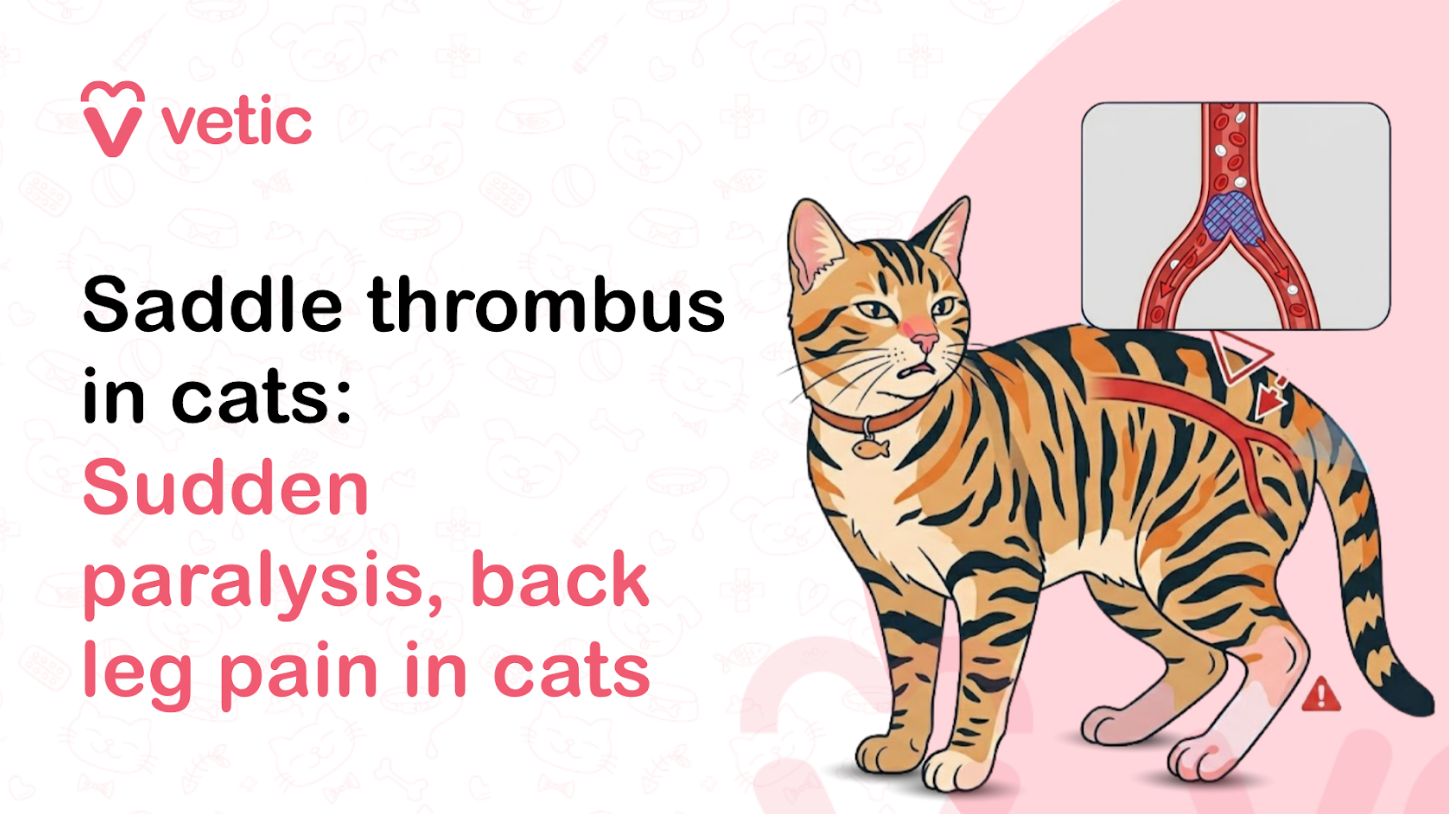
Saddle thrombus is one of the most sudden and devastating emergencies in cats. It occurs when a blood clot blocks the main artery supplying blood to the hind legs, leading to sudden paralysis and severe pain. For many pet parents, a saddle thrombus in cats can appear without warning, turning a normal day into a life-threatening situation within minutes.
What Is Saddle Thrombus in Cats and Why Is It Dangerous?
Saddle thrombus is a blood clot that lodges at the base of the aorta, cutting off blood supply to the hind limbs. The aorta is the main artery that carries oxygen-rich blood from the heart to the body. When a clot gets stuck where the artery branches toward the back legs, it blocks blood flow almost instantly. This results in loss of movement, severe pain, and tissue damage in the affected limbs.
This condition is also known as Feline Aortic Thromboembolism. It is dangerous because it not only affects mobility but also indicates serious underlying heart disease in cats. Feline saddle thrombus often remains undiagnosed until this emergency occurs.
What Causes Saddle Thrombus in Cats?
The most common cause of saddle thrombus in cats is underlying heart disease, particularly hypertrophic cardiomyopathy (HCM). This condition causes thickening of the heart muscle, which disrupts normal blood flow.
In cats with heart disease, abnormal blood flow and changes in the heart chambers promote clot formation. These clots can travel through the bloodstream and eventually lodge in major arteries like the aorta.
Other contributing factors may include clotting disorders, severe inflammation, or, rarely, certain systemic diseases. In many cases, pet parents are unaware their cat has heart disease until a thrombus occurs.
What Are the Early Signs of Saddle Thrombus in Cats to Watch For?
Early signs of saddle thrombus in cats are often subtle. It may include mild lethargy, reduced activity, or changes in breathing before the acute event.
Some cats may show increased respiratory rate, exercise intolerance, or reduced appetite in the days or weeks leading up to the episode. These signs are often missed because they are non-specific.
In many cases, there are no obvious warning signs, which is why saddle thrombus often appears sudden and unexpected.
What Are the Sudden Symptoms of Saddle Thrombus In Cats?
The distinctive symptom of a saddle thrombus in cats is sudden-onset paralysis or weakness of the hind legs, accompanied by severe pain.
Cats may suddenly cry out, collapse, or drag their hind limbs. The back legs often feel cold to the touch due to reduced blood flow, and the paw pads may appear pale or bluish.
Unlike neurological paralysis, affected cats are usually in intense pain and distress, which is a key distinguishing feature. They may also breathe rapidly due to pain and underlying heart involvement.
Suggested Read: Signs of Rabies in Cats: Symptoms, Stages, and Prevention Every Pet Parent Should Know
Why Is Saddle Thrombus in Cats a Medical Emergency?
Saddle thrombus in cats is an emergency because tissue damage begins immediately when the blood supply is cut off.
Without oxygen, muscles and nerves in the hind limbs start to deteriorate within hours. In addition to paralysis, cats may go into shock or develop complications affecting the heart and lungs. It also increases the risk of heart failure in cats.
Delayed treatment significantly reduces your cat’s chances of survival.
What Should You Do If Your Cat Shows Symptoms?
If your cat shows sudden paralysis or severe hind leg pain, you must seek emergency veterinary care immediately.
Do not attempt home treatment or wait for symptoms to improve. Handle your cat gently, as they may be in severe pain. Minimise movement to avoid additional stress and transport them to the nearest cat clinic as quickly as possible.
Avoid giving any medications at home unless specifically advised by a vet, as this may complicate treatment.
How Do Veterinarians Diagnose Feline Saddle Thrombus?
Diagnosis of saddle thrombus in cats is primarily based on clinical signs supported by physical examination and diagnostic tests.
Vets assess limb temperature, pulses in the hind legs, and your cat’s overall cardiovascular status. In many cases, the absence of a femoral pulse is a strong indicator.
Additional tests, such as echocardiography (heart ultrasound), blood tests, and imaging, may be used to confirm the presence of underlying heart disease and assess its severity.
What Are the Treatment Options for Saddle Thrombus in Cats?
Treatment for feline saddle thrombus focuses on stabilising the cat, managing pain, and preventing further clot formation.
Immediate care includes oxygen support, intravenous fluids, and medications to improve circulation. Blood-thinning medications may be used to prevent additional clots.
Unlike in humans, surgical removal of clots is rarely performed in cats due to the high risk. Treatment is generally medical and supportive rather than curative.
How Is Pain Managed and What Supportive Care Is Given?
Pain management is critical in treatment because a saddle thrombus in cats is extremely painful.
Strong analgesics (pain relievers) are used to control pain and reduce distress. Supportive care may include maintaining body temperature, fluid therapy, monitoring organ function, and assisting with feeding and hydration.
In some cases, physiotherapy may be introduced later if the cat regains limb function.
What Is the Prognosis and Survival Chance for Cats with Saddle Thrombus?
The prognosis for saddle thrombus in cats is guarded to poor, especially in severe cases.
What Factors Affect Recovery and Survival?
The outcome depends on the severity of the clot, the presence of heart disease in cats, and how quickly treatment is initiated.
Cats with mild limb involvement and stable heart function have a better chance of partial recovery. However, those with severe paralysis, significant heart disease, or complications like heart failure have a lower survival rate.
Recurrence is also common, which further affects long-term prognosis.
What Does Recovery and Long-Term Management Look Like After Treatment?
Recovery varies, and some cats may regain partial use of their hind limbs over time with supportive care.
Cats that survive the initial episode often require long-term heart medications and blood thinners to prevent recurrence. Activity may need to be restricted, and regular monitoring is essential.
Even with recovery, many cats live with underlying heart disease that requires ongoing management.
Can Saddle Thrombus in Cats Be Prevented?
Prevention of saddle thrombus in cats is focused on early detection and management of heart disease.
Routine veterinary check-ups, especially in middle-aged and older cats, can help detect heart conditions before complications occur. Cats diagnosed with heart disease may be prescribed medications to reduce the risk of blood clots.
However, since many cats show no early signs, complete prevention is not always possible.
Final Thoughts: About Saddle Thrombus in Cats
Saddle thrombus in cats is a life-threatening emergency that requires immediate veterinary attention.
The sudden onset of paralysis and pain can be distressing, but recognising the signs and acting quickly can make a difference in stabilisation and outcomes. While prognosis is often guarded, early intervention and supportive care offer the best possible chance.
FAQ: About Saddle Thrombus in Cats
What are the first signs of saddle thrombus in cats?
Sudden hind leg weakness, pain, and difficulty walking are the most common early signs of saddle thrombus in cats.
Is saddle thrombus painful for cats?
Yes, a feline saddle thrombus is extremely painful due to loss of blood supply to the limbs.
Can cats recover from a saddle thrombus?
Some cats may partially recover, but the prognosis is often guarded.
How long can a cat live after a saddle thrombus?
It varies widely, depending on severity and underlying heart disease. Some may survive months with management.
What causes blood clots, such as saddle thrombus in cats?
Most commonly, underlying heart disease leads to clot formation in cats.
References
Brooks, W. (2017). Feline Aortic Thromboembolism (FATE or Saddle Thrombus). VIN.com. https://veterinarypartner.vin.com/default.aspx?pid=19239&id=5307199
Cunningham, S. M., & Roderick, K. V. (2018, July 30). Blood Clots and Aneurysms in Cats. MSD Veterinary Manual. https://www.msdvetmanual.com/cat-owners/heart-and-blood-vessel-disorders-of-cats/blood-clots-and-aneurysms-in-cats
Kittleson, M. D. (n.d.). Arterial Thromboembolism in Dogs and Cats. MSD Veterinary Manual. https://www.msdvetmanual.com/circulatory-system/various-cardiovascular-diseases-in-dogs-and-cats/arterial-thromboembolism-in-dogs-and-cats
Moise, N. S. (2026). Thromboembolism in the Cat. VIN. https://www.vin.com/apputil/content/defaultadv1.aspx?pId=11196&meta=generic&catId=30743&id=3854246 Moses, I. A., Hallowell, T. C., & Johnson, J. A. (2024). Feline aortic thromboembolism with and without congestive heart failure did not exhibit hypercoagulability using a novel viscoelastic coagulation monitor. American Journal of Veterinary Research, 85(8). https://avmajournals.avma.org/view/journals/ajvr/85/8/ajvr.24.03.0065.xml