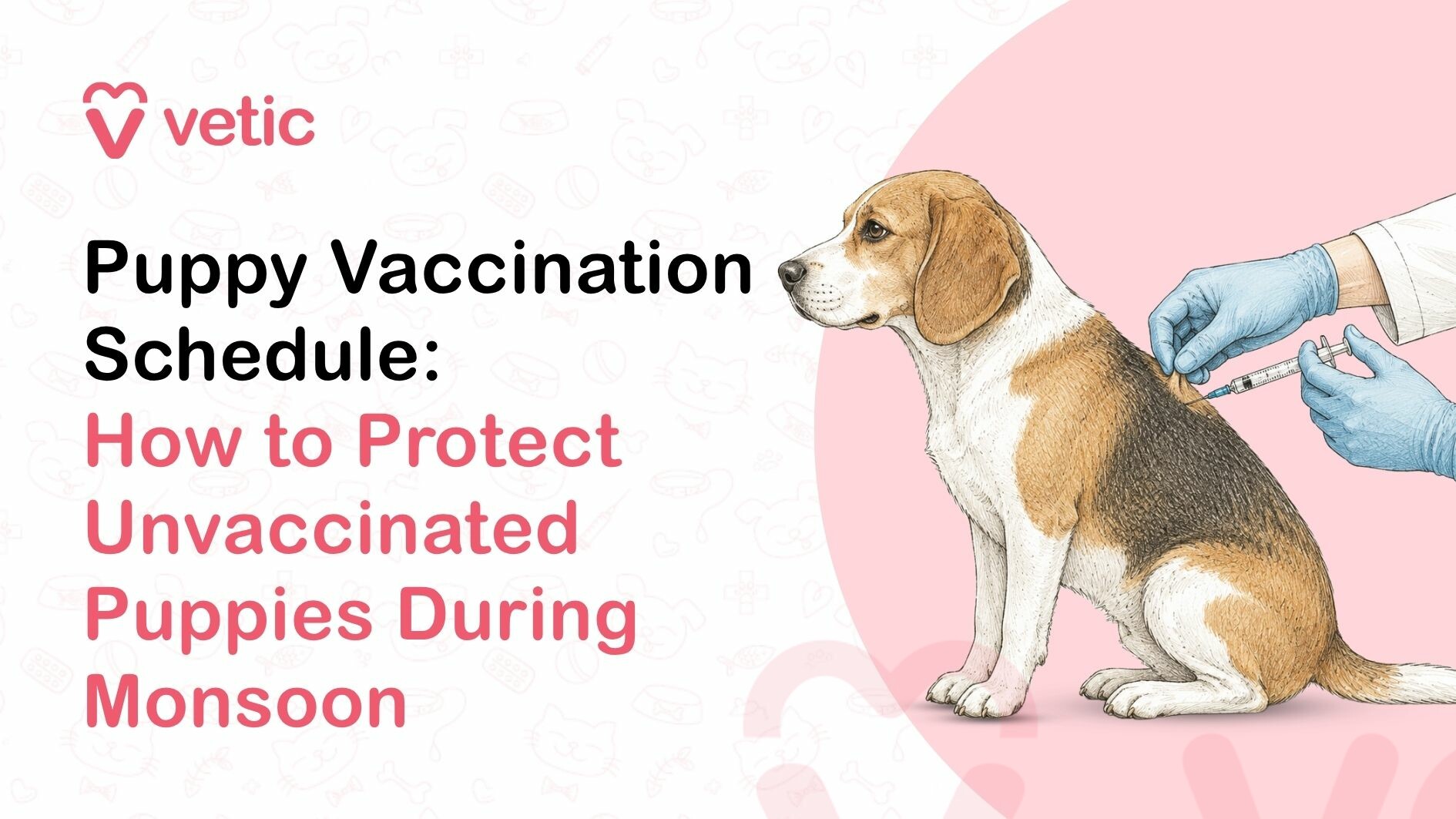
- Distemper, leptospirosis, and gastroenteritis are the biggest monsoon threats to unvaccinated puppies
- The puppy vaccinations typically starts at 6-8 weeks, with doses continuing to 14-16 weeks
- Unvaccinated puppies should stay indoors and away from puddles, stray animals, and waterlogged areas
- Signs of distemper include nasal discharge, fever, and coughing; leptospirosis causes fever, vomiting, and jaundice
Monsoon brings relief from the heat. But for unvaccinated puppies, the wet season also brings real risk. Waterlogged streets, contaminated puddles, and higher disease transmission all peak during the rains.
Following a puppy vaccination schedule is the single most important thing you can do for a young pup’s health. This blog explains the biggest health threats, how to spot them early, and how to protect a puppy until their vaccine course is complete.
Why Are Unvaccinated Puppies at Higher Risk During Monsoon?
Puppies receive maternal antibodies through their mother’s first milk (colostrum), which provides temporary protection during the first few weeks of life. These antibodies gradually decline over time, but the rate varies between puppies. While maternal antibodies are still present, they can also reduce vaccine effectiveness, which is why puppies need a series of vaccinations between 6 and 16 weeks of age to build reliable immunity.
Monsoon makes this window more dangerous. Flooding and stagnant water can spread bacteria such as Leptospira. Higher humidity keeps viruses active longer. Contaminated soil and puddles become hazards anywhere a puppy walks.
An unvaccinated puppy’s immune system simply isn’t equipped for this level of exposure.
Biggest Disease Threats to Unvaccinated Puppies
Three conditions are responsible for the most serious illnesses in unvaccinated puppies during the monsoon – Distemper, gastroenteritis and leptospirosis.
Distemper in Puppies During Monsoon
What is Canine Distemper?
Canine distemper is a highly contagious viral disease that affects a puppy’s respiratory, digestive, and nervous systems. Unvaccinated puppies are at the highest risk because their immune systems are still developing.
How Does Distemper Spread?
Distemper spreads through droplets released when an infected dog coughs or sneezes, as well as through direct contact with infected dogs or contaminated bowls, bedding, or other shared objects. During the monsoon, puppies may spend time in crowded shelters or encounter contaminated environments where disease transmission is easier.
Signs of Distemper in Puppies and Treatment
Early signs of distemper include:
- Watery or pus-like discharge from the eyes and nose
- Coughing and difficulty breathing
- Loss of appetite and lethargy
- Temporal twitching
- Twitching of the limbs
- Vomiting and diarrhoea
- Fever
As the disease progresses, some puppies may develop muscle twitching, seizures, or loss of coordination. There is no specific antiviral treatment for distemper. Veterinary care focuses on supportive treatment, including fluids, nutritional support, antibiotics for secondary bacterial infections as needed, and management of neurological or respiratory complications.
How to Protect an Unvaccinated Puppy
Follow the recommended puppy vaccination schedule and avoid exposing your puppy to unfamiliar or unvaccinated dogs. Keep food and water bowls clean, avoid shared pet items, and minimise visits to places where many dogs gather until your puppy has completed the initial vaccination course.
Gastroenteritis in Puppies During Monsoon
What is gastroenteritis?
Gastroenteritis is inflammation of the stomach and intestines. In puppies, it can result from viral, bacterial, or parasitic infections, contaminated food or water, or dietary indiscretion. Because puppies become dehydrated quickly, prompt treatment is important.
How does it spread?
During the monsoon, pathogens survive longer in damp environments and contaminated water. Puppies may become infected by drinking contaminated water, eating spoiled food, licking contaminated surfaces, or coming into contact with infected faeces.
Signs of Gastroenteritis in puppies and treatment
Common signs include:
- Repeated vomiting
- Loose or bloody diarrhoea
- Abdominal pain
- Loss of appetite
- Lethargy
Treatment depends on the underlying cause but commonly includes fluid therapy to prevent dehydration, medications to control vomiting, nutritional support, and treatment directed at the specific infection when identified.
How to protect an unvaccinated puppy
Provide clean drinking water, avoid feeding raw or spoiled food, clean food and water bowls regularly, promptly remove faeces from the environment, and prevent access to contaminated outdoor areas during the monsoon. Vaccination against diseases such as parvovirus, a common cause of severe gastroenteritis, remains essential.
Leptospirosis in Dogs During Monsoon
What is leptospirosis?
Leptospirosis is a bacterial infection caused by Leptospira bacteria. The disease can affect the kidneys, liver, and other organs and is more common during the rainy season because the bacteria survive well in warm, wet conditions.
How does it spread?
Dogs become infected when Leptospira bacteria enter through broken skin or mucous membranes after contact with water, soil, or mud contaminated with the urine of infected animals, particularly rodents. Flooding and stagnant water during the monsoon increase the risk of exposure.
Signs and treatment
Watch for:
- High fever
- Vomiting
- Loss of appetite
- Jaundice (yellowing of the gums or eyes)
- Muscle stiffness
- Reduced urine output or blood in the urine
Leptospirosis is treated with antibiotics and supportive veterinary care. Early diagnosis and treatment greatly improve the chances of recovery.
How to protect an unvaccinated puppy
Vaccination is the most effective way to reduce the risk of leptospirosis. Until your puppy completes the vaccine course, avoid puddles, flooded areas, stagnant water, and places that may be contaminated with animal urine. Wipe your puppy’s paws after unavoidable outdoor exposure and keep drinking water clean and fresh.
Zoonosis: Leptospirosis can spread to people
Leptospirosis is a zoonotic disease, meaning that infected dogs can transmit the bacteria to people through contaminated urine or environments. Wash your hands after cleaning up urine, wear gloves if handling potentially contaminated materials, and seek veterinary care promptly if leptospirosis is suspected. Vaccinating pet dogs and community dogs where vaccination programmes exist can help reduce disease circulation and lower the risk for both animals and people.
Can Unvaccinated Puppies Go Outside During Monsoon?
Keep unvaccinated puppies indoors during the monsoon wherever possible. The risk from leptospirosis, distemper, and parvovirus is highest in contaminated outdoor environments.
Short, supervised time on a clean private balcony or terrace is generally safer than street or park exposure. But avoid any direct or indirect contact with stray animals or unfamiliar dogs. This includes letting your puppy interact with them or handling your puppy after it has touched other dogs without washing your hands first. Also, keep your puppy away from standing water and contaminated outdoor areas.
Once your puppy completes their vaccine course, your vet can advise when outdoor exposure is safe.
Puppy Vaccination Schedule: When Does Protection Begin?
A typical puppy vaccination schedule in India starts on the 30th day and continues through the 120th day.
| Timeline | Vaccine Name | What it Protects Against |
| 30 Days | Puppy DP | Early protection against Distemper and Parvovirus |
| 45 Days | DHPPiL | Distemper, Hepatitis, Parvovirus, Parainfluenza, and Leptospirosis |
| 60 Days | Canine Corona | Viral intestinal infections causing severe diarrhea |
| 75 Days | DHPPiL | First booster for core viral and bacterial protection |
| 90 Days | Anti Rabies & Corona | Mandatory rabies protection and second coronavirus booster |
| 105 Days | DHPPiL | Final combination booster for long-term immunity |
| 120 Days | Anti Rabies & Kennel Cough | Final rabies booster and highly contagious respiratory protection |
Full protection develops 2 to 4 weeks after the final dose in the course. Your vet will advise on the right timing based on your puppy’s breed, age, and health.
When to Contact a Vet for an Unvaccinated Puppy
Book an expert canine vet checkup if your unvaccinated puppy shows any of the following:
- Fever, lethargy, or loss of appetite lasting more than 12 hours
- Persistent vomiting or diarrhoea
- Nasal or eye discharge
- Difficulty breathing
- Muscle twitching or seizures
- Yellowing of gums or eyes
Don’t wait to see if symptoms resolve on their own. In young, unvaccinated puppies, illness can escalate fast.
Conclusion: About Puppy Vaccination Schedule
The monsoon season increases the risk of several serious infectious diseases in puppies, especially those that have not completed their vaccinations.
Following the recommended puppy vaccination schedule, avoiding contaminated environments, and recognising early warning signs are the best ways to protect your puppy during the rainy season.
FAQs: About Puppy Vaccination Schedule
What are the early signs of distemper in puppies?
Early signs of distemper in puppies include watery or pus-like nasal and eye discharge, fever, coughing, and lethargy.
Can unvaccinated puppies go outside in the rain?
It’s best to keep unvaccinated puppies indoors during the monsoon. Rainwater and waterlogging spread leptospirosis and other infections.
At what age should puppies start vaccinations?
Most puppies start vaccinations at 6 to 8 weeks of age. A vet can confirm the right puppy vaccination schedule based on your pup’s breed, age, and health history.
Why is leptospirosis more common during the monsoon?
Monsoon flooding carries Leptospira bacteria from infected animal urine into puddles, drains, and soil. Any puppy that comes into contact with contaminated water or ground is at higher risk.
References
Brooks, W. (2017). Vaccine Information for Dogs, Cats, Puppies and Kittens. VIN. https://veterinarypartner.vin.com/default.aspx?pid=19239&id=4951406
Day, M. J., Horzinek, M. C., Schultz, R. D., & Squires, R. A. (2016). GUIDELINES FOR THE VACCINATION OF DOGS AND CATS. E2 Journal of Small Animal Practice, 57. https://wsava.org/wp-content/uploads/2020/01/WSAVA-Vaccination-Guidelines-2015.pdf
Ford, R. B., Larson, L. J., McClure, K. D., Schultz, R. D., & Welborn, L. V. (2017). 2017 AAHA canine vaccination guidelines. Journal of the American Animal Hospital Association, 53(5), 243-251.
https://pubmed.ncbi.nlm.nih.gov/28846453/