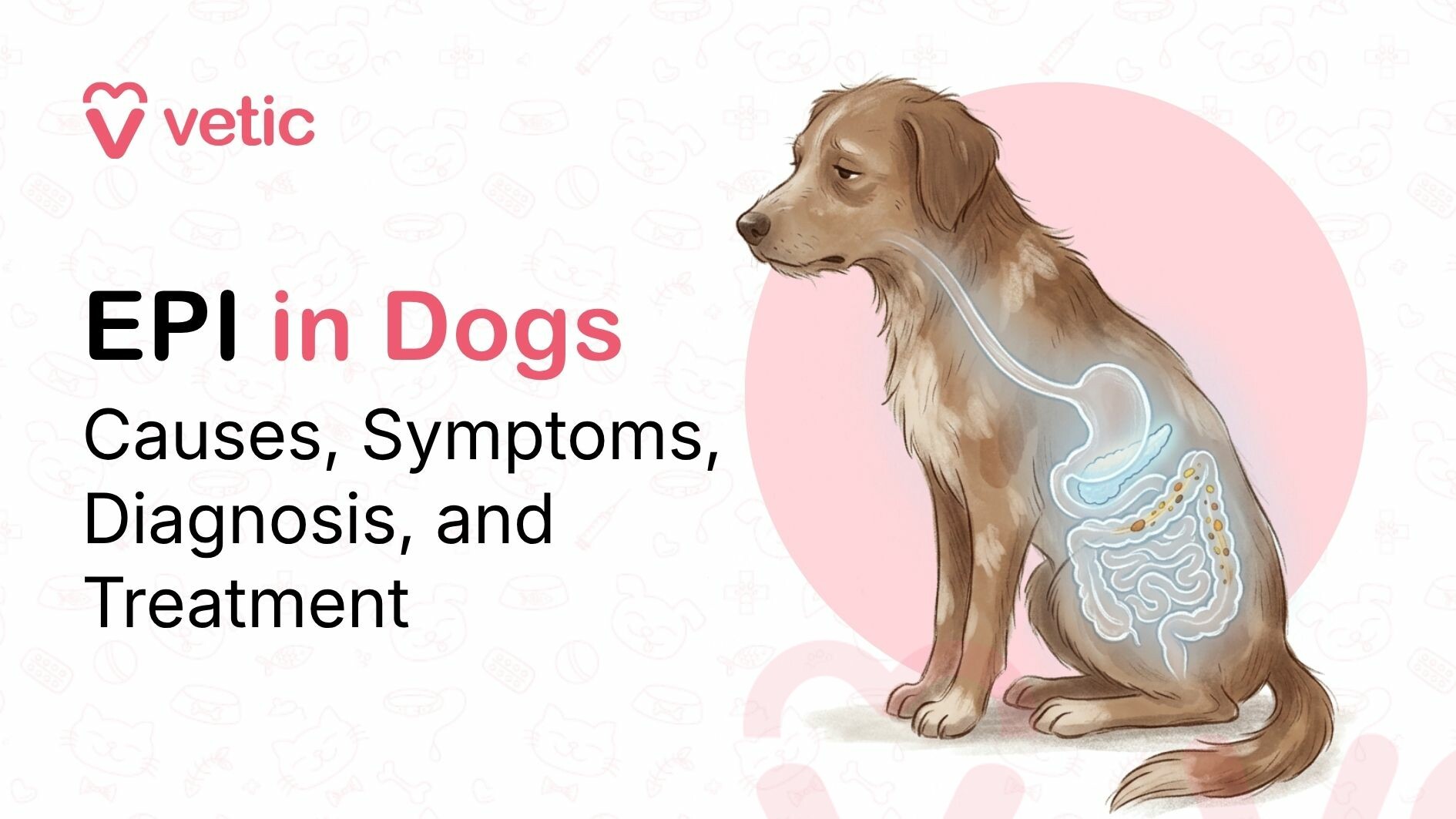
What Is EPI in Dogs?
Exocrine pancreatic insufficiency in dogs means the pancreas makes too little lipase, amylase, and protease. These enzymes are needed to break down fat, starch, and protein. Pancreatic insufficiency in dogs leads to maldigestion and malabsorption, causing weight loss despite a normal or increased appetite.
What Are the Symptoms of EPI in Dogs?
Signs build gradually over weeks rather than appearing suddenly.
Classic stool and appetite changes due to EPI
Stools become large in volume, pale yellow or grey, and very greasy. They often carry a strong, foul odour. Despite a good appetite, dogs lose weight and muscle condition rapidly. Flatulence, gut rumbling, and occasional diarrhoea are also common.
When dog EPI symptoms need urgent veterinary care
Dog EPI symptoms that warrant urgent attention include rapid muscle wasting, extreme lethargy, or neurological signs such as stumbling. These may point to severe B12 deficiency or a concurrent condition that needs assessment.
What Causes EPI in Dogs?
Canine EPI develops when the enzyme-producing acinar cells of the pancreas are destroyed or permanently damaged.
Pancreatic acinar atrophy and chronic pancreatitis
Pancreatic acinar atrophy (PAA) is the most common cause in dogs. It is thought to be immune-mediated: the body gradually destroys its own acinar cells. Chronic pancreatitis causes repeated bouts of inflammation that scar the pancreas over time. Both leave the gland unable to produce enough enzymes.
Genetic risk for EPI in dogs and breed patterns
German Shepherd Dogs are most commonly affected by PAA. Rough Collies and Chow Chows are also predisposed. Cavalier King Charles Spaniels and English Cocker Spaniels are more likely to develop EPI as a result of chronic pancreatitis.
How Do Vets Diagnose EPI in Dogs?
Diagnosis is straightforward when the right test is used.
TLI testing for canine exocrine pancreatic insufficiency
The serum trypsin-like immunoreactivity (TLI) test is the gold standard. A dog must fast for 12 hours before the blood sample is taken. A TLI result below 2.5 µg/L confirms EPI. Cobalamin (B12) and folate levels should be checked simultaneously, as both are frequently low in dogs with EPI.
Conditions that can look like EPI in dogs
Inflammatory bowel disease (IBD), food intolerance, intestinal parasites, and lymphangiectasia all produce similar signs. A normal TLI result rules out EPI and directs the investigation elsewhere.
How Is EPI in Dogs Treated?
EPI treatment in dogs focuses on two things: replacing the missing enzymes and correcting B12 deficiency.
Pancreatic enzyme replacement and vitamin B12 support
Dried porcine pancreatic enzyme powder (PERT) is sprinkled directly onto food before each meal. Powder works far better than tablets or capsules. Dose is adjusted based on stool quality, usually over the first few weeks. Cobalamin (vitamin B12) supplements are started when blood levels are low. This applies to most dogs with EPI.
Home care that can help dogs with EPI
When treating EPI in dogs at home, feed two or three small meals daily rather than one large one. A highly digestible, moderate-fat diet reduces stool volume. Monitor weight weekly in the early months and report any changes to your vet promptly.
What Should Dogs With EPI Eat?
A highly digestible, moderate-fat diet works best. Very high fat worsens steatorrhoea (fatty stools). Many dogs do well on commercial gastrointestinal diets. Avoid raw food unless your pet health expert specifically approves it, as enzyme activity is less predictable with raw feeding.
What Is the Outlook for Dogs With EPI?
The prognosis is good for most dogs with canine pancreatic insufficiency when treatment is started correctly. Most return to a healthy weight and live a normal lifespan. EPI is lifelong and requires permanent management, but it does not prevent a full life. Dogs without treatment decline progressively and will not survive without intervention.
What Mistakes Do Pet Parents Make With EPI?
Using enzyme tablets or capsules instead of powder is the most common mistake. Powder delivers far more reliable results. Stopping supplementation once the dog looks better leads to rapid relapse. Neglecting B12 treatment and feeding a high-fat diet are also frequently responsible for slow or incomplete progress.
What Does EPI in Dogs Cost?
Ongoing costs include monthly enzyme powder, B12 supplements, and expert canine vet check-ups to monitor weight and adjust dosing. The initial TLI test and first consultation add to early expenses. Costs vary between clinics and cities. A vet can discuss a realistic treatment budget at your first appointment.
When Should You Call the Vet?
Call your vet if EPI in dogs treatment is not producing the results you expect. Continued weight loss, worsening stools, or weakness after a few weeks on enzyme therapy all need reassessment. Concurrent SIBO (small intestinal bacterial overgrowth) or undertreated B12 deficiency is often the cause.
Conclusion: About Exocrine Pancreatic Insufficiency (EPI) in Dogs
Exocrine Pancreatic Insufficiency is a chronic digestive disorder caused by inadequate pancreatic enzyme production. Early diagnosis and lifelong enzyme replacement allow most dogs to return to a healthy, active life. With good long-term care, the prognosis for most dogs with EPI is excellent.
FAQs: About Exocrine Pancreatic Insufficiency (EPI) in Dogs
At What Age Does EPI Start in Dogs?
PAA-related EPI most commonly appears in young adults between one and five years of age. German Shepherd Dogs can develop it even earlier.
What Does EPI Poop Look Like in Dogs?
EPI stools are large in volume, pale yellow or grey, and very greasy. They carry an unusually strong, foul odour. Some dogs pass mushy or liquid stools rather than formed ones.
Can EPI in Dogs Be Cured?
No. EPI is a lifelong condition. Cases linked to pancreatitis occasionally stabilise if the underlying inflammation is controlled, but full recovery is rare.
Is EPI in Dogs Life-Threatening?
Without treatment, yes. Progressive malnutrition leads to muscle wasting, immune compromise, and eventually death.
What Is the Most Common Cause of Exocrine Pancreatic Insufficiency in Dogs?
Pancreatic acinar atrophy (PAA) is the most common cause, particularly in German Shepherd Dogs.
References
Cridge, H., Williams, D. A., & Barko, P. C. (2024). Exocrine pancreatic insufficiency in dogs and cats. Journal of the American Veterinary Medical Association, 262(2), 246–255. https://avmajournals.avma.org/view/journals/javma/262/2/javma.23.09.0505.xml
Purina. (2022). Exocrine Pancreatic Insufficiency in Dogs [Review of Exocrine Pancreatic Insufficiency in Dogs]. https://www.purinainstitute.com/centresquare/therapeutic-nutrition/exocrine-pancreatic-insufficiency
Steiner, J. M. (n.d.). Exocrine Pancreatic Insufficiency in Dogs and Cats – Digestive System. MSD Veterinary Manual. Retrieved July 15, 2026, from https://www.msdvetmanual.com/digestive-system/the-exocrine-pancreas/exocrine-pancreatic-insufficiency-in-dogs-and-cats