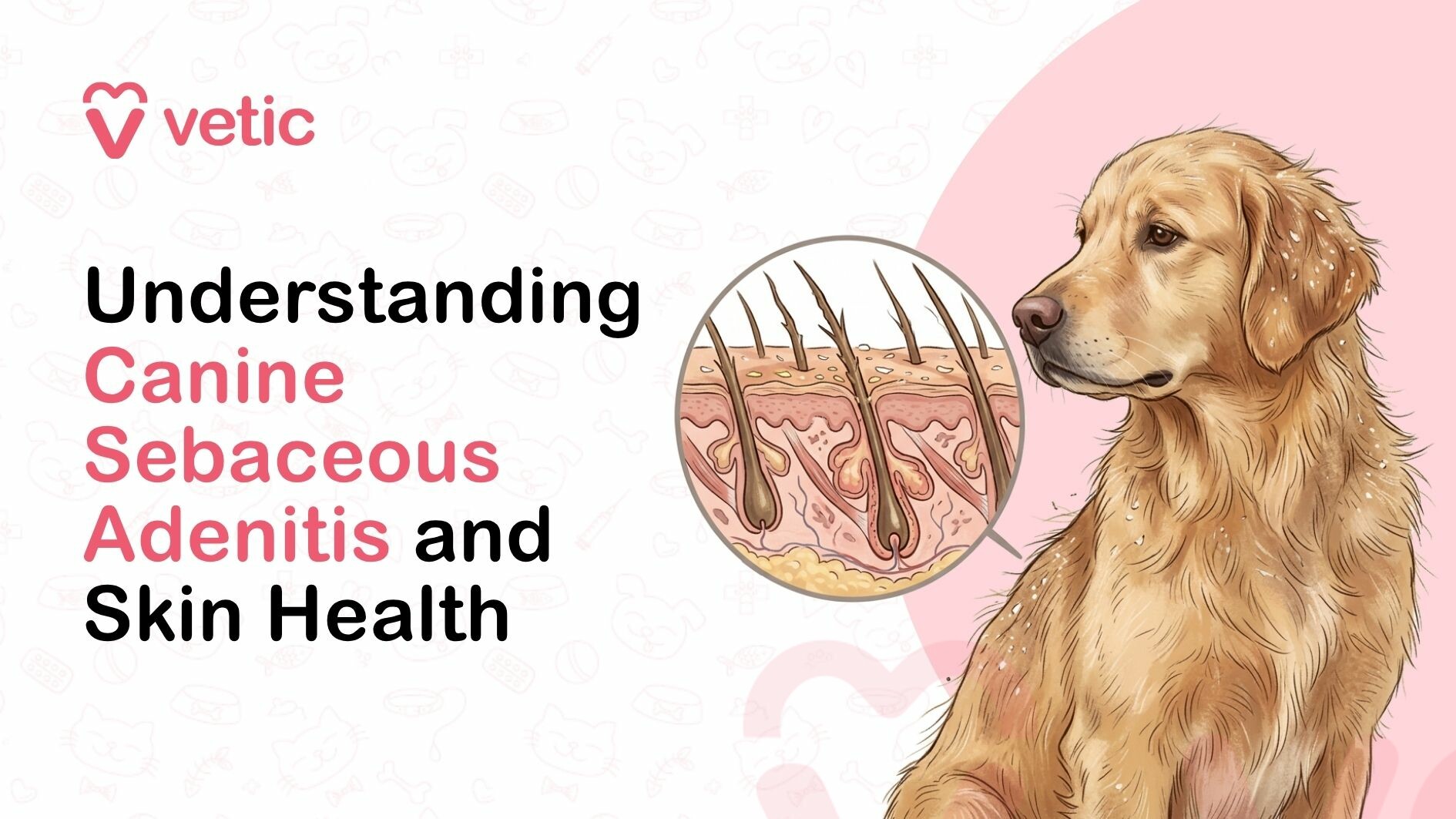
What Is Sebaceous Adenitis in Dogs?
Sebaceous adenitis in dogs is an inflammatory disease that destroys the glands that make the skin’s natural oils. Without those oils, the skin becomes dry and scaly, and the coat loses its shine.
Pet health experts classify it as an autoimmune condition, though the exact trigger isn’t fully understood.
Why is this sebaceous adenitis more than simple dry skin
This isn’t the occasional flaky patch after a bath. Sebaceous adenitis in dogs causes scale that clings tightly to the hair shaft, forming what vets call a follicular cast.
Dry skin in dogs from allergies or diet usually clears up with a moisturising shampoo. Sebaceous adenitis doesn’t, because the oil-producing glands themselves are being destroyed.
What Are the Symptoms of Sebaceous Adenitis in Dogs?
Symptoms usually develop gradually rather than appearing overnight.
- A dull, brittle coat that loses its shine
- Bald patches on a dog’s ears, head or along the back
- Thick, greyish-white scale stuck to the hair shafts
- A musty or rancid smell from secondary infection
- Occasional itching, though many dogs aren’t bothered by it
Bald spots on dogs with sebaceous adenitis often start small and symmetrical before spreading.
Long-haired vs short-haired coat patterns
Long-haired breeds like Standard Poodles often show hair loss patches in dogs first, since matting hides the scale underneath.
Short-haired breeds like Vizslas tend to develop tiny bald spots on their skin, giving it a fine, moth-eaten look.
Why Do Dogs Get Sebaceous Adenitis?
The exact cause of canine sebaceous adenitis isn’t fully known, but researchers point to autoimmune destruction of the glands.
Breed risk and typical age of onset of sebaceous adenitis
It’s hereditary in Standard Poodles and suspected to run in families of Akitas, Vizslas, Springer Spaniels and Havanese. Most dogs are diagnosed between one and five years old, well before old age.
How Is Sebaceous Adenitis Diagnosed?
A vet usually suspects sebaceous adenitis from the pattern of scaling and hair loss in dogs alone.
Why is a biopsy often needed?
A skin biopsy is the only way to confirm it. The sample shows destroyed or shrunken sebaceous glands under the microscope, ruling out look-alike conditions like mange or ringworm.
How Is Sebaceous Adenitis in Dogs Treated?
There’s no cure, but treatment for sebaceous adenitis in dogs can control it well.
Medicated bathing and topical care
Regular baths with an antiseborrheic shampoo loosen the scale and improve the results of dog dry skin treatment early on. Some vets also recommend propylene glycol or warm oil soaks left on for a few hours each week.
Oral medications and managing secondary infections
Oral cyclosporine is currently the most effective systemic treatment, according to the MSD Veterinary Manual. Retinoids and omega-3 supplements are sometimes used as alternatives.
Secondary bacterial infections, common with this condition, are treated with antibiotics alongside the main plan.
How Does Home Care Help Sebaceous Adenitis in Dogs?
Home care won’t cure sebaceous adenitis, but it makes a real difference between flare-ups.
Gentle, unscented moisturisers can ease dry skin spots on a dog’s areas that flare between vet visits. Brushing regularly also helps loosen scale before it builds up, especially for a dog getting bald patches.
What home remedies cannot replace
Home shampoos and oils help manage scale, but they can’t reverse gland damage that’s already happened. Skipping vet-prescribed medication in favour of home remedies alone often lets the condition progress further.
What Is the Prognosis for Sebaceous Adenitis in Dogs?
The outlook is generally good with consistent treatment, though sebaceous adenitis is a lifelong condition.
Does it go away, and will hair grow back?
Sebaceous adenitis doesn’t go away on its own, and stopping treatment usually brings symptoms back within weeks. Hair regrowth varies. Dogs treated early, before the glands are badly scarred, tend to see the most improvement.
When Should You Call Your Vet?
Call your pet doctor if you notice tiny bald spots on your dog’s skin, thick scales, or a bad smell. Left untreated, secondary infections can make your dog genuinely uncomfortable.
A vet can confirm the diagnosis with a simple biopsy and develop a treatment plan tailored to your dog’s breed.
Conclusion: About Canine Sebaceous Adenitis
Sebaceous adenitis in dogs isn’t curable, but it’s rarely something to panic about either. With the right shampoo routine, medication and regular vet check-ins, most dogs live full, comfortable lives.
If you’ve spotted early symptoms, don’t wait for them to spread. A vet can confirm what’s going on and start treatment before the glands sustain lasting damage.
FAQs: About Canine Sebaceous Adenitis
What Is the Best Shampoo for Dogs With Sebaceous Adenitis?
Vets typically recommend antiseborrheic shampoos containing ingredients such as sulfur, salicylic acid, or chlorhexidine.
What Supplements Are Good for Dogs With Sebaceous Adenitis?
Omega-3 fatty acid supplements are commonly recommended alongside medication to support skin barrier health.
How Do I Moisturise My Dog’s Skin?
Warm oil soaks or propylene glycol solutions, used as directed, help loosen scale and hydrate dry patches of dog skin.
Should I Be Worried if My Dog Has a Bald Spot?
A bald patch on your dog can be a healed scratch or ringworm. It isn’t automatically sebaceous adenitis.
Can Parasites Cause Hair Loss in Dogs?
Yes. Mites, fleas, and ringworm can all cause hair-loss spots in dogs that resemble sebaceous adenitis.
References
Brooks, W. (2017, August 8). Sebaceous Adenitis in Dogs. VIN.Com. https://veterinarypartner.vin.com/default.aspx?pid=19239&id=4952762
Tomich, L. (2024, August 30). Sebaceous Adenitis Affecting the Pinna in Dogs and Cats. MSD Veterinary Manual. https://doi.org/10.1111/vde.13293
White, S. (2025). Sebaceous Adenitis [Review of Sebaceous Adenitis]. Vin.Com. https://www.vin.com/apputil/content/defaultadv1.aspx?id=3843739&pid=8708