What Are the Signs When My Cat’s Paw Is Infected?
A cat with an infected paw usually shows one or more of these signs. Two or more together are a clear reason to book an appointment with an expert feline vet.
Redness
The skin around the toes or between the paw pads looks inflamed and feels warm.
Swelling
One or more toes, the paw pad, or the webbing between toes swells noticeably.
Discharge
Pus, cloudy fluid, or dried crust appears near a wound or between the toes. This is a reliable sign of active infection.
Limping
A cat with an infected paw favours that leg and avoids putting full weight on it.
Is Sore Paw a Cat Foot Infection or Irritation?
Not every sore paw is a cat foot infection. Grass seeds, contact irritation from cleaning products, or a minor graze can all cause redness without an infection.
The key difference: a true infection produces pus or discharge, spreading redness, and pain that does not improve within 24 to 48 hours. Irritation from a known cause usually settles once that cause is removed.
What Types of Paw Infections Do Cats Get?
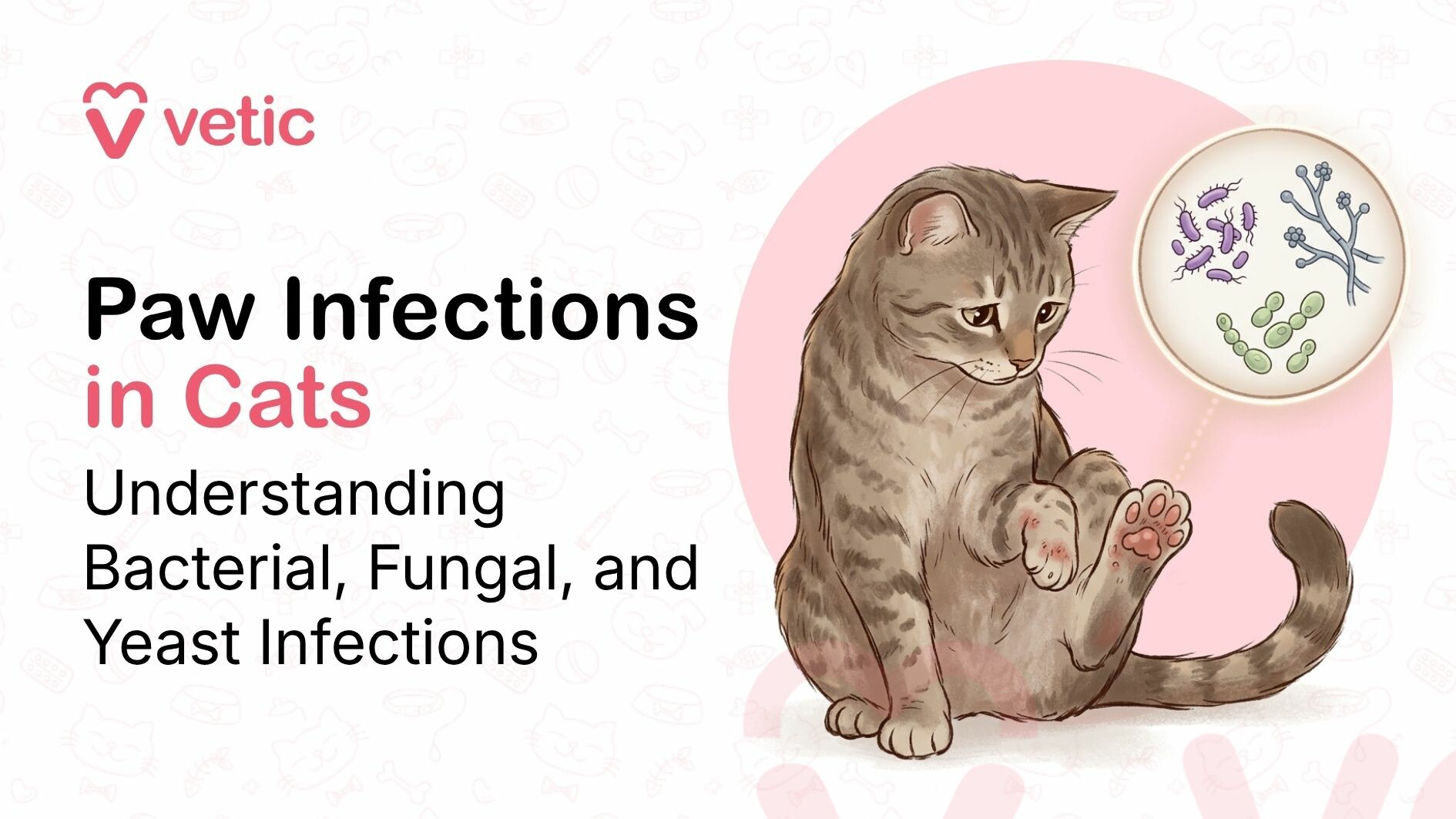
There are three main types of paw infections in cats, each with a different cause and treatment.
Bacterial Paw Infection
This is the most common type. Bacteria enter through a wound, bite, or cracked claw. The result is a hot, swollen, infected paw pad in a cat, often with pus discharge. Staphylococcus and Pasteurella are the bacteria most often involved.
Yeast Infection of Cat Paws
A cat paw yeast infection is almost always caused by Malassezia. Allergies or persistent moisture allow it to overgrow. Signs include brown discolouration between the toes, a musty smell, and constant licking.
Fungal Paw Infection in Cats
Ringworm (Microsporum canis) is the most common fungal cause. A fungal infection in cats on the paw produces scaling and hair loss near the claws and nail folds. Cat paw pad callus formation and thickening are characteristic signs that the infection has spread to the pads.
Comparison Table: Bacterial vs. Yeast vs. Fungal Paw Infections
| Feature | Bacterial | Yeast | Fungal (Ringworm) |
| Main cause | Staphylococcus, Pasteurella via wound | Malassezia overgrowth | Microsporum canis |
| Key signs | Pus, swelling, heat | Brown staining, musty odour | Scaling, hair loss, callus |
| Spreads to humans | No | No | Yes |
| Typical treatment | Antibiotics 7-14 days | Antifungal shampoo or oral itraconazole | Itraconazole 6-12 weeks |
Why Do Cats Get Paw Infections?
Cuts
Any break in the skin opens a route for bacteria or fungi. Outdoor cats face a higher risk, but indoor cats are not immune to claw injuries and household hazards.
Moisture
Chronic paw licking keeps the skin persistently damp. That moisture supports yeast and bacterial growth. Persistent licking usually signals underlying allergies.
Underlying Allergies
Food or environmental allergens trigger paw licking and chewing. This damages the skin barrier, and secondary infections follow. Without treating the underlying allergy, the infection is likely to return.
How Do Vets Treat Cat Paw Infections?
Treatment for paw infections in cats depends on the type. Cat paw infection treatment for bacterial cases means oral antibiotics. Amoxicillin-clavulanate is commonly prescribed. Yeast infections respond to antifungal shampoos or oral itraconazole. Fungal ringworm requires systemic antifungals for 6 to 12 weeks.
A pet health expert will also investigate for underlying causes. This avoids treating each infection episode without addressing the root problem.
Diagnosis of Cat Paw Infections
Cytology is the main diagnostic tool. A tape strip from the paw is stained and examined under a microscope for bacteria, yeast, or fungal elements.
For persistent or resistant infections, a culture identifies the exact organism. A Wood’s lamp screens for some ringworm strains. A skin biopsy is occasionally needed for deep or unusual cases.
Medications and At-Home Wound Care for Infected Cat Paws
If your cat’s paw is infected, your vet will typically prescribe one or more of these:
- Oral antibiotics or systemic antifungals
- Topical chlorhexidine solution for cleaning
- Miconazole cream for yeast or fungal infections
- An E-collar to prevent licking
Avoid hydrogen peroxide, Dettol, and neat iodine. All three cause damage to tissue and delay healing.
How Can You Care for an Infected Cat Paw at Home?
Clean the paw gently with diluted chlorhexidine or saline once or twice daily, as your vet directs. Keep the paw dry between cleans. Use an E-collar consistently. Licking is the fastest way to set back recovery.
Check the paw daily. If swelling increases or discharge changes colour, call your vet.
When Is a Cat Paw Infection an Emergency?
Get to a vet urgently if your cat:
- Has swelling spreading up the leg
- Cannot put any weight on the affected paw
- Has a fever, is lethargic, or has stopped eating, alongside the paw problem
- Has a bite wound or a wound producing large amounts of pus
How Long Does a Cat Paw Infection Take to Heal?
Mild bacterial infections typically clear in 7 to 14 days on antibiotics. Moderate infections or abscesses can take 2 to 4 weeks. Yeast infections often take 4 to 8 weeks to resolve, especially when underlying allergies are also being treated. Fungal ringworm usually requires 6 to 12 weeks.
Recurrence is common whenever the underlying cause is not addressed alongside the infection.
How Can You Prevent Repeated Cat Paw Infections?
Check your cat’s paws weekly, paying attention to the skin between the toes. Keep paws dry after outdoor walks. Trim claws regularly to reduce injury risk.
If infections keep returning, a vet can investigate for underlying allergies.
Can Cat Paw Fungus Spread to Humans?
Ringworm is zoonotic. It can pass from an infected cat to humans through direct contact. Children, elderly people, and immunocompromised individuals are at the highest risk. Infected people develop circular, itchy, red lesions on the skin.
Wash your hands after handling your cat during treatment, and wash bedding frequently. Paw infections in cats caused by bacteria or yeast do not typically spread to people.
Conclusion: About Paw Infections in Cats
Paw infections in cats can result from bacteria, yeast, fungi, wounds, or underlying medical conditions. Early veterinary care improves healing, reduces pain, and prevents deeper infections involving joints or bone.
FAQs: About Paw Infections in Cats
What Are the Risks of Leaving a Cat’s Fungal Infection Untreated?
Untreated ringworm spreads across the cat’s body, to other pets in the household, and potentially to humans. Secondary bacterial infections can also develop in the lesions.
What Kills Fungal Infections in Cats?
Vets prescribe itraconazole or fluconazole for systemic cases. Topical chlorhexidine-miconazole shampoo is used alongside.
Can a Cat Paw Infection Heal on Its Own?
Minor irritation can settle on its own. But true bacterial, yeast, or fungal infections will not.
Is a Cat Paw Infection Contagious to Other Pets?
Ringworm is highly contagious between cats and between cats and dogs. Bacterial and yeast infections do not typically spread between pets in the same household.
Why Does My Cat Keep Getting Paw Infections?
Recurrent infections usually point to an underlying condition, most often allergies. A vet can run allergy testing or a dietary elimination trial to find the root cause.
References
Brooks, W. (2017, August 8). Hyperesthesia Syndrome in Cats. VIN. https://veterinarypartner.vin.com/default.aspx?pid=19239&id=4952886
Parker, H. (2009, July 16). Cats and Compulsive Scratching, Licking, and Chewing. WebMD. https://www.webmd.com/pets/cats/features/cats-and-compulsive-scratching-licking-and-chewing
WebMD. (2021, February 19). Cat Paw Care Tips: Nails, Pads, and More. https://www.webmd.com/pets/cats/cat-paws