What Is Proptosis in Dogs?
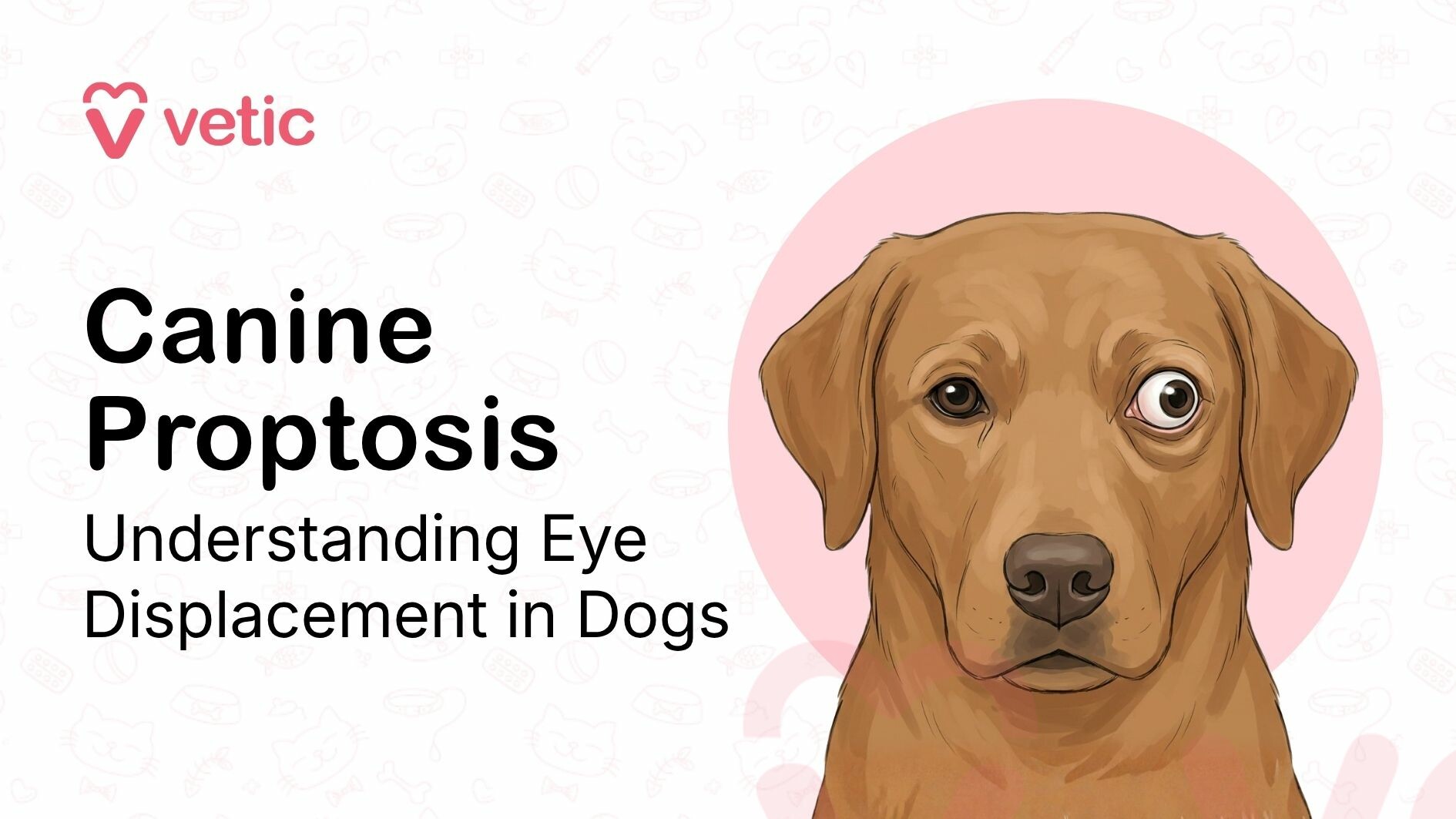
Proptosis in dogs means the eyeball has been pushed forward out of the eye socket. The eyelids then get trapped behind it, unable to close normally.
This is different from a bulging eye that’s still sitting inside its socket. In proptosis, the eye itself has physically moved forward.
Why Is Dog Eye Proptosis an Emergency?
Dog eye proptosis threatens both the eye and the vision inside it almost immediately.
Blood flow and nerve function to the eye can be cut off within minutes. The longer the eye stays out of place, the lower the chances of saving vision.
What Are the Signs of Canine Proptosis?
The eye appears pushed forward, with the eyelids visibly caught behind it. Dogs often paw at the face, squint, or cry out in pain.
What Causes Proptosis in Dogs?
Almost all cases trace back to some form of trauma.
Blunt trauma
A direct hit to the head or face can force the eye out of its socket.
Falls
Falls from a height, even a short one, can generate enough force in small or flat-faced dogs.
Impact Injuries
Car accidents and dog fights are two of the most common triggers vets see.
Breed-related risk in flat-faced dogs
Pugs, Shih Tzus and other brachycephalic breeds have shallow eye sockets, so even minor trauma can proptose the eye. Breed and orbital depth are major factors in both risk and outcome.
What Should You Do Before Reaching a Vet?
Stay calm and get to the nearest pet emergency care as safely as possible.
Safe transport priorities and what not to do
If you have sterile saline or clean water, gently keep the eye moist on the way. Don’t try to push the eye back into place yourself, and don’t let your dog rub or paw at it.
How Do Vets Treat Dog Eye Proptosis?
Treating dog eye proptosis is always time-sensitive.
Eye replacement vs eye removal
If the eye and surrounding tissue are healthy enough, vets attempt to reposition it surgically. When damage is too severe, removing the eye is sometimes the safer, more comfortable option.
How vets judge whether vision can be saved
Pet health experts check pupil response, bleeding inside the eye, and the number of torn eye muscles. More damage generally means a lower chance of saved vision.
What Is Recovery Like After Proptosis?
Dog eye proptosis recovery varies a lot depending on how the eye was treated.
Healing timeline and complications to watch for
Most dogs heal over several weeks, with the eyelids often staying partly stitched shut at first. Watch for discharge, swelling, or signs of pain during recovery.
What Is the Prognosis and Surgery Cost for Proptosis in Dogs?
The prognosis for proptosis in dogs depends heavily on how quickly treatment is started.
Factors that affect outcomes and what parents can expect financially
Breed, pupil response, and the number of damaged eye muscles all affect the odds of saving vision. Surgery costs vary widely by location and severity, so ask your vet for an estimate upfront.
How Is Proptosis Different From Other Bulging Eye Conditions?
In proptosis, the eyelids are trapped behind the displaced eye. In exophthalmos, the eye protrudes, but the eyelids still close normally. This is often caused by a mass or swelling behind the eye.
When Should You Call an Emergency Vet?
Call immediately if you see a bulging, displaced, or protruding eye after any trauma. Don’t wait to see if it improves on its own.
Conclusion: About Canine Proptosis
Canine proptosis is frightening to witness, but prompt action can genuinely change outcomes. Proptosis in dogs treated within the first hour has a real chance of saving both the eye and vision.
If your dog’s eye looks displaced or bulging after any injury, don’t wait. A vet can assess the damage and start treatment immediately.
FAQs: About Canine Proptosis
Can Proptosis Be Cured in Dogs?
With fast treatment, many dogs keep their eyes and some vision. In severe cases, the eye may need to be removed to keep the dog comfortable.
How to Treat Eye Proptosis?
Treatment always starts with an emergency vet visit, not home care. Depending on the extent of the damage, this may mean either surgical repositioning or removal of the eye.
How Much Does Proptosis Dog Eye Surgery Cost?
Costs vary widely depending on severity, location, and whether the eye is saved or removed. Your vet can give an accurate estimate after examining your dog.
How Long Does It Take a Dog to Recover From Eye Surgery?
Most dogs recover over several weeks, though full healing can take longer depending on the surgery. Follow-up visits track how well the eye is healing.
Is Proptosis in Dogs Always an Emergency?
Yes, always. Even if the eye appears to be moving back into place on its own, professional treatment is essential.
References
Gilger, B. C., Hamilton, H. L., Wilkie, D. A., Woerdt van der, A., McLaughlin, S. A., & Whitley, R. D. (1995). Traumatic ocular proptoses in dogs and cats: 84 Cases (1980-1993). Journal of the American Veterinary Medical Association, 206(8), 1186–1190. https://avmajournals.avma.org/view/journals/javma/206/8/javma.1995.206.08.1186.pdf
Ofri, R. (2025). Is it Exophthalmos, Buphthalmos or Proptosis? How Do I Know? How Do I Treat? VIN. https://www.vin.com/apputil/content/defaultadv1.aspx?pId=12886&catId=57113&id=7054840
Thomasy, S. M. (2024, July). Proptosis in Small Animals. MSD Veterinary Manual. https://www.msdvetmanual.com/emergency-medicine-and-critical-care/ophthalmic-emergencies-in-small-animals/proptosis-in-small-animals