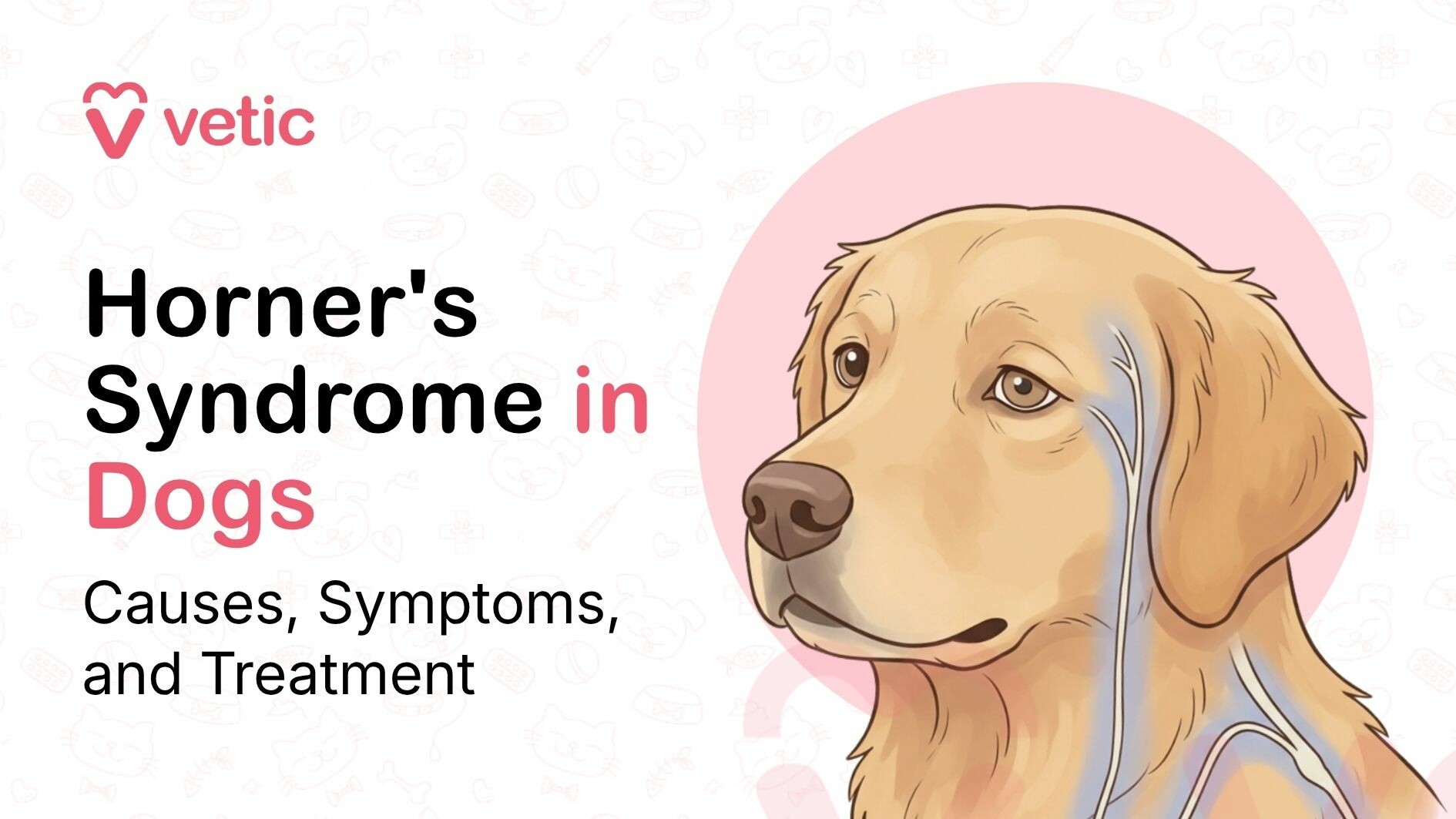
What Is Horner’s Syndrome in Dogs?
This condition happens when a nerve pathway controlling the eye and eyelid gets disrupted. That pathway is part of the sympathetic nervous system, which normally keeps the eyelid up and the pupil responsive. It runs from the brainstem, through the chest, and back to the eye. Damage anywhere along that path can cause it.
When it’s interrupted, the eye on the affected side droops, shrinks and looks different from the other one.
What Does Bilateral Horner’s Syndrome Mean?
Bilateral Horner’s syndrome in a dog means both eyes are affected, not just one. It’s rare, and it usually points to a more widespread problem rather than a simple local injury. If you notice both eyes changing at once, treat it as more urgent than a single-eye case.
What Are the First Signs of Horner’s Syndrome in Dogs?
The signs of Horner’s disease in dogs usually appear suddenly, often overnight, and only affect one eye.
The four classic eye changes
Vets look for four signs together: a drooping eyelid, a smaller pupil, a sunken eye, and a raised third eyelid. All four don’t always appear at once, but at least two or three usually do.
Is Horner’s syndrome in dogs painful?
No, Horner’s syndrome for dogs itself isn’t painful. Any discomfort usually comes from whatever caused it, such as an ear infection, rather than the eye changes themselves.
What Causes Horner’s Syndrome in Dogs?
Canine Horner’s syndrome can come from several different sources along the nerve pathway.
Ear disease
Middle or inner ear infections are one of the most common identifiable causes. Horner’s syndrome can develop when the infection affects nearby sympathetic nerves. This is one reason vets always check the ears closely when they see these eye changes.
Neck trauma
An injury to the neck or chest can directly damage the nerve pathway. This is more common after accidents, falls, or rough play. Even a seemingly minor injury in dogs can sometimes affect this delicate nerve pathway.
Nerve injury
Tumours or inflammation pressing on the nerve pathway, anywhere from the brainstem to the eye, can also trigger it. These cases often come with other neurological symptoms, not just eye changes.
Idiopathic cases with no clear trigger
In roughly half of all cases, vets never find a clear cause. This is called idiopathic Horner’s syndrome, and it’s especially common in Golden Retrievers.
How Is Horner’s Syndrome Diagnosed?
Diagnosis starts with a full physical and neurological exam, since the signs help narrow down where the problem sits.
Physical exam and eye tests
The best pet doctor checks both eyes for the four classic signs and may use special eye drops to help locate the problem.
Differential diagnoses to rule out
Vets also rule out other causes of eye changes, like general eye pain or allergic reactions. This step matters because the right diagnosis changes the whole treatment plan.
How Is Horner’s Syndrome Treated?
There’s no direct treatment for Horner’s syndrome itself, since the eye changes aren’t dangerous on their own. The focus is always on figuring out what’s driving it.
Treating the underlying cause
Treatment for Horner’s syndrome really means treating the underlying cause, whether that’s infection, injury, or something else.
What not to do at home
Don’t apply eye drops or ointments without your vet’s guidance, since some can worsen unrelated eye problems. Skip home remedies and go straight to a proper exam instead.
What Is the Recovery Timeline?
Recovery depends entirely on the underlying cause, and there’s no single timeline that fits every dog.
Idiopathic cases often resolve within two to six months as the nerve heals on its own. Cases caused by injury or infection improve once the underlying problem is treated.
When Should You Call Your Vet?
Call your vet if you notice any sudden changes in your dog’s eyes, even if nothing else seems wrong. An expert canine vet checkup is always worth it, even when your dog seems otherwise fine.
Same-day signs that need urgent care
Seek same-day care if the eye changes are accompanied by stumbling, head tilt, facial drooping, or sudden changes in behaviour. These can point to something more serious than Horner’s syndrome alone.
Conclusion: About Horner’s Syndrome in Dogs
Horner’s syndrome in dogs looks dramatic, but it’s rarely an emergency on its own. In most cases, especially idiopathic ones, they resolve within weeks to months without lasting effects.
Still, any sudden change in the appearance of the eyes warrants a visit to the vet. A vet can examine your dog, rule out serious causes, and set expectations for recovery.
FAQs: About Horner’s Syndrome in Dogs
How Serious Is Horner’s Syndrome in Dogs?
On its own, it’s not usually serious or painful. It’s worth a vet visit, mainly to rule out the underlying causes that can be serious.
What Can Be Mistaken for Horner’s Syndrome in Dogs?
Facial nerve paralysis and certain eye injuries can look similar at first glance. A vet exam usually tells them apart quickly.
What Is the Most Common Cause of Horner’s Syndrome in Dogs?
Ear disease is the most common identifiable cause, though about half of all cases remain idiopathic.
What Breeds of Dogs Are Prone to Horner’s Syndrome?
Golden Retrievers are the breed most strongly linked to the idiopathic form. Any breed can develop it from an underlying cause, though.
Is Horner’s Syndrome Permanent?
Usually not, especially in idiopathic cases, which tend to resolve within months. Cases tied to permanent nerve damage or ongoing disease may not fully reverse.
References
Bjerk s, E. (2026). Ocular Disease of the Aging Dog [Review of Ocular Disease of the Aging Dog]. Vin.Com. https://www.vin.com/apputil/content/defaultadv1.aspx?id=3852270&pid=11181&print=1
Brooks, W. (2025). Horner’s Syndrome in Cats and Dogs. VIN.Com. https://veterinarypartner.vin.com/default.aspx?pid=19239&id=4951369
MSD Veterinary Manual. (2026). Horner syndrome, llama. https://www.msdvetmanual.com/multimedia/image/horner-syndrome-llama