What Are Anal Sac Problems in Cats?
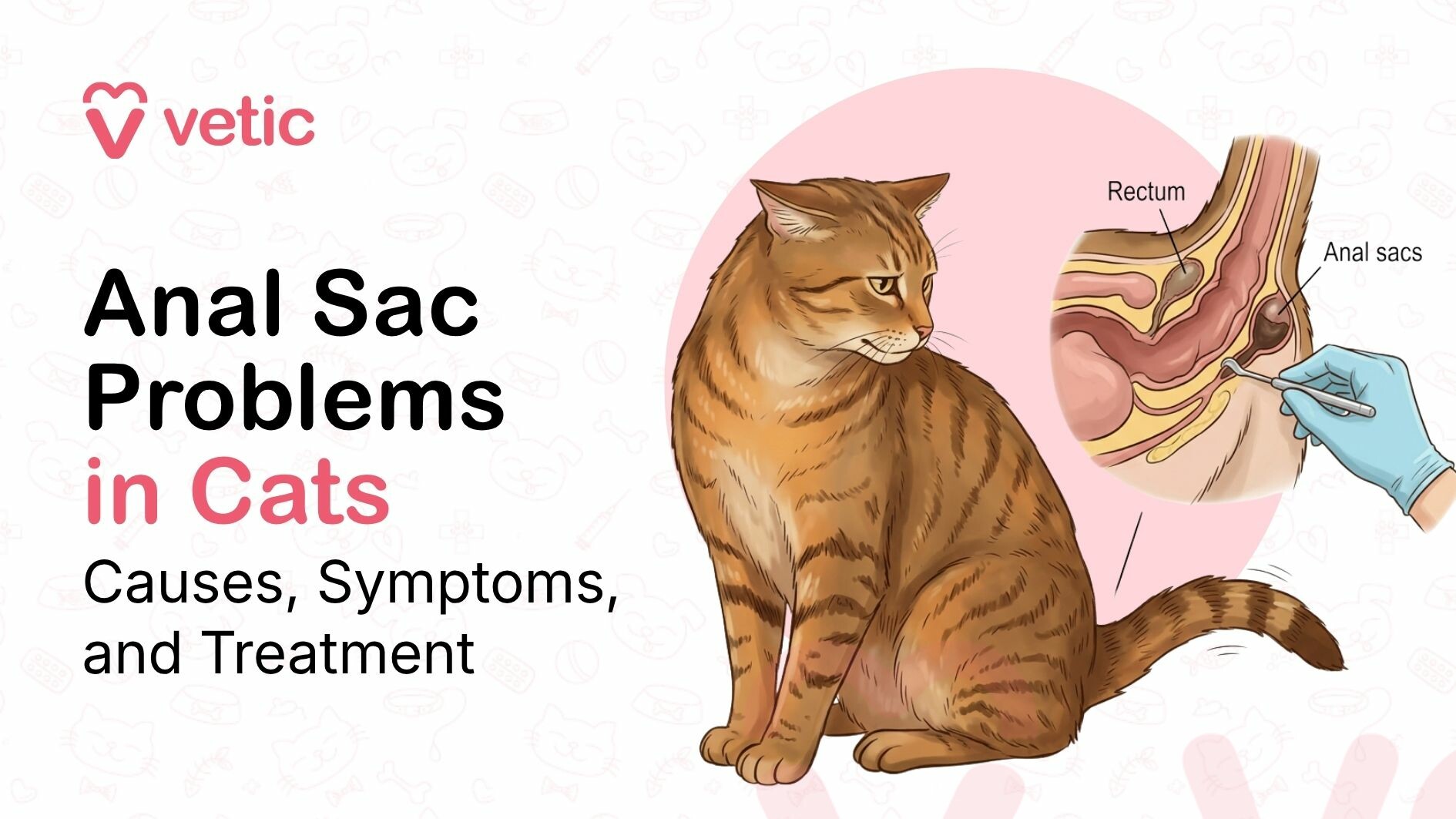
Anal sacs are two small glands located on either side of your cat’s anus. They release a pungent secretion during defecation. Anal sac problems in cats happen when this system breaks down.
Impaction
The secretion thickens, and the sac fails to empty normally. The result is a swollen, uncomfortable sac that your cat can feel with every step. This is the most common presentation.
Infection
An anal gland infection in cats develops when bacteria enter an impacted sac. A feline anal gland infection ranges from mild redness and discharge to severe swelling. The area becomes hot and painful, producing a foul-smelling discharge.
Abscess
An untreated infection can develop into a painful abscess. This is a pocket of pus inside or beside the anal sac. It presents as a warm, swollen lump near the anus and requires prompt treatment.
Rupture
An abscess that is not treated will eventually rupture, creating an open wound beside the anus. This looks alarming and needs same-day veterinary care.
What Symptoms Need Prompt Attention?
Cats hide pain well, which is why knowing what to look for matters.
Scooting
Dragging the bottom along the floor is the most recognisable sign. It indicates discomfort or itching around the anal area.
Licking
Excessive licking or chewing at the tail base or anus is a clear sign of discomfort. Some cats also bite the area or pull at their fur around the tail.
Foul Odour
A sudden, fishy, or unusually foul odour from your cat’s rear end often signals impaction or infection. It is easy to notice and should not be ignored.
Signs of a Ruptured Anal Gland
A visible wound or bloody discharge beside the anus points to rupture. So does your cat cry out when touched near the tail. This is an emergency and needs an expert feline vet checkup.
What Causes Anal Sac Disease in Cats?
Anal sac problems in cats most often stem from soft or infrequent stools. Without firm stools to create pressure during defecation, the sacs do not empty. Feline anal sac disease is closely linked to underlying allergies, diet, and obesity.
Thick Secretions and Poor Emptying
Some cats naturally produce thicker secretions that block the duct. Overweight cats are at higher risk because fat pads can impede normal drainage. Food allergies cause chronic soft stools and are a common underlying trigger for recurrent cases.
How Are Anal Sac Infections Diagnosed and Treated?
A vet will examine the area and express the sacs to assess the secretion. An anal sac infection in cats is confirmed by the colour, smell, and bacterial content of the discharge. Anal sac problems in cats at this stage need more than expression alone.
Expression
The vet gently empties each anal sac by applying external pressure. This is usually done under sedation in cats, who rarely tolerate the procedure when awake. The secretion ranges from pale yellow when normal to brown, thick, or purulent when infected.
Pain Relief
Anti-inflammatory drugs or pain relief are given before or after expression. This makes a significant difference to how comfortable the cat is during recovery.
Antibiotics
For any anal gland infection, expert feline vets confirm on examination that antibiotics are the main treatment. A course typically lasts 7 to 14 days. Oral antibiotics are the most common. Topical infusion directly into the sac may be used for deeper infections.
When Sedation, Flushing, or Surgery Is Needed
Severe infection or abscess often requires flushing the sac under sedation with an antiseptic solution. If infections keep recurring, sacculectomy (surgical removal of the anal sac) may be recommended. This is a definitive solution but carries a small risk of faecal incontinence.
What Should Cat Parents Do at Home?
Keep the area clean and dry. Gently apply a warm compress to the swollen area to ease discomfort. An E-collar prevents licking, which slows healing. Do not attempt to express the glands yourself.
Safe Comfort Measures vs Why Home Expression Backfires
Warm compresses are safe. Wiping the area clean with a damp cloth is safe. But trying to express the anal sacs at home is not.
The duct in cats is narrow, and the procedure is painful. Home attempts cause bruising, injury, and can push infection deeper into the tissue. Book a vet appointment instead.
How Can You Support Recovery and Prevention?
Addressing the underlying cause is the most important step. If allergies are driving recurrent infections, managing those allergies reduces flare-up frequency. A higher-fibre diet helps produce firmer stools that express the glands naturally during defecation.
Maintaining a healthy body weight reduces pressure on the anal sac ducts. A vet can help identify whether diet, allergies, or anatomy is contributing to your cat’s problems.
Healing Timeline and Preventing Flare-Ups
The anal sac disease cats experience most often resolves within 7 to 14 days for simple impaction. Infection takes 2 to 4 weeks to clear. An abscess or rupture may take 4 to 6 weeks to heal fully. Recurrence is common without addressing the root cause.
What Mistakes Delay Relief?
The most common mistake with anal sac problems in cats is waiting until an abscess forms. Stopping antibiotics early, not managing underlying allergies, and attempting home expression all delay recovery and increase the risk of complications.
When Should You Call a Vet Now?
Call your vet immediately if your cat has a visible wound or discharge beside the anus. Anal sac problems in cats that have reached the abscess or rupture stage are not a wait-and-see situation. Severe pain when defecating or sitting, or rapid swelling near the anus, also needs same-day attention.
Conclusion: About Anal Sac Problems in Cats
Although anal sac disease is less common in cats than in dogs, it can cause significant pain when it occurs. With appropriate treatment, pain management, and follow-up care, most cats recover well and return to normal comfort.
FAQs: About Anal Sac Problems in Cats
Is It Painful for Cats to Have Their Glands Expressed?
Yes, particularly if the sacs are impacted or infected. Most cats in discomfort need sedation for safe and effective expression.
How Do Vets Treat Blocked Cat Glands?
Vets manually express the sac contents and assess the secretion. If infection is present, antibiotics and pain relief follow.
How Do I Know if My Cat Needs Glands Expressed?
Scooting, obsessive licking at the base of the tail, and a foul odour are the main signs. Visible swelling or discharge beside the anus confirms the need for veterinary attention.
Can a Cat’s Anal Sac Infection Heal Without Antibiotics?
Simple impaction may resolve with expression alone. But a true infection will not clear without antibiotics.
How Much Does Treatment for a Cat’s Anal Gland Abscess Usually Cost?
Anal gland disease cat treatment costs vary considerably depending on severity.
References
Gallagher, A. (n.d.). Anal Sac Disease in Dogs and Cats . MSD Veterinary Manual. Retrieved July 15, 2026, from https://www.msdvetmanual.com/digestive-system/diseases-of-the-rectum-and-anus/anal-sac-disease-in-dogs-and-cats
Radhakrishnan, S. (2025). Anal Glands and Anal Gland Abscess in Dogs and Cats [Review of Anal Glands and Anal Gland Abscess in Dogs and Cats]. VIN. https://veterinarypartner.vin.com/default.aspx?pid=19239&catId=254091&id=9759085
Rubin, S. I. (n.d.). Disorders of the Rectum and Anus in Cats [Review of Disorders of the Rectum and Anus in Cats]. MSD Veterinary Manual. Retrieved July 15, 2026, from https://www.msdvetmanual.com/cat-owners/digestive-disorders-of-cats/disorders-of-the-rectum-and-anus-in-cats