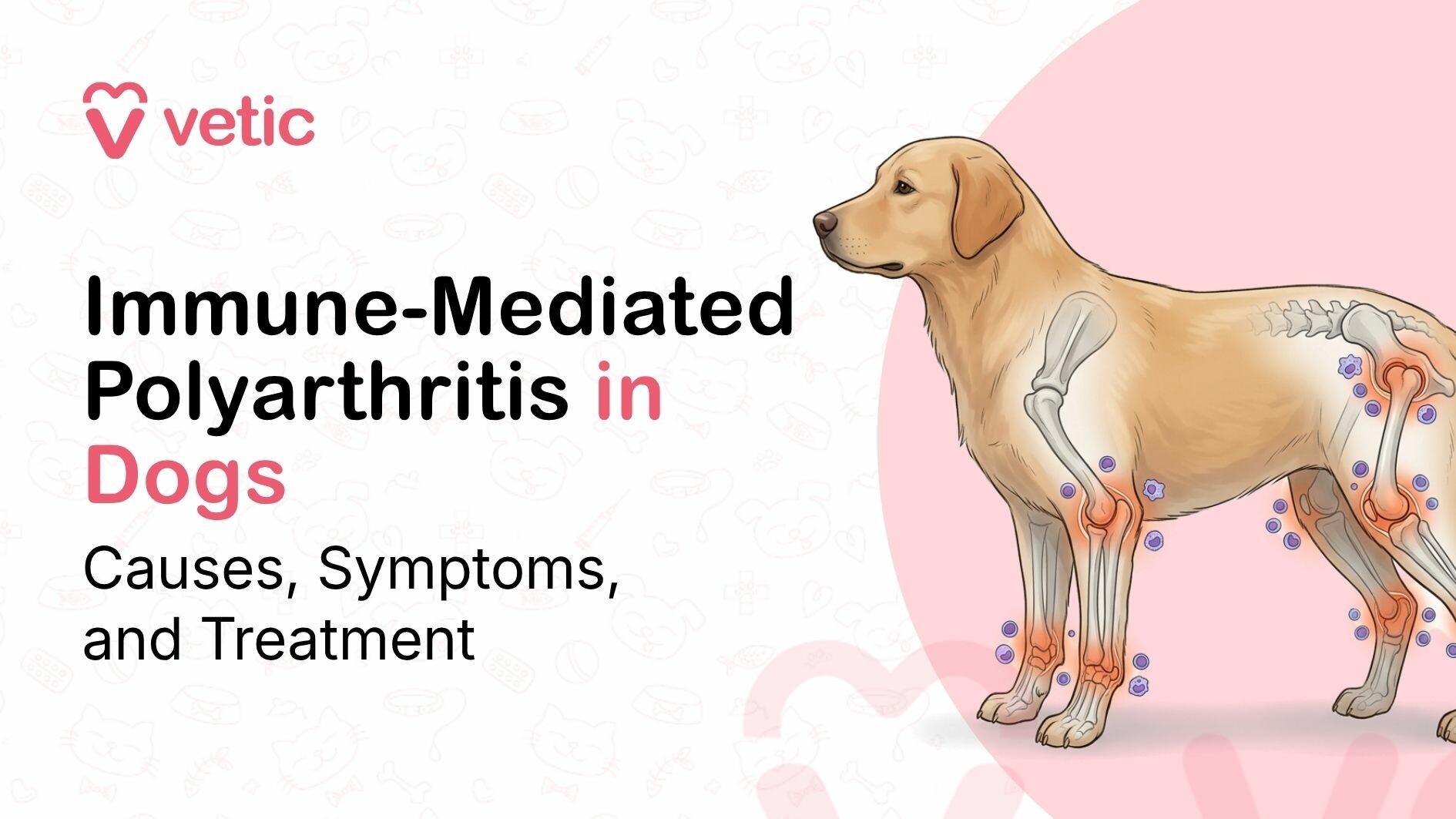
What is Immune-Mediated Polyarthritis in Dogs?
Immune-mediated polyarthritis in dogs is a condition where the immune system attacks the synovium. That’s the thin lining inside a joint. The attack triggers inflammation, fluid buildup and pain in more than one joint at once.
Vets sometimes just call it canine IMPA. It’s not an infection, and it’s not simple arthritis in dogs, though it can look similar.
Primary vs Secondary Disease
IMPA falls into two broad camps. Primary (or idiopathic) disease has no identifiable trigger, and it’s the most common form vets diagnose.
Secondary disease develops in response to something else in the body. Common triggers include an infection elsewhere, chronic gut inflammation, or occasionally a drug reaction. Treating the underlying cause often resolves the joint symptoms too.
What Symptoms Should Prompt a Vet Visit?
Symptoms of canine immune-mediated polyarthritis can be easy to miss at first, because they come and go.
Joint Pain
Affected dogs often flinch or pull away when their paws or legs are handled. Multiple joints, especially the wrists and hocks, are often tender.
Stiffness
Stiffness is usually worse first thing in the morning or after resting. Some dogs seem reluctant to jump onto furniture or climb stairs they’d normally manage easily.
Shifting-Leg Lameness
Your dog limps on the front left leg one day, then favours a back leg the next. That shifting pattern, rather than one consistent limp, is a hallmark sign.
Emergency Red Flags
Some signs mean you shouldn’t wait for a routine appointment. Visit the nearest dog emergency care if you notice:
- Fever along with joint swelling
- Sudden reluctance to stand or walk at all
- Multiple joints swell within a day or two
- Lethargy combined with loss of appetite
These combinations can point to a more severe flare and warrant same-day care.]
What Causes Canine Immune Mediated Polyarthritis?
The cause depends on which type of canine immune-mediated polyarthritis a dog has.
Idiopathic Causes
Most cases are idiopathic, meaning no clear trigger is ever found. Vets suspect a mix of genetic susceptibility and immune dysregulation, though the exact mechanism isn’t fully understood.
Infection Triggers
Secondary IMPA can follow infections elsewhere in the body, such as urinary or respiratory infections. The immune response meant to fight the infection ends up depositing immune complexes in the joints instead.
Immune Triggers
Chronic gut inflammation, certain vaccines, and some medications have also been linked to secondary joint inflammation in dogs. Autoimmune polyarthritis in dogs can occasionally overlap with other immune-mediated diseases, like lupus-type conditions, though this is less common.
How Is Canine IMPA Diagnosed?
Diagnosing canine IMPA requires more than a physical exam because its symptoms overlap with those of several other joint conditions.
Joint Taps
Arthrocentesis, a joint fluid tap, is the main diagnostic tool. A vet draws fluid from several joints, often three or more. The sample is checked under a microscope for signs of inflammation.
Laboratory Work
Blood tests for dogs help rule out infection and check organ function before starting immunosuppressant treatment. Some vets also test for tick-borne disease, especially in dogs with outdoor exposure.
Imaging
X-rays are typically normal in early IMPA. But they help rule out fractures, bone cancer, or advanced osteoarthritis that could explain the same symptoms.
Conditions Vets Need to Rule Out
Because shifting lameness has several possible causes, vets typically rule out:
- Septic (infectious) arthritis
- Lyme disease and other tick-borne infections
- Osteoarthritis or joint trauma
- Bone or joint cancer
How is Immune-Mediated Polyarthritis in Dogs Treated?
Treatment depends on whether the disease is primary or secondary.
Steroids and Other Immunosuppressive Drugs
Corticosteroids are usually the first-line treatment, aimed at calming the overactive immune response. Dogs that don’t fully respond to steroids are often given a second immunosuppressive drug. Azathioprine and cyclosporine are common choices for cases that need more than steroids alone
Your vet decides the right combination and monitors bloodwork throughout.
Treating Secondary Canine Polyarthritis
When secondary canine polyarthritis is diagnosed, treating the underlying cause often resolves joint symptoms as well. That’s why identifying the type matters so much before treatment starts.
What Is the Recovery and Outlook?
The outlook for immune-mediated polyarthritis in dogs is generally encouraging, particularly for idiopathic cases caught early.
What Affects Prognosis and Risk of Flare-Ups
Several factors influence how well a dog does long-term:
- How quickly did treatment start after symptoms began
- Whether the disease is primary or secondary
- How the dog responds to the first round of medication
- Whether an underlying disease is driving secondary IMPA
Relapses are fairly common, even in dogs that initially respond well. That’s why vets often taper medication slowly rather than stop abruptly.
Conclusion: About Immune-Mediated Polyarthritis in Dogs
Immune-mediated polyarthritis (IMPA) in dogs can develop quickly. But early diagnosis and appropriate treatment give many dogs an excellent chance of returning to a comfortable, active life.
With ongoing monitoring and close collaboration with your vet, many dogs with IMPA can achieve long-term remission and continue to enjoy a happy, healthy life.
FAQs: About Immune-Mediated Polyarthritis in Dogs
How Long Do Dogs Live With IMPA?
Most dogs with idiopathic IMPA have a normal life expectancy once it’s controlled.
Is Polyarthritis Curable in Dogs?
Primary IMPA is rarely “cured” outright, but it’s usually well managed long-term with medication. Secondary IMPA can resolve once its trigger is treated.
What Is the Prognosis for Immune-Mediated Polyarthritis in Dogs?
The prognosis is generally good for idiopathic cases that respond to first-line treatment. Relapses are common enough that ongoing monitoring still matters.
What Is Type 3 IMPA in Dogs?
Type 3 IMPA is linked to chronic gastrointestinal disease, most often inflammatory bowel disease.
Is IMPA in Dogs Genetic?
A genetic link is suspected in idiopathic cases, as certain breeds appear to be more affected. But no single gene test confirms it yet.
References
Kohn, B. (n.d.). Update on Canine Immune-Mediated Polyarthritis. VIN.Com. https://www.vin.com/apputil/content/defaultadv1.aspx?pId=11343&catId=34571&id=5124324
Lafuente, P. (2025). Poliartrite imunomediada em cães e gatos. MSD Veterinary Manual. https://www.msdvetmanual.com/pt/musculoskeletal-system/artropatias-e-dist%C3%BArbios-relacionados-em-animais-de-pequeno-porte/poliartrite-imunomediada-em-c%C3%A3es-e-gatos
Tizard, I. R. (n.d.). Disorders Involving Immune Complexes (Type III Reactions) in Dogs [Review of Disorders Involving Immune Complexes (Type III Reactions) in Dogs]. MSD Veterinary Manual. Retrieved July 17, 2026, from https://www.msdvetmanual.com/dog-owners/immune-disorders-of-dogs/disorders-involving-immune-complexes-type-iii-reactions-in-dogs