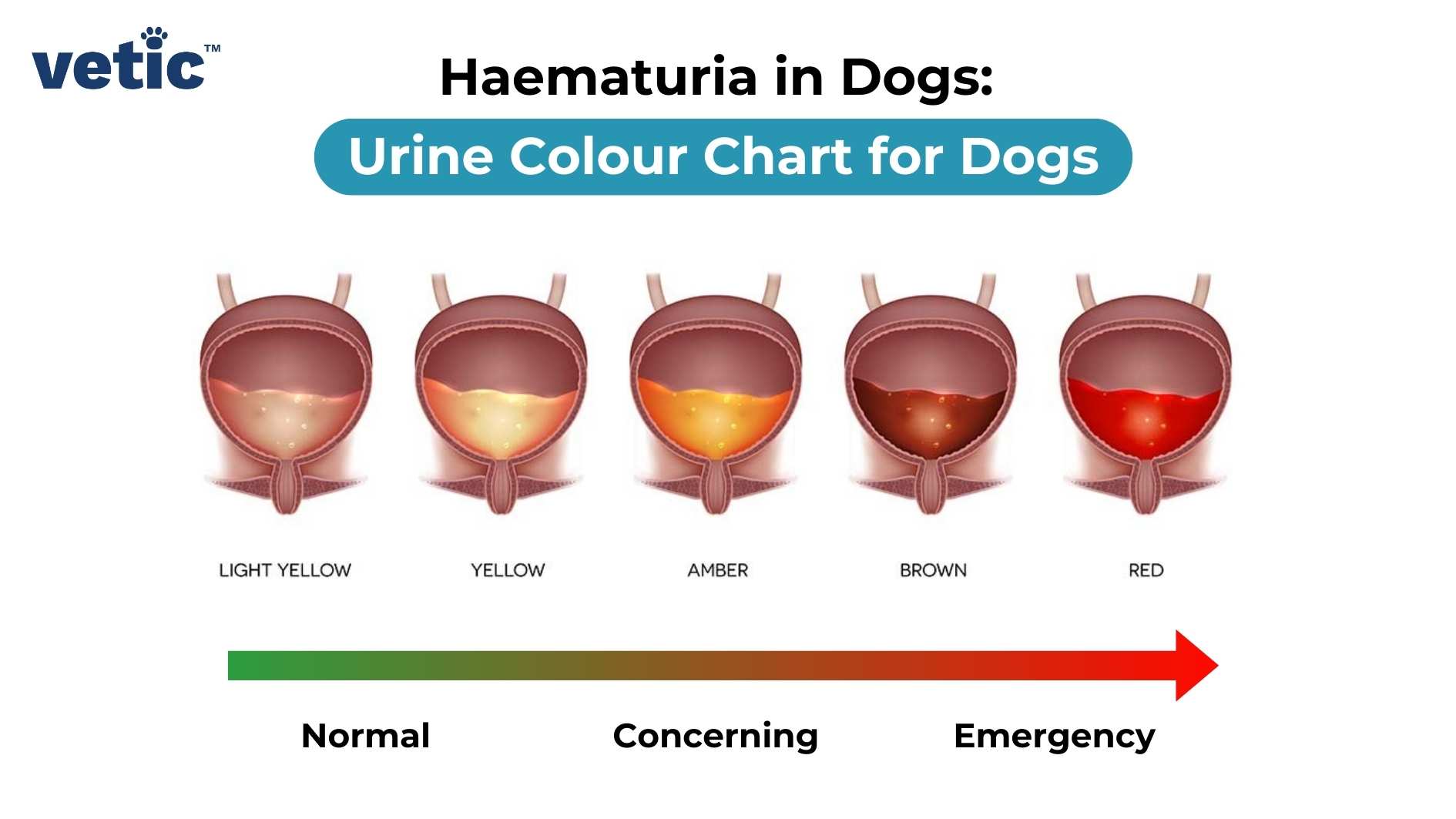
• Blood in urine (haematuria) can appear as pink, red, or brown-tinted urine – it always requires veterinary investigation as causes range from UTIs to bladder stones to tumours.
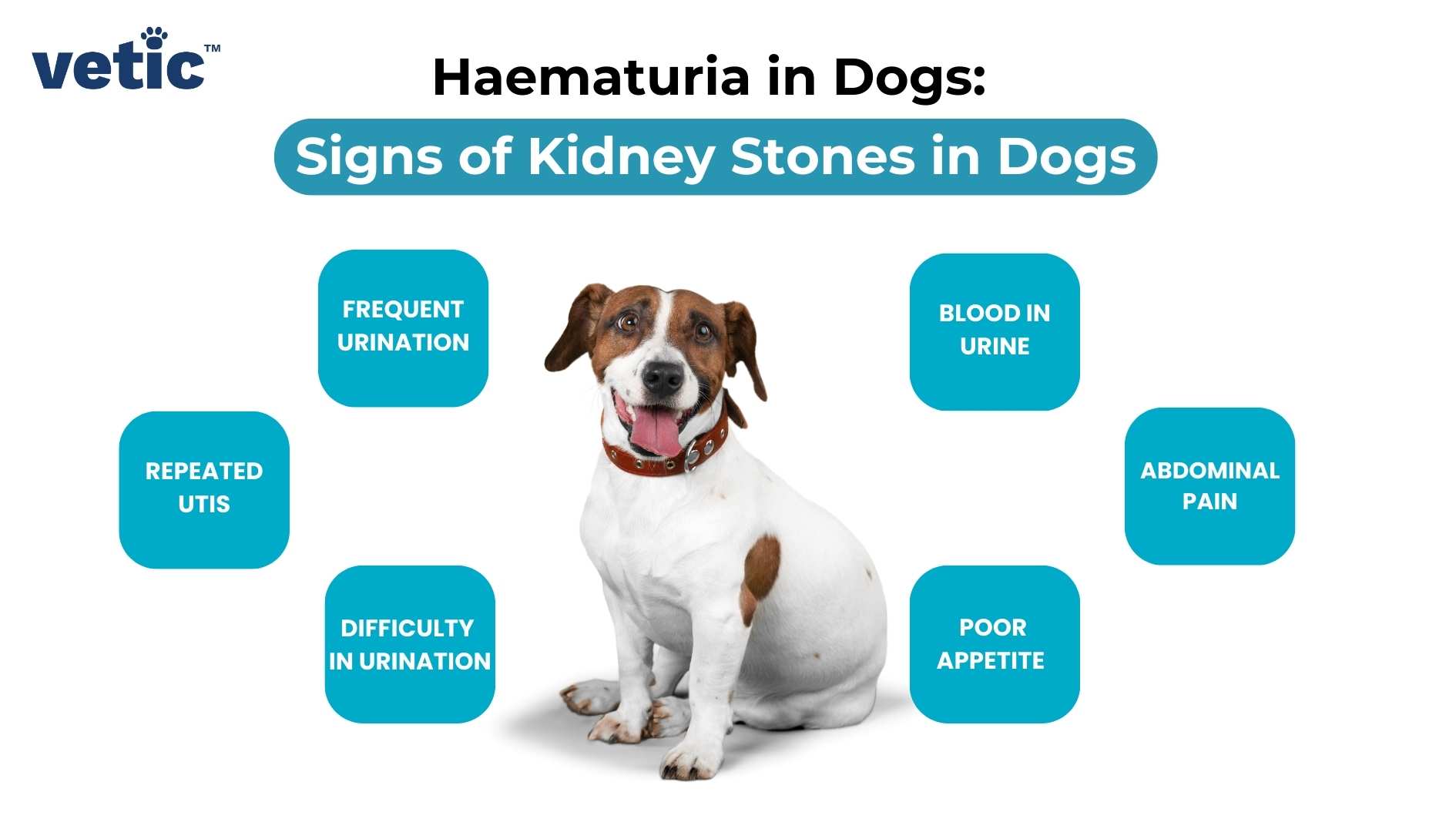
• Other signs that accompany haematuria include frequent urination, straining, accidents in the house, or crying when urinating.
• A urine test and ultrasound are usually the first steps – do not wait to see if it resolves, take your dog to Vetic for prompt diagnosis.
Why is My Dog Peeing Blood?
Blood in urine or haematuria in dogs typically indicates underlying diseases. Seeing your dog pee blood is indeed scary. However, some cases, such as familial haematuria (a family trend of blood in urine) occur in younger dogs. It is the most common cause of a young dog peeing blood.
Nonetheless, it is always better to get your dog checked up by a veterinarian near you if you notice blood in your dog’s urine.
Symptoms of Haematuria in Dogs
Haematuria or blood in the urine of a dog is in itself a symptom. Sadly, it can be a sign of several serious conditions that involve the dog’s bladder, kidneys, or blood (platelets).
Fully red or red-tinged urine is a sign that your dog has blood in their urine. However, some dogs may also show additional signs like constant dripping of blood, abnormal frequency of urination, or straining during urination.
What are the Causes of Haematuria in Dogs?
The causes of haematuria in dogs can be plenty. We have already mentioned that some dogs experience familial hematuria and you need to talk to your breeder for the family history of your puppy before you seek veterinary care.
The more serious causes of haematuria in dogs that demand immediate attention include –
- Diseases of the urinary tract due to the inflammation of the surrounding blood vessels (vasculitis).
- A very low number of platelets that prevents the blood from clotting.
- TVT (transmissible venereal tumours) in male dogs that cause blood to drip and mix with their urine.
- Acute kidney injury or chronic kidney disease.
- Bladder or Kidney stones.
- Tumours or cancer (neoplasia) involving the kidneys or bladder.
- Trauma to the kidneys, urinary tract or bladder.
- Infectious diseases (urinary tract infection or UTI).
- Nephritis (inflammation of the kidneys. Can be caused by infection or due to autoimmune diseases).
- Benign prostatic hyperplasia (BPH) in male dogs.
- A side-effect of chemotherapy.
More than one organ can be involved in causing hematuria in dogs. Blood might be present in the urine of a dog due to problems in the lower urinary tract, upper urinary tract, kidney(s), bladder and/or genitalia.
How is the Cause of Haematuria in Dogs Diagnosed?
Diagnosis of haematuria requires thorough physical examination by a veterinarian followed by multiple tests. Your veterinarian will take a complete history of your dog’s health including their vaccination status, diet, and past illnesses to gain clues about the role of other organs that may be causing secondary symptoms.
Haematuria diagnosis requires multiple tests such as complete blood count (CBC), Kidney function test (KFT), liver function test (LFT), enzymatic efficiency of the pancreas, blood glucose levels, urine test and imaging of the kidneys, bladder and urinary tract. Your veterinarian may recommend a biopsy if there is a mass (tumour) present.
Only after a complete check-up can a doctor confirm the cause of your dog peeing blood.
What Will the Veterinarian Do If Your Dog has Haematuria?
The treatment of haematuria will depend upon its primary cause. Here are some of the causes and corresponding treatments of haematuria in dogs –
Urinary tract infection (UTI)
Urinary tract infections (UTIs) are common among dogs, especially female dogs who have not been neutered. The most common course of treatment involves the use of antibiotics. The proper diagnosis of UTI involves both blood tests and urine culture. The veterinarian may recommend urine culture and sensitivity to understand which antibiotic(s) can treat the UTI.
Bladder Stones
Bladder stones or struvites are more common in male dogs. Some breeds are more prone to struvite stones, such as the miniature poodle, shih tzu, pekingese, dachshund, cocker spaniel and bichon frise.
In the early stages of the formation of bladder stones, doctors can recommend struvite diet, supplements and medication to dissolve the stones. Larger stones, especially calcium oxalate stones can be removed via surgery.
Cancer(s) and tumours

Some cancers such as TVT can cause bleeding during urination in male dogs. In the early stages, TVT is highly curable through proper treatment that involves chemotherapy and antineoplastic drugs.
Other cancers, including the cancer of the urinary tract or kidneys can cause haematuria in dogs. However, the prognosis depends upon the grade and stage of the cancer, the organ(s) involved and the overall health of the dog. Most treatment protocols involve chemotherapy, surgery, radiation and palliative care.
Trauma of the urinary tract
Accidental trauma to the urinary tract can cause bleeding during urination. It typically results from lacerations and swelling. It is best to go to a veterinarian to assess the extent of trauma after you notice blood in your dog’s urine.
The treatment will depend on the associated symptoms as well. It may include pain relief medication and medicines to stop bleeding. In very severe cases, a minor surgery may be necessary.
Bleeding disorders
Bleeding disorders may include a severely low platelet count. In such cases, medication to stop bleeding is given by the veterinarian. Depending on the current hemoglobin level of your dog, they may need a blood transfusion.
Benign prostatic hyperplasia (BPH)
It is the swelling of the prostate gland that leads to blood in urine. It is not cancerous or malignant.
It is most commonly seen in intact or unneutered male dogs. Neutering prevents BPH. If your dog has BPH, the veterinarian can suggest medicines and other supplements to reduce the size of their prostate gland and stop the bleeding.
How to Take Care of Your Dog After Further Diagnosis?
Dogs who are undergoing treatment for haematuria require lots of close attention and care. You should encourage your dog to eat and drink unless they are on fluid therapy and the doctor has advised otherwise.
Do not miss any medication or stop any medicines without talking to your vet.
Modify your dog’s diet as per the vet’s suggestion. Prescription food plays one of the biggest roles in the treatment of haematuria in pets. Do not feed your dog any other food or human food unless it is okay-ed by the veterinarian.
What is the prognosis of haematuria in dogs?
The prognosis of haematuria depends upon multiple factors starting with the primary and secondary causes of haematuria.
Most cases of UTIs and early stage struvites can be successfully treated with prescription medications. Following recovery, dogs may need a prescription diet for a long time.
Some causes of haematuria may require surgical interventions, while others may require chemotherapy, radiation and long-term maintenance therapy.
The prognosis of blood in the urine of a dog is not easy to determine. Your veterinarian is the best person to guide you about the future treatment, maintenance therapy and possible outcomes.