
• Puppies should be dewormed from 30 days of age, then every 15 days until 3 months, monthly till 6 months, and quarterly thereafter.
• Different dewormers target different parasites – roundworms, tapeworms, hookworms, and whipworms often need different active ingredients.
• Over-the-counter dewormers may not cover all worm types – a Vetic vet can run a stool test and prescribe the right deworming protocol.
Internal parasites are far more common in dogs than most pet parents realize. Puppies can get worms even before birth, while adult dogs can pick them up from soil, fleas, infected feces, or even while playing at the park. These worms live in the intestines and can cause serious health issues, from poor growth and dull coats to life-threatening anemia or organ damage. That’s why choosing the right dewormers for dogs and following a proper schedule is essential. Whether you have a tiny pup or an active adult, regular deworming protects your pet and family too.
What Is Deworming and Why Is It Important for Dogs?
Deworming is the process of clearing intestinal parasites from your dog’s body using antiparasitic treatment. Dogs can pick up intestinal worms through contaminated soil or faeces, from other infected animals, through raw meat, from fleas during grooming, or in the case of puppies through their mother’s milk.
Internal parasites can cause symptoms ranging from mild such as weight loss, dull coat, and occasional loose stools, to serious in young or vulnerable dogs. Deworming is not a one-off event but an ongoing part of responsible pet care throughout your dog’s life.
How Frequently Should You Deworm Your Puppy?
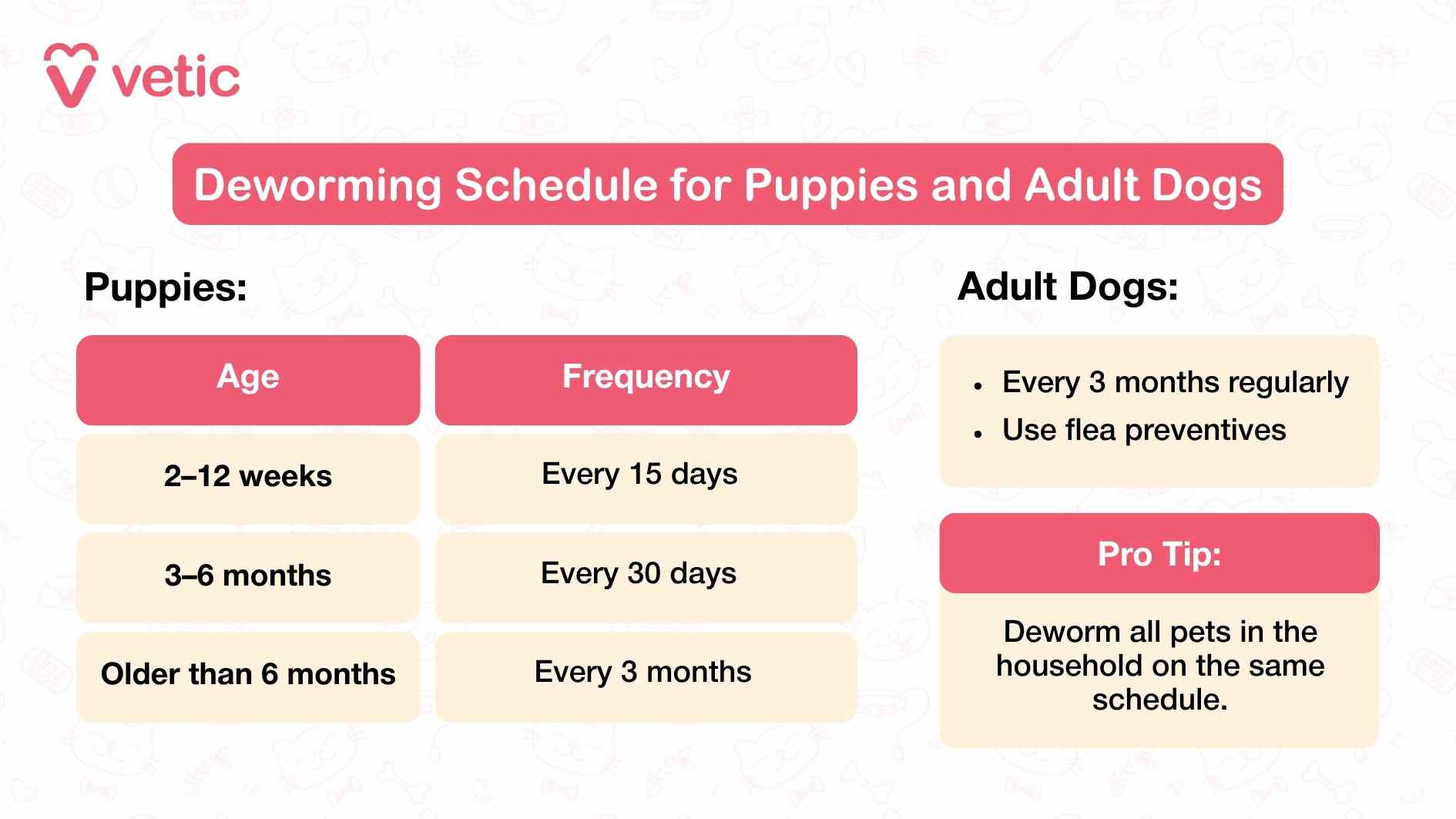
A puppy’s first deworming is as crucial as their first vaccination. Puppies as young as 30 days old should visit a vet for their first deworming. At this stage, most puppies receive a liquid deworming medicine for dogs, carefully measured according to their body weight.
Because puppies explore their world with their mouths, they are constantly exposed to parasites. Between 1 to 3 months of age, deworming should be repeated every 15 days. From 3 to 6 months, switch to monthly doses, and after 6 months, most dogs follow a quarterly schedule.
Your veterinarian may adjust this depending on your puppy’s appetite, growth rate, or stool test results. Remember, skipping even one dose can allow worms to multiply again.
Are Puppy Dewormers the Same as Dewormers for Dogs?
A puppy dewormer is formulated to eliminate internal worms safely without harming a young pup’s delicate system. Most products come as sweet-flavoured suspensions to make dosing easier.
Common active ingredients include:
- Pyrantel embonate (pamoate): Paralyzes and expels roundworms and hookworms.
- Febantel: Converts to fenbendazole in the body and kills tapeworms and whipworms.
Because puppies have developing organs, always choose a vet-recommended deworming tablet for puppy or liquid, never a random over-the-counter option.
How to Choose the Right Dewormer for Your Puppy
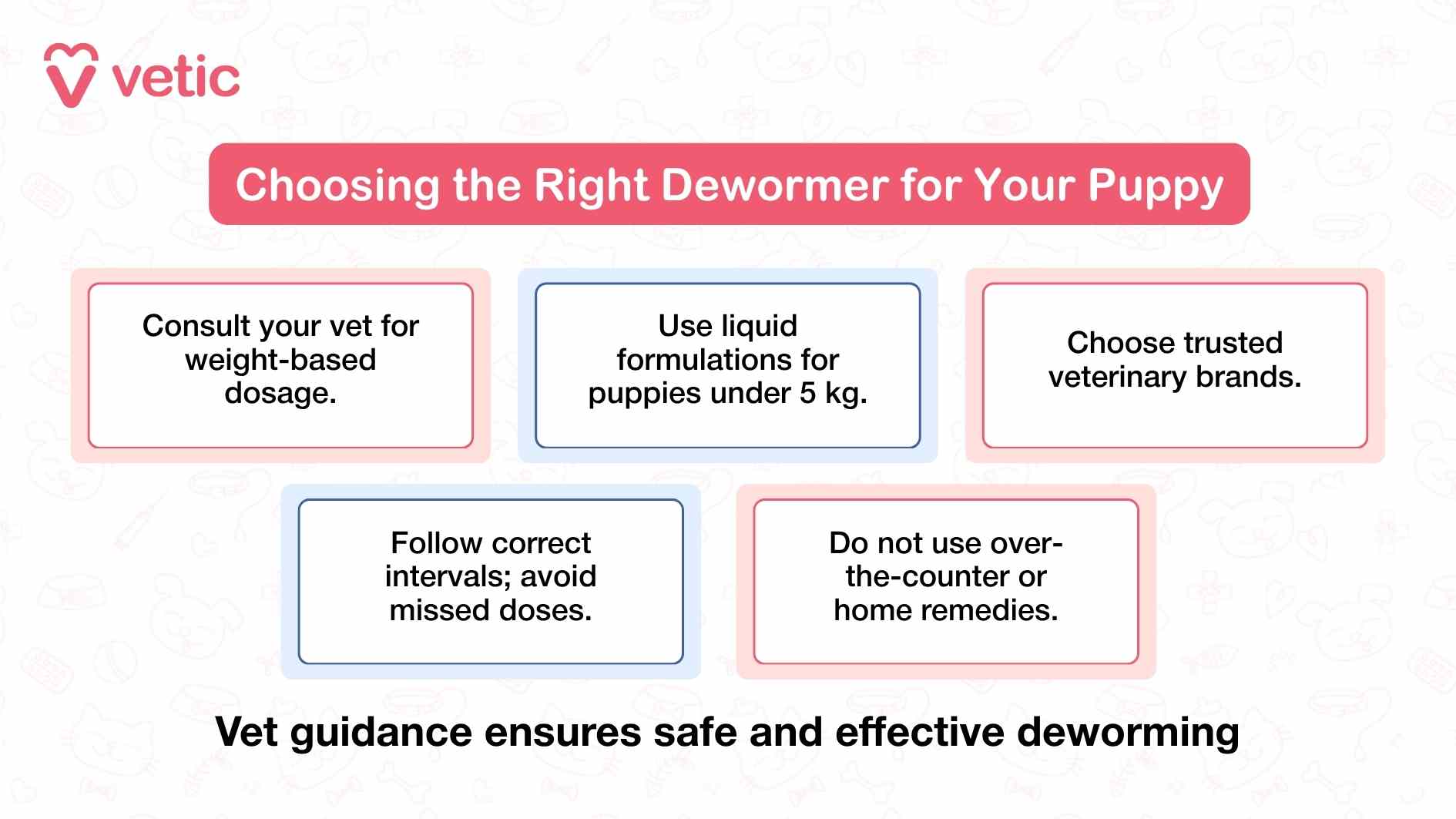
Not all dog dewormers are created equal. The ideal choice depends on your puppy’s age, weight, and overall health. Vets also consider factors like local parasite prevalence and your pup’s exposure risk — for example, outdoor play areas or multi-dog households.
At Vetic clinics, veterinarians rely on well-tested, trusted brands known for consistent results and minimal side effects. They guide you on:
- Correct dosage per kilogram of body weight
- Safe intervals between doses
- Combination protection, if your puppy also needs flea or tick control
Never split tablets or guess quantities — improper dosing can reduce efficacy or cause digestive upset.
Deworming Schedule for Dogs – By Age and Lifestyle
Puppies require more frequent deworming than adult dogs due to their vulnerability and the risk of maternal transmission. A typical puppy schedule starts in the first few weeks and continues at regular intervals through to several months of age, then transitions to an adult schedule.
Adult dogs are generally dewormed every three to six months depending on their lifestyle. Dogs with high outdoor exposure, those in multi-pet households, or dogs that hunt or scavenge benefit from more frequent treatment. Speak to your vet to confirm the right schedule for your specific dog.
How Often Should You Deworm Your Dog?
How often to deworm a dog depends on age, lifestyle, and risk level. Most adult dogs benefit from deworming every three months as a standard preventive measure.
Dogs with more exposure to outdoor environments, raw food, or other animals may need more frequent treatment. Puppies follow a more intensive schedule in their first months of life. Your vet can help you set the right frequency based on your dog’s individual circumstances.
Dewormers for Dogs: When Should You Switch From a Suspension to Tablets?
As puppies grow, giving large volumes of liquid becomes difficult and messy. Once your puppy crosses 5 kg, your vet may recommend shifting from liquid to a deworming tablet for dogs.
Tablets can be hidden inside treats or pouches, ensuring accurate intake with less stress. They’re easier for pet parents and help avoid under-dosing. It is a major cause of worm resistance.
For very small breeds, your vet might still prefer liquid dosing for precision. Always follow professional advice on when to make this transition.
When to Give a Deworming Tablet to Your Dog – Timing Guide
The timing of deworming treatment matters. Generally, deworming tablets are given when parasites are identified or as part of a preventive schedule, and most are given with a small amount of food though this can vary between products.
The correct dose is always based on your dog’s current body weight. If you are unsure about timing, frequency, or which product is appropriate, your vet can advise based on your dog’s age, lifestyle, and risk factors.
What Is the Composition of Dewormers for Dogs?

Most broad-spectrum deworming tablets for dogs combine three proven ingredients:
- Praziquantel: Targets and kills tapeworms.
- Pyrantel embonate (pamoate): Works against hookworms and roundworms.
- Febantel: Expands coverage to whipworms.
This trio ensures one dose clears almost all intestinal parasites common in dogs in India. Some formulations even add probiotics or vitamins to support gut health during recovery.
Deworming Tablet vs Syrup vs Spot-On – Which Format Is Right?
Different formats suit different dogs. Tablets are commonly used for adult dogs and can often be hidden in food or a treat to make administration easier. Syrups and liquid suspensions are generally easier to give to puppies or small dogs and often come in flavours that dogs accept more readily.
Spot-on products applied to the skin are available and some combine flea and worm prevention in a single treatment. Your vet can recommend the most suitable format based on your dog’s age, size, and the type of worm being treated.
How Frequently Should You Deworm Your Dog?
For adult dogs, a 3-month interval is generally sufficient. However, dogs that socialize often, in boarding, parks, or training facilities, may need other formulations and frequencies.
Environmental hygiene is equally important: clean up feces promptly, wash food bowls daily, and prevent your dog from drinking stagnant water. These simple steps amplify the protection offered by the best deworming tablets for dogs.
Do the Common Dewormers for Dogs Always Work?
Most deworming medicine for dogs works effectively when administered correctly, but reinfection is possible. Dogs can easily ingest worm eggs while sniffing or licking contaminated ground.
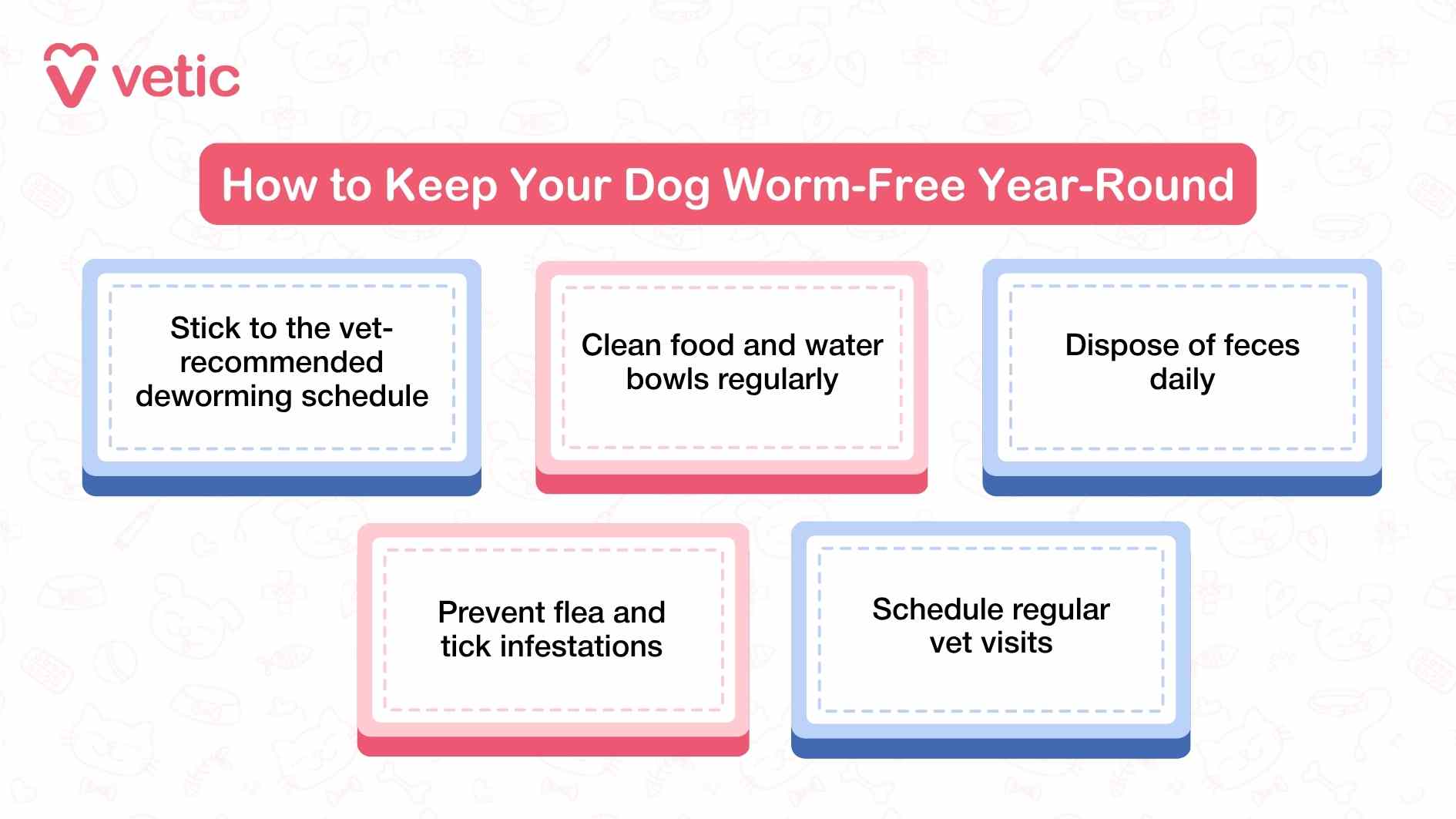
To ensure long-term success:
- Deworm all pets in the household on the same day.
- Get a stool test every 6–12 months to confirm parasite clearance.
- Rotate brands only if your vet suspects resistance — never switch unnecessarily.
Regular vet checks make sure your chosen dog dewormer continues to work as intended.
When to NOT Deworm Your Dog
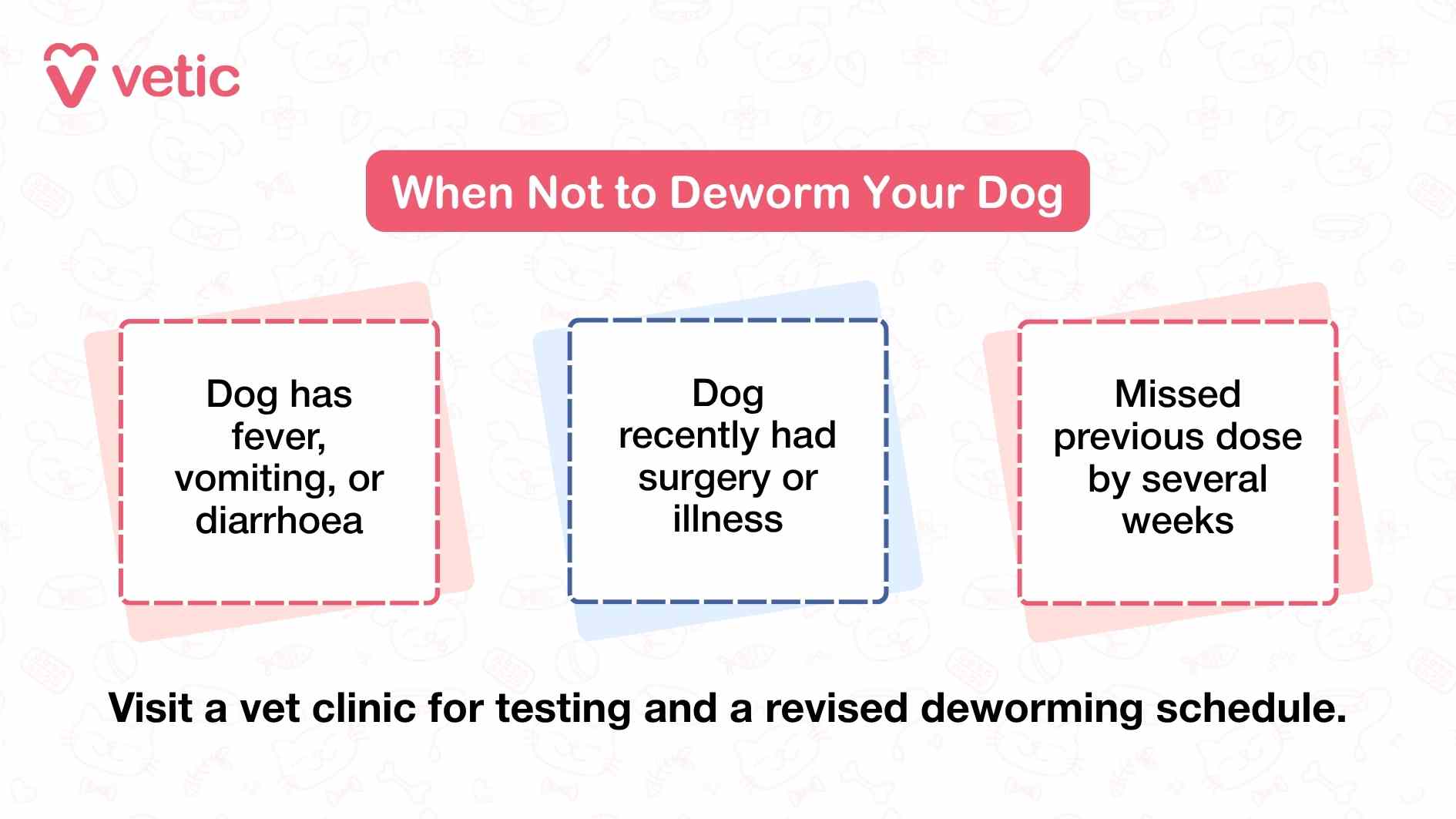
Skip deworming if your dog is vomiting, has diarrhoea, or seems feverish. Giving medication at such times can worsen dehydration or cause toxicity.
Instead, take your pet to a clinic equipped with in-house diagnostics and experienced veterinarians, such as Vetic Pet Clinics. Once stabilized, your vet will redesign a safer deworming schedule. If you’ve missed doses for several weeks, don’t double the amount; let your vet restart the cycle gradually.
Deworming protects your pet from unseen internal threats and keeps your home parasite-free. With a veterinarian’s guidance and the right dewormer for dogs, you can ensure your furry companion stays healthy, energetic, and safe year-round.
Ensure your dog or puppy is dewormed safely — book a consultation with the Vetic vets today.
FAQ on Dewormers for Dogs
Why is deworming important for puppies and dogs?
It removes internal parasites that steal nutrients and damage organs, keeping your dog strong and infection-free.
At what age should puppies be dewormed first?
Begin at 30 days old, using a liquid dewormer prescribed by your vet.
How often should adult dogs be dewormed?
Every 3 months for most dogs, or more frequently if they roam outdoors often.
Is deworming dogs necessary before pregnancy?
Yes. Treating before breeding prevents the mother from passing worms to her puppies.
How does deworming affect a dog’s immunity and overall health?
It supports nutrient absorption, reduces toxin load, and helps maintain a balanced immune response.
What are the signs that my dog may have worms?
Scooting, bloated belly, dull coat, diarrhoea, weight loss, or worms visible in stool.
Can deworming dogs prevent transmission of worms to humans?
Yes. Routine deworming reduces zoonotic risk and protects your family from parasite exposure.
Are there side effects of dewormers for dogs?
Mild effects like soft stool or temporary appetite loss can occur; serious reactions are rare with vet guidance.
Do indoor dogs and pups also need regular deworming?
Absolutely. Worm eggs can enter homes on footwear, other pets, or contaminated food.
What happens if I skip my dog’s deworming schedule?
Parasites multiply rapidly, causing poor digestion, anaemia, and weakness over time. You should speak with your vet for resuming their deworming routine.
Can I give over-the-counter deworming medicine to my dog without a vet’s advice?
No. Incorrect ingredients or dosages can be harmful. Insufficient dewormers for dogs can lead to resistance — always consult your veterinarian first.
What role do diet and hygiene play in preventing worms in dogs?
Balanced nutrition and clean surroundings reduce reinfection risk and strengthen gut health.
Can I Buy Deworming Tablets Without a Vet Prescription?
Many deworming products are available without a prescription in India. However, buying a product without veterinary guidance does not mean it is the right choice for your dog. Different products target different worms, and not all over-the-counter options cover all types. If your dog has not been checked recently, a simple examination or faecal test can identify the specific parasite and allow more targeted treatment. Your vet can also confirm the correct dose for your dog’s current weight.
What Happens if You Give a Dog Too Much Dewormer?
Giving too high a dose of deworming treatment can cause side effects. Always follow the dosage instructions based on your dog’s current body weight. If you accidentally give more than the recommended amount or your dog reacts poorly after deworming, contact your vet promptly. Do not give a repeat dose without veterinary guidance.
Is Deworming Safe for Pregnant or Nursing Dogs?
Whether deworming is safe during pregnancy depends on the specific product and the stage of pregnancy. Some deworming treatments are considered safe at certain stages while others are not. This is a decision that should always be made in consultation with your vet rather than by using an over-the-counter product without guidance. Your vet can recommend a protocol that protects both the mother and the developing or nursing puppies.