- Stage 1 (gingivitis) is fully reversible; stages 2 through 4 cause irreversible bone loss
- Bad breath, red gums, and visible tartar are the first warning signs
- Professional dental cleaning under anaesthesia is the only way to fully assess and treat gum disease
- Daily tooth brushing is the single most effective home prevention measure
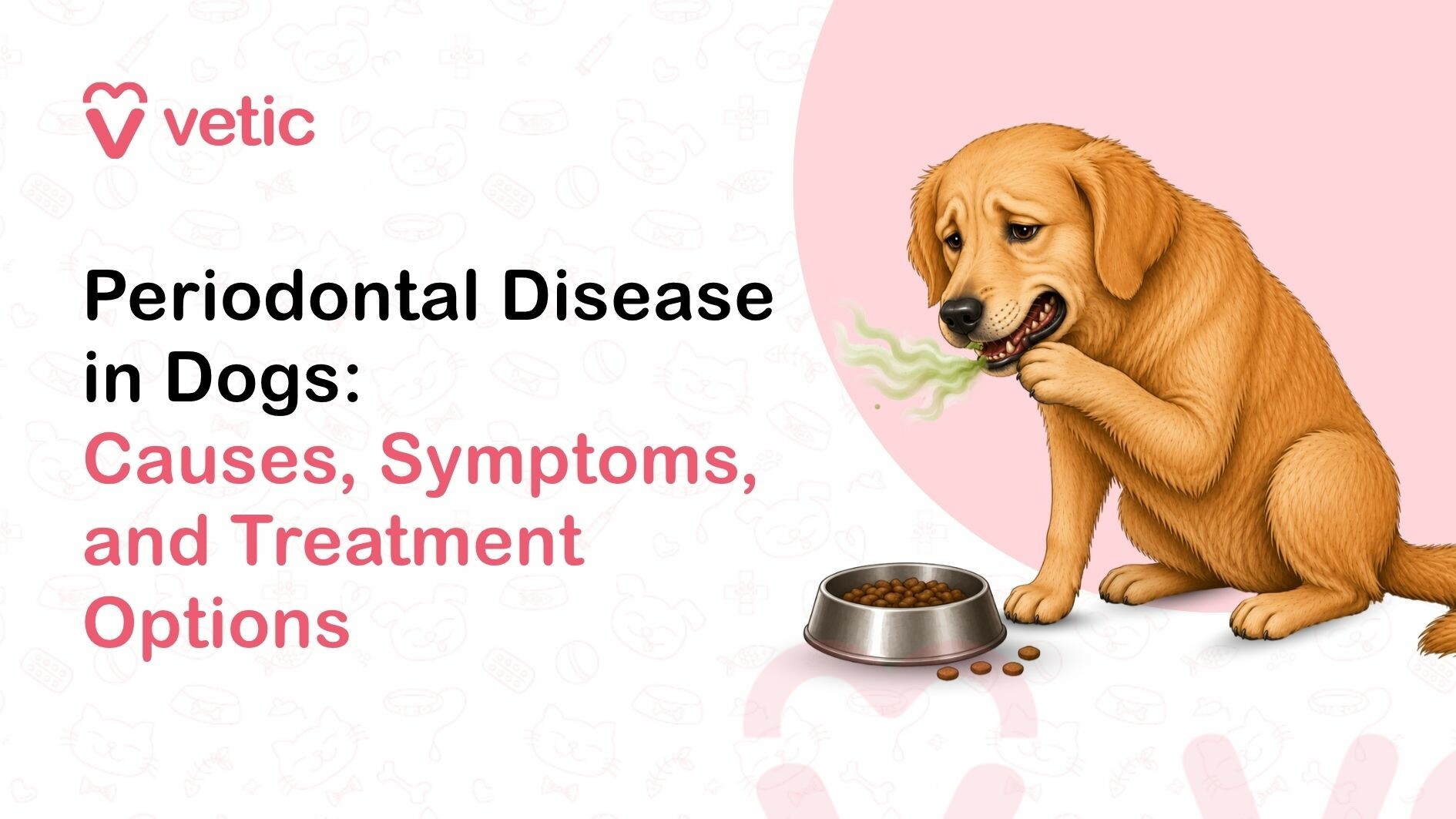
- Most pet parents notice bad breath in their dog and think nothing of it. “Dog breath” is common, but it is not always normal. It is usually the first detectable sign of something happening in the mouth.
What Is Periodontal Disease in Dogs?
Periodontal disease in dogs is an infection and inflammation of the structures supporting a dog’s teeth. These include the gums, periodontal ligament, alveolar bone, and the cementum covering each tooth root.
The impact of periodontal disease on dogs extends well beyond the mouth. As bacteria accumulate under the gum line, they enter the bloodstream. Over time, this can affect the heart, kidneys, and liver.
How Dental Disease Develops in Dogs
Dogs’ teeth disease begins with plaque, a sticky film of bacteria that forms on tooth surfaces within hours of eating. Brushing removes plaque easily. If not removed, plaque hardens into tartar (calculus) within 24 to 48 hours. Tartar requires professional scaling to remove.
Once tartar forms, it drives bacteria deeper under the gum line. The body’s immune response causes gingival inflammation. Over time, the gum pulls away from the tooth, creating pockets where more bacteria accumulate, and the cycle accelerates.
Early Signs of Dog Gum Disease
Dog gum disease is often silent in the early stages. Signs to look for include:
- Persistent bad breath that does not improve between meals
- Red, puffy, or bleeding gums when the dog chews or is touched
- Yellow or brown tartar visible on the back molars
- Excessive drooling
- Pawing at the mouth or rubbing the face on surfaces
- Reluctance to eat hard food or to let the mouth be touched
Stages of Canine Periodontal Disease
Canine gum disease progresses through four recognised stages:
- Stage 1 is gingivitis: inflammation of the gum only, with no bone loss. It is fully reversible with professional cleaning.
- Stage 2 is early periodontitis, with up to 25% loss of attachment between the tooth and supporting bone. Some bone loss has already occurred and cannot be reversed.
- Stage 3 is moderate periodontitis, with 25 to 50% attachment loss. Teeth may feel loose. Root planing is needed to clean below the gum line.
- Stage 4 is advanced periodontitis, with more than 50% attachment loss. Tooth extraction is typically required.
Which Dogs Are More Prone to Dental Problems?
The relationship between dogs and gum disease often comes down to breed, size, and home care.
Small and toy breeds (Chihuahuas, Yorkshire Terriers, Pomeranians) develop dental disease earlier and more severely. Their teeth are crowded into smaller jaws, leaving less space between teeth. Brachycephalic breeds (Bulldogs, Pugs) also face a higher risk due to rotated or crowded teeth.
Dogs fed only soft food, dogs that rarely chew, and dogs whose teeth are never brushed are all more prone, regardless of breed.
Why Untreated Gum Disease Can Affect Overall Health
Bacteria from infected gum tissue enter the bloodstream, a process called bacteraemia. Studies link severe periodontal disease in dogs to changes in kidney, liver, and heart tissue.
Chronic dental pain also changes a dog’s eating habits and behaviour. Dogs with persistent oral pain often eat less, lose weight, and become quieter or more irritable than usual. These changes are easy to overlook until the underlying cause is found.
How Vets Diagnose Dental Disease in Dogs
Full assessment requires general anaesthesia, which allows the vet to:
- Probe each tooth pocket (normal depth: under 3 mm; disease: 4 mm or more)
- Take dental X-rays to reveal bone loss that is invisible from the surface
- Assess tooth mobility, root exposure, and gum recession
- Identify fractured, non-vital, or abscessed teeth
Treatment Options for Periodontal Disease
Periodontal disease in dogs cannot be managed with antibiotics alone. Professional mechanical cleaning is essential in every case.
Stages 1 and 2 require scaling and polishing to remove tartar above and below the gum line. Stage 3 requires deeper root planing to clear bacteria from the root surface. Stage 4 requires the extraction of teeth that can no longer be saved, alongside scaling of all remaining teeth.
Professional Dental Cleaning and Advanced Procedures
All professional dental work in dogs requires general anaesthesia. This is not optional. Anaesthesia allows the vet to scale under the gum line, probe all pockets, and take dental X-rays. Treatment can then be done safely without causing pain or distress.
A pre-anaesthetic blood test checks that the dog is healthy enough for the procedure. Modern anaesthetic protocols are safe for dogs of all ages when properly managed by a vet team.
How to Prevent Dental Disease in Dogs at Home
Daily tooth brushing with a soft-bristled brush and dog-specific toothpaste is the single most effective home care measure. Aim for daily brushing. Even three to four times a week makes a meaningful difference.
VOHC-accepted (Veterinary Oral Health Council) dental chews, water additives, and dental diets are useful supplements to brushing. They are not replacements for it.
Creating a Long-Term Dental Care Routine
A sustainable dental routine includes:
- Daily brushing, or as often as your dog will tolerate
- VOHC-accepted dental chews or dental diet as a brushing supplement
- Annual professional dental check-up and cleaning for most dogs
- More frequent professional cleaning for small breeds or dogs with a history of rapid tartar build-up
A pet health expert can advise on the right interval for your dog’s teeth.
Final Thoughts: About Periodontal Disease in Dogs
Periodontal disease in dogs is progressive but also highly preventable. The earlier it is caught and treated, the better the outcome for your dog’s teeth and their overall health.
A vet can examine your dog’s mouth, identify the right stage of treatment, and help you build a home care routine that works for your dog.
FAQs: About Periodontal Disease in Dogs
What causes periodontal disease in dogs?
Periodontal disease in dogs is caused by plaque, a bacterial film that forms on tooth surfaces after eating. If plaque is not removed, it hardens into tartar. Tartar drives bacteria under the gum line, causing inflammation, bone loss, and eventually tooth loss.
Can dog gum disease be reversed?
Stage 1 (gingivitis) is fully reversible with a professional cleaning and consistent home care.
How often should dogs have their teeth cleaned?
Most dogs benefit from an annual professional dental cleaning under anaesthesia. Small breeds often need more frequent cleaning due to faster tartar build-up.
What are the signs of dental disease in dogs?
Common signs include bad breath, red or bleeding gums, visible yellow or brown tartar, drooling, pawing at the mouth, and reluctance to eat hard food.
Can periodontal disease affect a dog’s overall health?
Yes. Bacteria from infected gums enter the bloodstream and have been linked to changes in heart, kidney, and liver tissue in dogs. Chronic dental pain also affects eating, weight, and behaviour.
References
Gorrel, C. (2026). Diagnostics and Treatment of Periodontal Disease in Dogs and Cats. Vin.com. https://www.vin.com/apputil/project/defaultadv1.aspx?pid=11268&catid=&id=3866564&meta=&authorid=
Mulherin, B. L. (2024, February). Periodontal Disease in Small Animals. MSD Veterinary Manual. https://www.msdvetmanual.com/digestive-system/dentistry-in-small-animals/periodontal-disease-in-small-animals
Reiter, A. M. (n.d.). Dental Disorders of Dogs. Veterinary Manual. https://www.msdvetmanual.com/dog-owners/digestive-disorders-of-dogs/dental-disorders-of-dogs