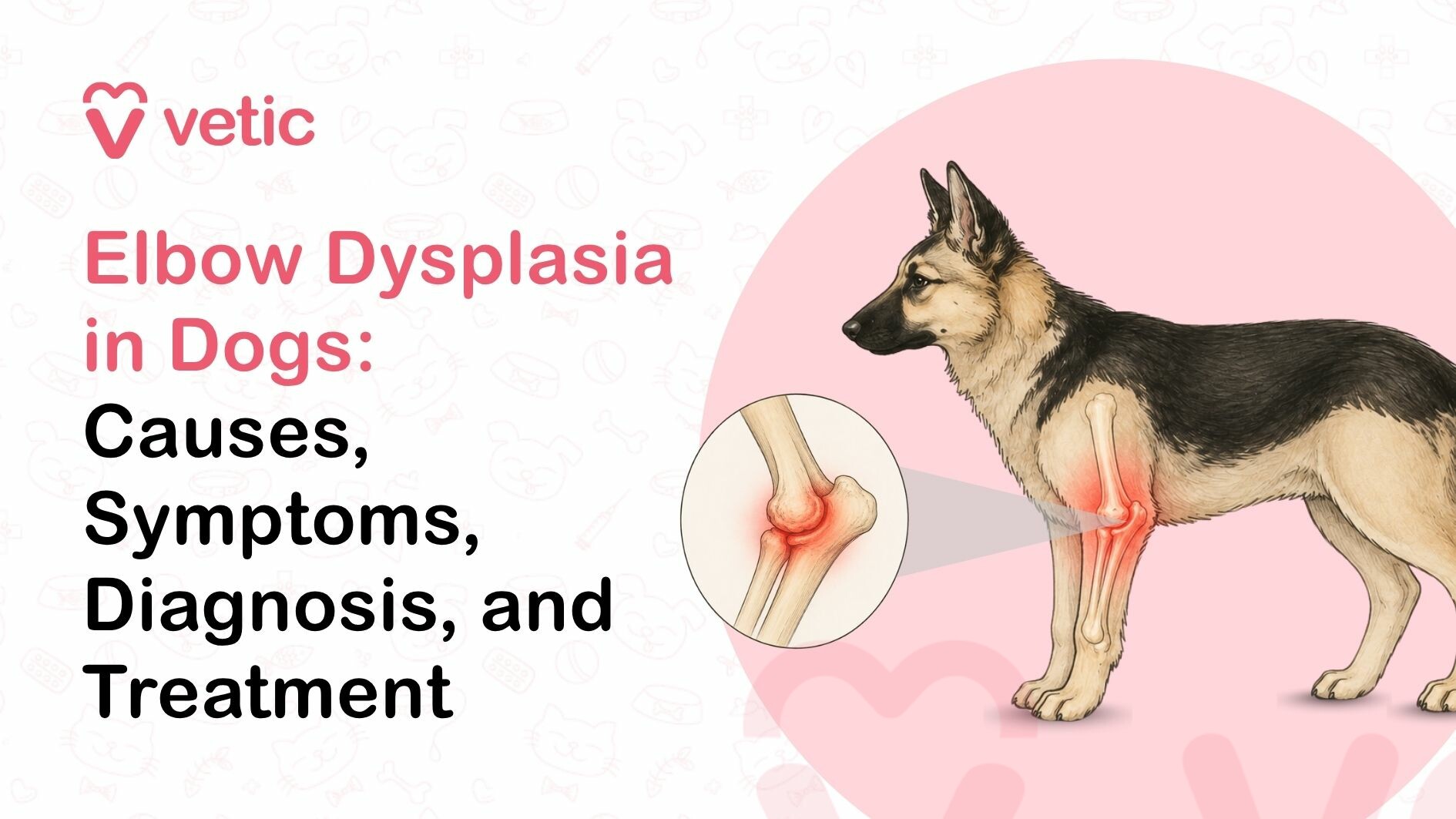
What Is Elbow Dysplasia in Dogs?
Elbow dysplasia in dogs is not a single condition. It is a group of developmental abnormalities of the elbow joint. The elbow is formed by three bones: the humerus (upper arm), the radius, and the ulna (forearm).
When these bones do not develop in perfect alignment during the growth phase, the joint is placed under abnormal stress. The result is cartilage damage, bone fragmentation, and eventually osteoarthritis.
How Does Elbow Dysplasia Develop?
Understanding the dysplastic elbow in dogs requires knowing how fast large breeds grow. Genetics is the primary driver. Certain breeds, such as Rottweilers and German Shepherds, carry a genetic predisposition for abnormal elbow development. This typically presents during rapid growth between three and twelve months.
Excessive exercise, overfeeding, and rapid weight gain can worsen the impact on developing joints. But they do not cause the condition on their own.
Difference Between Elbow Dysplasia and Hip Dysplasia in Dogs
Both are developmental joint conditions with a strong genetic component. Hip dysplasia in dogs affects the ball-and-socket joint of the hip. Elbow dysplasia in dogs affects the hinge joint of the foreleg.
Hip dysplasia causes rear-end weakness and a swaying gait. Elbow dysplasia in dogs causes front-leg lameness, sometimes from as early as four months. Both lead to secondary osteoarthritis if left unmanaged. Some large-breed dogs develop both conditions at the same time.
Why Large-Breed Dogs Are More Commonly Affected
Rapid growth puts higher mechanical loads on developing joints. The elbow in large breeds bears considerable weight during the growth phase. When the three bones do not develop in perfect congruence, the resulting stress damages cartilage and bone.
Small breeds can also be affected, but the condition is far more common and more severe in large and giant breeds.
Elbow Dysplasia in Puppies: Early Warning Signs
Elbow dysplasia in puppies typically presents between four and ten months of age. Early signs include:
- Lameness in one or both front legs, especially after exercise or play
- Stiffness when getting up after a rest
- Reluctance to exercise, run, or go on walks
- Holding one front leg slightly outward when standing or moving
- Swelling or thickening around the elbow joint
- Yelping or pulling away when the elbow is touched
The condition may affect both legs simultaneously, though one side often appears more severely affected.
Symptoms of Canine Elbow Dysplasia
Elbow dysplasia in dogs symptoms often first appears during the growth phase. They can also emerge later in life when secondary arthritis develops.
- Front-leg lameness that worsens after exercise
- An abducted gait (elbow held outward from the body while walking)
- Reluctance to bear full weight on the affected leg
- Exercise intolerance and reduced willingness to be active
- Joint swelling or thickening around the elbow
- Pain when the elbow is flexed, extended, or pressed
How Vets Diagnose Elbow Dysplasia
Diagnosis of canine elbow dysplasia begins with a thorough physical examination. An experienced vet for dogs will assess the dog’s gait and carefully palpate the elbow, feeling for crepitus, swelling, and a pain response during flexion and extension.
Imaging confirms the diagnosis:
- X-rays: reveal joint effusion, bone changes, and signs of secondary arthritis
- CT scan: the gold standard for identifying bone fragments (especially FCP), offering far greater detail than X-ray
- Arthroscopy: a minimally invasive camera examination inside the joint, used for both diagnosis and treatment in the same procedure
Understanding the Different Forms of Elbow Dysplasia
Four distinct conditions fall under the umbrella of elbow dysplasia.
- Fragmented coronoid process (FCP): a fragment of bone breaks off the inner tip of the ulna. The most common form is especially in Labrador Retrievers.
- Osteochondrosis dissecans (OCD): a flap of damaged cartilage detaches from the humerus inside the joint. It causes significant pain and progressive joint damage.
- Ununited anconeal process (UAP): a bony projection at the back of the elbow fails to fuse properly during growth. More common in German Shepherds.
- Elbow incongruity: a mismatch between the radius and ulna creates abnormal loading across the entire joint surface.
Non-Surgical Management Options
Not every dog is a surgical candidate. Some dogs with mild disease do well on a structured medical management programme.
- NSAIDs (non-steroidal anti-inflammatory drugs) for pain and inflammation control
- Omega-3 fatty acid supplementation to support joint health
- Glucosamine and chondroitin supplements
- Physiotherapy and hydrotherapy to maintain muscle support around the joint
- Strict weight management (excess weight worsens joint loading significantly)
- Controlled, low-impact exercise: leash walks and swimming
Platelet-rich plasma (PRP) and stem cell therapy are being explored at specialist centres with growing evidence for benefit in select cases.
Canine Elbow Dysplasia Treatment and Surgery
Canine elbow dysplasia treatment through surgery is typically recommended when bone fragments, OCD lesions, or UAP are confirmed on imaging.
Arthroscopy is the preferred approach. It allows the vet to remove loose cartilage fragments, smooth damaged joint surfaces, and treat OCD lesions with minimal invasiveness. Recovery is faster than with open surgery.
UAP may require an ulnar osteotomy to correct elbow alignment. Severe cases with advanced joint damage may be candidates for total elbow replacement.
Recovery and Long-Term Mobility Care
After surgery, dogs typically need six to twelve weeks of restricted exercise. Physiotherapy begins early to maintain muscle tone without stressing the healing joint.
Elbow dysplasia almost always leads to some degree of secondary osteoarthritis. Long-term management includes:
- Weight control is maintained throughout the dog’s life
- Low-impact exercise, such as leash walks and swimming
- Ongoing NSAIDs as prescribed and monitored by a vet
- Regular joint reassessment at routine check-up appointments
Can Elbow Dysplasia Be Prevented?
There is no guaranteed way to prevent elbow dysplasia in genetically predisposed dogs. Responsible breeding using elbow-scoring programmes reduces prevalence within breeding lines over time.
Pet parents can reduce severity and delay progression by:
- Avoiding excessive exercise in large-breed puppies under twelve months
- Feeding a large-breed puppy a diet that supports controlled, steady growth
- Maintaining a healthy weight throughout the dog’s life
Booking a same-day vet checkup if any front-leg lameness appears in a young large-breed dog
Final Thoughts: About Elbow Dysplasia in Dogs
Elbow dysplasia in dogs is a serious condition, but most dogs treated early go on to live active, comfortable lives. The key is early diagnosis before secondary arthritis takes hold.
If your large-breed puppy or young dog shows any sign of front-leg lameness or stiffness, a vet can examine the elbow and recommend the right next steps.
FAQs: About Elbow Dysplasia in Dogs
What are the first signs of elbow dysplasia in dogs?
Front-leg lameness after exercise, stiffness on rising, holding one leg outward, and reluctance to play or walk are the most common early signs.
Can puppies develop elbow dysplasia?
Yes. Elbow dysplasia in puppies is common in large breeds, with signs often appearing between four and twelve months during the rapid growth phase.
Does elbow dysplasia always require surgery?
No. Mild cases or dogs that are not surgical candidates can be managed with NSAIDs, weight control, physiotherapy, and hydrotherapy.
Which dog breeds are prone to elbow dysplasia?
Labrador Retrievers, Golden Retrievers, German Shepherds, Rottweilers, Bernese Mountain Dogs, Newfoundlands, and Chow Chows are the most commonly affected.
Can dogs live comfortably with elbow dysplasia?
Yes, with appropriate management. Dogs treated early often maintain a good quality of life.
References
Harari, J. (n.d.). Other Joint Disorders in Dogs. MSD Veterinary Manual. https://www.msdvetmanual.com/dog-owners/bone-joint-and-muscle-disorders-of-dogs/other-joint-disorders-in-dogs
Harasen, G. (2026). Elbow Dysplasia Causes Front Limb Lameness In Young Dogs. VIN. https://veterinarypartner.vin.com/default.aspx?pid=19239&id=4952626
VIN. (2026). Examining Elbow Dysplasia. https://www.vin.com/apputil/content/defaultadv1.aspx?pId=11203&id=3853864