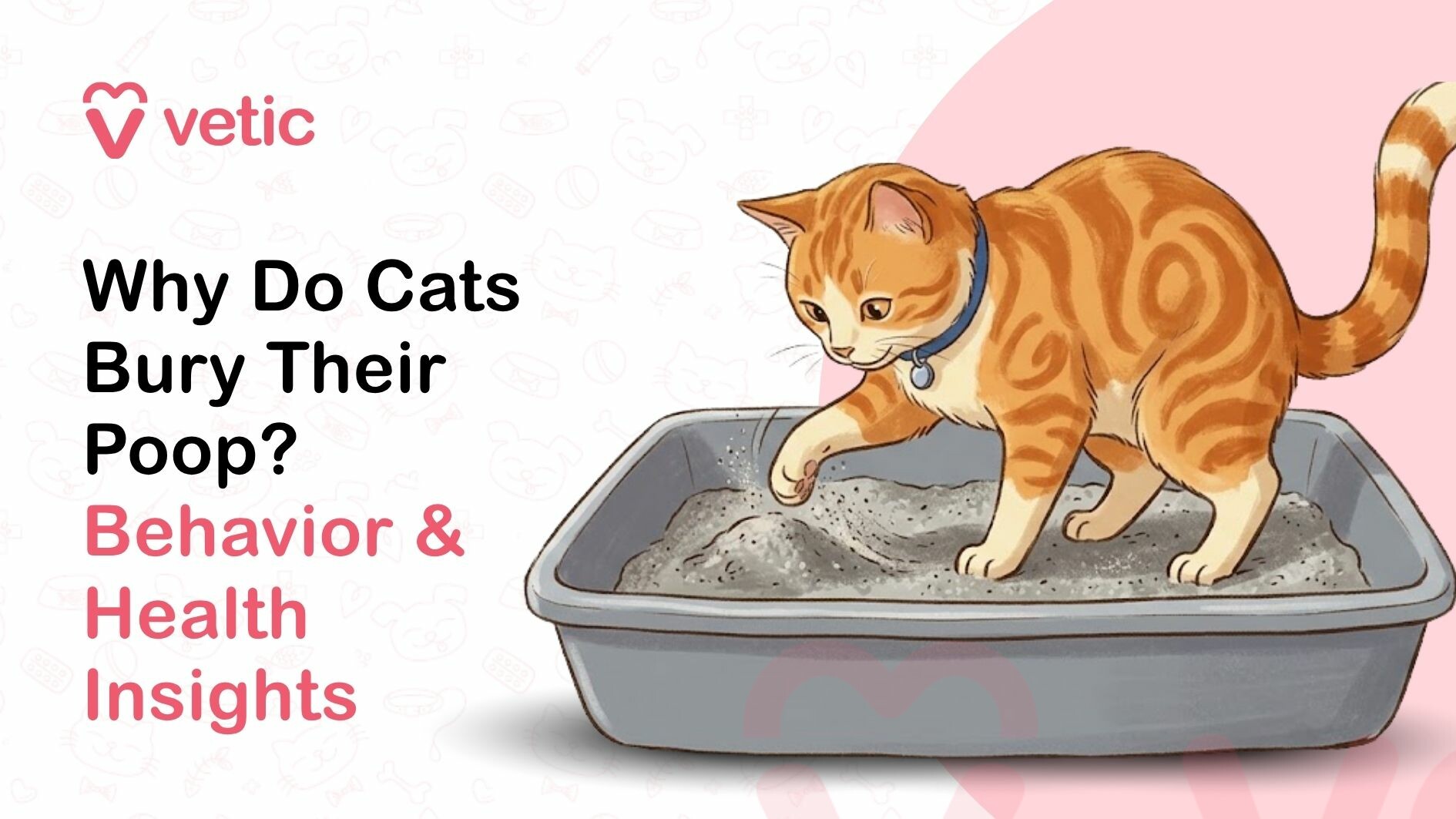
If you’ve ever had a domestic cat, you’ve probably noticed a curious (and sometimes amusing) behaviour: after using the litter box, many cats carefully scratch around to bury their waste. While it may seem like simple tidiness, this behaviour actually has deep evolutionary roots and serves several important purposes.
In this blog, we’ll explore why cats bury their poop, what it means when they don’t, and how you can encourage healthy litter box habits.
What Is the Natural Instinct Behind Cats Burying Their Poop?
Cats bury their poop because it is an inherited survival behaviour from their wild ancestors.
How Wild Ancestors Use Burying Poop for Survival?
Wild cats buried their waste to avoid detection by predators and competitors.
Faeces carry strong scent markers that can reveal a cat’s location, health, and presence. When wild cats covered their poop, they reduced the risk of being tracked or challenged by larger predators or rival animals. This behaviour increased their chances of survival in the wild.
Why Do Domestic Cats Still Follow This Instinct?
Domestic cats continue this behaviour because it is hardwired, not learned based on the environment.
Even indoor cats, who are not exposed to predators, instinctively act as if threats exist. Their brains interpret scent exposure as a potential risk, which is why they continue to bury their poop despite living in a safe home environment.
Why Cats Prefer to Cover Their Waste?
Cats bury their poop to maintain cleanliness and create a comfortable environment for repeated use.
Why Do Cats Prefer a Clean Litter Area?
Cats are naturally clean animals and prefer a hygienic elimination area.
By covering waste, cats reduce direct contact with faeces and prepare the litter box for future use. If the litter box is dirty, many cats may avoid using it altogether or show incomplete burying behaviour.
How Does Burying Poop Help With Odour Control?
When cats bury their poop, it helps reduce strong smells, which cats are highly sensitive to.
Cats have a more acute sense of smell than humans, and covering waste helps maintain a neutral and comfortable environment.
Suggested Read: 25 Mistakes Every New Cat Owner Makes: Complete Guide for Cat Parents
What Social Signals Are Associated With Feline Poop Burying
Burying or not burying poop is also a form of communication between cats.
Why Do Submissive Cats Bury Their Poop?
Submissive cats bury their waste to avoid drawing attention and to signal non-aggression.
Scent plays a major role in animal communication. A cat’s faeces contains chemical signals that can reveal information about identity, health, and territory.
So, when cats cover their poop, this behaviour signals: “I’m not a threat.”
Cats That Don’t Bury Their Poop: What It Could Mean
If your cat suddenly stops covering their poop, or never did, it may be worth paying attention.
Is Your Cat Leaving Poop Uncovered to Show Dominance?
Yes. Some cats do not cover their poop intentionally to assert dominance and mark territory. It’s a signal to other cats that says, “This area belongs to me.”
In multi-cat households, you might notice differences: submissive cats bury their poop thoroughly while dominant cats may leave it exposed. This behaviour mirrors how cats communicate in the wild.
Can Health Issues Prevent Cats From Burying Poop?
Yes. Cats may stop hiding their poop due to pain (e.g., arthritis that makes digging difficult), digestive issues, or urinary or gastrointestinal problems.
If it is accompanied by straining, blood in stool, or diarrhoea in cats, then consult a pet health expert.
Can Stress or Environmental Changes Affect Litter Behaviour?
Yes, stress is a common cause of altered litter box behaviour, including failure to bury poop.
Changes such as moving homes, introducing new pets, or loud environments can disrupt normal habits. Cats may show incomplete burying or avoidance of the litter box under stress.
How Does the Litter Box Setup Influence This Behaviour?
Improper litter box setup is a frequent reason why cats stop burying their poop.
Cats may not cover poop if the box is too small, dirty, placed in a noisy area, or contains an uncomfortable litter texture. In clinical practice, litter box issues are one of the most common causes of behavioural changes.
Do Age and Physical Ability Play a Role?
Age-related factors can influence a cat’s ability to bury poop effectively.
Kittens may not consistently bury waste while learning, whereas older cats may struggle due to joint stiffness or reduced mobility.
How to Encourage Your Cat to Cover Their Poop?
If your cat isn’t burying poop, small changes can help. Encouraging this behaviour requires improving litter conditions and reducing stress, rather than forcing it.
How Adjusting Litter Type and Box Setup Can Help?
Cats can be picky about texture. Experiment with different types of litter, such as clumping vs. non-clumping, fine vs. coarse grains, or unscented vs. lightly scented.
Observe what your cat prefers. Also, ensure that the box is large enough for your cat to turn comfortably and the litter depth is adequate (usually 2–3 inches).
Why Is Litter Box Hygiene Important?
A clean litter box directly influences whether a cat exhibits natural behaviours such as burying waste. Scoop the litter box daily and do a full clean regularly. Also:
- Place the box in a quiet, low-traffic area
- Ensure it’s easy to access (especially for older cats)
- Provide one litter box per cat, plus one extra in multi-cat homes
How Can Stress Be Reduced to Improve Behaviour?
Reducing environmental stress helps restore normal litter habits.
Maintaining a consistent routine, quiet space, and stable environment allows the cat to feel secure and resume instinctive behaviours. Pet parents can also use calming aids if needed (like pheromone diffusers).
If issues persist, consider consulting expert feline vets for professional guidance and reassurance.
Final Takeaway: About Cats Burying Their Poop
Cats bury their poop primarily due to instinct, cleanliness, and social signalling. While it’s a normal behaviour for most cats, variations can provide insight into their health, comfort, and environment. By maintaining a clean litter box, reducing stress, and observing your cat’s habits, you can support healthy and natural behaviour.
FAQs: About Cats Burying Their Poop
Is it normal for kittens to bury their poop?
Yes. Most kittens learn this behaviour naturally, often by observing their mother.
Can not burying poop indicate illness?
Sometimes. If the behaviour changes suddenly or is accompanied by other symptoms, it may signal a health issue.
Should I be concerned if my cat never covers its poop?
Not always. Some cats simply don’t develop the habit. However, if it’s paired with other behavioural or physical changes, it’s worth investigating.
References
Calder, C. D. (2024). Choosing the right litterbox for your cat. VIN. https://veterinarypartner.vin.com/default.aspx?pid=19239&id=12143182
Purina. (2025a). Why Cats Don’t Cover Their Poop & Tips to Get Them to Bury It. https://www.purina.com/articles/cat/behavior/litter/cat-not-burying-poop
Purina. (2025b, October 9). Guide to types of cat poop: What the colour & consistency Mean. https://www.purina.com/articles/cat/health/digestion/cat-poop-types-color-guide
Sung, W., & Crowell-Davis, S. L. (2005). Elimination behaviour patterns of domestic cats (Felis catus) with and without elimination behaviour problems. AVMA, 67(9), 1500–1504. https://avmajournals.avma.org/view/journals/ajvr/67/9/ajvr.67.9.1500.xml WebMD. (2025, July 17). Cats and moving to a new home: making the transition. https://www.webmd.com/pets/cats/moving-new-home-cat