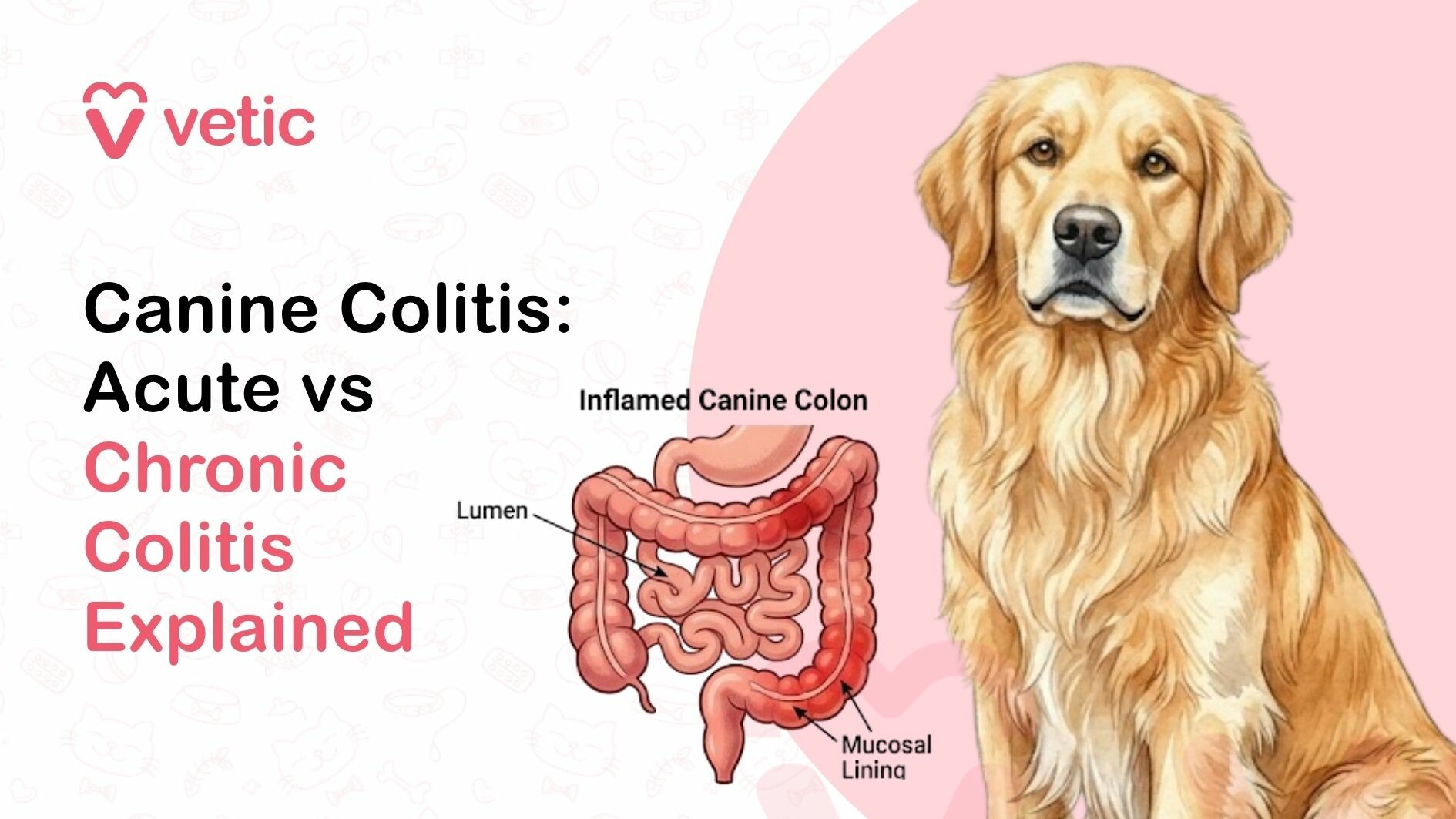
Colitis in dogs is a common digestive condition. It affects the large intestine (colon), leading to symptoms like diarrhoea, mucus, and sometimes blood in the stool. While it can look alarming, many cases are manageable, especially when identified early.
Understanding the difference between acute and chronic colitis, along with causes and treatment options, helps you respond appropriately and support your dog’s recovery.
What Is Colitis in Dogs and How Does It Affect Digestive Health?
Colitis refers to inflammation of the colon, also known as the large intestine. The colon plays a vital role in absorbing water and storing faecal matter before elimination. When it becomes inflamed, this process is disrupted, leading to urgency, discomfort, and diarrhoea in dogs.
Dogs with colitis typically experience frequent, small-volume bowel movements rather than large amounts of diarrhoea. The condition can be acute (short-term) or chronic (long-lasting), depending on the underlying cause and how quickly it is treated.
What Are the Signs and Symptoms of Colitis in Dogs?
The signs of colitis disease in dogs usually involve frequent defecation, straining, and visible changes in stool consistency and appearance.
What Bowel Movement Changes Occur in Colitis?
Dogs with colitis pass stool more frequently, often with straining and reduced stool volume.
Instead of large diarrhoeal output, you will notice repeated attempts to defecate with only small amounts passed each time. Straining is common and may be mistaken for constipation.
Why Is There Mucus or Fresh Blood in the Stool?
Mucus and fresh blood appear in the stool because the inflamed colon lining becomes irritated and fragile.
In most cases, the blood is bright red rather than black because it comes from the lower part of the intestinal tract. The stool may also appear slimy or jelly-like due to excess mucus produced by an irritated colon. This often alarms pet parents, but it is a classic sign of colitis rather than stomach bleeding.
What Other Signs Are Seen Along With Colitis?
Dogs with colitis may show abdominal discomfort, restlessness, and sudden urgency to defecate.
Some dogs appear uneasy, repeatedly change positions, or seem unable to settle comfortably due to intestinal cramping. In mild cases, appetite may still remain fairly normal, but in more severe cases, the dog may appear dull, uncomfortable, or reluctant to eat.
Suggested Read: Why is your dog not eating: What can you do?
What Is the Difference Between Acute and Chronic Colitis in Dogs?
Acute and chronic colitis differ mainly in duration, cause, and long-term management.
What Is Acute Colitis in Dogs?
Acute colitis in dogs develops suddenly and usually resolves within a few days with appropriate care.
It is commonly triggered by dietary changes, eating spoiled food, stress, or mild infections, and in most cases, responds quickly to basic treatment and dietary adjustment.
What Is Chronic Colitis in Dogs?
Chronic colitis in dogs persists for weeks or recurs frequently and is often linked to underlying disease.
Conditions such as food intolerance or inflammatory bowel disease (IBD) are commonly associated, and long-term dietary and medical management is usually required.
What Causes Colitis in Dogs?
Colitis in dogs can result from multiple triggers, including dietary, infectious, and stress-related factors.
Can Food Trigger Colitis in Dogs?
Yes, food is one of the most common triggers of colitis in dogs, especially when the diet changes suddenly or the dog eats something unsuitable.
Dogs may develop colitis after consuming table scraps, rich foods, spoiled leftovers, garbage, or abrupt switching of commercial diets. Some dogs also have food intolerance or sensitivity to specific ingredients, which can cause repeated episodes of bowel inflammation.
How Do Infections and Parasites Cause Colitis?
Bacterial infections and intestinal parasites can directly inflame the colon lining.
Organisms such as E. coli, Salmonella, Giardia, and whipworms interfere with normal gut function and lead to diarrhoea with mucus or blood.
Can Stress Cause Colitis in Dogs?
Yes, stress can directly affect gut motility and lead to what is commonly known as stress colitis.
Situations such as travel, boarding, environmental changes, or routine disruption can trigger sudden-onset diarrhoea even in otherwise healthy dogs.
How Do Veterinarians Diagnose Colitis in Dogs?
A veterinarian typically starts with a clinical evaluation and a professional dog check-up to identify the underlying cause. Key diagnostic steps may include:
- Physical examination and a review of your dog’s medical history
- Faecal examination to check for parasites or bacteria
- Blood tests to assess overall health
- Stool cultures for infection detection
- Imaging (X-rays or ultrasound) if needed
- Dietary trials to identify food sensitivities
In chronic cases, more advanced procedures like colonoscopy or biopsy may be recommended to evaluate the colon lining directly.
Suggested Read: Food for Dog in Summer: Best Diet for Dogs in Summer to Keep Them Cool and Healthy
What Are the Treatment Options for Colitis in Dogs?
Canine colitis treatment depends on the cause, the severity of inflammation, and whether the condition is acute or chronic.
What Medications Are Used for Colitis in Dogs?
Medications for colitis in dogs are used to control infection, inflammation, and diarrhoea.
Veterinarians may prescribe antibiotics for bacterial causes, anti-inflammatory drugs to reduce colon irritation, and medications to control diarrhoea.
How Does Diet Help in Treating Colitis?
Dietary management is a key part of treatment and recovery in cases of colitis.
Easily digestible foods, such as boiled chicken and rice, or prescription gastrointestinal diets, help reduce strain on the colon and promote healing.
Why Are Probiotics and Hydration Important in Colitis?
Probiotics and hydration are important because colitis disrupts the normal gut flora and can lead to fluid loss from frequent stools.
Probiotics may help restore the intestinal microbial balance, while hydration support helps prevent worsening weakness and dehydration. In mild cases, oral fluids may be enough, but more severe cases may require veterinary fluid therapy, especially if the dog is weak or refusing food.
Why Does Colitis Need Special Attention in Puppies?
Colitis in puppies requires special attention because they dehydrate more quickly and are more vulnerable to parasites and infections. Puppies have less physiological reserve than adult dogs, so repeated loose stools can lead to weakness much more quickly.
In younger dogs, colitis is commonly associated with dietary error, intestinal parasites, or infectious causes. So early diagnosis and prompt treatment of colitis in puppies are especially important.
How Can You Manage Colitis at Home During Recovery?
Home care plays an important role in supporting recovery from canine colitis once treatment has started.
Feeding small, frequent meals and avoiding sudden diet changes helps stabilise digestion. It is also important to ensure constant access to clean water and avoid treats or table scraps during recovery.
How Long Does Colitis in Dogs Last?
The duration of colitis depends on whether it is acute or chronic and how quickly treatment is started.
Acute colitis usually resolves within 2 to 5 days, while chronic colitis may require weeks to months of management depending on the underlying cause.
Can Colitis in Dogs Be Cured Completely?
A cure for colitis in dogs is possible in some cases, while others can only be controlled long-term.
Acute colitis caused by a temporary trigger such as stress, garbage eating, or a minor dietary upset is often fully reversible. Chronic colitis, however, is more often managed rather than permanently cured, especially when linked to food intolerance or inflammatory bowel disease. With correct treatment and follow-up, most dogs can still maintain a good quality of life.
When to See a Vet for Colitis in Dogs?
Seek veterinary care at the best pet clinic near you when symptoms are severe, persistent, recurrent, or associated with other symptoms. Watch for:
- Diarrhoea lasting more than 2 days
- There is significant blood in the stool
- Your dog becomes lethargic
- Vomiting or dehydration occurs
- Symptoms keep recurring
Early canine colitis treatment prevents complications.
Final Takeaway: About Colitis and Dogs
Colitis in dogs is a common but manageable digestive issue. Recognising symptoms early, especially diarrhoea with mucus or blood, helps ensure quick treatment. While acute colitis often resolves quickly, chronic cases require ongoing care. With the right diet, treatment, and monitoring, most dogs recover well and maintain a healthy digestive system.
Frequently Asked Questions: About Colitis in Dogs
What is the best treatment for colitis in dogs?
The best treatment for canine colitis is a combination of diet, medication, and probiotics, tailored to the underlying cause.
What medication is used for canine colitis?
Canine colitis medication options include antibiotics, anti-inflammatories, and gut-support medications prescribed by a vet.
Can stress cause colitis in dogs?
Yes. Stress is a well-known trigger for acute colitis in dogs.
Is colitis in dogs life-threatening?
Most cases of colitis in dogs are mild and manageable. But severe or untreated cases can lead to dehydration and complications.
References
Brooks, W. (n.d.). Colitis-Related diarrhea in dogs and cats. https://veterinarypartner.vin.com/default.aspx?pid=19239&id=4951545
Burgener, I. A. (n.d.). Approach to Canine and Feline Colitis. https://www.vin.com/apputil/content/defaultadv1.aspx?id=4516240&pid=11310
Collier, A. (2025, June 12). Colitis in small animals. MSD Veterinary Manual. https://www.msdvetmanual.com/digestive-system/diseases-of-the-large-intestine-in-small-animals/colitis-in-small-animals
Defarges, A., Blois, S., Hall, E. J., Gibson, T. W. G., & Mitchell, K. D. (2025, August 5). Disorders of the stomach and intestines in dogs. MSD Veterinary Manual. https://www.msdvetmanual.com/dog-owners/digestive-disorders-of-dogs/disorders-of-the-stomach-and-intestines-in-dogs Purina. (n.d.). Fiber-Responsive Colitis and Large Bowel Diarrhea in Dogs. https://www.purinainstitute.com/centresquare/therapeutic-nutrition/fiber-responsive-colitis-and-large-bowel-diarrhea-in-dogs