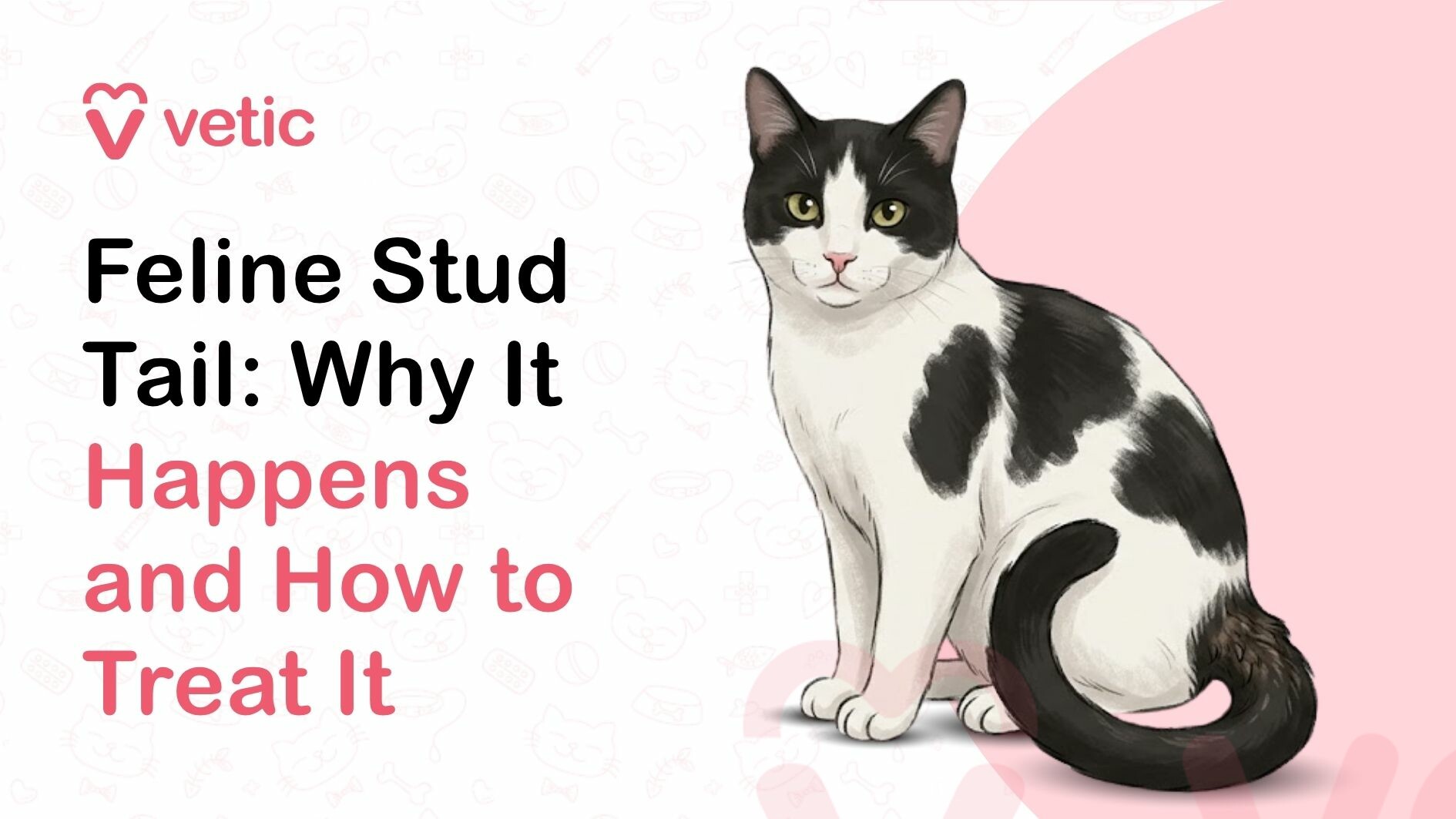
If you’ve noticed your cat’s tail looking greasy, matted, or covered with black specks near the base, it may be a condition called stud tail. While it may sound unusual, stud tail is a fairly common skin condition, especially in male cats. However, with proper care and treatment, this common cat disease is manageable and often reversible.
What Is A Stud Tail in Cats, and What Causes The Feline Stud Tail Condition?
Stud tail in cats, also known as tail gland hyperplasia, is a condition caused by overactivity of sebaceous glands at the base of the tail, resulting in excessive oil accumulation and skin changes.
These glands normally produce oil to maintain coat health and skin barrier function. However, when they become overactive, oil builds up on the skin surface, blocks hair follicles, and leads to blackheads, greasiness, and irritation. Clinically, this condition is also referred to as tail gland hyperplasia.
Despite the name, stud tail is not limited to breeding males and can be seen in a broader range of cats, depending on risk factors.
Which Cats Are More Likely to Develop a Stud Tail?
Stud tail is more common in certain cats due to hormonal influence, grooming ability, and coat type:
Factors contributing to stud tail in white cats are:
- Hormonal influence: Most common in unneutered males due to testosterone. Higher hormone levels increase oil production at the tail base.
- Poor grooming: Cats that are overweight, elderly, or ill may struggle to groom the base of the tail properly, allowing oil, dirt, and debris to accumulate.
- Long-haired breeds: Such as Himalayan cats, are also at higher risk because dense fur traps oil and makes early detection more difficult.
- Underlying medical conditions: Skin infections, obesity, or dermatological disorders reduce grooming efficiency and allow oil to build up.
What Are the Common Symptoms of Stud Tail in Cats?
Stud tail typically presents with visible changes in the skin and coat at the base of the tail.
What Are the Early Signs of Stud Tail in Cats?
Early signs of a stud tail in cats include greasy fur, blackheads, and mild hair changes at the base of the tail.
This area may feel sticky or dirty even after grooming your cat. Blackheads may be visible on the skin, and hair may begin to thin or clump together. These changes are usually localised to the upper surface of the tail near its base.
What Happens in An Advanced or Untreated Stud Tail?
If left untreated, stud tail can progress to inflammation, infection, and skin damage.
The skin may become red, irritated, and develop an unpleasant odour. In more severe cases, pimples, pustules, or open sores may form due to secondary bacterial infection. Cats may also show increased licking or discomfort in the affected area.
How Veterinarians Diagnose a Stud Tail in Cats?
A feline stud tail is usually diagnosed through physical examination based on characteristic skin and coat changes.
Veterinarians look for oily fur, blackheads, hair loss, and inflammation at the base of the tail. The pattern and location of lesions are typically distinct enough to suggest stud tail without complex testing.
Additional tests are only needed if other skin diseases are suspected. Skin tests, skin scrapings, cytology, or fungal testing may be done at the affordable cat diagnostic centre to confirm infection.
What Are the Options for Stud Tail Treatment for Cats?
Stud tail treatment in cats focuses on reducing oil buildup, improving hygiene, and managing infection if present.
What Topical Treatments Are Used for Treating Feline Stud Tail?
Topical therapy is the first-line treatment for a stud tail and aims to remove excess oil and keep the skin clean.
Veterinarians commonly recommend degreasing or antiseborrheic shampoos specifically formulated for cats. Regular cleaning of the affected area helps clear blocked follicles and reduce the recurrence of feline stud tail.
Suggested Read: Feline Eosinophilic Granuloma Complex: Symptoms, Causes, and Treatment in Cats
When Are Medications Needed for Stud Tail?
Medications are required when there is inflammation, infection, or more severe skin involvement.
In such cases, vets may prescribe topical or oral antibiotics and anti-inflammatory treatment to control infection and discomfort. These treatments are especially important for moderate-to-severe cases of feline stud tail.
Why Is Grooming Important in Managing Stud Tail?
Regular grooming helps prevent recurrence by reducing oil accumulation and maintaining skin hygiene.
Brushing and cleaning the tail area helps prevent excess oil from building up again. In long-haired cats, trimming the fur around the base of the tail may also help improve cleanliness and visibility.
What Are the Options For Home Treatment of Stud Tail in Cats?
Mild cases of a stud tail in cats can often be managed at home with proper hygiene and vet-recommended products.
- Using vet-approved degreasing shampoos
- Cleaning the area gently with warm water and pet-safe wipes
- Trimming fur around the tail base if necessary
- Ensuring your cat maintains a healthy diet and weight
Avoid over-scrubbing or using harsh human shampoos, which can irritate the skin
When to See a Vet for a Stud Tail in Cats?
Consult a vet at the top cat clinic near you when the condition does not improve or shows signs of infection.
- Persistent greasiness despite cleaning
- Redness, swelling, or pain
- Foul smell
- Pus, open sores, or bleeding
- Behavioural changes (e.g., excessive licking or discomfort)
These signs of feline stud tail indicate infection or worsening condition. Early treatment helps prevent complications and speeds up recovery.
Can Stud Tail in Cats Be Prevented?
A stud tail in white cats can often be prevented or controlled by managing risk factors and maintaining skin hygiene.
- Neutering male cats to lower hormone levels
- Regular grooming and hygiene
- Keeping your cat at a healthy weight
- Monitoring skin condition
- Maintaining a clean environment
Suggested Read: How Much is Cat Sterilization: Cat Neutering Cost at the Best Clinics in India
What Is the Recovery Timeline After Treatment for A Stud Tail?
Recovery from feline stud tail treatment depends on the severity of the condition and how early treatment is started.
Mild cases often improve within one to two weeks with proper grooming and cleaning. Moderate to severe cases may take several weeks to resolve, especially if an infection is present. Hair regrowth usually occurs after the skin has healed.
Final Takeaway: About Stud Tail in Cats
Stud tail in cats is a manageable skin condition caused by excess oil production, most commonly influenced by hormones. Early signs like greasiness and blackheads should not be ignored, as timely care can prevent infections and complications. With proper grooming, treatment, and in some cases neutering, most cats recover well and maintain healthy skin.
Frequently Asked Questions: About Stud Tail in Cats
What is stud tail in cats, and is it serious?
Stud tail is a skin condition caused by overactive oil glands at the base of the tail. It is usually not serious, but it can lead to infections if untreated.
Can a stud tail in cats be treated at home?
Yes, mild cases can often be managed at home with proper grooming and vet-approved products. However, severe cases of feline stud tail need veterinary care.
Does neutering help cure stud tail in cats?
Yes. Neutering often reduces hormone-driven oil production and can significantly improve the condition.
How long does a stud tail take to heal?
Healing time for feline stud tail varies from a couple of weeks in mild cases to several weeks for more severe conditions, especially if infections are involved.
References
Moriello, K. A. (n.d.). Structure of the Skin in Cats. Veterinary Manual. https://www.msdvetmanual.com/cat-owners/skin-disorders-of-cats/structure-of-the-skin-in-cats
Moriello, K. A. (2025, February 3). Hyperplastic and Seborrheic Syndromes in Animals. MSD Veterinary Manual. https://www.msdvetmanual.com/integumentary-system/congenital-and-inherited-anomalies-of-the-integumentary-system/hyperplastic-and-seborrheic-syndromes-in-animals
Noli, C. (2026). Seborrhea: Why and How Does it Happen? Vin.com. https://www.vin.com/apputil/content/defaultadv1.aspx?pId=8768&catId=18812&id=3850098&ind=175&objTypeID=17
Pfannkuche, H., Maus, J., Engel, K. M., Schiller, J., & Schneider, M. R. (2026). Decoding sebaceous gland functions and diseases: insights from domestic animals. Veterinary Research Communications, 50(3). https://link.springer.com/article/10.1007/s11259-026-11128-0 Villalobos, A. E. (n.d.). Epidermal and Hair Follicle Tumours in Animals. MSD Veterinary Manual. https://www.msdvetmanual.com/integumentary-system/tumors-of-the-skin-and-soft-tissues/epidermal-and-hair-follicle-tumors-in-animals