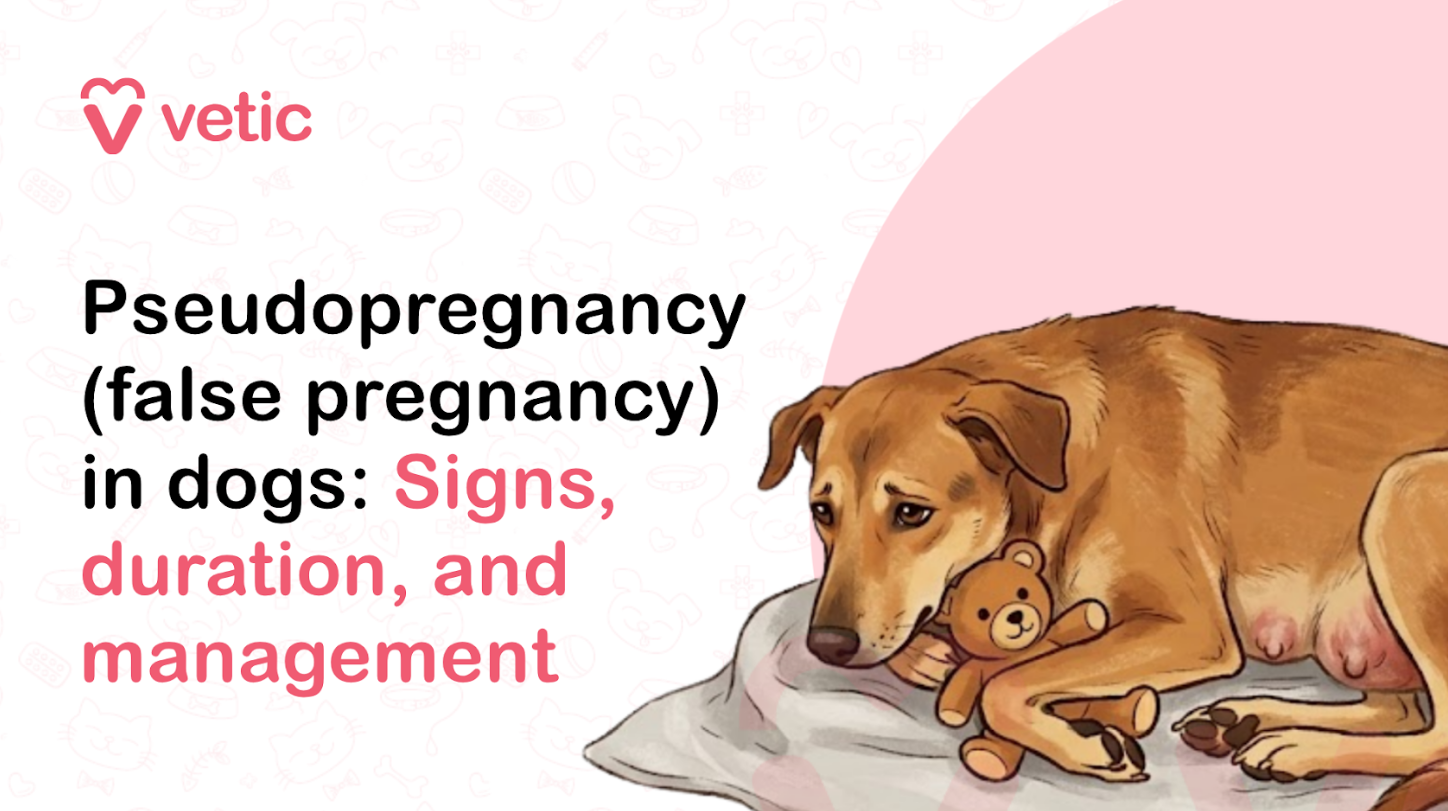
Pseudopregnancy, also known as false pregnancy, is a common hormonal condition seen in unspayed female dogs. This condition causes a non-pregnant female dog to exhibit signs of pregnancy. While it can be confusing for pet parents, most cases are self-limiting and manageable with proper care.
Understanding why false pregnancy in dogs occurs, how long it lasts, and when treatment is needed helps ensure your dog’s comfort and prevents complications.
What Is False Pregnancy in Dogs and Why Does It Occur?
False pregnancy in dogs is a natural hormonal response that occurs after a heat cycle. This causes the body to behave as though it is pregnant even when it is not.
After a heat cycle, the hormone progesterone rises and then falls. This triggers an increase in prolactin, the hormone responsible for maternal behaviours and milk production. This hormonal shift can cause the dog’s body to behave as if it were pregnant.
Canine pseudopregnancy is considered a physiological response rather than a disease, but symptoms can vary in intensity.
What Causes Pseudopregnancy in Dogs?
Dog pseudopregnancy is caused by hormonal fluctuations following the estrus (heat) cycle.
It typically occurs in unspayed female dogs after they go through a heat cycle without becoming pregnant. The canine reproductive system doesn’t immediately “recognise” whether pregnancy has occurred, so the hormonal pattern remains similar regardless.
Certain factors, such as genetics, previous episodes, or heightened sensitivity to hormonal shifts, may increase the likelihood of experiencing false pregnancy.
When Does False Pregnancy Typically Occur in Dogs?
Canine false pregnancy usually occurs 4 to 8 weeks after a dog’s heat cycle.
This timing corresponds to the period when hormonal changes peak. Pet parents often notice symptoms suddenly during this phase, especially if they are not expecting any reproductive changes.
Suggested Read: Dog C-Section: Procedure, Costs, Recovery, and When Your Dog Needs One
What Are the Common Signs and Symptoms of False Pregnancy in Dogs?
False pregnancy in dogs presents with both physical and behavioural signs that resemble true pregnancy.
Common physical signs include enlarged mammary glands, milk production, mild abdominal distension, weight gain, and, in some cases, reduced appetite. Dogs may also show lethargy or restlessness depending on hormone levels. In certain cases, dogs may lick their mammary area excessively, which can sometimes lead to irritation or infection.
These signs can vary in severity, and not all dogs will show every symptom.
What Behavioural Changes Are Seen in Dogs with False Pregnancy?
Behavioural changes in dogs with false pregnancy often resemble maternal instincts. Dogs may begin nesting, gathering toys or objects, and treating them like puppies. Increased clinginess, restlessness, or even mild aggression can occur. Some dogs may appear anxious or depressed, while others become more protective of their “nest” or chosen objects.
How Long Does False Pregnancy Last in Dogs?
Pseudo pregnancy in dogs typically lasts between 2 and 3 weeks, though mild cases may resolve sooner. In some dogs, behavioural signs may fade quickly, while physical symptoms such as milk production may persist slightly longer.
If symptoms persist for more than a few weeks or worsen, a further canine vet checkup is necessary.
Can False Pregnancy in Dogs Resolve on Its Own?
Most cases of pseudopregnancy resolve naturally without medical treatment.
As hormone levels return to normal, the body gradually stops producing pregnancy-like symptoms. In mild cases, no intervention is required apart from monitoring and supportive care. However, recurring or severe cases may need veterinary attention.
How Do Vets Diagnose Canine Pseudopregnancy?
Diagnosis of pseudopregnancy is based on clinical signs, history of heat cycle, and ruling out actual pregnancy.
Veterinarians assess mammary changes, behaviour, and timing after heat. If needed, diagnostic tools such as ultrasound or palpation may be used to confirm that the dog is not pregnant.
Accurate diagnosis is important to avoid unnecessary treatment or confusion with a real pregnancy.
What Are the Treatment Options for False Pregnancy in Dogs?
Treatment of false pregnancy in dogs depends on the severity of symptoms and whether the condition is causing discomfort or complications.
In mild cases, no active treatment is required, and symptoms are monitored until they resolve. In more noticeable cases, supportive management is advised to reduce stimulation of milk production and behavioural distress. Supportive care, such as preventing excessive licking or providing a calm environment, is also important.
When Is Medical Treatment Needed for Pseudopregnancy?
Medical treatment is required when symptoms are severe, prolonged, or causing complications such as mastitis.
Vets may prescribe medications to reduce prolactin levels and stop milk production. This is particularly important if the dog shows significant distress, excessive lactation, or repeated episodes.
Treatment decisions are always based on clinical evaluation at the best pet clinic.
How Can You Manage False Pregnancy in Dogs at Home Safely?
Home management focuses on reducing stimulation of maternal behaviours and supporting the dog through the hormonal phase.
It is important to avoid stimulating the mammary glands, as licking or handling can increase milk production. Limiting access to objects that trigger maternal behaviour, such as toys, can help reduce nesting behaviour.
Providing regular exercise, distraction, and routine feeding helps stabilise behaviour and reduces anxiety. Always ensure your dog has a calm and stress-free environment.
What Happens If A False Pregnancy in Dogs Is Left Untreated?
Most cases do not cause harm if left untreated, but some dogs may develop complications.
Potential issues include mastitis (infection of the mammary glands), persistent lactation, and behavioural stress. Repeated canine pseudopregnancy episodes can also affect the dog’s overall well-being.
This is why monitoring and timely intervention are important in recurrent cases.
Can False Pregnancy in Dogs Be Prevented?
The most effective way to prevent dog pseudopregnancy is through spaying (ovariohysterectomy).
Spaying eliminates the hormonal cycles responsible for the condition. However, timing is important, as surgery should not be performed during an active pseudopregnancy episode, because it may prolong symptoms.
Consulting a veterinarian helps determine the safest timing for the procedure.
When Should You See a Vet for False Pregnancy Symptoms?
Veterinary consultation is needed if symptoms are severe, persistent, or causing discomfort.
You should seek medical advice if your dog shows signs of infection, such as redness, heat, or excessive milk production, painful swelling, and lethargy. Behavioural changes like aggression, extreme anxiety, or depression also warrant professional evaluation. Early intervention helps prevent complications and ensures proper management.
Final Thoughts: About Dogs and False Pregnancy
False pregnancy in dogs is a common hormonal condition that is usually temporary but can sometimes require intervention.
With proper understanding, monitoring, and supportive care, most dogs recover without complications. For recurring cases, long-term prevention through spaying and veterinary guidance is the most effective approach.
FAQ: About Dogs and False Pregnancy
What are the first signs of false pregnancy in dogs?
Early signs of false pregnancy in dogs often include behavioural changes such as nesting, increased affection, and carrying objects, followed by physical signs like enlarged mammary glands.
How long does pseudopregnancy last in dogs?
Pseudopregnancy in dogs typically lasts 2 to 3 weeks but can sometimes extend up to a month.
Does every female dog experience false pregnancy?
No, not all dogs show noticeable symptoms, although hormonal changes occur in all unspayed females.
Can false pregnancy in dogs be treated at home?
Mild cases of canine pseudopregnancy can be managed at home, but severe cases require veterinary treatment.
Is pseudopregnancy harmful to dogs?
It is usually not harmful, but complications like mastitis or behavioural issues can occur if symptoms are severe or recurrent.
References
Concannon, P. W. (2015). Understanding and Monitoring Canine Pregnancy. VIN. https://www.vin.com/apputil/content/defaultadv1.aspx?id=3854215&pid=11196
Menteith, C. (n.d.). Dog Puberty: What You Need to Know. Purina. https://www.purina.co.uk/articles/dogs/puppy/health/dog-puberty
Purina. (n.d.). Phantom Pregnancy in Dogs – Symptoms & Treatment. https://www.purina.co.uk/articles/dogs/health/pregnancy/phantom-pregnancy-in-dogs
Purina Pro Plan. (n.d.). Signs of False Pregnancy in Dogs. American Kennel Club. https://www.akc.org/expert-advice/dog-breeding/signs-false-pregnancy-dogs/ Scully, C. M. (n.d.). Pseudopregnancy in Small Animals. MSD Veterinary Manual. https://www.msdvetmanual.com/reproductive-system/reproductive-diseases-of-the-female-small-animal/pseudopregnancy-in-small-animals