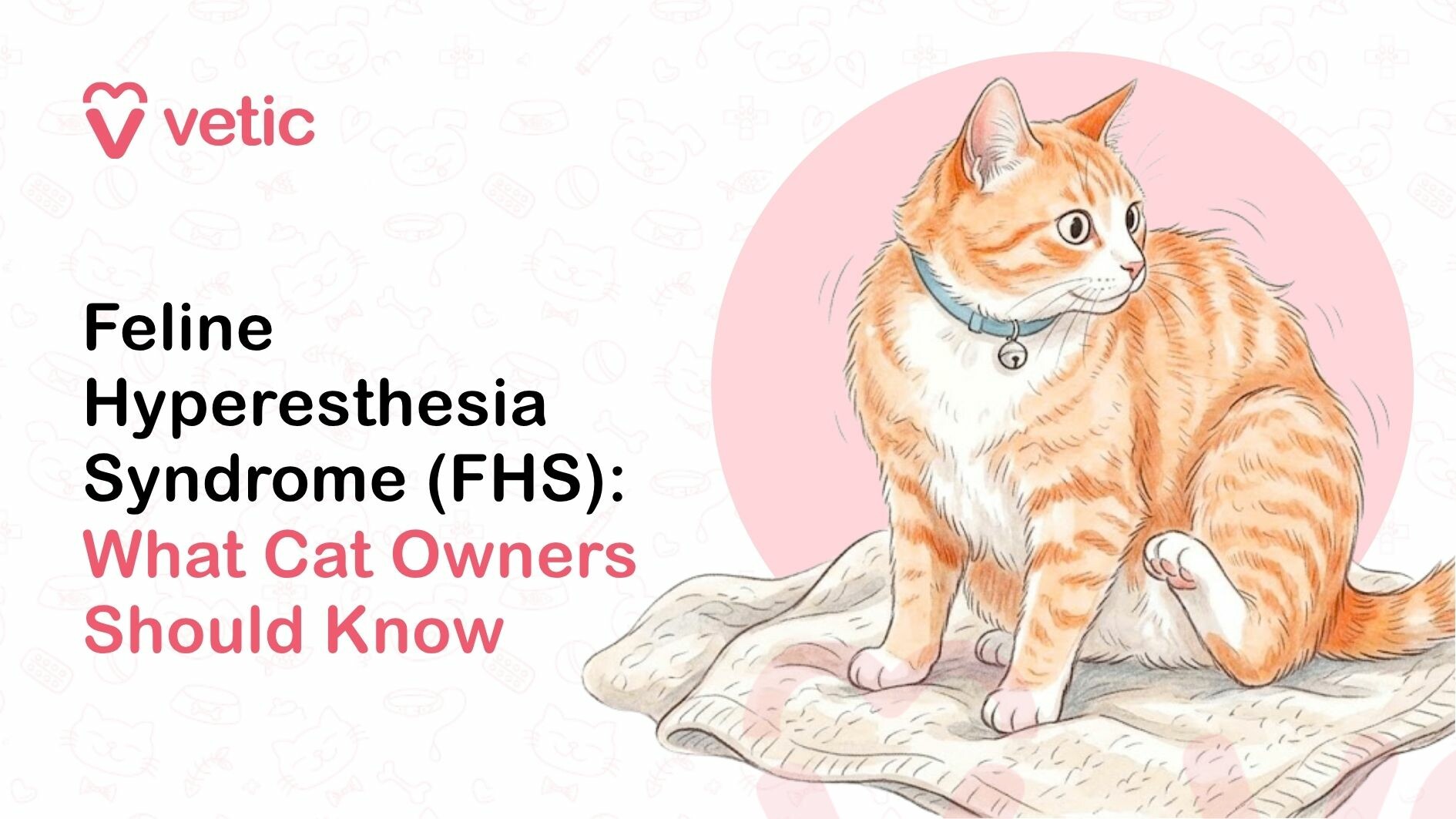
Feline Hyperesthesia Syndrome (FHS), often called “twitchy cat syndrome,” is a puzzling condition that can be alarming to watch. Cats may suddenly react as if something is bothering their skin, dart around the house, or act unusually sensitive to touch, especially along the back.
While it’s not fully understood, FHS is manageable, and many cats live comfortable lives with the right support. This blog breaks down what cat hyperesthesia syndrome is, its causes, and how you can help your cat feel safe and calm.
What Is Cat Hyperesthesia Syndrome and Why Is It Called Twitchy Cat Syndrome?
Feline Hyperesthesia Syndrome is a condition that affects a cat’s skin sensitivity, nervous system, and behaviour. The term “hyperesthesia” means increased sensitivity, particularly along the spine. So, cats with FHS may react strongly to sensations that wouldn’t normally bother them.
It’s often called Twitchy cat syndrome or Rolling skin disease because affected cats exhibit visible skin rippling and sudden behavioural changes during episodes. It can be in response to touching, brushing or it can be spontaneous as well.
What Are the Symptoms of Feline Hyperesthesia Syndrome in Cats?
Symptoms of cat hyperesthesia syndrome typically occur in short episodes and may vary in intensity from mild twitching to dramatic behavioural changes.
What Physical Signs Are Seen in Cat Hyperesthesia Syndrome?
Physical signs of cat hyperesthesia syndrome are mainly related to abnormal skin sensitivity and muscle activity.
- Skin rippling or rolling along the back
- Sudden twitching of muscles
- Extreme sensitivity when touched
- Sudden grooming or biting at the back or tail
These episodes can come and go unpredictably.
What Behavioural Changes Occur During Episodes?
Behavioural signs of cat hyperesthesia syndrome are often more noticeable and can appear alarming to pet parents.
- Sudden running or darting around the house
- Tail chasing or attacking behaviour
- Loud vocalisation (meowing or yowling)
- Dilated pupils and a startled expression
Some cats appear anxious or agitated during these episodes, which helps differentiate it from simple skin irritation.
Suggested Read: How Long Do Cats Live? Lifespan of Domestic and House Cats Explained
What Causes Feline Hyperesthesia Syndrome in Cats
The exact cause of cat hyperesthesia syndrome is not clearly defined, but it is considered a multifactorial condition involving neurological, behavioural, and environmental components.
Is Cat Hyperesthesia Syndrome a Neurological Condition?
Yes, many cases of cat hyperesthesia syndrome are believed to involve abnormal nerve activity or seizure-like episodes.
- Altered sensory processing in the nervous system
- Possible mild seizure activity in some cats
- Pain pathway hypersensitivity
This explains the sudden and episodic nature of the condition.
Can Stress and Anxiety Trigger Hyperesthesia Episodes?
Yes, stress and environmental factors are among the most common triggers of cat hyperesthesia syndrome. Common triggers include:
- Changes in routine or environment
- Lack of stimulation or boredom
- Excessive petting (especially along the back)
- Loud noises or stressful situations
Episodes of cat hyperesthesia syndrome often occur during periods of heightened stress or excitement.
How Veterinarians Diagnose Feline Hyperesthesia Syndrome?
There is no single test for cat hyperesthesia syndrome. Diagnosis is made by ruling out other conditions. The best cat doctor near you may:
- Perform a full physical and neurological exam
- Check for fleas, allergies, or skin infections
- Conduct blood tests to rule out systemic illness
- Recommend imaging in complex cases
Conditions such as skin diseases, parasites, pain-related issues, and seizure disorders must be excluded before diagnosing FHS.
What Are Feline Hyperesthesia Treatment Options?
Treatment for feline hyperesthesia focuses on reducing the frequency of episodes, managing triggers, and improving overall comfort.
Can Environmental Changes Help Manage FHS?
Yes, environmental management is a key part of treatment and often significantly reduces episode frequency.
- Maintain a consistent routine
- Provide enrichment (toys, climbing spaces)
- Reduce environmental stressors
- Create safe, quiet resting areas
These steps are especially important for indoor cats in Indian households, where stimulation may be limited.
What Medications Are Used to Treat Hyperesthesia in Cats?
Medications are used in moderate to severe cases of cat hyperesthesia syndrome, where episodes are frequent or distressing.
- Anti-anxiety medications to reduce stress-related triggers
- Anti-seizure drugs in suspected neurological cases
- Pain-modulating medications to reduce nerve sensitivity
Supplements may include omega-3 fatty acids and calming nutraceuticals. Treatment is always tailored based on severity and response.
Does Behavioural Therapy Help in Managing FHS?
Yes, structured behavioural management plays an important role in long-term control.
- Regular interactive play sessions
- Scheduled feeding routines
- Avoiding overstimulation during petting
Consistency is essential to reduce the unpredictability of episodes.
How to Calm a Cat During a Feline Hyperesthesia Episode?
During an episode of cat hyperesthesia syndrome, the goal is to minimise stimulation and allow the cat to settle naturally.
- Stay calm and avoid sudden movements
- Do not attempt to restrain the cat
- Reduce noise and stimulation
- Allow the cat space to settle
Avoid touching sensitive areas in cats, as this may worsen the reaction.
How Can Hyperesthesia in Cats Be Managed Long-Term?
Long-term management of cat hyperesthesia syndrome focuses on controlling triggers and maintaining routine stability.
- Identifying and avoiding triggers
- Maintaining routine and predictability
- Monitoring frequency and severity of episodes
- Keep a symptom diary to track patterns
This approach helps in adjusting treatment plans effectively.
Suggested Read: How Much is Cat Sterilization: Cat Neutering Cost at the Best Clinics in India
Can Feline Hyperesthesia Syndrome Be Cured?
Cat hyperesthesia syndrome is generally not curable, but it is manageable. With proper care:
- Episodes may reduce in frequency
- Severity can be controlled
- Cats can live normal, happy lives
Early intervention at the best pet clinic significantly improves outcomes.
When to See a Veterinarian for Hyperesthesia in Cats?
Veterinary consultation is necessary when episodes are frequent, severe, or worsening. Seek vet advice if:
- Your cat injures itself during episodes
- Symptoms worsen over time
- You notice new neurological signs
- Behaviour changes significantly
Prompt evaluation at the nearest top cat clinic helps rule out serious conditions.
What to Expect When Living With a Cat Diagnosed With Feline Hyperesthesia Syndrome?
Living with cat hyperesthesia syndrome requires patience, observation, and consistency. Most cats:
- Adapt well to management strategies
- Continue normal daily activities
- Maintain strong bonds with their parents
Understanding your cat’s triggers and behaviour is the most powerful tool you have.
Final Takeaway: About Cat Hyperesthesia Syndrome
Cat hyperesthesia syndrome may look dramatic, but it is a manageable condition with the right understanding and care. By recognising early signs, reducing triggers, and working closely with your veterinarian, you can help your cat live a calm, comfortable, and fulfilling life despite the condition.
Frequently Asked Questions: About Cat Hyperesthesia Syndrome
What triggers feline hyperesthesia syndrome in cats?
Common triggers of cat hyperesthesia syndrome include stress, overstimulation, environmental changes, and sometimes unknown factors.
Are cats with hyperesthesia in pain during episodes?
Some cats with cat hyperesthesia syndrome may experience discomfort or heightened sensitivity, though the exact sensation varies.
How effective is feline hyperesthesia treatment?
Treatment for cat hyperesthesia syndrome can be highly effective in reducing symptoms, especially when combining environmental and medical approaches.
How do you calm a cat with feline hyperesthesia syndrome?
Provide a quiet environment, avoid touching sensitive areas, and allow the episode to pass without interference.
What does feline hyperesthesia syndrome look like in cats?
Cat hyperesthesia syndrome typically involves skin rippling, sudden twitching, tail chasing, vocalisation, and bursts of unusual activity.
References
AVMA. (n.d.). Feline Hyperesthesia Syndrome. 176(1), 47. https://avmajournals.avma.org/view/journals/javma/176/1/javma.1980.176.01.47.xml
Hall, E. (2025, July 2). How Often Should You Play with Your Cat? The American Animal Hospital Association. https://www.aaha.org/resources/how-often-should-you-play-with-your-cat/
Landsberg, G. M. (2019). Behavior Problems in Cats. Veterinary Manual; MSD Veterinary Manual. https://www.msdvetmanual.com/cat-owners/behavior-of-cats/behavior-problems-in-cats
McPeake, K. J., Peregrin, M., Hepple, A., & Gunn‐Moore, D. (2024). Scent as a trigger of feline hyperaesthesia syndrome. Veterinary Record Case Reports. https://bvajournals.onlinelibrary.wiley.com/doi/full/10.1002/vrc2.1059 Tizard, I. R. (2024). Hypersensitivity Diseases in Animals. Veterinary Manual. https://www.msdvetmanual.com/immune-system/immunologic-diseases/hypersensitivity-diseases-in-animals