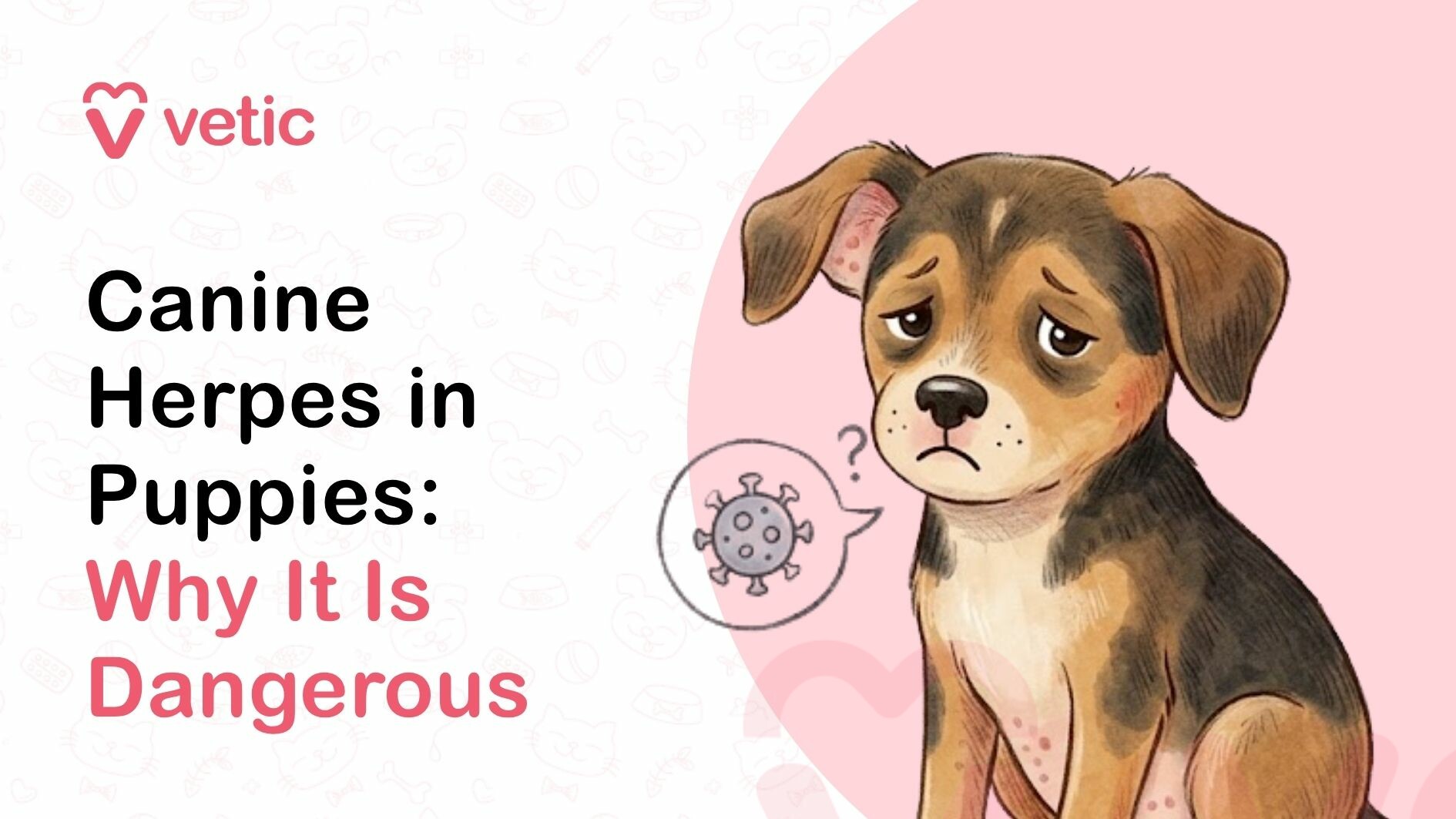
Canine herpesvirus (CHV) is a highly contagious viral infection in dogs. It often causes mild or unnoticed symptoms such as restlessness or coughing in adult dogs. But it can be devastating and often fatal in newborn puppies.
For breeders and pet parents, understanding why canine herpes is so dangerous in puppies and how to prevent it is essential.
What Is Canine Herpesvirus, and How Does It Affect Dogs of Different Ages?
Canine herpesvirus is a viral infection that primarily affects the respiratory and reproductive systems but, in severe cases, can involve multiple organs, especially in puppies. The effect of the virus varies significantly with age.
- Adult dogs: Usually develop mild respiratory or genital signs or may remain completely asymptomatic, acting as carriers
- Pregnant dogs: Risk of transmitting infection to puppies
- Newborn puppies: Highly vulnerable due to immature immunity.
This age-dependent severity is the most important feature of CHV in clinical cases.
How Canine Herpesvirus Spreads Between Dogs?
In adult dogs, the virus spreads through nasal, oral, or genital secretions during close contact.
This commonly occurs in kennels, breeding environments, or multi-dog households where dogs interact closely. Even dogs that appear healthy can intermittently shed the virus, especially under stress.
How Do Puppies Get Infected With Canine Herpesvirus?
Puppies are usually infected by their mother either before, during, or shortly after birth.
Transmission of canine herpes in puppies can occur across the placenta, through the birth canal, or via close contact after birth. The virus replicates more easily in puppies because they cannot regulate their body temperature effectively, creating conditions favourable for viral growth.
Also Read: Dogs Down Syndrome: Can Dogs Have Down Syndrome and What It Really Means
What Are the Symptoms of Canine Herpesvirus in Adult Dogs?
In adult dogs, canine herpesvirus infection is often subtle. The signs of canine herpesvirus can include respiratory and genital discomfort.
What Respiratory and Genital Signs Are Seen in Adult Dogs?
When symptoms occur, they typically involve mild respiratory or reproductive signs.
Adult dogs may show occasional coughing or sneezing, mild nasal or eye discharge, or genital inflammation and discharge. These signs are often self-limiting and may not require intensive treatment.
Why Do Many Adult Dogs Show No Symptoms?
Many adult dogs remain asymptomatic because their immune systems can control the infection effectively.
However, the virus can remain dormant in the body and reactivate during stress, illness, or immunosuppression. This makes apparently healthy dogs potential carriers that can unknowingly transmit the virus.
Why Is Canine Herpesvirus More Dangerous in Puppies?
Canine herpesvirus is particularly dangerous in puppies because their immune systems and thermoregulation are not fully developed.
What Are the Early Signs of Canine Herpesvirus in Puppies?
Early signs in puppies include weakness, continuous crying, and difficulty feeding.
Affected puppies often appear lethargic, fail to nurse properly, and may feel cold to the touch. Weight gain is usually poor, and growth may be noticeably delayed compared to littermates.
Why Does Canine Herpesvirus Cause Sudden Death in Puppies?
The virus spreads rapidly through vital organs in puppies, leading to sudden deterioration and death.
This happens because their immune response is immature and unable to control viral replication. Additionally, the inability to maintain body temperature allows the virus to multiply more efficiently, worsening the infection.
Mortality is highest in puppies under 2 to 3 weeks of age.
What Are the Risk Factors of Dog Herpes Infection?
Canine herpesvirus spreads more easily in environments where dogs are in close contact and under stress.
Why Are Breeding and Kennel Environments High Risk?
Breeding setups and kennels increase the risk of transmission due to crowding and frequent dog interactions.
Close proximity, shared spaces, and introducing new dogs without quarantine significantly increase exposure to the virus.
How Do Stress and Hygiene Affect CHV Infection Risk?
Stress and poor hygiene weaken the immune system and increase the likelihood of viral spread.
Factors such as transport, overcrowding, illness, and inadequate sanitation can trigger viral reactivation and transmission.
How Is Canine Herpesvirus Diagnosed in Dogs?
Diagnosis of canine herpesvirus is based on clinical suspicion supported by laboratory testing.
Your dog veterinarian suspects CHV when multiple puppies in a litter show similar signs or die suddenly. A history of recent breeding, neonatal illness, or unexplained puppy mortality raises suspicion.
Laboratory tests such as PCR are used to detect the virus, especially in suspected cases. In many situations, definitive diagnosis in puppies is confirmed through post-mortem examination, as the disease progresses rapidly.
What Are the Treatment Options for Canine Herpesvirus?
There is no definitive cure for canine herpesvirus, but supportive care can help.
What Supportive Care Is Required for Puppies?
Maintaining body temperature is the most critical aspect of treatment in puppies.
Puppies require external warmth, fluid support to prevent dehydration, and assisted feeding if they are unable to nurse. Keeping body temperature around 38 to 39 degrees Celsius helps slow viral replication.
Are There Effective Antiviral Treatments for CHV?
Antiviral treatments are limited in effectiveness and are not routinely reliable in severe cases.
Early intervention may improve survival in some puppies, but outcomes remain guarded. Adult dogs generally recover without intensive treatment.
What Is the Prognosis for Dogs With Canine Herpesvirus?
The prognosis depends strongly on the age of the dog at the time of infection.
- Young puppies have a poor prognosis, especially in the first three weeks of life. Mortality rates are very high due to rapid disease progression and weak immunity.
- Adult dogs have an excellent prognosis and usually recover with mild or no symptoms.
- Older puppies, particularly after 3 to 4 weeks of age, have better survival chances with supportive care.
How Can Canine Herpesvirus Be Prevented?
Prevention is the most effective strategy for controlling canine herpesvirus, especially in breeding environments.
How Should Breeding Environments Be Managed?
Pregnant dogs should be isolated and protected from exposure to unfamiliar dogs.
It is important to avoid crowded environments, quarantine new dogs, and minimise stress during pregnancy and whelping.
What Hygiene and Care Practices Help Prevent CHV?
Maintaining strict hygiene and reducing stress are essential preventive measures.
Regular cleaning, proper sanitation of whelping areas, good ventilation, and adequate nutrition all contribute to reducing infection risk.
In some regions, dog vaccines are available for breeding females to reduce transmission risk to puppies.
When to Contact a Vet for Dog Herpes Symptoms?
Immediate veterinary consultation at the nearest best pet clinic is required if symptoms are seen in puppies or breeding dogs. Watch for:
- Puppies are weak or not feeding
- Continuous crying or restlessness occurs
- Sudden deaths occur in a litter
- Pregnant dogs show unusual symptoms
These signs indicate possible CHV infection and require urgent evaluation.
Final Takeaway: About Herpes and Dogs
Canine herpesvirus is a silent but serious threat, especially to newborn puppies. While adult dogs often show mild symptoms, the infection can be rapidly fatal in young litters. Prevention, through hygiene, isolation, and careful breeding management, is the most effective way to protect vulnerable puppies and ensure their survival.
Frequently Asked Questions: About Canine Herpesvirus in Dogs
What are the first dog herpes symptoms to watch for?
In puppies, herpes symptoms are weakness, crying, and poor feeding. In adults, mild respiratory or genital signs can be present.
Can humans get canine herpesvirus from dogs?
No. Canine herpesvirus does not infect humans.
Is canine herpesvirus curable in puppies?
There is no cure. Treatment focuses on supportive care, but survival in very young puppies is limited.
How can I protect newborn puppies from canine herpes?
Keep them warm. Isolate from infected dogs. Maintain hygiene. Monitor closely during the first few weeks.
References
Brooks, W. (n.d.). Herpes infections in dogs. https://veterinarypartner.vin.com/default.aspx?pid=19239&catId=254096&id=4952309
Holst, B. S., Gustavsson, M. H., Grapperon‐Mathis, M., Lilliehöök, I., Johannisson, A., Isaksson, M., Lindhe, A., & Axnér, E. (2012). Canine herpesvirus during pregnancy and Non‐Pregnant luteal phase. Reproduction in Domestic Animals, 47(s6), 362–365. https://pubmed.ncbi.nlm.nih.gov/23279539/
Ledbetter, E. C., Silva, E. C. D., Kim, S. G., Dubovi, E. J., & Schwark, W. S. (2012). Frequency of spontaneous canine herpesvirus-1 reactivation and ocular viral shedding in latently infected dogs and canine herpesvirus-1 reactivation and ocular viral shedding induced by topical administration of cyclosporine and systemic administration of corticosteroids. AVMA, 73(7), 1079–1084. https://avmajournals.avma.org/view/journals/ajvr/73/7/ajvr.73.7.1079.xml
Lobetti, R. (n.d.). Understanding PCR. VIN. https://www.vin.com/apputil/content/defaultadv1.aspx?pId=12886&catId=57123&id=7054903 Rezaei, M., Jajarmi, M., Kamani, S., Khalili, M., & Babaei, H. (2023). Prevalence of canine herpesvirus 1 and associated risk factors among bitches in Iranian breeding kennels and farms. Veterinary Medicine and Science, 9(6), 2497–2503. https://onlinelibrary.wiley.com/doi/full/10.1002/vms3.1246