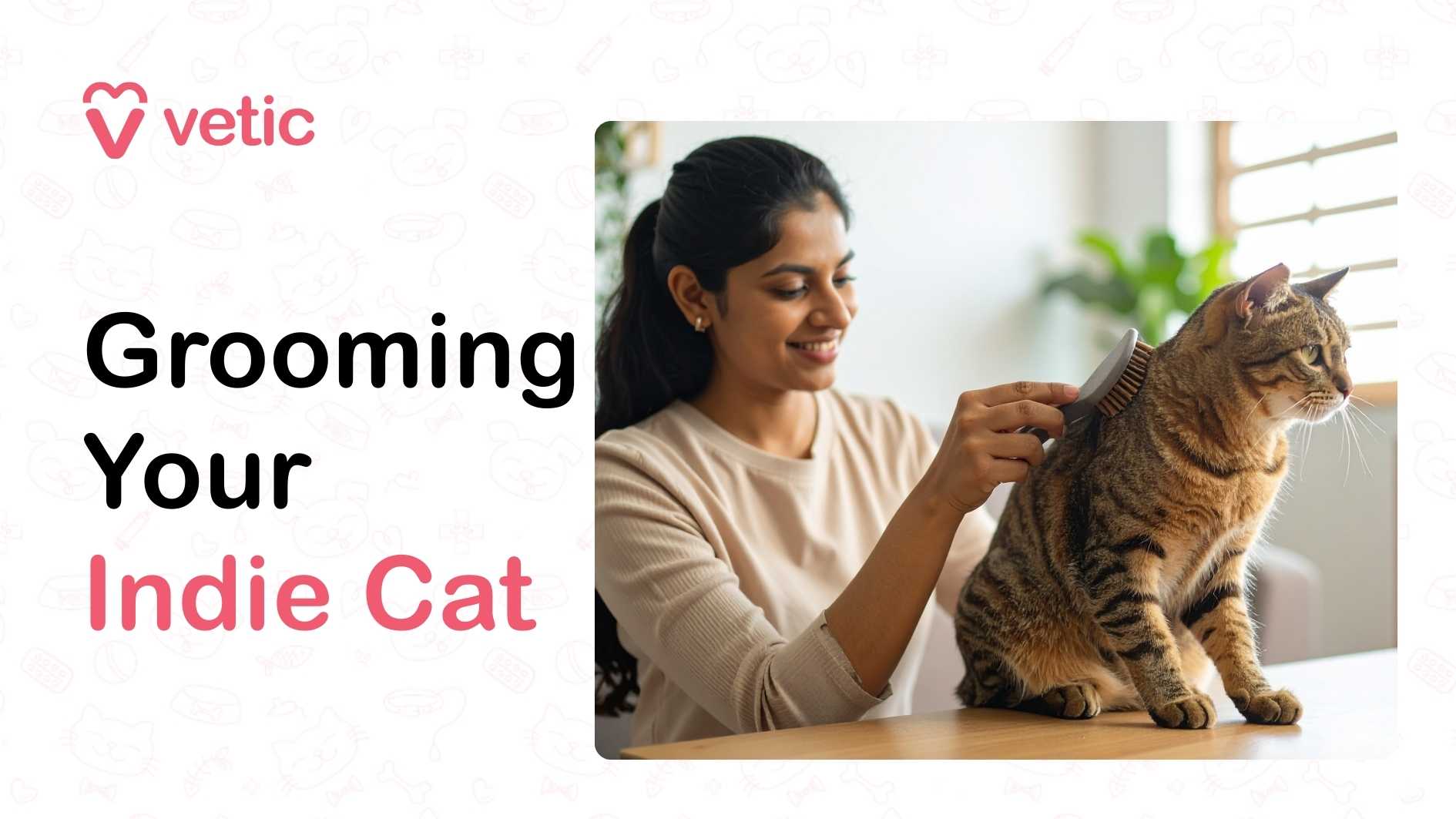
Home GroomingGrooming Your Cat: A Gentle Guide for First-Time Indie Cat Parents

Grooming Your Cat: A Gentle Guide for First-Time Indie Cat Parents

by Vetic Editorial
Published: Updated: 7K views

Bringing home an Indie cat is exciting, but grooming can feel confusing at first. Many first-time pet parents wonder whether cats need brushing, how often to bathe them, or how to handle tasks like nail trimming and dental care without stress.
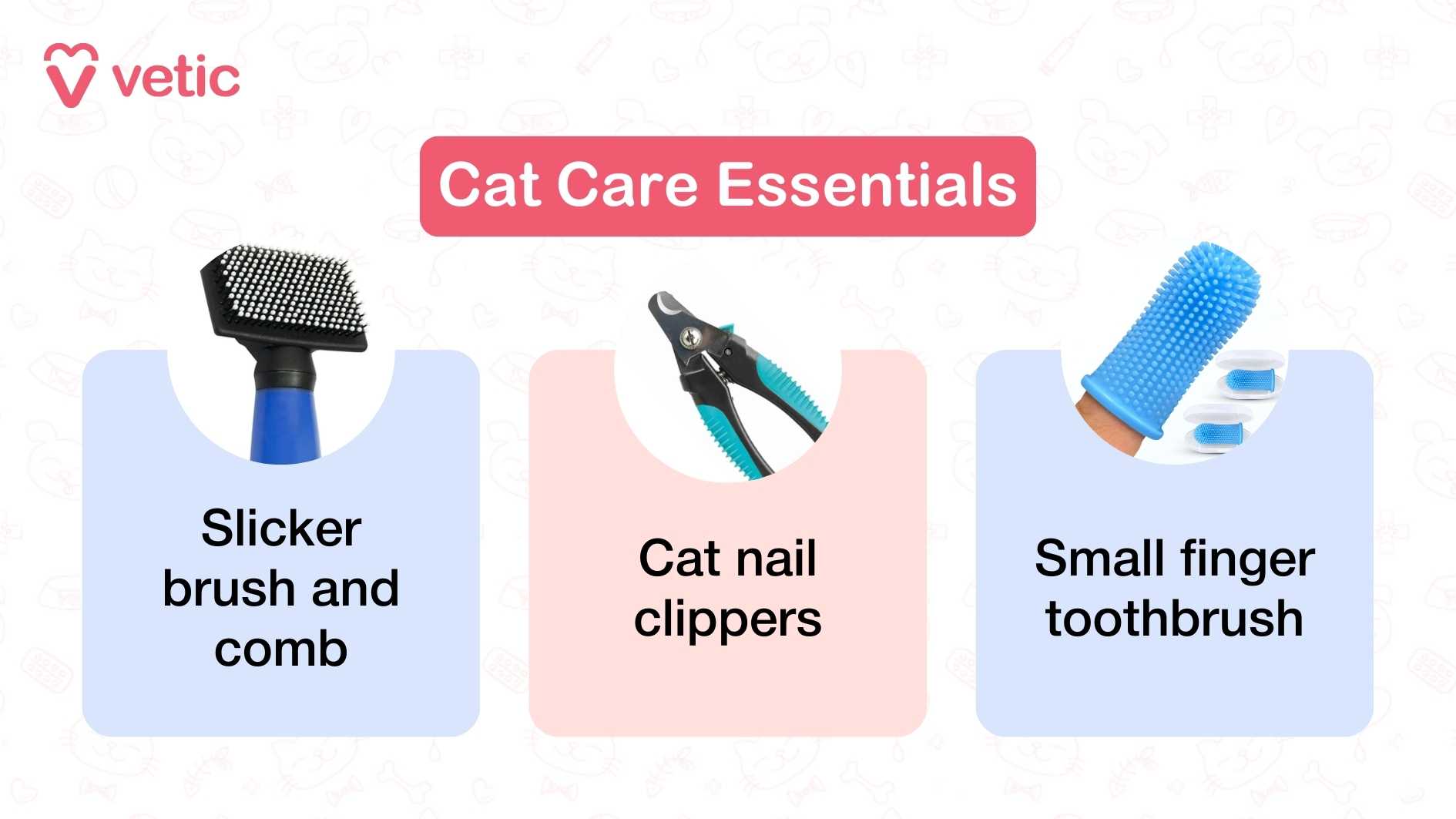
visually structured infographic from "Vetic" titled “Cat Care Essentials.” It showcases three foundational grooming tools every cat parent should have. Each tool is illustrated with a clear image and labeled with bold, readable text. The first item is a “Slicker brush and comb,” shown with fine, closely spaced wires designed to remove loose fur and detangle the coat. The second is “Cat nail clippers,” a specialized tool shaped for feline claws, emphasizing safe and precise trimming. The third is a “Small finger toothbrush,” a soft silicone brush that fits over a finger, ideal for gently cleaning a cat’s teeth. The layout is simple and symmetrical, with each tool given equal visual weight, making the graphic easy to scan and understand.

The truth is, grooming is not just about cleanliness it is a key part of preventive healthcare. With the right approach, grooming can become a calm, bonding experience instead of a struggle. This guide will help you understand every aspect of grooming your Indie cat in a simple and practical way.

Coat Care and Brushing for Cats: How Regular Brushing Keeps Your Cat’s Coat Healthy and Reduces Hairballs
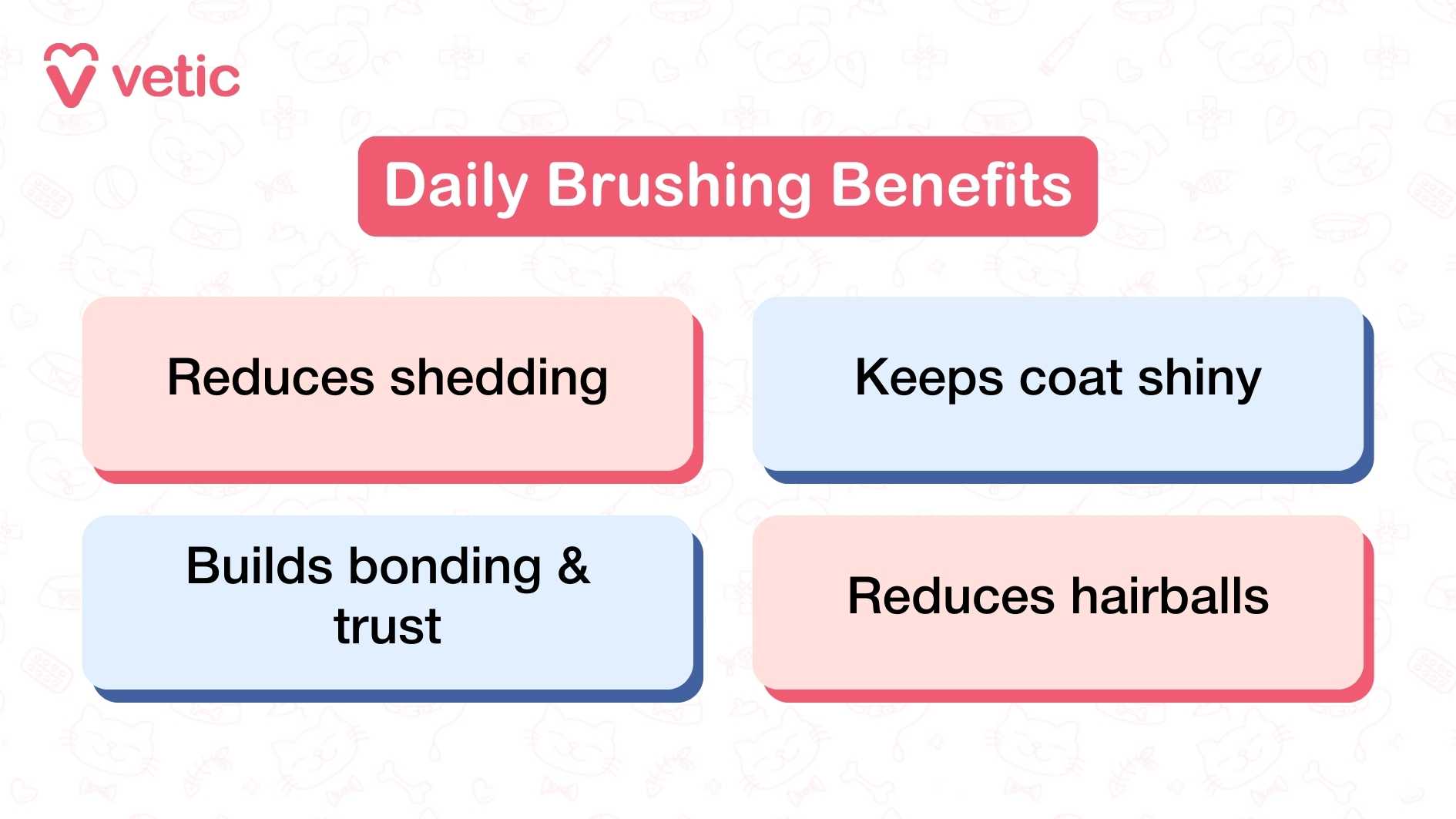
a vibrant infographic from "Vetic" titled “Daily Brushing Benefits,” prominently displayed in a red banner at the top center. The layout features four colored boxes, each containing a key benefit of daily brushing for pets. The first box reads “Reduces shedding,” emphasizing how regular grooming helps manage loose fur. The second states “Keeps coat shiny,” highlighting the role of brushing in distributing natural oils for a healthy appearance. The third box says “Builds bonding & trust,” pointing to the emotional connection that forms through consistent grooming routines. The fourth benefit, “Reduces hairballs,” underscores the practical health advantage of minimizing ingested fur. The design is clean, with high contrast and simple typography that makes the information easy to absorb at a glance.

Indie cats usually have short to medium-length coats, which are relatively easy to maintain compared to long-haired breeds. However, this does not mean they do not need brushing. Regular brushing helps remove loose fur, dirt, and dander while also distributing natural oils across the coat, keeping it soft and shiny.

Brushing also plays a major role in reducing hairballs. Cats groom themselves by licking their fur, which leads to ingestion of loose hair. Without regular brushing, this hair can accumulate in the stomach and cause frequent vomiting. Occasional hairballs are normal, but frequent episodes may indicate the need for better grooming or dietary adjustments.

To make brushing stress-free, keep sessions short and consistent. A few gentle strokes daily or every alternate day work better than long, infrequent sessions. Over time, your cat begins to associate brushing with comfort rather than restraint.

Use tools like:

  • Rubber grooming brushes or fine-toothed combs for daily use
  • Slicker brushes during shedding seasons

Watch for warning signs like bald patches, dandruff, or scabs. These may indicate underlying skin issues that require veterinary attention rather than more brushing.

Bathing Cats: Do Cats Really Need Baths and When Should You Bathe Your Cat?
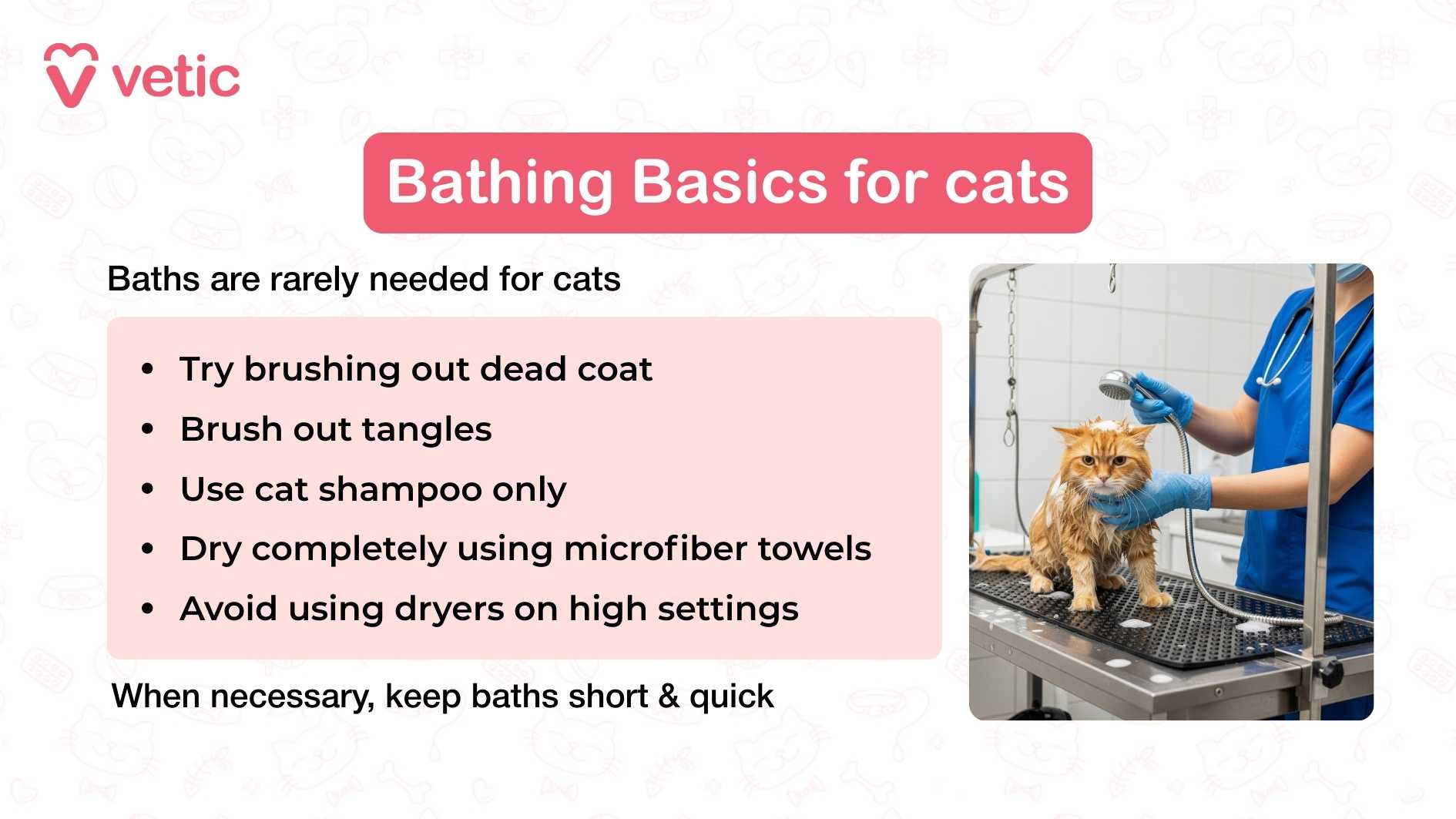
This image is a well-composed infographic from "Vetic" titled “Bathing Basics for cats.” It features a photograph of a cat being bathed by a person wearing blue gloves, likely in a professional grooming setting. The cat stands on a metal grooming table and is held gently near a showerhead, suggesting a controlled and hygienic environment. The cat appears alert but calm, and the gloved hands indicate a careful, sanitary approach to handling. The text in the image offers practical advice for bathing cats, emphasizing that baths are rarely necessary. It reads: “Bathing Basics for cats” “Baths are rarely needed for cats” Try brushing out dead coat Brush out tangles Use cat shampoo only Dry completely using microfiber towels Avoid using dryers on high settings “When necessary, keep baths short & quick”

Cats are naturally clean animals and spend a significant amount of time grooming themselves. Most Indie cats do not require frequent bathing, especially if they live indoors. However, baths may become necessary in specific situations such as exposure to dirt, sticky substances, or parasites like fleas.

For a healthy indoor cat, bathing once every few months is usually enough. Overbathing can strip natural oils from the skin, leading to dryness and irritation. Between baths, you can use waterless grooming foams or cat wipes to maintain hygiene without causing stress.

It is important to always use cat-specific shampoos. Human and dog shampoos may contain ingredients that are toxic or too harsh for feline skin.

To make bathing easier:

  • Prepare everything in advance (towel, shampoo, mat)
  • Use lukewarm water
  • Keep the session short and calm
  • Dry your cat gently with a towel and reward them afterwards

Avoid bathing your cat during illness, after vaccination, or during heat cycles, as they may be more vulnerable during these times. Think of bathing as an occasional need rather than a routine task.

Ear Care for Cats: How to Safely Check and Clean Your Cat’s Ears Without Causing Stress
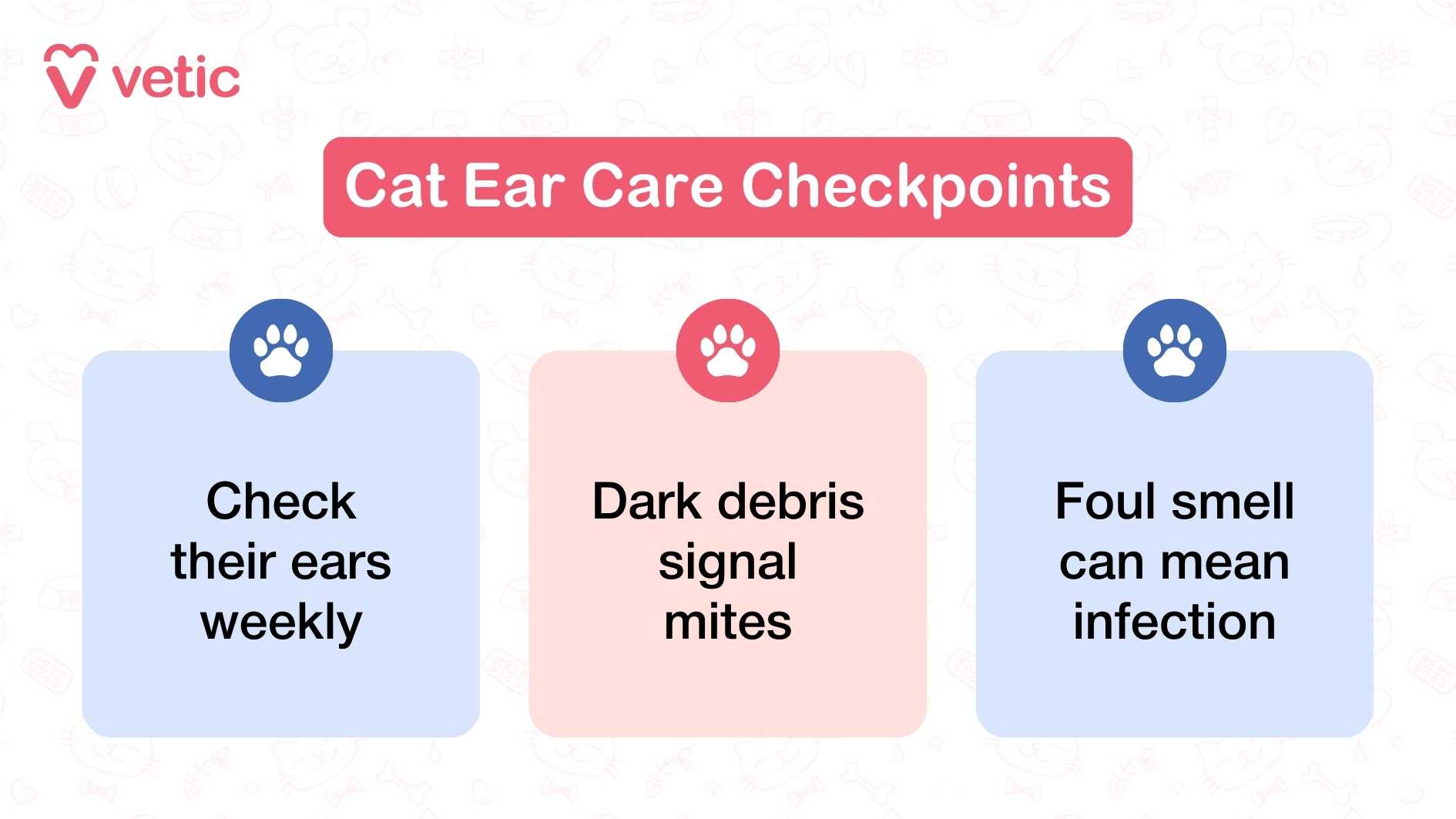
a visually engaging infographic from "Vetic" titled “Cat Ear Care Checkpoints.” It features three distinct colored boxes, each containing a key tip for monitoring feline ear health. At the top of each box is a small paw icon, reinforcing the pet-focused theme. The first box, in blue, reads “Check their ears weekly,” encouraging routine inspection. The second box, in pink, states “Dark debris signal mites,” alerting pet parents to a common sign of parasitic infection. The third box, also in blue, warns “Foul smell can mean infection,” pointing to a symptom that may require veterinary attention. The layout is clean and symmetrical, with high contrast between text and background colors for easy readability.

Ear care in cats is more about observation than frequent cleaning. Most Indie cats do not need regular ear cleaning unless there is visible dirt or wax buildup. A weekly check is usually sufficient to ensure ear health.

Healthy ears should appear pale pink, clean, and free from strong odours. If you notice dark debris that looks like coffee grounds, it could indicate ear mites. Redness, swelling, or a foul smell may suggest an infection.

When cleaning is required:

  • Use a vet-recommended ear cleaning solution
  • Apply it to a cotton ball (not directly into the ear canal)
  • Gently wipe the outer ear

Avoid using cotton buds inside the ear, as they can push debris deeper and cause injury. If you notice persistent symptoms, it is important to consult a veterinarian instead of attempting repeated cleaning at home.

Cat Dental Care: Simple Grooming Habits That Help Maintain Your Cat’s Oral Health
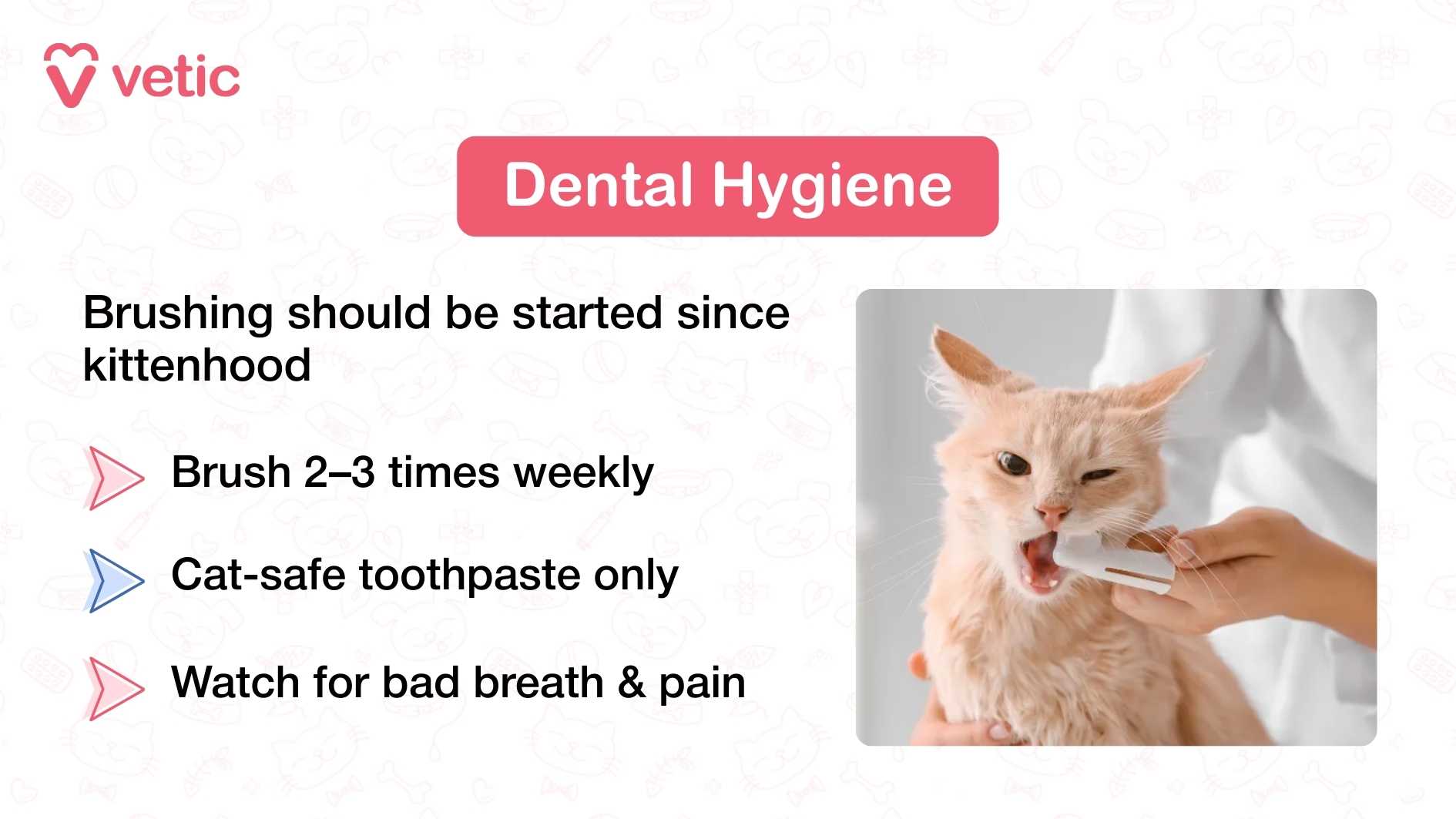
This image is a well-organized infographic from "Vetic" titled “Dental Hygiene,” displayed in a pink box at the top. It features a photograph of a light-colored cat being gently brushed with a toothbrush by a person, likely a pet parent or groomer. The cat appears calm and cooperative, and the toothbrush is positioned carefully near the mouth, emphasizing a gentle and familiar approach to oral care. The background is softly lit, keeping the focus on the grooming interaction and reinforcing the message that dental hygiene can be a positive, bonding experience. The text in the image outlines three essential practices for maintaining a cat’s dental health: “Brush 2–3 times weekly” “Cat-safe toothpaste only” “Watch for bad breath & pain” The layout is clean and easy to follow, with each point clearly separated and supported by the visual of a real grooming moment.

Dental health is often overlooked in cats, but it is essential for their overall well-being. By the age of three, many cats begin to show signs of plaque buildup or gum disease. Without proper care, dental issues can lead to pain, infection, and difficulty eating.

The most effective way to maintain oral hygiene is by brushing your cat’s teeth two to three times a week. Start slowly by letting your cat taste a small amount of cat-safe toothpaste. Gradually introduce a finger brush or a soft toothbrush designed for cats.

It is important to never use human toothpaste, as it contains ingredients like fluoride and xylitol that are toxic to cats.

If brushing is difficult:

  • Use dental treats or special kibble as support
  • Schedule regular veterinary dental check-ups

Watch for signs like bad breath, drooling, or pawing at the mouth, as these may indicate dental problems that require professional care.

Nail and Paw Care for Cats: Safe Nail Trimming and Paw Hygiene Tips for Indoor and Outdoor Cats
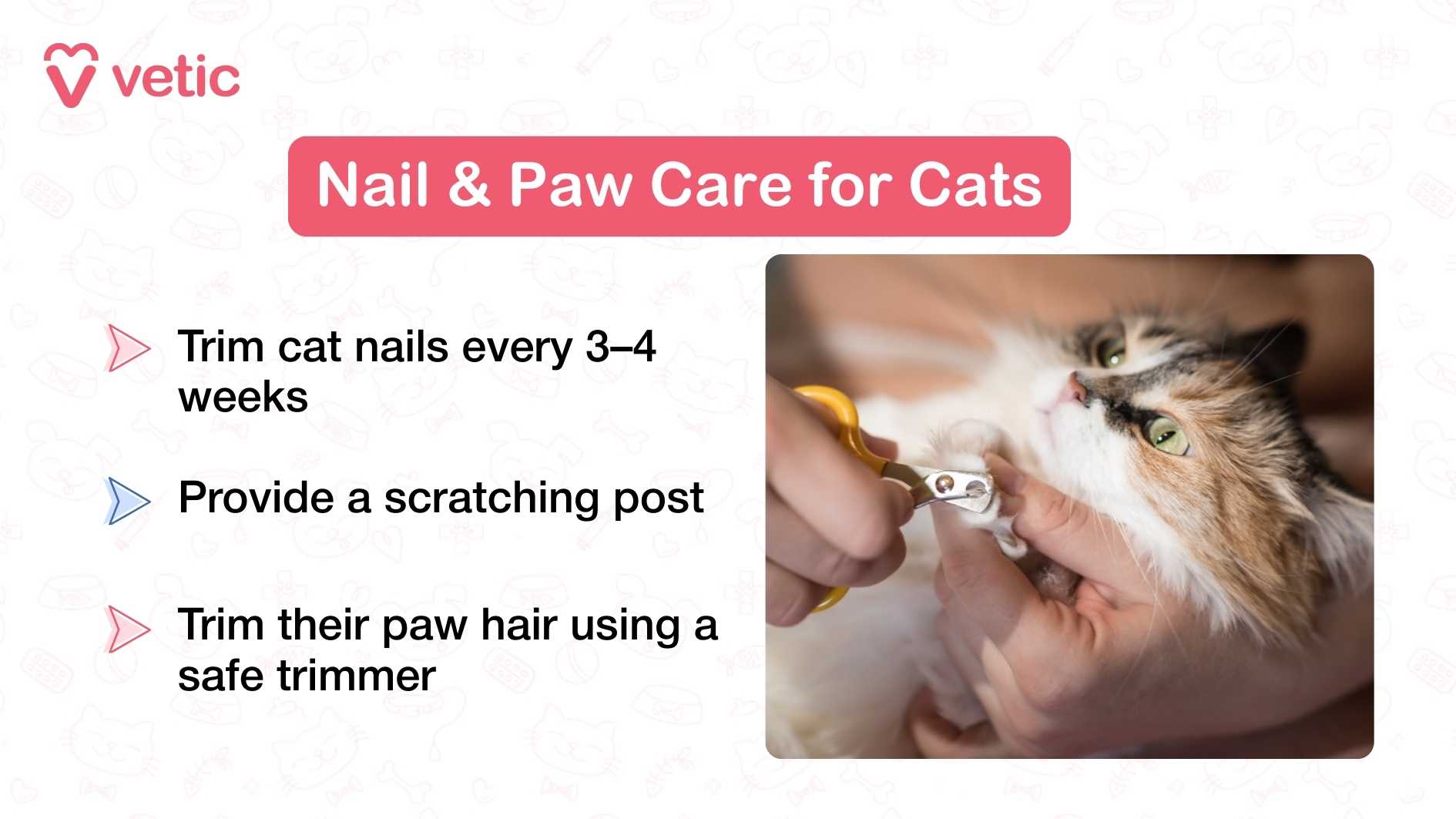
This image is another cleanly designed infographic from "Vetic," centered on “Nail & Paw Care for Cats.” It features a close-up photograph of a person trimming a cat’s nails using a safe, pet-appropriate clipper. The cat, an orange tabby, appears calm and cooperative, held gently in a way that supports its paw without causing stress. The lighting is soft and natural, highlighting the grooming action while keeping the background unobtrusive. To the left of the image, three grooming tips are listed in bold, legible text: “Trim cat nails every 3–4 weeks” “Provide a scratching post” “Trim their paw hair using a safe trimmer” The visual and textual elements work together to reinforce the importance of routine paw care.

Scratching is a natural and essential behaviour for cats. It helps them stretch, mark territory, and maintain their claws. Instead of trying to stop scratching, it is better to redirect it by providing scratching posts or mats.

Indoor cats typically need nail trimming every three to four weeks. If you hear a clicking sound when your cat walks, it is usually a sign that their nails are too long.

When trimming nails:

  • Use a proper cat nail clipper
  • Only cut the transparent tip
  • Avoid the pink area (quick), which contains blood vessels

If you accidentally cut the quick, it can cause bleeding and pain, but it can be managed with styptic powder or cornstarch.

For outdoor cats, paw care is equally important. Check their paws regularly for debris like stones or thorns, and wipe them after outdoor activity to prevent infections.

General Hygiene and Cat Grooming Habits That Help Keep Cats Clean, Comfortable, and Healthy

This image is a well-composed infographic from "Vetic" titled “Bathing Basics for cats.” It features a photograph of a cat being bathed by a person wearing blue gloves, likely in a professional grooming setting. The cat stands on a metal grooming table and is held gently near a showerhead, suggesting a controlled and hygienic environment. The cat appears alert but calm, and the gloved hands indicate a careful, sanitary approach to handling. The text in the image offers practical advice for bathing cats, emphasizing that baths are rarely necessary. It reads: “Bathing Basics for cats” “Baths are rarely needed for cats” Try brushing out dead coat Brush out tangles Use cat shampoo only Dry completely using microfiber towels Avoid using dryers on high settings “When necessary, keep baths short & quick”

  • Even though cats groom themselves, they still need support to maintain overall hygiene. Regular grooming routines help prevent infections, control parasites, and keep your cat comfortable.

    Key hygiene practices include:

    • Monthly flea and tick prevention, even for indoor cats
    • Keeping the litter box clean to maintain overall hygiene
    • Using grooming wipes occasionally to freshen up

    Cats should not have a strong or unpleasant smell. If you notice persistent odour, it could be due to skin issues, dental problems, or anal gland concerns, which require veterinary attention.

    Professional grooming is not always necessary for Indie cats, but it can help with nail trimming, deshedding, or handling difficult grooming situations.

Building Trust Through Cat Grooming: How Gentle Grooming Strengthens the Bond with Your Cat
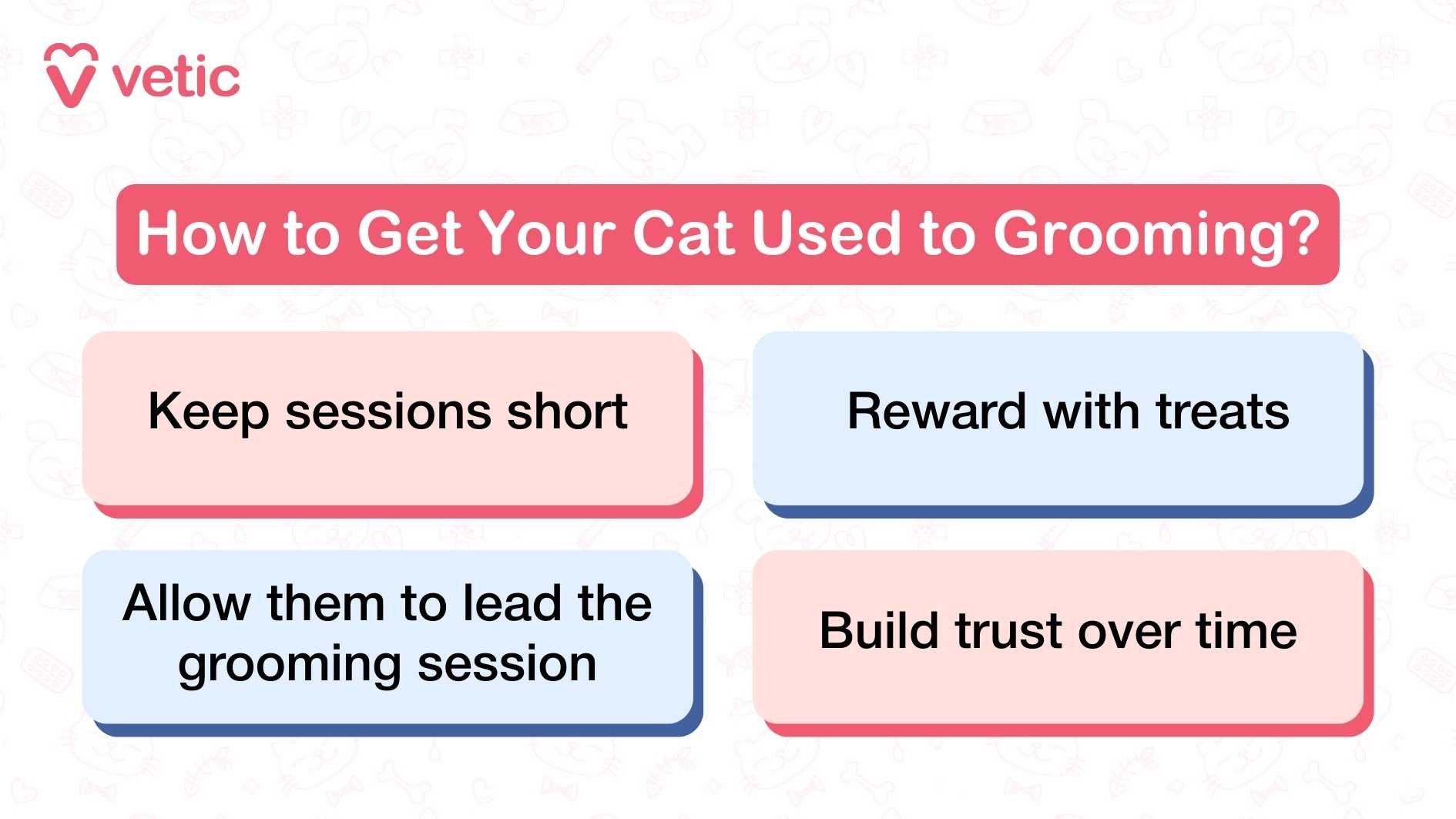
infographic from "Vetic" titled “How to Get Your Cat Used to Grooming?” displayed in a pink banner at the top. Below the title, four colored boxes offer practical, behavior-sensitive tips to help pet parents ease their cats into grooming routines. The first pink box reads “Keep sessions short,” emphasizing the importance of respecting a cat’s tolerance levels. The second blue box says “Reward with treats,” encouraging positive reinforcement to build trust. The third blue box advises “Allow them to lead the grooming session,” suggesting a cat-led approach that reduces resistance. The final pink box reads “Build trust over time,” reinforcing that grooming success is gradual and rooted in patience. The layout is clean and symmetrical, with soft colors that evoke calm and reassurance—ideal for guiding pet parents through what can often be a challenging process.

Grooming is not just a routine, it is an opportunity to build trust with your cat. Indie cats can be independent and sensitive to handling, which makes patience and consistency very important.

Start by introducing grooming tools gradually. Let your cat sniff and explore them before use. Keep sessions short, calm, and positive. Reward your cat with treats or gentle praise after each session.

Avoid forcing grooming when your cat is stressed, unwell, or in heat. Negative experiences can make future grooming more difficult. Over time, your cat will begin to associate grooming with comfort and safety.

Final Thoughts: Creating a Stress-Free Grooming Routine for First-Time Cat Parents
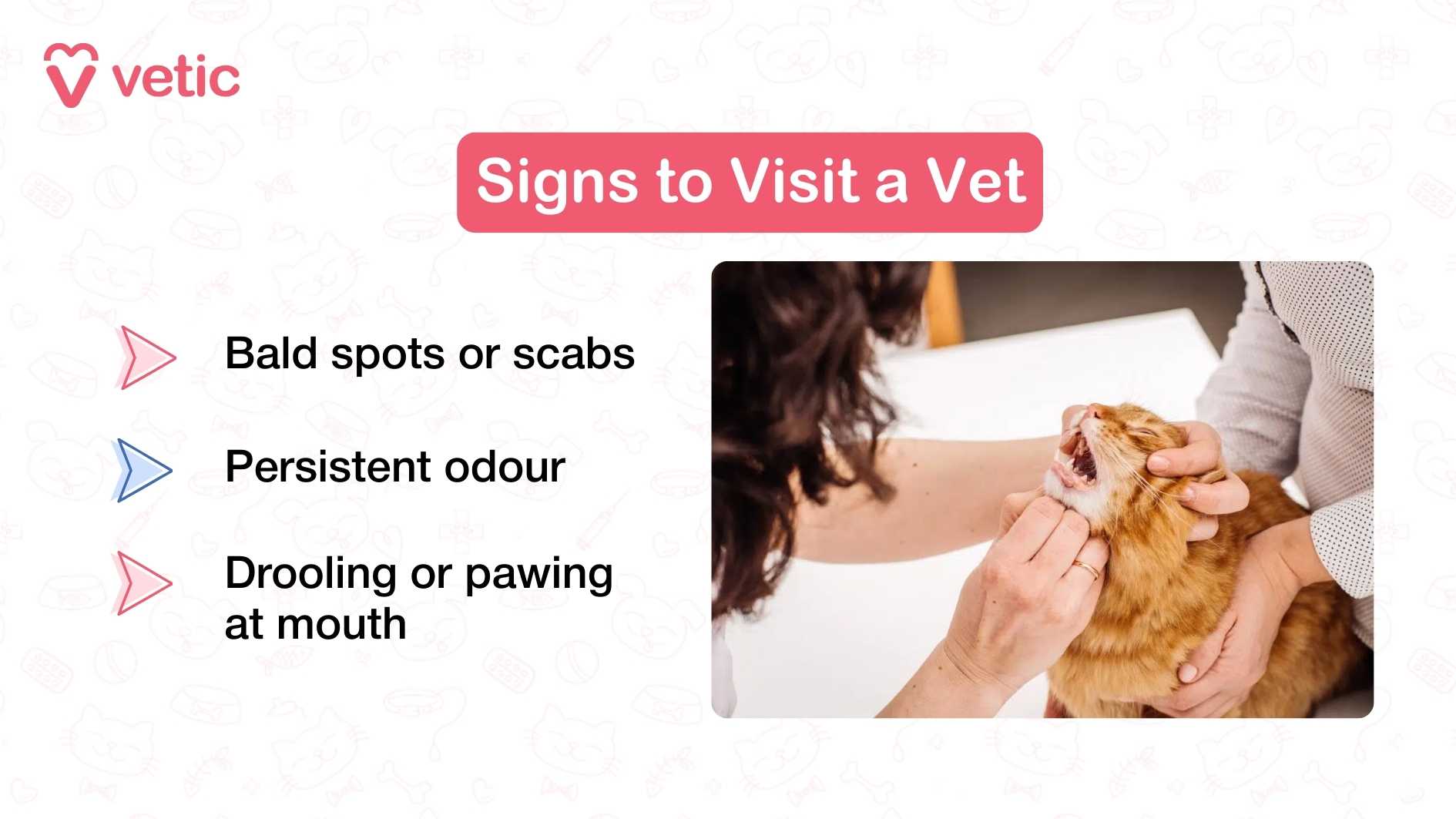
The image is a professionally designed infographic from "Vetic" that educates pet parents on specific signs indicating when a cat should be taken to the veterinarian. On the left side of the graphic, three key symptoms are listed with corresponding icons: “Bald spots or scabs,” “Persistent odour,” and “Drooling or pawing at mouth.” Each icon is simple and intuitive, helping viewers quickly associate the symptom with its visual cue. The right side features a high-resolution photograph of an orange tabby cat being gently examined by a person—likely a veterinarian—who is inspecting the cat’s mouth. The cat appears calm, and the close-up framing emphasizes the importance of oral health checks.

Grooming your Indie cat may feel overwhelming at first, but it becomes easier with consistency and the right approach. Focus on small, manageable steps rather than trying to do everything at once.

By maintaining regular brushing, occasional bathing, ear checks, dental care, and nail trimming, you are not just keeping your cat clean you are actively preventing health problems. Most importantly, you are building a stronger bond with your pet.

Your cat may never love every part of grooming, but with patience and gentle handling, they will learn to tolerate, and sometimes even enjoy, it.

Frequently Asked Questions About Grooming Indie Cats

How do I groom an indie cat for the first time?

Start slowly with short sessions and introduce one grooming activity at a time. Focus on brushing first, and gradually include nail trimming and other care routines.

Do indie cats need grooming or do they clean themselves?

Indie cats groom themselves, but they still need support for brushing, nail trimming, and hygiene checks to stay healthy.

How often should I bathe my indie cat at home?

Bathing once every few months is sufficient unless your cat gets dirty or has a medical condition.

What are the best grooming tools for cats in India?

Rubber brushes, fine-toothed combs, slicker brushes, nail clippers, and vet-approved grooming wipes are essential tools.

How do I brush my cat’s teeth without getting scratched?

Start with your finger and cat-safe toothpaste, keep sessions short, and gradually introduce a brush once your cat is comfortable.

How do I get my cat comfortable with grooming?

Use positive reinforcement, keep sessions short, and avoid forcing grooming when your cat is stressed.

How do I know if my cat has ear mites or an ear infection?

Dark debris, foul smell, redness, or excessive scratching of ears are common signs that require veterinary attention.

Can I use human shampoo or dog shampoo on my cat?

No, these products can be harmful. Always use shampoos specifically formulated for cats.

How do I stop my cat from scratching furniture and people?

Provide scratching posts or mats and reward your cat for using them instead of furniture.

When should I take my indie cat to a professional groomer or vet?

If your cat has mats, skin issues, dental problems, or resists grooming completely, professional help is recommended.

References

American Veterinary Medical Association. (2021). Pet dental care. AVMA. Retrieved from https://www.avma.org/resources-tools/pet-owners/petcare/pet-dental-care 

ASPCA. (n.d.). Cat grooming tips. ASPCA Pet Care. Retrieved from https://www.aspca.org/pet-care/cat-care/cat-grooming-tips 

Cornell University College of Veterinary Medicine. (2023). Cat care: Grooming, dental health, and parasite control. Cornell Feline Health Center. Retrieved from https://www.vet.cornell.edu/departments-centers-and-institutes/cornell-feline-health-center 

Want to know more about pets?

Popular Searches

Consultation for Dog Near Me | About Us | Grooming for Dog Near Me | Vaccination for Dog Near Me | Surgery for Dog Near Me | Emergency Care for Dog Near Me | Consultation for Cat Near Me | Grooming for Cat Near Me | Vaccination for Cat Near Me | Surgery for Cat Near Me | Emergency Care for Cat Near Me | Pet Clinic in Gurgaon | Pet Clinic in Delhi | Pet Clinic in Hyderabad | Pet Clinic in Mumbai | Pet Clinic in Chennai | Pet Clinic in Noida | Pet Clinic in Ghaziabad | Pet Clinic in Bangalore | Pet Clinic in Pune | Pet Clinic in Faridabad | Pet Clinic in Kolkata | Pet Consultation in Gurgaon | Pet Consultation in Bangalore | Pet Consultation in Chennai | Pet Consultation in Delhi | Pet Consultation in Hyderabad | Pet Consultation in Mumbai | Pet Consultation in Ghaziabad | Pet Consultation in Pune | Pet Consultation in Faridabad | Pet Consultation in Noida | Pet Consultation in Kolkata | Pet Grooming in Bangalore | Pet Diagnostics in Bangalore | Pet Surgery in Delhi | Pet Emergency Care in Mumbai | Pet Clinic in Golf Course Road, Gurgaon | Pet Clinic in Sector 45, Gurgaon | Pet Clinic in Sohna Road, Gurgaon | Pet Clinic in Galleria Market, Gurgaon | Pet Clinic in Sector 57, Gurgaon | Pet Clinic in Sector 82, Gurgaon | Pet Clinic in Greater Kailash, Delhi | Pet Clinic in Pitampura, Delhi | Pet Clinic in Sector 11, Delhi | Pet Clinic in Defence Colony, Delhi | Pet Clinic in Malviya Nagar, Delhi | Pet Clinic in Anand Vihar, Delhi | Pet Clinic in Vasant Kunj, Delhi | Pet Clinic in Hitec City, Hyderabad | Pet Clinic in Secunderabad, Hyderabad | Pet Clinic in Manikonda, Hyderabad | Pet Clinic in Banjara Hills, Hyderabad | Pet Clinic in Kukatpally, Hyderabad | Pet Clinic in Kandivali, Mumbai | Pet Clinic in Thane West, Mumbai | Pet Clinic in Andheri West, Mumbai | Pet Clinic in Chembur, Mumbai | Pet Clinic in Sanpada, Mumbai | Pet Clinic in Mira Road, Mumbai | Pet Clinic in Borivali, Mumbai | Pet Clinic in Powai, Mumbai | Pet Clinic in Banerghatta, Bangalore | Pet Clinic in HSR Layout, Bangalore | Pet Clinic in Domlur, Bangalore | Pet Clinic in Kalyan Nagar, Bangalore | Pet Clinic in Whitefield, Bangalore | Pet Clinic in Sadashiva Nagar, Bangalore | Pet Clinic in Nagarbhavi, Bangalore | Pet Clinic in Electronic City, Bangalore | Pet Clinic in Banashankari, Bangalore | Pet Clinic in Yelahanka, Bangalore | Pet Clinic in Sarjapur Road, Bangalore | Pet Clinic in Koramangala, Bangalore | Pet Clinic in Aundh, Pune | Pet Clinic in Kalyani Nagar, Pune | Pet Clinic in NIBM, Pune | Pet Clinic in Wakad, Pune | Pet Clinic in Sector 20, Noida | Pet Clinic in Sector 49, Noida | Pet Clinic in Indirapuram, Ghaziabad | Pet Clinic in Sector 14, Faridabad | Pet Clinic in Salt Lake, Kolkata | Pet Clinic in Anna Nagar, Chennai | Veterinary Hospital Near Me | Pet Clinic Near Me | Vet Near Me | Pet Grooming Clinic Near Me | Pet Cancer Treatment Near Me | Pet Grooming in Chennai | Pet Grooming in Delhi | Pet Grooming in Gurgaon | Pet Grooming in Hyderabad | Pet Grooming in Mumbai | Pet Grooming in Ghaziabad | Pet Grooming in Pune | Pet Grooming in Faridabad | Pet Grooming in Noida | Pet Grooming in Kolkata | Pet Diagnostics in Chennai | Pet Diagnostics in Delhi | Pet Diagnostics in Gurgaon | Pet Diagnostics in Hyderabad | Pet Diagnostics in Mumbai | Pet Diagnostics in Ghaziabad | Pet Diagnostics in Pune | Pet Diagnostics in Faridabad | Pet Diagnostics in Noida | Pet Diagnostics in Kolkata | Pet Surgery in Bangalore | Pet Surgery in Chennai | Pet Surgery in Gurgaon | Pet Surgery in Hyderabad | Pet Surgery in Mumbai | Pet Surgery in Ghaziabad | Pet Surgery in Pune | Pet Surgery in Faridabad | Pet Surgery in Noida | Pet Surgery in Kolkata | Pet Emergency Care in Bangalore | Pet Emergency Care in Chennai | Pet Emergency Care in Gurgaon | Pet Emergency Care in Hyderabad | Pet Emergency Care in Ghaziabad | Pet Emergency Care in Pune | Pet Emergency Care in Faridabad | Pet Emergency Care in Noida | Pet Emergency Care in Kolkata

    Consult A Vet

    Book An Appointment


    image
    Call A Vet
    ×

      Consult A Vet

      Book An Appointment