Many pet parents feel tempted to shave heavily coated dogs during summer because the thick fur appears uncomfortable in hot weather. In India, this question becomes especially common during heatwaves and humid summer months, when breeds such as Huskies, Golden Retrievers, German Shepherds, and Spitzes shed heavily and pant excessively.
Understanding how a double coat functions is important before deciding whether shaving is truly helpful.
What Is a Double Coat in Dogs?
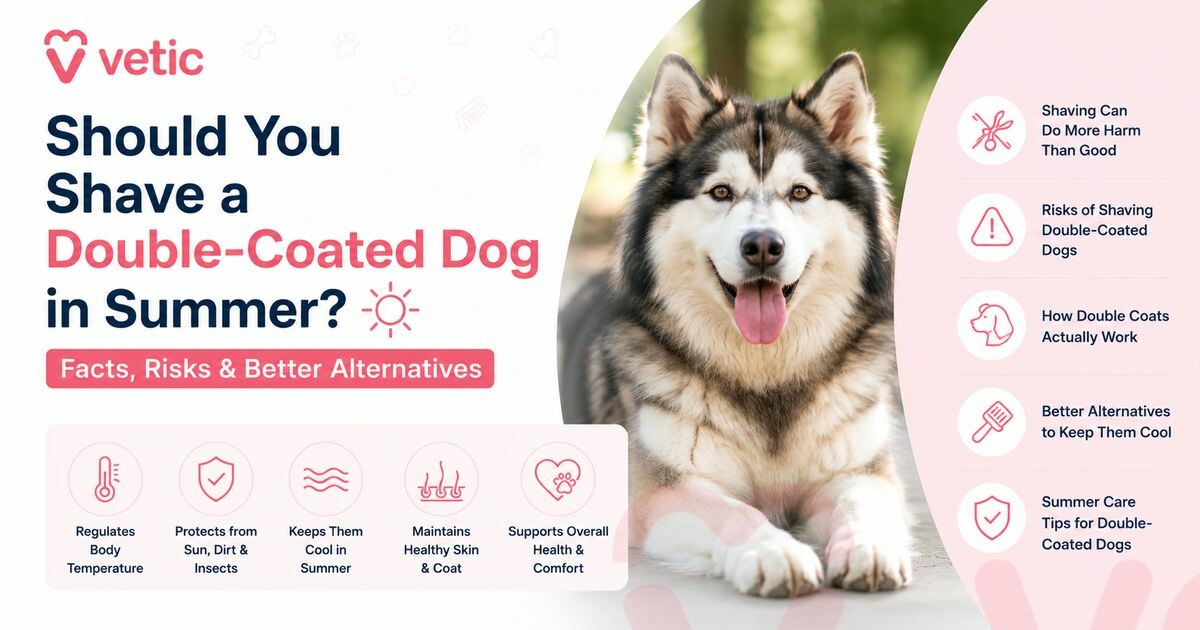
A double coat consists of two distinct layers of fur that work together to protect the dog’s skin and regulate body temperature. The outer layer, called the guard coat, contains longer hairs that protect against sun exposure, dirt, moisture, and insects.
The inner layer, called the undercoat, is soft and dense. It acts as insulation against both cold and heat. During summer, dogs naturally shed much of their undercoat to improve airflow and temperature control. This shedding process is part of the body’s normal seasonal adaptation mechanism.
Which Dog Breeds Commonly Have Double Coats?
Many popular dog breeds naturally have double coats, such as the Golden Retriever, Labrador Retriever, German Shepherd, Siberian Husky, Alaskan Malamute, Spitz, Akita, Chow Chow, Saint Bernard, and Border Collie.
Indian Spitz dogs commonly seen in Indian households also have thick double coats that shed heavily during warmer months.
Some mixed-breed dogs may also inherit double-coated fur depending on their genetics.
Why Do Double-Coated Dogs Shed So Much in Summer?
Seasonal shedding helps remove excess undercoat as temperatures rise.
During summer, the dense winter undercoat naturally loosens to improve airflow near the skin, reduce heat retention, and allow better temperature regulation. This process is often called “blowing the coat.”
In India’s warmer climate, some indoor dogs may shed year-round due to artificial lighting, indoor cooling, and inconsistent seasonal temperature exposure.
Excessive shedding in dogs itself is not always abnormal unless accompanied by bald patches, itching, red skin, hair thinning, and skin infections.
Should You Shave a Double-Coated Dog During Hot Weather?
In most cases, vets and certified groomers do not recommend cutting healthy double-coated dogs during summer.
How Does the Double Coat Help With Natural Insulation and Temperature Regulation?
The double coat acts as insulation against both heat and cold. While the dense fur may appear uncomfortable, it actually helps regulate airflow close to the skin and protects the dog from direct sun exposure.
When properly maintained through brushing and undercoat removal, the coat helps:
- Reduce direct heat absorption
- Protect against sunburn
- Support natural cooling mechanisms
Shaving a double-coated dog removes this protective barrier, exposing the skin to excessive sunlight and environmental heat.
What Are the Risks of Shaving a Double-Coated Dog?
Shaving a double-coated dog may cause several problems, such as sunburn, skin irritation, uneven coat regrowth, permanent changes in coat texture, increased heat exposure, and reduced skin protection.
Some dogs develop “post-clipping alopecia,” where the coat grows back very slowly or unevenly after shaving.
In certain breeds, the outer guard hairs may not regrow normally once damaged.
When Is Shaving a Double-Coated Dog Medically Necessary?
Situations in which cutting a double-coated dog may be medically necessary include severe matting, skin infections, surgical procedures, tick infestation management, wound treatment, and severe hygiene problems.
In heavily matted coats, shaving may sometimes be the safest option because tight mats trap moisture, bacteria, and heat close to the skin.
Medical clipping should be performed carefully at a certified dog grooming clinic to minimise unnecessary skin trauma.
How Can You Manage Double Coat Shedding During Summer?
Regular grooming is far more beneficial than shaving for managing summer shedding. Frequent brushing helps:
- Remove loose undercoat
- Improve airflow
- Reduce matting
- Minimise trapped heat
- Reduce indoor fur accumulation
Deshedding tools may help remove dead undercoat safely when used correctly.
Professional grooming sessions during seasonal shedding periods may also improve comfort significantly without completely removing protective fur layers.
Bathing with veterinary-approved shampoos may help loosen excess undercoat.
What Grooming Tips Help Double-Coated Dogs During Hot Weather?
Proper summer grooming focuses on coat maintenance rather than complete removal. Helpful practices include:
- Brush during cooler hours
- Remove loose undercoat gently
- Avoid aggressive shaving blades
- Use pet-safe moisturising shampoos if needed
- Keep paw fur trimmed for hygiene
- Check regularly for ticks and hotspots
Professional blow-drying after bathing often helps separate dense undercoat layers properly.
What Signs Suggest Your Dog Is Struggling With Heat?
Warning signs of heat issues in dogs include excessive panting, weakness, drooling, reluctance to walk, bright red gums, lethargy, vomiting, and collapse.
Brachycephalic dogs with double coats may experience even greater heat intolerance due to reduced airway efficiency.
Heatstroke in dogs is a medical emergency.
What Are Common Myths About Shaving Double-Coated Dogs?
One of the biggest myths is that shaving a double-coated dog automatically keeps it cooler.
In reality, removing the insulating coat may increase direct heat exposure to the skin and interfere with natural temperature regulation.
Another misconception is that shaving permanently reduces shedding. Double-coated dogs usually continue shedding because hair growth cycles remain active.
Final Thoughts: About Shaving a Double-Coated Dog
Most double-coated dogs do not need to be shaved in summer, even in hot climates. Shaving should generally be reserved for medical reasons. Pet parents should focus on proper grooming and heat safety rather than removing the protective coat completely.
FAQ: About Shaving a Double-Coated Dog
Should you shave a double-coated dog in summer?
In most cases, no. Vets generally recommend regular grooming and undercoat removal.
Does shaving help dogs stay cooler?
Not necessarily. In double-coated breeds, shaving may remove natural insulation.
What happens if you shave a double-coated dog?
The dog may develop sunburn, uneven coat regrowth, skin irritation, or permanent changes in coat texture.
How do you manage shedding in double-coated dogs?
Frequent brushing, undercoat removal, regular grooming, and proper bathing help manage seasonal shedding.
What is the best grooming routine for double-coated dogs in summer?
The best routine includes regular brushing, coat maintenance, undercoat management, proper drying after bathing, and skin monitoring.
References
Fries, W. C. (n.d.). Dogs and Bald Spots. WebMD. https://www.webmd.com/pets/dogs/dog-bald-spot
Gewirtz, E. W. (n.d.). Double-Coated Dogs: What the Double-Coat Does for Breeds. American Kennel Club. https://www.akc.org/expert-advice/dog-breeds/double-coated-dog-breeds/
Meyers, H. (n.d.). Is It OK to Shave Your Dog’s Coat? American Kennel Club. https://www.akc.org/expert-advice/health/is-it-ok-to-shave-your-dog/
Meyers, H. (2024, November 18). How to Groom a Double-Coated Dog. American Kennel Club. https://www.akc.org/expert-advice/health/how-to-groom-a-double-coated-dog/
Purina. (2021). 7 Double Coated Dog Breeds & How to Groom Them. https://www.purina.co.uk/find-a-pet/articles/dog-types/fur-type/double-coated-dogs