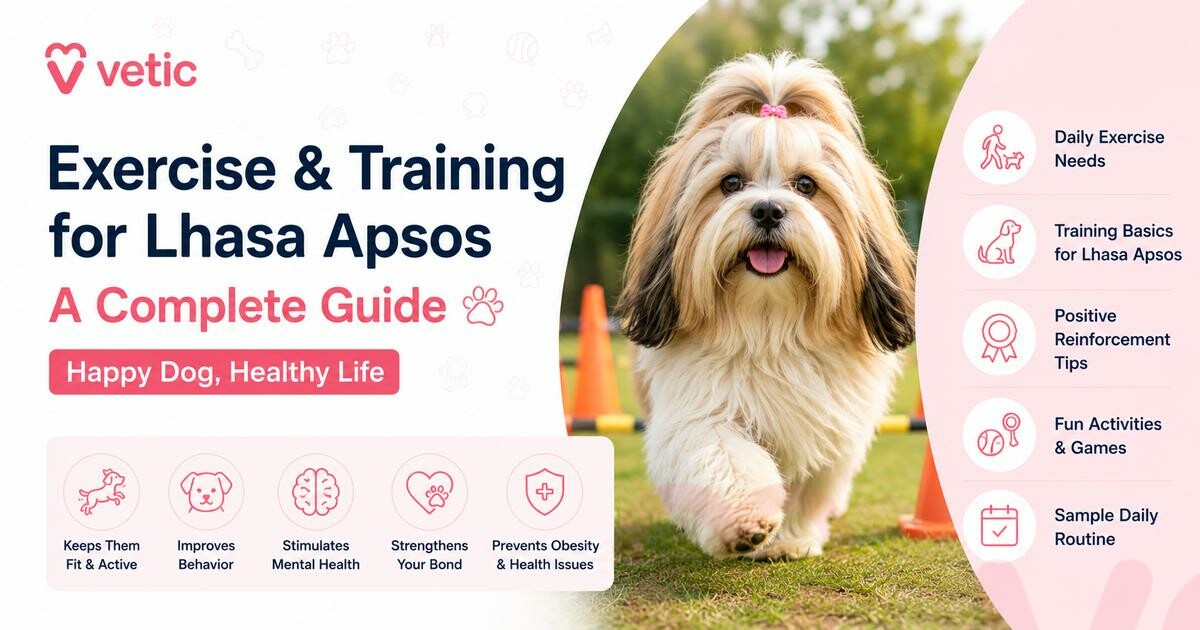
The Lhasa Apso may be small, but this breed has a big personality and an even bigger sense of independence. Originally bred as watchdogs for Tibetan monasteries, they are alert, intelligent, and sometimes stubborn. While not as high-energy as working or sporting breeds, Lhasas still need the right balance of exercise and training at every life stage to stay healthy, happy, and well-behaved.
Because of their unique traits, a long coat, short stature, short muzzle, and watchful nature, Lhasas benefit most from gentle, structured routines that focus as much on mental stimulation as physical activity. Let’s explore the best practices for exercise and training through each stage of their life: puppy, adolescence, adulthood, and senior years.
Exercise and Training for Lhasa Puppy (2–12 Months)
Exercise Needs of Lhasa Puppies
Puppyhood is all about controlled activity. Lhasa Apso puppies are playful but don’t have the stamina for long walks. Their joints and bones are still developing, so the goal is short, gentle play sessions spread throughout the day.
- Playtime: 5–10 minutes of indoor play several times a day. Use soft toys or gentle fetch games.
- Walks: Start with short leash walks (5–10 minutes). Focus on exploration, not distance.
- Avoid: Jumping off furniture or rough play that could strain their growing joints.
Training for Lhasa Puppy
This is the most important stage to lay down the foundation for lifelong good behavior. Lhasas are smart but independent, so consistency matters.
- House Training: Stick to a routine for potty breaks. Crate training helps structure their day.
- Basic Commands: Introduce “sit,” “stay,” “come,” and “leave it.” Keep sessions short – 5 minutes at a time.
- Leash Training: Start early. Lhasas may resist but gentle encouragement works.
- Socialization: Introduce them to different people, pets, and environments to prevent timidity or excessive barking later.
Parent Tip: Keep training sessions playful. Puppies learn best when training feels like a game with rewards and praise.
Exercise and Training for Lhasa Apso Juniors (12–18 Months)
Exercise Needs of Lhasa Juniors
Adolescence is often compared to the “teenage” phase — your Lhasa is full of confidence, sometimes stubborn, and eager to test limits.
- Walks: Two short walks of 15–20 minutes daily. Focus on slow, sniff-heavy walks rather than speed.
- Play Sessions: Moderate games indoors or in a secure yard. Puzzle toys help channel energy.
- Avoid Overexertion: Their short muzzle means they can overheat quickly, especially in warm weather.
Training for Lhasa Apso Adolescents
This is when bad habits can creep in, so consistency in positive reinforcement training is key.
- Reinforce Basics: Keep practicing “sit,” “stay,” and recall commands.
- Impulse Control: Teach them to “wait” before meals or doors.
- Leash Manners: Adolescents may pull — use a harness and reward calm walking.
- Barking Management: As natural watchdogs, Lhasas bark at noises. Teach “quiet” with gentle redirection.
Parent Tip: Adolescence is when many pet parents feel frustrated. Remember, patience and consistency now will shape your Lhasa into a reliable adult companion.
Exercise and Training for Lhasa Apso Adults (18 Months – 7 Years)
Exercise Needs of Lhasa Apso Adults
Adult Lhasas don’t require hours of activity, but daily exercise is vital to prevent weight gain and boredom.
- Walks: Two daily walks of 20–30 minutes each. Let them sniff; it’s a mental exercise too.
- Indoor Play: Tug games, rolling treat balls, or hide-and-seek.
- Mental Enrichment: Rotate toys, use puzzle feeders, or set up scent games.
- Safe Outdoor Time: In secure areas, let them explore off-leash (but never unsupervised).
Training for Lhasa Adults
Adulthood is when you can expand training and truly enjoy your dog’s intelligence.
- Advanced Commands: “Stay” with distractions, “come” from longer distances.
Trick Training: Teach fun tricks like “paw” or “spin.” Lhasas enjoy showing off when rewarded. - Guarding Instincts: Channel their natural watchdog tendencies. Reward calm behavior when visitors arrive.
- Consistency: Don’t let small behaviors (like begging for food) slip — Lhasas are quick to form habits.
Parent Tip: Lhasas love routine. Keep walks, meals, and training times consistent, and you’ll have a content, cooperative companion.
Training and Exercise for Lhasa Apso Senior (7+ Years)
Exercise Needs for Lhasa Seniors
Seniors may slow down, but they still need gentle activity to keep joints moving and prevent weight gain.
- Walks: Two very short walks (10–15 minutes). Let them set the pace.
- Playtime: Gentle indoor play with soft toys. Avoid strenuous activity.
- Joint-Friendly Activity: If possible, swimming in a safe environment can be excellent for older joints.
Training For Senior Lhasa Apso
Older dogs may not learn new tricks as quickly, but training keeps their mind sharp and helps prevent cognitive decline.
- Refresher Training: Reinforce basic commands to keep them responsive.
- Hand Signals: If hearing fades, hand gestures work well.
- Scent Games: Hide treats in easy places for nose work.
- Cognitive Support: Keep sessions short, positive, and gentle.
Parent Tip: Senior Lhasas may struggle with arthritis or vision changes. Keep activities gentle and adjust to their comfort level.
Exercise and Training for Lhasa Apso: Takeaway
The Lhasa Apso may not need hours of vigorous exercise, but consistent, structured activity combined with positive training shapes them into happy, well-mannered companions.
As puppies, they need short playtimes and gentle training foundations. As adolescents, patience and consistency help guide them through stubborn teenage months. As adults, steady walks, play, and mental enrichment keep them balanced and healthy. As seniors, gentle activity and refresher training preserve mobility and mental sharpness.
With exercise and training tailored to their stage of life, your Lhasa Apso can thrive as the dignified, loyal, and loving companion they were always meant to be.
FAQs on Exercise & Training for Lhasa Apsos
Q1: How much exercise does a Lhasa Apso puppy need daily?
Lhasa Apso puppies need short 5–10 minute play sessions and short walks, several times a day, to support healthy growth.
Q2: What is the best training method for Lhasa Apso puppies?
Training Lhasa Apso puppies works best with short, reward-based sessions. Positive reinforcement builds trust and makes learning enjoyable.
Q3: How can I manage stubborn behavior in adolescent Lhasa Apsos?
Consistency, patience, and positive reinforcement help manage adolescent stubbornness. Keep training sessions short and repeat commands calmly.
Q4: What kind of exercise suits an adult Lhasa Apso?
Adult Lhasas need two daily walks of 20–30 minutes, combined with indoor play and mental enrichment activities.
Q5: Do Lhasa Apsos enjoy advanced training or tricks?
Yes, Lhasa Apso dogs enjoy trick training and advanced commands. It provides mental stimulation and strengthens their bond with owners.
Q6: How much activity does a senior Lhasa Apso need?
Senior Lhasas need gentle activity — two short walks daily and light indoor play to maintain mobility and prevent stiffness.
Q7: Can Lhasa Apsos over-exercise?
Yes, Lhasas can overheat or strain joints. Always keep sessions moderate and avoid intense exercise, especially in hot weather.
Q8: Why is routine important for training Lhasa Apsos?
Routine provides structure. Feeding, walking, and training at consistent times make Lhasa Apsos feel secure and improve behavior.
References
American Kennel Club. (n.d.). Lhasa Apso dog breed information. American Kennel Club. Retrieved from https://www.akc.org/dog-breeds/lhasa-apso/
Hill’s Pet Nutrition. (n.d.). Lhasa Apso dog breed – facts and information. Hill’s Pet. Retrieved from https://www.hillspet.com/dog-care/dog-breeds/lhasa-apso
Royal Canin. (n.d.). Lhasa Apso nutrition and care guide. Royal Canin. Retrieved from https://www.royalcanin.com
The Kennel Club. (n.d.). Lhasa Apso. The Kennel Club (UK). Retrieved from https://www.thekennelclub.org.uk
American Veterinary Medical Association. (n.d.). Canine behavior and training basics. AVMA. Retrieved from https://www.avma.org
Cornell University College of Veterinary Medicine. (n.d.). Training and behavior resources for dogs. Cornell Vet. Retrieved from https://www.vet.cornell.edu