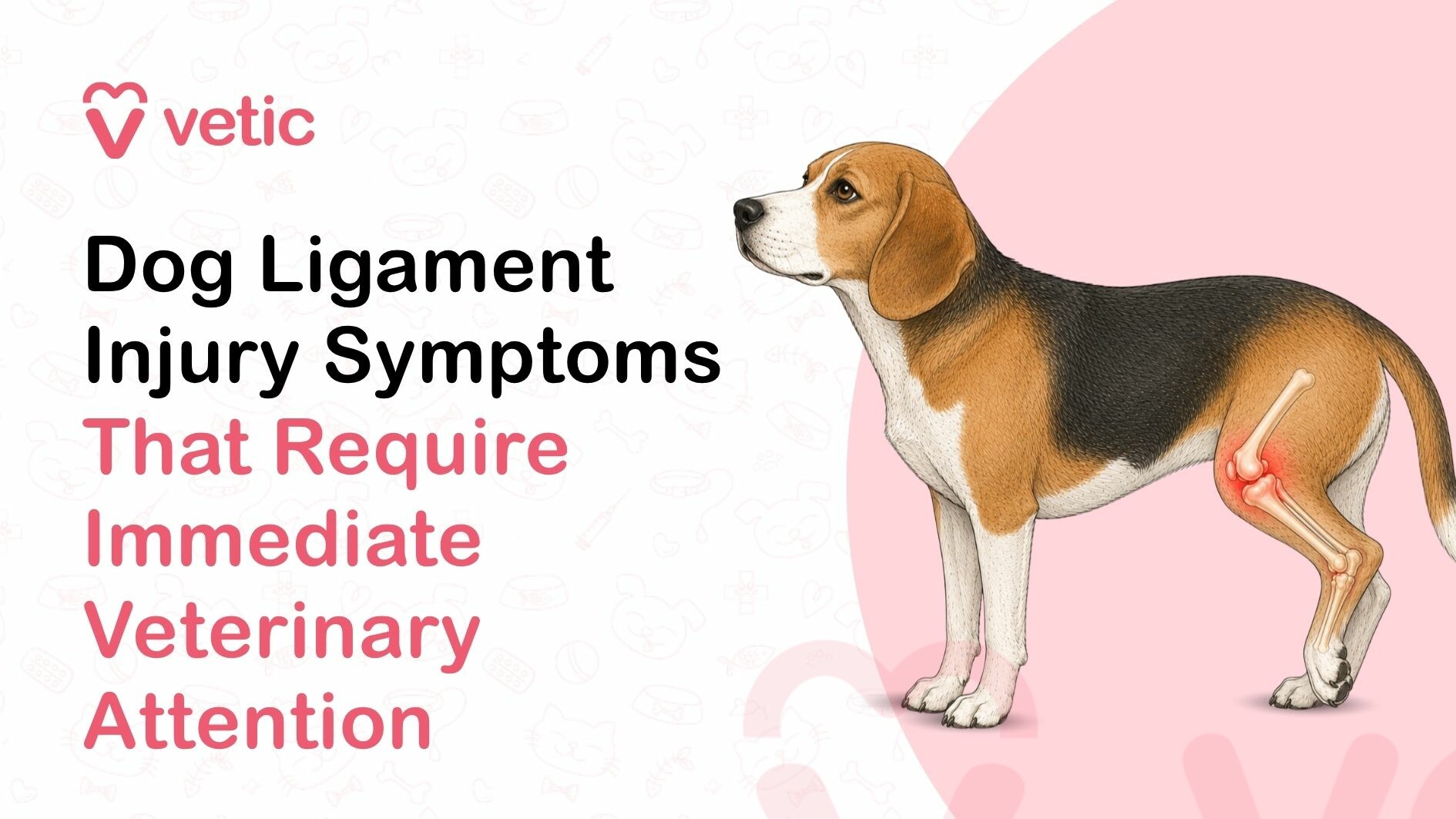
What Is a Ligament Injury in Dogs: What are ACL and CCL Injuries?
The CCL in dogs (cranial cruciate ligament) is the canine equivalent of the human ACL. It connects the femur to the tibia inside the stifle (knee) joint and stabilises the joint during movement and weight-bearing.
An ACL injury in dogs is technically a misnomer. The correct veterinary term is CCL tear or CCL rupture. A torn anterior cruciate ligament in dogs is what most people mean when they use ACL terminology. The stifle is the most vulnerable joint for this type of injury.
Common Causes of ACL and CCL Injuries in Dogs
Unlike the human ACL, which usually tears suddenly during physical impact, canine CCL disease is most often degenerative. The ligament weakens gradually over months or years before it finally tears.
When people talk about dogs and ACL injuries, they are almost always describing this degenerative process. Common contributing factors include:
- Genetic predisposition (Labrador Retrievers, Rottweilers, Newfoundlands, and Boxers are most commonly affected)
- Obesity, excess body weight, increases stress on the stifle joint
- Middle-aged and older dogs are most frequently affected
- Sudden twisting of a ligament already weakened by degeneration
- A partial CCL tear that progresses to a complete rupture over time
Early Dog Ligament Injury Symptoms Pet Parents Should Watch For
Early signs of a dog ligament injury are easy to dismiss as lethargy or a minor muscle strain. Watch for:
- Intermittent rear-leg lameness after exercise or play
- Stiffness when getting up after rest
- Reluctance to jump, climb stairs, or run
- Mild swelling around the knee joint
- Sitting with the affected leg out to one side (a characteristic posture for CCL pain)
- Gradual muscle loss in the back leg over time
Partial CCL tears can cause these low-level signs for weeks or months before a complete rupture occurs.
Signs That Require Immediate Veterinary Attention
These signs mean a same-day vet checkup is needed today:
- Complete non-weight-bearing on a rear leg (the dog holds it entirely off the ground)
- Sudden severe swelling of the knee
- Audible popping or cracking in the joint after a sudden movement
- Visible distress and unwillingness to let the leg be touched
- Rapid-onset lameness that does not ease after a few minutes of rest
Do not wait to see if the leg improves on its own. A complete CCL rupture will not heal without intervention. Delayed treatment means faster, irreversible joint damage.
ACL vs CCL Injuries in Dogs: Are They the Same Thing?
Yes. The terminology differs, but the injury is the same.
In humans, the ligament at the front of the knee is the anterior cruciate ligament (ACL). In dogs, the equivalent is the cranial cruciate ligament (CCL). The different name reflects how canine anatomy is described relative to a four-legged posture.
Searching online for “ruptured anterior cruciate ligament dog” returns results for the same condition vets call a CCL tear. Both terms describe a rupture of the same stabilising structure inside the stifle joint. Vets use CCL. Pet parents often say ACL. Both refer to the same problem.
How Vets Diagnose Dog Ligament Injuries
When a dog’s ligament injury is suspected, diagnosis combines physical examination with imaging.
The cranial drawer test is the key physical examination. The vet stabilises the femur and attempts to slide the tibia forward. If it moves (a positive drawer sign), the CCL has ruptured. The tibial compression test provides a complementary check.
Dog X-rays reveal joint effusion (fluid in the joint), bone changes, and secondary arthritis. MRI or arthroscopy is used to confirm partial tears that produce equivocal physical findings.
Treatment Options for Torn Ligaments in Dogs
Two approaches exist: non-surgical management and surgical repair. The right choice depends on your dog’s size, age, and the severity of the tear.
Non-Surgical Management
Conservative management involves strict rest, NSAIDs for pain and inflammation, physiotherapy, and hydrotherapy. It is appropriate for:
- Very small dogs under 10 to 15 kg with a confirmed CCL tear
- Dogs with concurrent health conditions are at a higher risk of anaesthesia
- Partial tears in some circumstances
Most dogs over 20 kg do not achieve good long-term outcomes with conservative management alone. Secondary arthritis progresses faster without surgical stabilisation of the joint.
Surgical Repair Options
Surgery stabilises the stifle joint by altering the knee’s biomechanics, rather than directly replacing the torn ligament.
Treatment for a torn canine ACL (CCL) typically uses one of three techniques:
- TPLO (Tibial Plateau Levelling Osteotomy): the most widely used procedure. Rotates the tibial plateau to eliminate the functional need for the CCL.
- TTA (Tibial Tuberosity Advancement): advances the tibial tuberosity to neutralise the cranial tibial thrust force during weight-bearing.
- Lateral suture technique: places a strong nylon suture outside the joint to provide stability. Best suited to small and medium dogs.
A vet will recommend the right technique based on your dog’s size, age, and the degree of joint damage present.
Recovery and Rehabilitation After Treatment
After surgery, dogs need strict rest for the first six to eight weeks. Short, controlled leash walks are introduced gradually from the second week.
Physiotherapy and hydrotherapy begin around two to four weeks post-surgery and are central to a successful outcome. Full return to normal activity typically takes four to six months.
Some degree of secondary osteoarthritis will develop regardless of treatment. Long-term management includes weight control, low-impact exercise, and regular check-ups with a vet.
Potential Complications of Untreated Ligament Injuries
Without treatment, a dog’s ligament injury causes progressive, irreversible joint deterioration:
- Secondary osteoarthritis: accelerates rapidly once the stifle is unstable; irreversible
- Medial meniscus tear: the cartilage pad inside the knee commonly tears secondary to an unstable CCL rupture
- Muscle wasting: the dog offloads the affected leg, leading to progressive muscle loss and permanent gait changes
- Contralateral CCL rupture: up to 60% of dogs injure the opposite stifle within two years of the first tear
Can Ligament Injuries in Dogs Be Prevented?
Preventing a dog ligament injury entirely is not always possible, particularly in genetically predisposed breeds. But the risk can be reduced:
- Maintain a healthy weight throughout your dog’s life
- Avoid excessive high-impact jumping and twisting movements in young, growing large-breed dogs
- Address partial tears early, before they progress to a complete rupture
- Know your breed’s risk profile and book regular orthopaedic check-ups early
Final Thoughts: About Dog Ligament Injury
A dog ligament injury treated promptly gives your dog the best chance of a comfortable, active life. The longer a CCL tear goes unmanaged, the more joint damage accumulates. And that damage is irreversible.
If your dog is limping, holding up a back leg, or sitting awkwardly after exercise, do not wait.
FAQs: About Dog Ligament Injury
How can I tell if my dog tore its ACL?
Look for sudden rear-leg lameness and non-weight-bearing on the back leg. Other signs include swelling around the knee, stiffness after rest, and reluctance to exercise.
Can a dog walk with a torn ligament?
Yes, some dogs can bear partial weight on a partially torn CCL. A complete tear usually results in non-weight-bearing lameness.
Is surgery always necessary for a CCL tear?
Not always. For a torn CCL in a dog under 15 kg, conservative management may give an acceptable outcome.
How long does recovery take after ligament surgery?
Strict rest is needed for the first six to eight weeks after surgery. Physiotherapy runs alongside from the second week onwards.
References
Houlton, J. E. F. (2026). Cruciate Injuries: An Overview. VIN. https://www.vin.com/apputil/content/defaultadv1.aspx?id=3860717&pid=11242
Lafuente, P. (2020, November 5). Joint Trauma in Dogs and Cats. MSD Veterinary Manual. https://www.msdvetmanual.com/musculoskeletal-system/arthropathies-and-related-disorders-in-small-animals/joint-trauma-in-dogs-and-cats
Parker, H. (n.d.). ACL Injuries in Dogs. WebMD. https://www.webmd.com/pets/dogs/acl-injuries-in-dogs