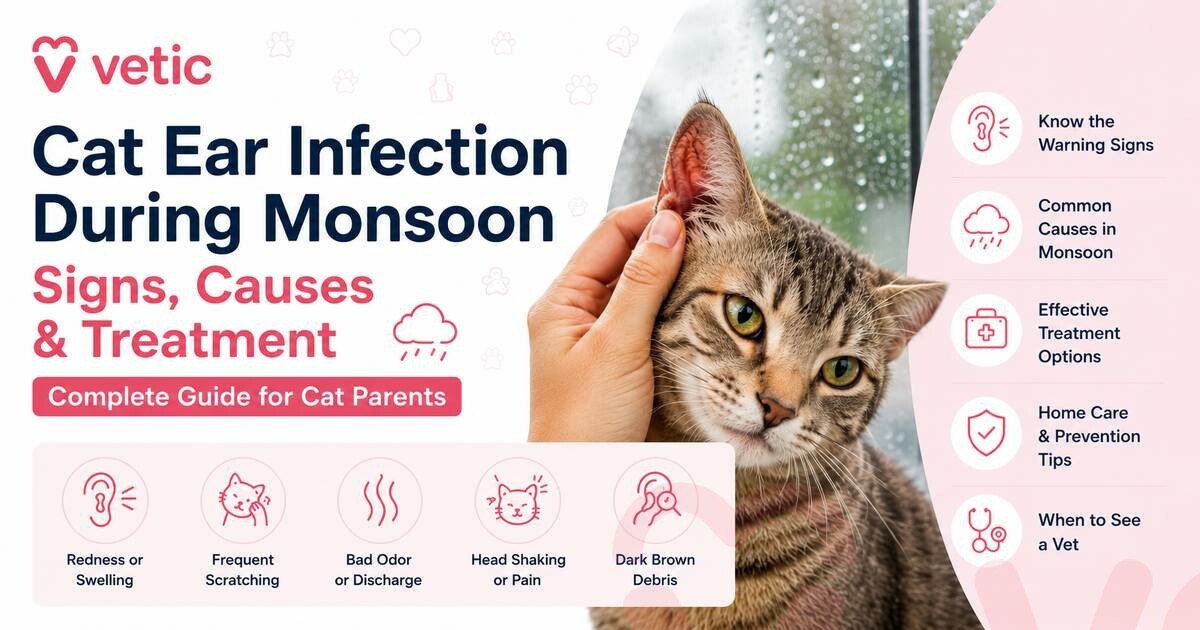
Ear infections in cats are a common problem during the monsoon season. Because cats usually hide discomfort until the infection becomes painful, early signs such as head shaking, scratching, or foul ear odour should never be ignored. Untreated ear infections in cats may spread deeper into the ear canal and cause severe pain, balance problems, and long-term damage.
Why Do Ear Infections Become More Common in Cats During Monsoon?
Monsoon humidity creates ideal conditions for microbial growth inside the cat’s ear canal. Moisture trapped around the ears encourages bacteria and yeast to multiply more rapidly, especially in cats with existing ear irritation.
During rainy weather:
- Humidity remains high
- Skin becomes oilier
- The ear canals retain more moisture
- Parasites may increase
- Fungal growth becomes more common
Long-haired cats (Persians or Maine Coons) may also trap moisture around the ears more easily during humid weather.
What Causes Ear Infections in Cats?
Ear infections in cats usually develop because of an underlying problem that disrupts the normal ear environment. Common causes of ear infections include bacterial infection, yeast overgrowth, allergies, skin disease, excess earwax, foreign material in the ear, and ear mites in cats.
Cats with weakened immunity or chronic allergies may develop repeated ear infections if the underlying condition remains untreated.
What Are the Common Signs of Cat Ear Infections?
Cats with ear infections often show discomfort through scratching, head movements, and behavioural changes.
Why Is My Cat Shaking Its Head Repeatedly in the Monsoon?
Frequent head shaking in cats usually indicates irritation or discomfort inside the ear canal. Cats shake their heads to relieve itching, remove debris, and reduce irritation.
Persistent head shaking in cats may also occur with ear mites, foreign bodies, or deep ear infections.
Why Do Ear Infections in Cats Cause Constant Scratching of Their Ears?
Ear infections in cats often cause inflammation and itchiness, leading them to scratch excessively. Affected cats may:
- Scratch near the ears repeatedly
- Rub the face against furniture
- Cry when ears are touched
- Avoid handling
Excess ear scratching in cats may sometimes cause wounds or hair loss around the ears and neck.
Why Do Ear Infections Cause Discharge and Foul Smell?
Infected ears often produce abnormal discharge due to inflammation and microbial overgrowth. Ear discharge in cats may appear brown, yellow, black, and thick or waxy.
A strong, unpleasant odour usually indicates a bacterial or yeast infection. A foul smell combined with redness or ear discharge in cats should always be evaluated by a pet health expert.
What Do Healthy Cat Ears Normally Look Like?
Healthy cat ears are usually clean, pale pink, odour-free, and free from heavy wax buildup. Small amounts of light brown wax may be normal in some cats.
How Can You Tell the Difference Between Ear Mites and Ear Infections in Cats?
Ear mites and ear infections in cats often produce similar symptoms, but there are some differences.
Ear mites in cats commonly cause intense itching, dark coffee-ground-like debris, frequent scratching, and head shaking. Secondary bacterial or yeast infections may develop afterwards due to irritation from mites.
Ear infections may produce a strong smell, thick discharge, pain, swelling, and red, inflamed ear canals.
Why Do Some Cats Develop Smelly or Dirty Ears During the Rainy Season?
Humidity and moisture increase oil and wax accumulation in the ears during the monsoon. Additional contributing factors for smelly ears in cats include poor grooming, ear mites, allergies, yeast overgrowth, and reduced ventilation.
Can Indoor Cats Also Get Ear Infections?
Yes, indoor cats can still develop ear infections even without outdoor exposure. Indoor cats may develop ear problems due to ear mites from other pets, allergies, excessive ear wax production, humidity, and underlying skin disease.
How Do Vets Diagnose Ear Problems in Cats?
Vets diagnose cat ear disease through physical examination and ear testing. Common diagnostic methods include otoscopic examination, microscopic examination of ear debris, cytology, and ear swab analysis. These tests help identify ear mites, bacteria, yeast, inflammation, and foreign material.
What Happens if a Cat’s Ear Infection Is Left Untreated?
Untreated ear infections in cats may worsen significantly over time. Possible complications include severe pain, chronic inflammation, ear canal thickening, balance problems, hearing damage, and spread of infection deeper into the ear. Cats with severe middle ear involvement may develop head tilt, loss of balance, and facial nerve problems.
How Can You Clean Your Cat’s Ears Safely at Home?
Ear cleaning should always be gentle and performed only with veterinary-approved ear cleaners. Safe ear cleaning steps include:
- Applying ear cleaner as directed
- Gently massaging the ear base
- Wiping visible debris with cotton
Cats showing severe pain, bleeding, or heavy discharge should undergo an expert feline vet checkup before any attempts at home cleaning.
How Can You Prevent Ear Infections in Cats During Monsoon?
Helpful prevention strategies for a cat’s ear infection include:
- Regular ear checks
- Keeping ears dry
- Managing ear mites promptly
- Treating allergies early
- Maintaining clean bedding
- Improving ventilation indoors
Final Thoughts: About Ear Infections in Cats During the Monsoon
Cat’s ear infections are common during the monsoon because humidity, moisture, parasites, and microbial overgrowth create ideal conditions for ear irritation and infection. Regular ear checks, proper hygiene, and prompt veterinary treatment improve comfort during the rainy season.
FAQ: About Ear Infections in Cats During the Monsoon
Why is my cat shaking its head constantly?
Frequent head shaking in cats often indicates ear irritation.
What causes smelly ears in cats?
Smelly ears in cats are often caused by bacterial or yeast infection, excessive wax buildup, or severe ear inflammation.
How do I know if my cat has ear mites?
Ear mites in cats commonly cause intense itching, head shaking, and dark coffee-ground-like debris.
Can cat ear infections heal on their own?
Most ear infections require proper veterinary treatment.
How can I prevent ear infections in cats during the monsoon?
Regular ear checks, prompt treatment of ear mites in cats, and seeking early veterinary care help reduce the risk of infection.
References
Brooks, W. (2017, August 8). Ear Mites in Dogs and Cats. VIN. https://veterinarypartner.vin.com/default.aspx?pid=19239&id=4951535
Edgar, J. (2009, December 29). Ear Infections in Cats: Causes, Treatment, and Prevention. WebMD. https://www.webmd.com/pets/cats/ear-infections-in-cats-causes-treatment-and-prevention
MSD Veterinary Manual. (2026). Tympanic membrane, otitis media, otoscopic examination, cat. https://www.msdvetmanual.com/multimedia/image/tympanic-membrane-otitis-media-otoscopic-examination-cat
Purina. (2025). Should You Clean a Cat’s Ears? https://www.purina.in/care-and-advice/cat/health/cleaning-a-cats-ears
Roman, N. (2026, February 6). Otitis Externa (External Ear Infection) in Cats. MSD Veterinary Manual. https://www.msdvetmanual.com/cat-owners/ear-disorders-of-cats/otitis-externa-external-ear-infection-in-cats