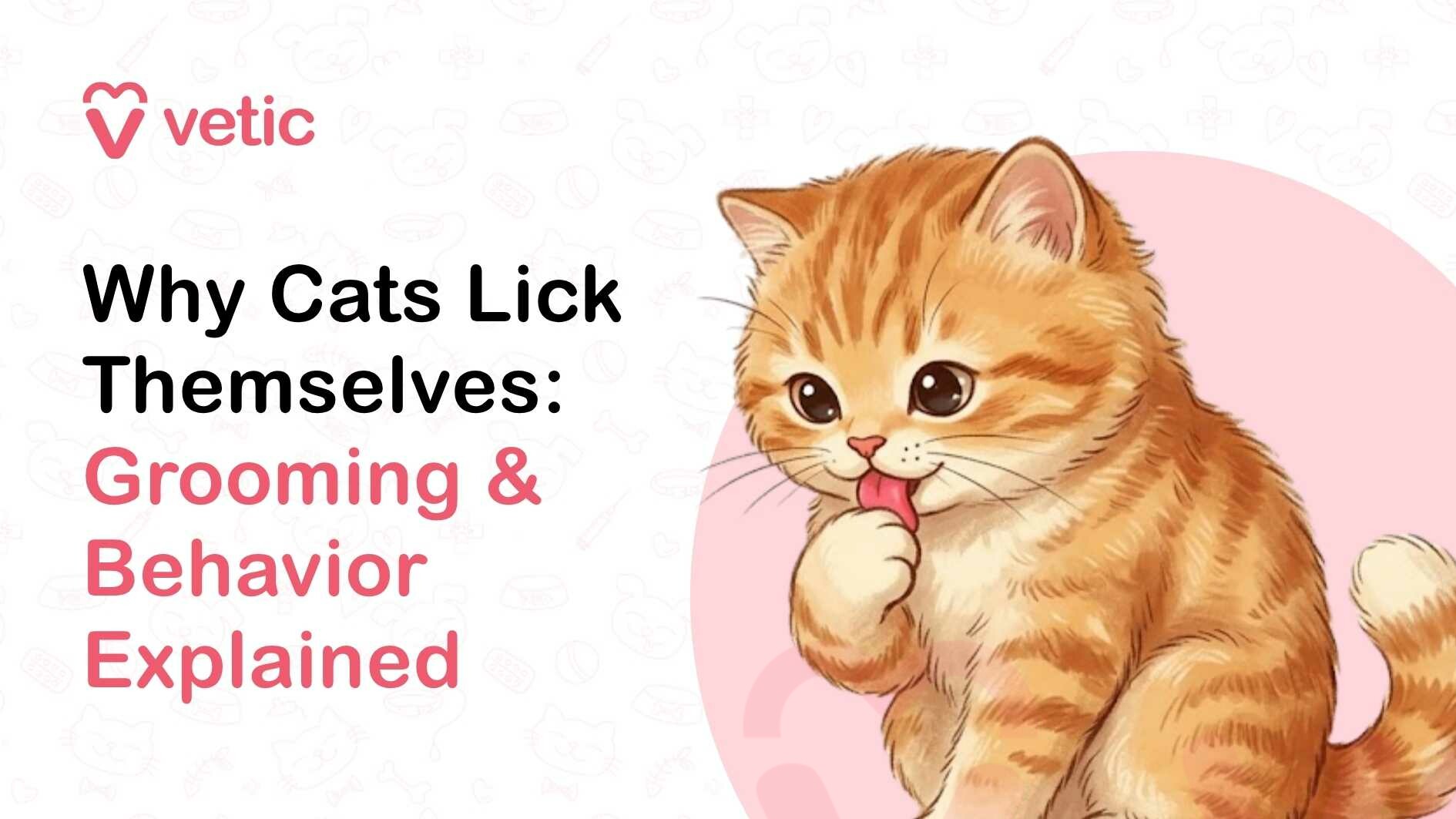
If you live with a cat, you’ve probably noticed how much time they spend licking themselves. Grooming is a defining feline behaviour. This makes many cat parents wonder where normal grooming ends and when it becomes something to worry about.
Cats licking themselves can be perfectly healthy, but sometimes it can signal stress, fungal or bacterial skin disease, pain, or underlying medical issues.
Understanding why cats lick themselves, how much grooming is normal, and what excessive licking may mean can help you support your cat’s physical and emotional well-being.
The Science Behind Cat Grooming: Why Cats Lick Themselves
Cats begin grooming themselves at just a few weeks of age. By adulthood, grooming typically accounts for about 25-30% of a cat’s time. Some cats have been observed spending up to one-third of their waking hours grooming. This behaviour is deeply rooted in feline biology and serves several essential functions. It is a deeply ingrained survival behaviour shaped by evolution.
How Grooming Helps Cats Stay Clean and Healthy
A cat’s tongue is covered with tiny backwards-facing barbs called papillae. These act like a natural brush, helping to:
- Remove dirt, debris, and loose hair
- Prevent matting of the fur
- Spread natural oils across the coat
- Remove parasites and allergens from the skin
This self-cleaning mechanism helps cats stay hygienic without needing water baths. It reduces odours that could attract predators in the wild.
Grooming also spreads sebum (natural oils) produced by the skin throughout the coat. This keeps the coat shiny and water-resistant.
In addition, grooming stimulates blood circulation to the skin and helps distribute scent markers that are important for feline communication.
Temperature Regulation and Coat Maintenance
Cats don’t sweat the way humans do. Grooming plays a key role in regulating body temperature:
- In cooler temperatures, grooming helps fluff up the coat, trapping insulating air.
- In warm weather, when a cat licks its fur, saliva spreads across the coat. As that saliva evaporates, it creates a cooling effect.
During the summer months, increased grooming in cats is normal, especially if your cat is resting comfortably and otherwise acting well.
Suggested Read: Should You Groom Your Short-Haired Cat?
Social Grooming: Why Cats Lick Each Other or Their Parents
Not all grooming is self-directed. Cats also groom others as part of social interaction.
Bonding and Social Hierarchy
When cats lick each other, it’s called allogrooming. This behaviour is common among cats that:
- Grew up together
- Share a close bond
- Have established social harmony
Allogrooming often focuses on the head, neck, and ears, areas that are difficult for cats to groom themselves. It can reinforce social bonds and reduce tension within a group.
In some cases, grooming reinforces social hierarchy. A dominant cat may groom a subordinate one, especially around the head and neck.
Grooming as a Sign of Affection
If your cat licks you, take it as a compliment. You’re being treated as part of their social group.
Cats may lick their parents to:
- Mark them with scent
- Show affection
- Seek attention
- Self-soothe in your presence
In some cases, cats may also lick people because they like the taste of salt on their skin. Sometimes, cats associate the person with safety and care.
While the sandpaper-like sensation can be surprising, it’s typically a positive behaviour, unless it becomes compulsive or intense.
Common Reasons: Why Cats Lick Themselves Excessively
While grooming is normal, excessive licking, especially focused on one area, often points to an underlying issue.
Grooming and Coat Care
Some cats naturally groom more than others. Long-haired breeds, such as the Persian cats, may spend extra time maintaining their dense coats. However, even in these breeds, grooming shouldn’t lead to bald patches or skin damage.
If shedding increases seasonally, grooming time may temporarily rise. But it should return to normal once shedding decreases.
Stress, Anxiety, and Boredom
Cats may lick excessively as a coping mechanism. They are highly sensitive to environmental changes.
Common stress triggers include:
- Moving to a new home
- Changes in routine
- New pets or people
- Loud noises or construction
- Lack of mental stimulation
Over-grooming releases endorphins, creating a calming effect. This type of grooming can be repetitive, similar to nail-biting in humans.
Stress-related grooming often targets the belly, inner thighs, or flanks. It may worsen over time if the underlying stressor isn’t addressed.
In some cases, this excessive licking can lead to noticeable hair loss. When hair loss is caused by repetitive grooming, it is referred to as psychogenic alopecia in cats.
Pain, Allergies, or Parasites
Cats often lick areas that hurt or itch. Excessive grooming may be caused by:
- Flea allergy dermatitis
- Food or environmental allergies
- Mites or lice
- Joint pain or arthritis
- Localised injury or inflammation
In these cases, licking is usually focused on a specific body part rather than generalised grooming.
Suggested Read: 20 Most Common Cat Diseases According to Gender, Neutering Status and Age
Medical Conditions Like Hyperesthesia Syndrome or Skin Infections
Certain medical conditions can drive compulsive licking in cats:
- Feline hyperesthesia syndrome, which causes skin sensitivity and sudden grooming frenzies
- Bacterial or fungal skin infections
- Hormonal imbalances
- Neurological disorders (nerve pain, seizure, age-related changes)
These conditions often require veterinary diagnosis and treatment at the top cat clinic.
Signs of Problematic Grooming in Cats
Knowing when cat grooming becomes abnormal is key.
Bald Patches, Redness, and Broken Skin
Healthy grooming should not damage the coat or skin. Concerning signs include:
- Thinning fur
- Completely bald spots
- Red, inflamed skin
- Scabs or open sores
- Thickened or darkened skin
- Bleeding
These changes suggest irritation, infection, or self-trauma.
Signs of Over-Grooming Due to Stress or Medical Issues
Over-grooming symptoms may look like:
- Constant licking in one area
- Sudden increase in grooming frequency
- Grooming that interferes with eating, sleeping, or play
This behaviour often escalates without intervention.
Behavioural Indicators to Watch For
Beyond the skin, look for behavioural changes in cats such as:
- Hiding more than usual
- Irritability or aggression
- Reduced appetite
- Vocalising during grooming
- Sudden personality changes
These clues can help differentiate normal grooming from distress-driven behaviour.
How Veterinarians Treat Cats That Lick Too Much
Treatment depends entirely on why the cat is licking themselves excessively.
Addressing Medical Causes: Allergies, Infections, Parasites
Diagnosis may involve skin scrapings, allergy testing, flea checks, dietary trials, and blood work.
If a physical cause is identified, treatment may include:
- Parasite prevention or treatment
- Antibiotics or antifungals for skin infections
- Anti-inflammatory or anti-itch medications
- Allergy management through diet or medication
- Pain control for arthritis or injuries
Treating the root cause usually significantly reduces excessive grooming.
Behavioural Treatments: Stress Management and Enrichment
If no medical issue is found, the focus shifts to behavioural health.
Strategies may include:
- Environmental enrichment (toys, climbing spaces, puzzle feeders)
- Predictable routines
- Safe hiding spaces
- Reducing household stressors
- Gradual introductions to new pets or environments
In some cases, behaviour-modifying medications or pheromone diffusers may be recommended.
Supporting Healing: Skin Care, Diet, and Supplements
Supportive care may involve:
- Protective collars to prevent self-trauma
- Omega-3 fatty acid supplements for skin health
- Hypoallergenic diets (formulated to reduce the risk of allergic reactions)
- Gentle topical treatments for irritated skin
Nutritional support plays a crucial role in restoring skin integrity and coat health.
Preventing Excessive Grooming in Cats
Prevention centres around reducing stress and maintaining good health rather than stopping grooming altogether.
Environmental Enrichment and Mental Stimulation
A mentally engaged cat is less likely to develop compulsive behaviours. Helpful strategies include:
- Interactive play sessions
- Rotating toys regularly
- Window perches
- Food puzzles
- Scheduled playtime to reduce boredom
Scratching posts and food puzzles help redirect excess energy into healthy outlets.
Suggested Read: Bacterial Skin Infections in Cats: What is Pyoderma in Cats?
Regular Veterinary Checkups for Skin and Coat Health
Routine checkups help catch:
- Early skin disease
- Dental pain
- Joint issues
- Weight-related problems
Consult a cat doctor for early intervention. It prevents minor issues from escalating into chronic grooming problems.
Monitoring and Managing Stressors at Home
Pay attention to changes in your cat’s environment or routine. Small adjustments, like adding quiet spaces or maintaining consistent feeding times, can make a big difference.
Final Thoughts: About Cats Licking Themselves
Cats lick themselves as a natural part of staying clean, comfortable, and emotionally balanced. Most grooming is completely normal and healthy. However, excessive licking is often a signal, not a habit to ignore. Whether caused by stress, skin disease, pain, or medical conditions, identifying the reason early allows for effective treatment. It prevents long-term discomfort in cats.
By observing your cat’s grooming habits and responding to changes promptly, you can help ensure that licking remains a healthy behaviour, not a cry for help.
Frequently Asked Questions: About Cats Licking Themselves
Is it normal for cats to lick themselves constantly?
Cats do groom frequently, sometimes spending several hours a day cleaning themselves. However, constant grooming that causes hair loss, skin damage, or behavioural changes is not normal. It should be evaluated.
When should I worry about my cat’s grooming habits?
You should be concerned if grooming leads to bald spots, sores, redness, or if your cat seems distressed, lethargic, or uncomfortable.
Can diet or hydration affect a cat’s grooming behaviour?
Yes. Poor-quality diets, food allergies, or dehydration can affect skin and coat health. This can lead to itchiness and increased grooming. A balanced diet and proper hydration support healthy grooming patterns.
References
Kim, H. S., Hong, J. S., Park, C. W., Cho, K. H., & Kim, Y. Y. (2018). Evaluation of grooming behaviour and apparent digestibility method in cats. Journal of Feline Medicine and Surgery, 21(4), 373–378. https://pmc.ncbi.nlm.nih.gov/articles/PMC10814636/
Parker, H. (2009, July 16). Cats and Compulsive Scratching, Licking, and Chewing. WebMD. https://www.webmd.com/pets/cats/features/cats-and-compulsive-scratching-licking-and-chewing
Purina. (n.d.). Cat Licking – Why Does My Cat Lick Me? https://www.purina.co.uk/articles/cats/behaviour/understanding-cats/why-does-my-cat-lick-me
Purina. (2021). Cat Overgrooming: Causes and Treatment. Purina.co.uk. https://www.purina.co.uk/articles/cats/health/daily-care/cat-overgrooming Purina. (2024). Cat Breeds that Need Daily Grooming. Purina.com. https://www.purina.com/cats/cat-breeds/collections/cat-breeds-that-need-daily-grooming