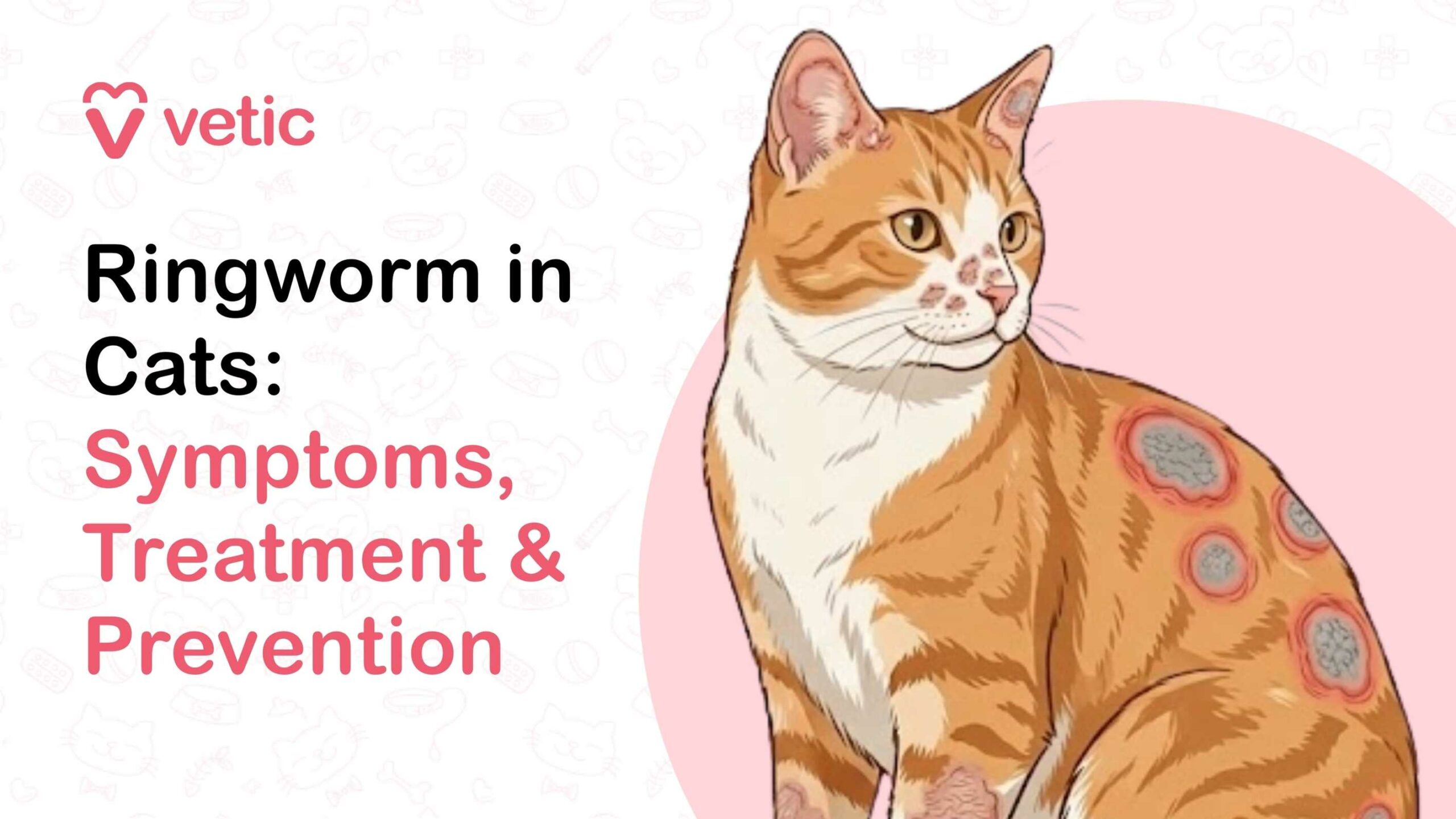
Ringworm is the common term used to describe a fungal infection affecting the skin, hair, and claws of animals and humans. Despite its name, it is not caused by a worm. The term originates from the circular, red lesions often seen in people, although these classic “rings” are not always present in cats.
The organisms responsible for ringworm in cats belong to a group of fungi called dermatophytes that infect keratinised tissues. Some dermatophyte species are host-specific, while others can spread between animals and humans, making ringworm a zoonotic disease.
What Ringworm Is and How Cats Become Infected
Ringworm in cats is a contagious fungal infection of the skin and hair, and sometimes the claws. The medical term for this condition is dermatophytosis. In cats, the most common organism responsible for ringworm is Microsporum canis.
A cat ringworm infection develops when fungal spores attach to the skin or hair shafts. These spores are highly resilient and can survive in the environment for months. Cats become infected through direct contact with an infected animal or contaminated surroundings. Kittens, immunocompromised cats, and long-haired breeds are particularly at risk.
Fungal Infection Mechanism and How It Affects Skin and Fur
Dermatophyte fungi feed on keratin, a protein found in the outer layer of the skin, hair, and claws. Once spores land on the skin, they invade hair follicles and the superficial skin layers. This results in brittle hair shafts that break easily, leading to the classic circular patches of hair loss seen in cats.
Inflammation develops as the immune system reacts to the fungus. Some cats show minimal irritation, while others experience redness, crusting, and scaling. In severe cases, claws may become brittle or misshapen.
How Ringworm Spreads Between Cats, Pets, and Humans
Ringworm infection in cats spreads easily because fungal spores are microscopic, lightweight, and highly resilient. Infected hairs break off and release thousands of spores into the environment, where they can settle on bedding, furniture, carpets, grooming tools, and clothing. These spores can survive for months or even years under favourable conditions, even in the absence of a host.
As a result, containment becomes particularly challenging in multi-pet households or shelters, where close contact and shared spaces significantly increase the risk of transmission and reinfection.
Direct contact with infected animals
The most common route of transmission is direct contact. When one cat with ringworm lesions rubs against another animal, fungal spores transfer to the new host. Grooming, playing, and shared sleeping areas increase the risk.
Dogs and even humans can contract ringworm from cats, making this a zoonotic disease. Children, elderly individuals, and people with weakened immune systems are more vulnerable.
Contaminated bedding, toys, and household surfaces
Spores shed from infected hairs contaminate bedding, carpets, furniture, grooming tools, and toys. Even if the infected cat has been treated, spores can linger in the environment and cause reinfection.
Because of this, environmental decontamination is a critical part of disease prevention and treatment. Without proper cleaning, recurrence is common.
Suggested Read: Diarrhoea in Cats: What Causes Loose Motion in Cats and What You Can Do About It
Recognising the Visible Signs of Ringworm in Cats
Clinical signs of ringworm in cats can vary significantly. Some cats act as silent carriers with minimal visible lesions, while others develop more obvious skin changes.
Circular patches of hair loss, scaling, and redness
The classic presentation of cats with ringworm cases includes:
- Circular areas of hair loss
- Dry, scaly skin
- Redness around lesion edges
- Broken hairs
Lesions are commonly found on the face, ears, paws, and tail. In long-haired cats, lesions may be more difficult to detect and appear as subtle thinning.
Behavioural signs such as excessive grooming or scratching
Although feline ringworm is often not intensely itchy, some cats may:
- Groom excessively
- Scratch affected areas
- Show mild discomfort
In more inflammatory cases, crusting and secondary bacterial infections can develop, increasing irritation.
If you notice these symptoms, consult a cat doctor near you for proper diagnosis and treatment.
Diagnosing Ringworm: Tests Your Veterinarian May Use
Because other skin diseases can resemble ringworm cases, veterinary confirmation is essential.
Physical examination and lesion inspection
Your veterinarian will begin with a thorough physical exam, assessing the distribution and appearance of skin lesions. While circular patches suggest ringworm, diagnosis cannot rely on appearance alone.
Fungal culture and Wood’s lamp examination
Two common diagnostic tools include:
- Wood’s lamp examination: Some strains of Microsporum canis fluoresce apple-green under ultraviolet light. However, not all strains glow, so a negative result does not rule out infection.
- Fungal culture: A sample of hair and skin debris is placed in a special medium to identify fungal growth. This remains the gold standard for confirming ringworm of cats, though results may take 1–3 weeks.
In some cases, PCR testing or microscopic examination may also be used.
Effective Treatments for Ringworm in Cats
Treatment depends on the severity of the infection, the number of cats in the household, and the risk to humans. Managing ringworm infection in cats usually requires a combination approach.
Topical antifungal creams, shampoos, and sprays
For mild, localised infections, topical therapy may be sufficient. Options include:
- Lime sulfur dips
- Miconazole shampoos
- Antifungal creams or sprays
These treatments reduce fungal load on the skin and help limit environmental contamination. Topical therapy is often recommended even when oral medication is used.
Oral antifungal medications for severe infections
In more widespread or persistent cases, veterinarians prescribe systemic antifungals. Itraconazole is commonly used and is considered effective and relatively safe when properly dosed.
Oral ringworm medications for cats helps eliminate infection from within the hair follicles. Treatment typically continues for several weeks and should not be stopped prematurely.
Cleaning and disinfecting the environment to prevent recurrence
Environmental control is essential in managing ringworm infections. Recommended measures include:
- Daily vacuuming to remove infected hairs
- Washing bedding in hot water
- Disinfecting surfaces with diluted bleach solutions (as advised by your veterinarian)
- Isolating infected cats during treatment
Without environmental management, reinfection is highly likely.
Recovery and Post-Treatment Care for Your Cat
Recovery timelines vary depending on severity and immune status. Even after visible improvement, spores may still be present.
Monitoring skin and fur regrowth
Hair regrowth usually begins within a few weeks of effective treatment. However, complete recovery may take 6–8 weeks or longer.
Veterinarians often recommend follow-up fungal cultures to confirm that the infection has resolved before discontinuing therapy.
Ongoing hygiene practices for household and other pets
Even after treatment:
- Continue regular grooming
- Wash bedding frequently
- Monitor other pets for early lesions
Early detection prevents recurrence and protects household members from getting ringworm from cats.
Preventing Ringworm Infection in Cats and Households
Prevention focuses on minimizing exposure and maintaining good hygiene.
Limiting exposure to stray or infected animals
Outdoor cats and those exposed to strays are at higher risk of feline ringworm. Avoid direct contact with animals showing suspicious skin lesions.
New cats introduced into the household should be examined and, if necessary, screened before mixing with resident pets.
Regular grooming and inspection of pets
Routine grooming allows early identification of:
- Small bald patches
- Scaling
- Broken hairs
Key Takeaways
- Ringworm in cats is a fungal skin infection, not a worm infestation.
- It spreads easily through direct contact and contaminated environments.
- Early signs include circular hair loss, scaling, and mild redness.
- Diagnosis requires veterinary testing, often including fungal culture.
- Effective treatment combines topical therapy, oral medication when needed, and environmental cleaning.
- Reinfection is common without proper hygiene measures.
- Ringworm can spread to humans, making prompt treatment essential.
Frequently Asked Questions About Ringworm in Cats
Can ringworm spread from my cat to humans?
Yes. Ringworm is a zoonotic infection. Humans can develop circular, red, itchy lesions after contact with infected cats or contaminated objects. Good hygiene, handwashing, and environmental cleaning reduce risk.
How long does it take for a cat to fully recover from ringworm?
Most cats recover within 4–8 weeks with appropriate treatment. Severe or immunocompromised cases may take longer. Veterinary confirmation through fungal culture ensures the infection has cleared.
Can ringworm go away without treatment?
In some healthy adult cats, mild infections may resolve spontaneously over several months. However, untreated cases continue to shed spores, increasing the risk of spread and environmental contamination.
What are the early warning signs of ringworm I should watch for?
Early signs include small patches of hair thinning, mild scaling, broken hairs, and subtle redness. Lesions often appear on the face, ears, or paws.
Are some cats more susceptible to ringworm than others?
Yes. Kittens, long-haired breeds, stressed cats, and those with weakened immune systems are more prone to infection. Crowded environments such as shelters also increase risk.
How should I clean my home to prevent reinfection?
Vacuum daily to remove contaminated hair. Wash bedding in hot water. Disinfect hard surfaces using veterinarian-recommended solutions. Isolate infected cats until cleared. Consistency is essential to prevent recurrence.
References:
Moriello, K. A. (2014). Treatment of dermatophytosis in dogs and cats: Review of published studies. Veterinary Dermatology, 25(5), 301–310. https://pubmed.ncbi.nlm.nih.gov/15030558/
Merchant, S. R. (2018, August; revised 2024, September). Ringworm (Dermatophytosis) in Cats. In The Merck/MSD Veterinary Manual. Merck & Co., Inc. https://www.msdvetmanual.com/cat-owners/skin-disorders-of-cats/ringworm-dermatophytosis-in-cats
Ringworm in dogs and cats. (n.d.). VeterinaryPartner. Retrieved March 2, 2026, from https://veterinarypartner.vin.com/default.aspx?pid=19239&id=4951439
Moriello, K. A., Coyner, K., Paterson, S., & Mignon, B. (2017). Diagnosis and treatment of dermatophytosis in dogs and cats: Clinical consensus guidelines of the World Association for Veterinary Dermatology. Veterinary Dermatology, 28(3), 266-e68. https://doi.org/10.1111/vde.12440