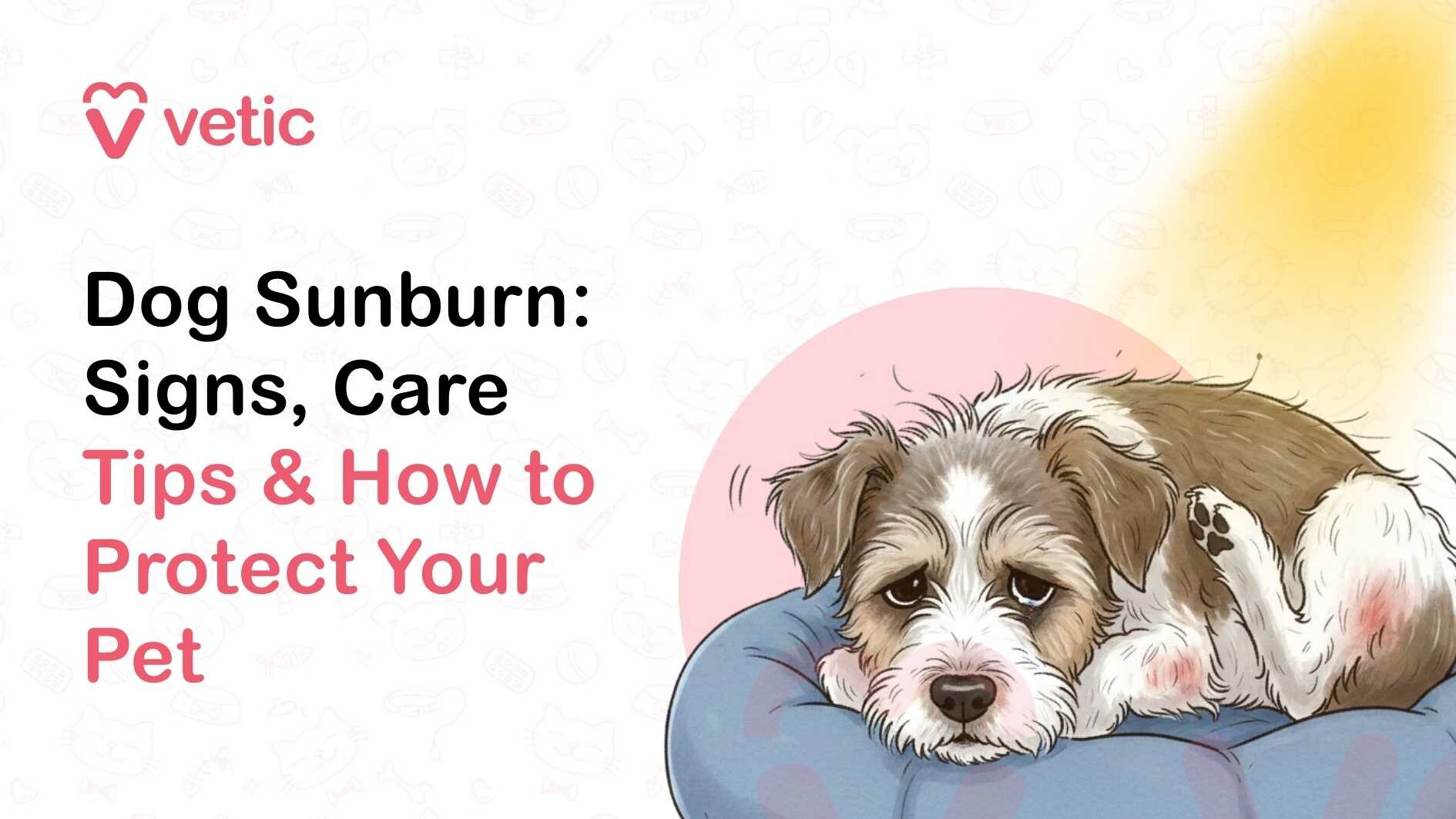
Sunburn isn’t just a human problem. Dogs can get sunburned too. Many pet parents are surprised to learn how common and potentially serious it can be. Prolonged sun exposure can damage a dog’s skin, cause pain, and lead to infections. It can also increase the long-term risk of skin cancer in dogs. Understanding which dogs are most at risk, how to spot early signs, and how to protect your dog from the sun can make a real difference to their comfort and health.
This blog explains dog sunburn in detail, what causes it, how to recognise it, how to treat it safely, and how to prevent it altogether.
Can Dogs Get Sunburned and Why Sun Exposure Is a Real Risk for Dogs
Yes, dogs can absolutely get sunburned. While fur provides some protection, it does not block all ultraviolet (UV) radiation. Areas with thin fur, sparse hair, or exposed skin are especially vulnerable. And because they don’t sweat like humans, they may lie in the sun longer without realising the damage building up.
Sunburn occurs when UV rays damage the outer layers of the skin. In dogs, repeated or intense sun exposure can cause:
- Painful skin inflammation
- Cracked or peeling skin
- Secondary bacterial infections
- Long-term skin damage and increased cancer risk
Dogs don’t always show obvious discomfort right away. This is why sunburn can go unnoticed until it becomes more severe.
Is your dog spending more time outdoors? Book a pet consultation at the best pet clinic to prevent sunburn damage!
Which Dogs Are Most at Risk of Sunburn Based on Coat Type, Colour, and Breed
Not all dogs face the same level of risk. Some are far more vulnerable due to genetics, coat characteristics, or health status.
Short-Haired, Light-Colored, and Hairless Dogs
Dogs with short or sparse fur provide less natural UV protection. Light-colored fur and pink skin also offer less melanin, which normally helps shield against sun damage.
Higher-risk examples include:
- Dalmatian
- Collies
- Bulldogs
- Whippets
- Xoloitzcuintli
- American Hairless Terrier
Hairless breeds are particularly vulnerable and often require consistent sun protection.
Puppies, Senior Dogs, and Dogs With Medical Conditions
Certain life stages and conditions also increase the risk of sunburn in dogs:
- Puppies have thinner, more delicate skin
- Senior dogs may have thinning fur or weaker skin barriers
- Dogs with immune disorders, allergies, or prior skin damage are more sensitive
- Dogs that have undergone hair clipping
- Dogs recovering from surgery (especially shaved areas) are temporarily more vulnerable
If your dog has pink eyelids, a pink nose, or thin ear flaps, those areas burn quickly.
Does Shaving or Trimming a Dog’s Coat Increase the Risk of Sunburn?
Grooming plays a complex role in sun protection.
When Grooming Helps vs When It Makes Sunburn Worse
Light trimming can help prevent overheating and improve airflow. But shaving too close to the skin removes the coat’s natural UV barrier. This can significantly increase sunburn risk.
Dogs shaved for medical reasons or aesthetics should be protected from direct sunlight until their coat regrows.
Double-coated breeds like Siberian Huskies, German Shepherds, and Golden Retrievers rely on their coat as temperature regulation. Shaving can disrupt that system and expose skin to direct UV damage.
Safe Summer Grooming Practices for Dogs
- Avoid shaving down to the skin unless medically necessary
- Leave enough coat length to shield the skin
- Groom early in the season rather than during peak summer heat
- Combine grooming with sun protection strategies
If in doubt, ask your veterinarian before drastically changing your dog’s coat.
Suggested Read: Summer Dog Grooming at Home – Expert Tips
Common Areas Where Dogs Get Sunburn and Why These Spots Are Exposed
Sunburn in dogs usually affects specific vulnerable areas.
Nose, Ears, Belly, and Groin
These areas often have thin fur or none at all:
- Nose (especially pink noses)
- Ear tips and edges
- Belly and inner thighs
- Groin and underarms
Dogs that lie on their backs or sunbathe are especially prone to belly sunburn.
Sunburn on the Face, Lips, and Eyelids
Facial sunburn can be subtle but painful. Watch for:
- Redness along the lip margins
- Swelling around the eyelids
- Crusting on the ear edges
These areas are sensitive and can become painful quickly.
Signs and Symptoms of Sunburn in Dogs You Should Never Ignore
Recognising sunburn early can prevent complications.
Early Symptoms Like Redness and Sensitivity
Mild sunburn signs in dogs include:
- Pink or red skin
- Warmth to the touch
- Mild swelling
- Sensitivity when touched
- Mild itching or discomfort
Dogs may lick or rub affected areas more than usual.
Severe Sunburn Signs Including Blisters and Skin Peeling
More serious sunburn in dogs may cause:
- Blisters or open sores
- Cracked or peeling skin
- Crusting lesions
- Swelling or oozing
- Hair loss in affected areas
- Signs of pain, lethargy, or appetite loss
Severe cases require veterinary attention.
Health Risks of Untreated Sunburn in Dogs
Dog sunburn is not just a cosmetic issue.
Skin Infections and Long-Term Damage
Burned skin loses its protective barrier. That allows bacteria to enter, increasing the risk of bacterial and fungal infections.
You may notice:
- Oozing discharge
- Foul smell
- Increased swelling
- Fever
Repeated sun damage can also lead to chronic skin thickening or scarring.
Increased Risk of Skin Cancer in Dogs
Chronic UV exposure is linked to:
- Squamous cell carcinoma (a common skin cancer)
- Hemangiosarcoma of the skin (blood vessel cancer)
- Other sun-related skin tumours (UV-linked skin growths)
Dogs with repeated sunburns are at higher risk over time.
How Veterinarians Diagnose Sunburn and Rule Out Other Skin Conditions
Sunburn can sometimes resemble:
- Allergic dermatitis
- Fungal infections
- Autoimmune skin diseases
- Bacterial infections
A veterinarian will:
- Examine affected skin areas
- Assess sun exposure history
- Rule out allergies, infections, or autoimmune skin diseases
In cases that are unclear, skin tests or biopsies may be recommended to confirm the diagnosis.
Dog showing red, inflamed skin after sun exposure? Access the best pet diagnostic lab services for all breeds to accurately diagnose sunburn!
Treating Sunburn in Dogs Safely at Home and When to Call a Vet
Treatment of dog sunburn depends on severity.
Mild Sunburn Care and Cooling Techniques
For mild sunburn:
- Move your dog out of the sun immediately
- Apply cool (not cold) compresses to soothe the skin
- Prevent licking with a recovery collar, if needed
- Keep the area clean and dry
Never apply human sunscreen or medicated creams unless approved by a vet. Some ingredients (like zinc oxide) can be toxic if licked.
Healing usually takes several days for mild cases.
Suggested Read: Pet Grooming 101: Tips and Tricks to Keep Your Pet Cool and Clean in the Summer Heat
When Sunburn Becomes a Medical Emergency
Contact a veterinarian if you notice:
- Blisters, open wounds, or bleeding
- Signs of infection (pus, odour, swelling)
- Significant pain or behaviour changes
- Sunburn covering large areas
Severe burns may require prescription anti-inflammatories, antibiotics, or pain relief.
Dog Sunscreen Explained – What to Use, What to Avoid, and How to Apply It Properly
Dog-safe sunscreen can be a valuable preventive tool.
- Use pet-specific sunscreens only
- Avoid products containing zinc oxide or salicylates
- Avoid spray sunscreens that can be inhaled
How to apply:
- Apply 15-20 minutes before sun exposure (going out)
- Focus on the nose, ears, belly, and groin
- Reapply every 2-4 hours during prolonged outdoor activity
- Monitor to prevent licking
Always supervise after application to prevent ingestion.
Proven Ways to Prevent Sunburn in Dogs During Summer and Outdoor Activities
Prevention is far easier than treatment.
- Walk during early morning or late evening
- Provide shaded areas when outdoors
- Use protective clothing for dogs when needed
- Use umbrellas or pop-up tents at beaches.
- Apply dog-safe sunscreen to exposed skin
- Limit midday sun exposure (10 a.m. – 4 p.m.)
- Avoid excessive coat shaving
- Monitor high-risk dogs closely
Indoor dogs that lounge near sunny windows can still get UV exposure over time, especially if they spend hours in direct sunlight.
Final Takeaway: About Dog Sunburn and Sun Protection
Dog sunburn is a real and preventable health issue. If your dog has light-coloured skin, sparse fur, or loves sunbathing, proactive protection is essential. A little shade, smart grooming choices, and dog-safe sunscreen can prevent painful burns and possibly serious long-term health issues.
When in doubt, talk to your veterinarian. Catching sun damage early makes treatment much easier and keeps your dog comfortable all summer long.
FAQs: About Dog Sunburn and Sun Protection
Can dogs get sunburn through their fur?
Yes, especially if the fur is thin, short, or light-colored. Dense double coats offer more protection but aren’t completely safe.
How long does sunburn take to heal in dogs?
Mild sunburn may heal in a few days. But severe cases can take weeks and may require medical treatment.
Can dogs get sunburn on cloudy days?
Yes. UV rays penetrate clouds. Just like humans, dogs can burn even when it doesn’t feel hot.
Is dog sunburn dangerous long-term?
Repeated exposure increases the risk of chronic skin damage and certain skin cancers, particularly in light-skinned dogs.
Do indoor dogs need sun protection too?
Indoor dogs that sunbathe near windows or spend occasional time outdoors may still need protection, especially if they are high-risk. UV-blocking window films can help reduce risk.
References
Canadian Veterinary Medical Association. (2020). The Effect of Sun Exposure on Animals. https://www.canadianveterinarians.net/related-resources/the-effect-of-sun-exposure-on-animals/
Gfeller, R., Thomas, M., & Mayo, I. (2026). Sunburn: First Aid. Vin.com. https://veterinarypartner.vin.com/default.aspx?pid=19239&id=4951342
Meyers, H. (n.d.-a). Do Dogs Need Sunscreen? American Kennel Club. https://www.akc.org/expert-advice/health/do-dogs-need-sunscreen/
Meyers, H. (n.d.-b). Is It OK to Shave Your Dog’s Coat in Summer? American Kennel Club. https://www.akc.org/expert-advice/health/is-it-ok-to-shave-your-dog/
Stern, L. (2025). Toxicosis in Animals From Human Topical Agents. MSD Manual. https://www.msdvetmanual.com/toxicology/toxicosis-from-human-topical-agents/toxicosis-in-animals-from-human-topical-agents