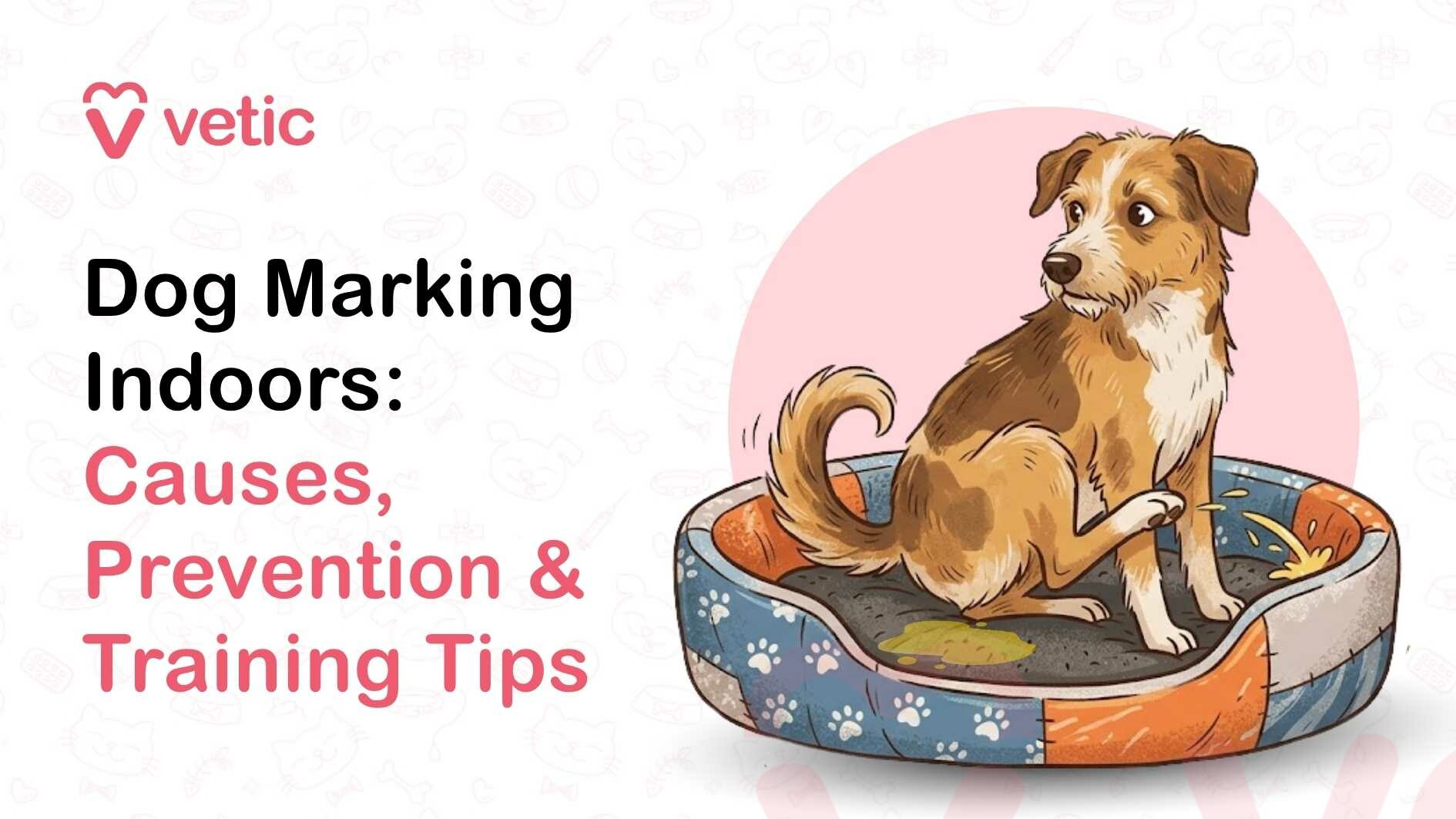
Finding urine spots around the house, especially after your dog is already toilet-trained, can be frustrating and confusing. Many pet parents assume it’s disobedience or a lapse in house training. But in most cases, dog marking in the house is a form of communication, not a bathroom accident.
Understanding the causes of marking is the key to stopping it effectively through training, environmental control, and neutering in dogs, without punishment, stress, or damage to your relationship.
Why Dogs Mark Indoors and What Urine Marking Communicates About Their Territory and Social Status
Urine marking is a normal canine communication behaviour. Even well-trained dogs may mark under certain conditions. It’s less about needing to relieve themselves and more about sending a message.
How Dogs Use Marking to Identify Their Territory
Dogs experience the world through scent. Their urine contains chemical signals (pheromones) that communicate identity, reproductive status, and social information to other dogs. When they mark:
- They’re claiming a space as familiar or controlled
- They’re leaving information for other animals
- They’re responding to a previously deposited scent
Indoors, dog marking often targets:
- Vertical surfaces like walls, furniture legs, doors, windows, or corners, unlike normal urination, which happens on horizontal ground.
Suggested Read: Fluid in the Abdomen of Dogs: Signs, Causes and Treatment for Ascites in Dogs
Male Dogs Marking in Response to Female Dogs in Heat
Intact male dogs are especially sensitive to the scent of females in heat. Even if the female is outside the home or neighbourhood, scent particles can travel far.
When a male dog detects this scent:
- Marking frequency may increase
- They may mark near exits or entryways
- Restlessness and vocalisation can accompany the behaviour
However, female dogs can also mark, particularly during hormonal cycles or in multi-dog households.
Conflicts Between Dogs and Other Housemates
Dog marking in dogs may increase when:
- A new dog or pet enters the home
- Dogs compete for resources or attention
- There’s subtle tension between housemates
In these cases, pee marking in dogs becomes a way to reassert presence rather than dominance.
How Changes in a Dog’s Environment Trigger Marking Behaviour
Dogs thrive on predictability. Urine marking in dogs may start suddenly after:
- Moving to a new home
- Renovations or rearranging furniture
- New people visiting or staying over
- Changes in routine or schedule
Even small disruptions can make a dog feel the need to “reclaim” their space. Marking can function as a self-soothing behaviour.
Submissive Urination vs Intentional Marking
It’s critical to distinguish marking from submissive or excitement-related urination.
Submissive urination:
- Occurs during greetings or scolding
- Common in puppies and young dogs with immature bladder control
- The dog may crouch, tuck its tail, and avoid eye contact
- Often involves small puddles during high emotional states
- Typically seen in puppies or shy dogs
- Usually improves with age, training, and confidence-building
Intentional marking:
- The dog remains confident and upright
- A small amount of urine on vertical surfaces
- No signs of fear
- Purposeful sniff, lift leg, and mark sequence
The motivations behind each behaviour are completely different, which affects how you address them.
Suggested Read: 15 Heat-Tolerant Dog Breeds for the Indian Climate
Differentiating Between House Soiling and Urine Marking in Dogs
Before implementing training strategies, confirm whether your dog is marking or simply not fully house-trained.
Signs That Indicate Intentional Marking Versus Accidents
Marking behaviours in dogs typically involve:
- Small urine amounts
- Frequent repetition
- Specific locations
- Raised-leg posture (in males, sometimes females)
House soiling, on the other hand, usually involves:
- Larger puddles or a full bladder release
- Horizontal surfaces
- Random locations
- May occur after long gaps between bathroom breaks
- Often linked to schedule inconsistencies
Understanding Patterns of Frequency and Location of Marking in Dogs
Dogs often mark:
- The same spots repeatedly
- Areas with strong scents
- Entryways, windows, or doors
These patterns suggest communication rather than poor bladder control.
Why Context and Timing Are Important for Accurate Identification
Ask yourself:
- Does it happen near doors after hearing other dogs?
- Does it follow conflicts between pets?
- Is it focused on new items?
- Does it occur during parents’ absence?
Context provides crucial clues to the underlying cause. A dog that urinates immediately after returning from outdoors likely isn’t emptying their bladder. They’re communicating.
Additionally, the sudden onset of indoor urination in a previously trained dog should prompt a medical evaluation. It helps to rule out urinary tract infections, bladder stones, hormonal disorders, and diabetes in dogs.
Behavioural solutions won’t resolve medical causes.
Strategies to Stop Your Dog From Marking in the House Effectively
Stopping indoor marking requires management, training, and consistency, not punishment.
How Neutering Can Reduce Territorial Urine Marking in Dogs
Neutering significantly reduces marking in many dogs, especially when done before the behaviour becomes habitual. Benefits may include:
- Reduced hormone-driven marking
- Decreased roaming impulses
- Lower reactivity to scent cues
However:
- Neutering does not guarantee the elimination of marking
- Learned marking habits may persist
- Environmental triggers can still provoke marking
Neutering works best when combined with training and environmental control.
Techniques for Thoroughly Cleaning Soiled Areas to Remove Scent Cues
Dogs return to previously marked spots because they can still smell urine, even when you can’t.
Use:
- Enzymatic cleaners specifically designed for pet urine
- Multiple treatments on heavily marked areas
- Blacklight to detect hidden spots
Avoid ammonia-based cleaners, which mimic urine scent.
Preventing Access to Frequently Marked Areas
Temporary restrictions can help break habits:
- Close doors to problem rooms
- Block furniture legs or corners
- Use baby gates where needed
The fewer opportunities a dog has to mark, the faster the behaviour declines.
Using Training and Counterconditioning to Change Marking Behaviour
Training focuses on:
- Rewarding appropriate toileting outdoors
- Interrupting urine marking calmly (never scolding)
- Teaching a reliable “leave it” or recall
- Redirecting attention before marking occurs
Counterconditioning helps when marking is triggered by anxiety or environmental stress. Consistency matters more than correction.
Belly Bands and Other Physical Management Tools
Belly bands wrap around a male dog’s waist and absorb urine if marking occurs. It can be useful:
- As a short-term management solution
- During visits or transitions
- While training takes effect
They are not a cure, but they prevent the behaviour from being reinforced.
Managing Anxiety and Stress in Dogs That Can Trigger Marking
If stress is driving marking:
- Increase enrichment activities
- Provide consistent routines
- Create safe resting spaces
- Use calming aids if needed
- Consider professional behavioural guidance
Calm dogs mark less. Chronic stress-related marking may require the services of a veterinary behaviourist.
Special Considerations for Controlling Marking When Visiting Other Homes or Outdoor Areas
Some dogs only mark in unfamiliar spaces.
How to Reduce Marking in Unfamiliar Indoor Environments
When visiting new places:
- Give your dog a long walk before entering another room
- Allow a full bladder emptying outdoors
- Supervise closely
- Keep your dog leashed indoors initially
- Allow frequent outdoor breaks
Limit access until you’re confident marking won’t occur. Early prevention is easier than correction.
How to Manage Outdoor Marking in Dogs During Walks or at Parks
Outdoor marking is normal and often harmless. However, excessive marking can slow walks or create tension with other dogs. Strategies include:
- Structured walks with fewer stops
- Increase structured outdoor bathroom breaks
- Setting designated sniff-and-mark breaks
- Rewarding forward movement
- Avoiding over-arousal
- Redirecting obsessive marking attempts
Balance is key; sniffing is mentally enriching.
Tools and Techniques for Short-Term Prevention and Long-Term Behaviour Modification
Short-term:
- Belly bands
- Close supervision
- Environmental management
Long-term:
- Training consistency
- Routine
- Neutering (if appropriate)
- Addressing emotional triggers (separation anxiety)
- Professional consultation, if needed
When Medical or Behavioural Interventions May Be Needed
Consult a veterinarian if:
- Marking begins suddenly in an older dog
- There are signs of urinary tract disease
- Urination frequency increases dramatically
- Your dog strains to urinate
- There’s blood in the urine
- Accidents happen during sleep
Seek a certified behaviour professional if:
- Marking is linked to aggression
- There are escalating conflicts between dogs
- Anxiety symptoms are severe
- Standard training hasn’t improved behaviour
- Anxiety or aggression accompanies marking
In some cases, anti-anxiety medications may support behaviour modification plans. Book a same-day pet checkup to rule out medical issues first.
Final Takeaway: About Dog Marking in the House
Dog marking indoors isn’t spite, stubbornness, or poor training; it’s communication. Once you understand what your dog is saying and why, solutions become clearer and more effective.
With patience, proper cleaning, stress management, and consistent training, most dogs can stop marking indoors and regain harmony in the home without fear or frustration.
Frequently Asked Questions: About Dog Marking in the House
Will neutering always stop urine marking in adult dogs?
No. Neutering reduces marking in many dogs, especially if done early. However, if marking has become a learned habit or is stress-related, training and management are still required.
Can anxiety alone cause a dog to start marking indoors?
Yes. Stressful changes, new pets, moving, and visitors can trigger marking. In these cases, addressing the emotional root cause is essential.
How long does it take for training to reduce or stop marking?
It depends on the duration of marking, the causes, the consistency of management, and the underlying anxiety levels in dogs. Some dogs improve within weeks. But long-standing habits may take several months to resolve fully.
References
American Kennel Club. (n.d.). Curbing the Issue of Dog Marking. https://www.akc.org/expert-advice/training/curbing-marking/
Gibeault, S. (n.d.). My Dog Peed On My Bed — What Should I Do? American Kennel Club. https://www.akc.org/expert-advice/training/dog-pees-on-bed/
Kane, G. (2015, April 27). Why Does My Female Dog Mark? American Kennel Club. https://www.akc.org/expert-advice/training/female-dog-mark-urinate-behavior-scent/
Meyers, H. (n.d.). Urinary Frequency in Dogs: What to Know. American Kennel Club. https://www.akc.org/expert-advice/health/why-is-my-dog-peeing-so-much-urinary-frequency/ WebMD Editorial Contributors. (2021, February 18). Medical Causes of House Soiling in Dogs. https://www.webmd.com/pets/dogs/medical-causes-house-soiling-dogs