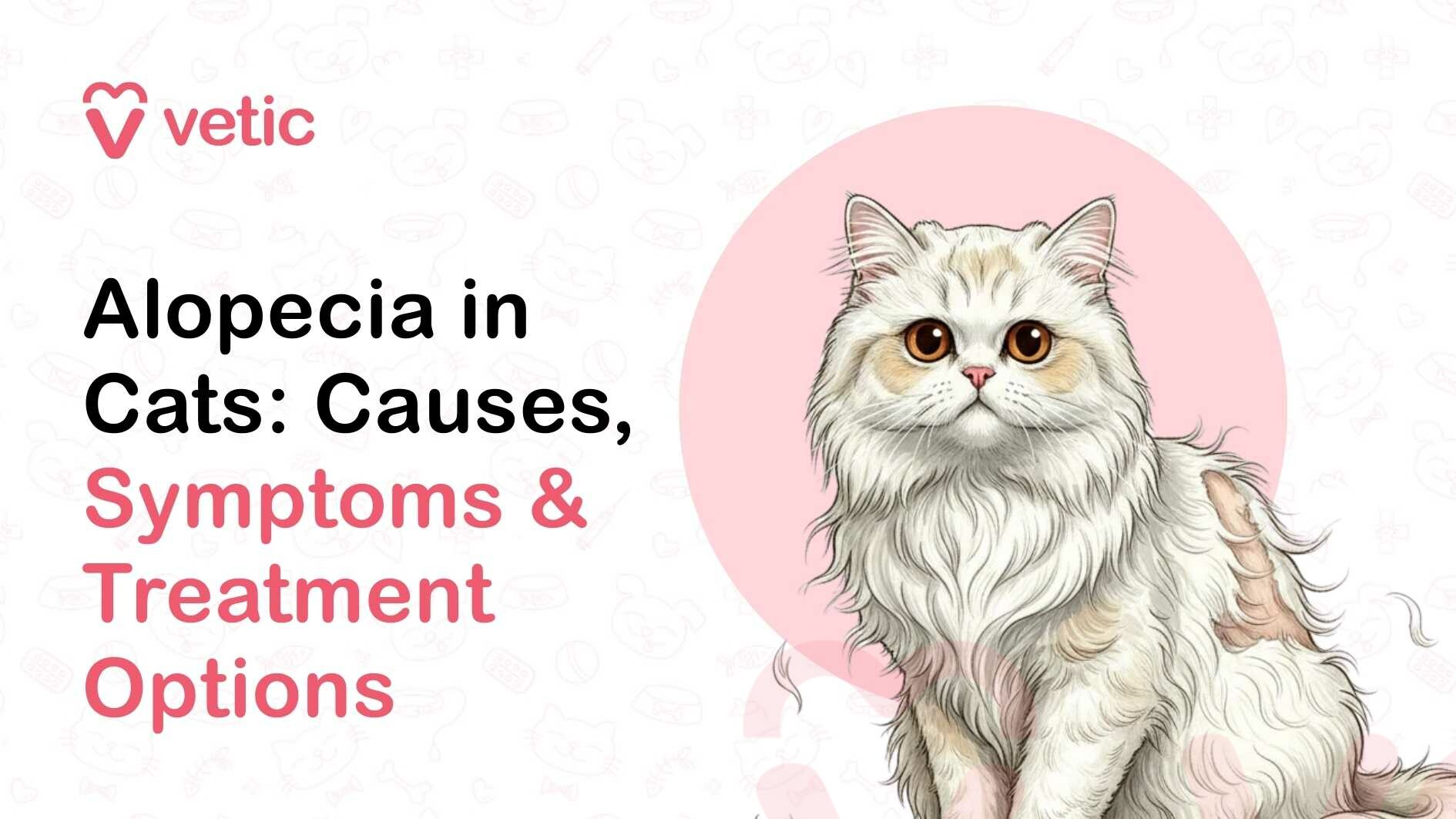
Hair loss in cats, medically known as alopecia, is a common concern among pet parents. Some shedding in cats is perfectly normal. But noticeable bald patches, thinning fur, or excessive grooming can signal an underlying issue that needs attention. Alopecia in cats is not a disease itself but rather a symptom of various medical, behavioural, or environmental conditions.
Understanding why alopecia occurs, how it appears, and the available treatment options helps you act early and prevent complications.
What Is Alopecia in Cats and How Does Cat Hair Loss Occur?
Alopecia in cats is the partial or complete loss of hair from areas of the body where fur is normally present. It can develop gradually or appear suddenly and may affect small patches or large areas.
Hair growth follows a cycle consisting of:
- Anagen (growth phase)
- Catagen (transition phase)
- Telogen (resting phase)
Inflammation, hormonal imbalances, infections, trauma, or stress in cats can disrupt this cycle. These disruptions can cause cats’ hair to fall out prematurely or fail to regrow.
Unlike seasonal shedding, alopecia often leaves visible bald spots, broken hairs, or irritated skin beneath the surface.
Suggested Read: Should You Groom Your Short-Haired Cat
Common Symptoms of Alopecia and Cat Hair Fall
Cat hair loss does not always look the same. Some cats lose fur quietly, while others show obvious skin changes or discomfort.
Common signs of alopecia in cats include:
- Bald patches or thinning fur
- Overgroomed areas with short, broken hairs
- Excessive licking, chewing, or biting at the skin
- Redness, scabs, or flaky skin
- Symmetrical hair loss on the belly, inner thighs, or flanks
- Dull, brittle coat or poor regrowth
- Changes in skin colour or texture
In some cases, cats show hair loss without itching, which can make the problem harder to notice early.
Types of Alopecia in Cats
Understanding the type of alopecia helps narrow down the cause.
Self-Inflicted Alopecia in Cats
This is the most common type of feline alopecia. It occurs when cats excessively groom themselves due to:
- Itching
- Pain
- Stress or anxiety
The hair shafts break off close to the skin, often leaving stubbly patches rather than smooth bald areas.
Spontaneous Alopecia in Cats
Spontaneous alopecia in cats happens without excessive grooming. Hair falls out on its own due to:
- Hormonal imbalance
- Genetic or metabolic disease
- Severe systemic illness
This type often appears as symmetrical hair loss. The skin typically appears smooth and non-irritated.
Localised vs Generalised Hair Loss in Cats
- Localised alopecia in cats affects one or a few specific areas (face, tail base, ears)
- Generalised alopecia affects large body areas or the entire coat
The pattern provides important diagnostic clues.
Noticing patchy hair loss in your cat? Explore Vetic’s pet diagnostic lab options for all breeds to pinpoint the exact type of alopecia!
Most Common Causes of Alopecia in Cats
Allergies Causing Cat Hair Loss
Allergies are a leading cause of feline alopecia. Triggers include:
- Flea allergy dermatitis
- Food allergies (commonly to chicken or dairy)
- Environmental allergens (dust mites, pollen, mould)
- Contact allergies
Even a single flea bite can cause intense itching and hair loss in sensitive cats.
Fleas, Mites, and Other Parasites
External parasites commonly cause:
- Itching and overgrooming
- Patchy hair loss around the neck, back, and tail base
Mites such as Demodex or Notoedres may cause crusting, redness, and hair loss, especially around the face and ears.
Hormonal and Endocrine Disorders
Hormonal imbalances can interfere with normal hair growth cycles. Though less common in cats than in dogs, conditions include:
- Hyperthyroidism
- Diabetes mellitus
- Adrenal disorders (rare)
Hormonal alopecia often presents as non-itchy, symmetrical hair loss.
Stress, Anxiety, and Behavioural Overgrooming
Cats are highly sensitive to environmental changes. Psychogenic alopecia, a behavioural condition where cats lick excessively due to anxiety, can be caused by:
- Boredom
- Moving homes
- New pets or family members
- Loud noises
- Changes in routine
Affected cats groom excessively, often targeting the belly, inner thighs, or sides.
Nutritional Deficiencies and Diet-Related Hair Fall
Poor-quality or imbalanced diets may lead to:
- Protein deficiency
- Fatty acid imbalance
- Vitamin and mineral shortages
These cats often have dull coats, slow regrowth, and increased shedding.
Infections Linked to Feline Alopecia
Skin infections in cats that cause hair loss include:
- Ringworm (fungal infection)
- Bacterial dermatitis
- Yeast overgrowth
These can damage hair follicles. Ringworm is especially important because it is contagious to humans and other pets. Symptoms include circular bald patches with scaly skin.
Underlying Medical Conditions and Cat Hair Loss Disease
Systemic illnesses that may contribute to alopecia include:
- Chronic pain
- Liver or kidney disease
- Autoimmune skin disorders
- Cancer affecting the skin or internal organs
In these cases, hair loss is often accompanied by weight loss, lethargy, or changes in appetite.
Suggested Read: Toxic Food for Cats
When Cat Hair Loss Becomes a Serious Health Concern
Cat hair fall should not be ignored when:
- Bald areas rapidly increase in size
- Skin becomes inflamed, ulcerated, or infected
- Cat hair fall is accompanied by vomiting, weight loss, or behaviour changes
- Kittens or senior cats develop alopecia
- Hair loss persists despite parasite control
Early veterinary evaluation at the best pet clinic can improve outcomes.
How Veterinarians Diagnose Alopecia in Cats
Physical Examination and Skin Evaluation
The vet assesses:
- Hair texture and breakage patterns
- Distribution of hair loss
- Grooming behaviour
- Skin condition
- Presence of parasites or lesions
A detailed history is essential. A vet may use a flea comb or special lighting to check for fungal infections.
Skin Scrapings, Blood Tests, and Allergy Testing
Common diagnostic tools include:
- Skin scrapings to detect mites
- Fungal cultures for ringworm
- Cytology (microscopic examination)
- Blood tests to assess hormones and organ function
- Elimination diets for suspected food allergies
- Intradermal allergy testing
Biopsy and Advanced Diagnostic Methods
If initial tests are inconclusive, a skin biopsy may be performed. This involves taking a small sample of skin tissue for laboratory analysis. Biopsies are particularly useful in diagnosing:
- Autoimmune disease
- Cancer
- Rare skin disorders
Alopecia in Cats: Treatment Options Recommended by Vets
Cat hair fall solutions depend entirely on the underlying cause.
Medical Treatment for Feline Alopecia
This may include:
- Antihistamines or steroids* for allergies
- Hormone-regulating medications
- Pain management
- Immunosuppressive therapy when indicated
*steroids should only be given after bacterial and fungal infections are ruled out.
Parasite Control and Skin Infection Treatment
Monthly flea and mite preventatives are essential, even for indoor cats. Treatment may include:
- Topical or oral flea medication
- Medicated shampoos
- Lime sulfur dips (for fungal infections)
Treating the environment is equally important to prevent reinfestation.
Dietary Changes for Cat Hair Fall Solutions
Dietary management may involve:
- High-quality, complete diets
- Novel protein or hypoallergenic foods
- Omega-3 and omega-6 fatty acid supplementation
Improved nutrition often enhances coat regrowth within weeks.
Stress Management and Behavioural Therapy
For psychogenic alopecia in cats:
- Increase environmental enrichment (toys, scratching posts)
- Provide safe hiding spaces
- Maintain consistent routines
- In severe cases, anti-anxiety medication may be prescribed
Reducing stress can significantly decrease overgrooming.
Home Care and Supportive Management for Cats With Alopecia
Pet parents can help by:
- Grooming gently to remove loose fur
- Maintaining strict parasite prevention
- Avoiding frequent diet changes
- Keeping the skin clean and dry
- Avoiding harsh shampoos
- Reducing household stress
- Monitoring grooming behaviour
- Ensuring proper hydration
- Keeping infected cats isolated if ringworm is present
Never apply human skin products without veterinary approval.
Recovery Timeline and Long-Term Management of Feline Alopecia
Hair regrowth depends on the causes of alopecia in cats:
- Allergies and parasites: weeks to months
- Behavioural causes: gradual improvement with consistency
- Hormonal conditions: regrowth after stabilisation
Some chronic conditions require lifelong management rather than a cure.
Preventing Alopecia and Reducing Future Hair Loss in Cats
Preventive steps include:
- Year-round parasite control
- Balanced, high-quality nutrition
- Regular grooming and skin checks
- Stress reduction strategies
- Routine veterinary check-ups
- Maintaining clean bedding
Prompt attention to small changes can prevent extensive hair loss in cats.
Final Takeaway: About Alopecia in Cats
Alopecia in cats is a signal, not a diagnosis. Whether caused by allergies, parasites, stress, or systemic disease, early identification and targeted treatment are key to restoring coat health and preventing complications. With proper veterinary guidance and consistent home care, most cats with alopecia can recover comfortably and regain a healthy coat.
FAQs: About Alopecia in Cats
Is alopecia painful or dangerous for cats?
Alopecia itself is not painful, but the underlying cause may be. Allergies, infections, or open sores can cause discomfort. Hormonal or systemic diseases may also pose health risks if untreated.
Can cat hair grow back after alopecia treatment?
In most cases, yes. If hair follicles remain intact and the underlying cause is addressed, hair typically regrows. However, long-term hormonal or scarring conditions may result in incomplete regrowth.
What vitamin deficiency causes alopecia in cats?
Deficiencies in essential fatty acids, biotin, zinc, and protein can contribute to poor coat quality and hair loss.
Can stress alone cause hair loss in cats?
Yes. Psychogenic alopecia results from stress-driven overgrooming. However, medical causes must be ruled out before confirming a behavioural diagnosis.
When should I take my cat to the vet for hair loss?
If hair loss is persistent, spreading, accompanied by skin changes, or associated with other symptoms, veterinary care is essential.
References
Calder, C. D. (2024). Psychogenic Alopecia. Vin.com. https://veterinarypartner.vin.com/default.aspx?pid=19239&catId=254060&id=11924460
Noli, C. (2026). Non-Inflammatory Alopecia in Cats. Vin.com. https://www.vin.com/apputil/content/defaultadv1.aspx?pId=8768&meta=generic&catId=18812&id=3850097
Dryden, M. W. (n.d.). Flea Allergy Dermatitis in Dogs and Cats. Veterinary Manual. https://www.msdvetmanual.com/integumentary-system/fleas-and-flea-allergy-dermatitis/flea-allergy-dermatitis-in-dogs-and-cats
Moriello, K. (2020). Dermatophytosis in Dogs and Cats. Veterinary Manual. https://www.msdvetmanual.com/integumentary-system/dermatophytosis/dermatophytosis-in-dogs-and-cats
Purina. (2025). Hair Loss in Cats. https://www.purina.in/care-and-advice/cat/health/hair-loss-in-cats