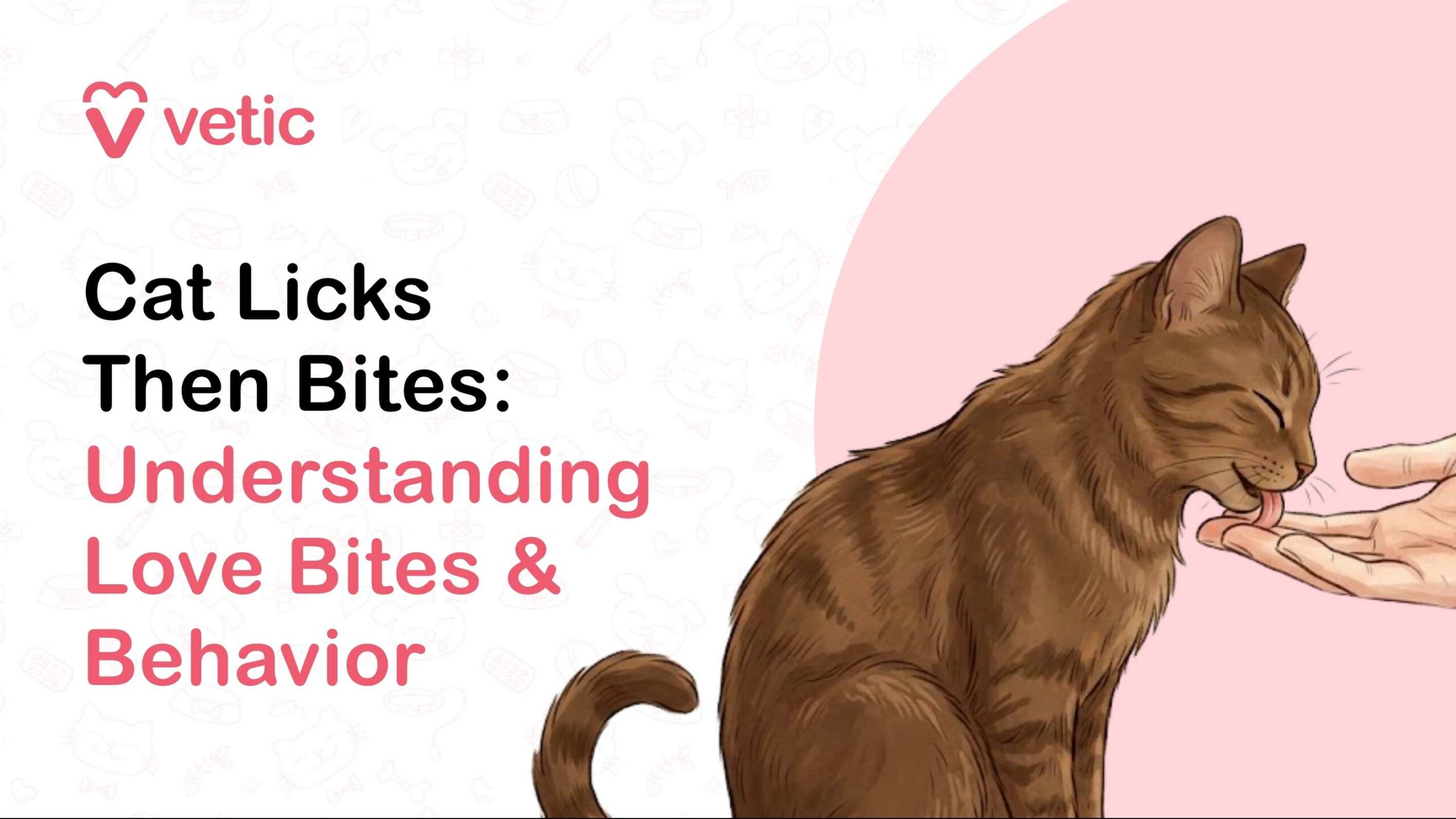
If you’ve ever thought, why does my cat lick me and then, out of nowhere, take a quick nibble, you’re not imagining the “mixed signals.” Many pet parents search variations like why did my cat lick me or why does my cat lick me then bite me after a cuddle session turns into teeth-on-skin. In most homes, this pattern is less about “bad behaviour” and more about how cats communicate boundaries, excitement, affection, and sometimes discomfort.
Cats rely less on facial expressions and more on body language, scent, grooming, and gentle mouthing. Sometimes that affectionate grooming (licking) flows into a “please stop,” “I’m too excited,” or “let’s play” bite- what many people call cat love bites. They rarely break skin and most cats learn when to stop with proper training.
Understanding context is the key to responding calmly and preventing the behaviour from escalating.
How Cats Communicate Through Licking: Affection, Bonding, and Social Behaviour
Cats lick for several reasons. If you’ve wondered why cats lick humans, the short answer is: licking is a multi-purpose social tool: part affection, part grooming, part communication, and sometimes part stress relief.
Licking as a sign of trust and comfort
When your cat chooses to lick you, it can be a sign you’re part of their safe circle. Many cats lick their preferred people as an affectionate “grooming gesture,” similar to how friendly cats groom each other.
Licking can also be self-rewarding for cats: it’s rhythmic, familiar, and can help them feel settled. That’s why some cats lick most during calm, cosy moments like bedtime, post-meal lounging, or when you’ve just come home.
Grooming behaviour learned from mother and siblings
From birth, kittens are licked by their mother for grooming and care, and many carry that comfort-signalling behaviour into adulthood. So if you’re asking why kittens lick humans, it can be a mix of social bonding, exploratory behaviour (kittens investigate with their mouths), and learned grooming routines.
Kittens also learn bite pressure and play manners from littermates, so a kitten raised without enough appropriate play practice may mix licking with mouthy play more often.
How licking reinforces social bonds with humans
Some cats lick to “share scent” and strengthen group identity. It can feel surprisingly personal when your cat grooms your hand like you’re family. In many cases, that’s exactly what’s happening: your cat may be affiliating with you, mixing scents, and reinforcing familiarity.
Cats may also lick you because you taste interesting, salty skin, fragranced lotion, or food smells. This isn’t “gross”; it’s just a cat being a cat, investigating with both nose and tongue.
When licking becomes obsessive or attention-seeking
Sometimes licking is a learned attention strategy: cats notice that licking gets a reaction like talking, petting, laughing, or even “no, stop.” If licking consistently earns attention, some cats repeat it.
Suggested Read: Why Does My Cat Stare at Me? 6 Reasons Cats Stare and How to Respond
Understanding Why Your Cat Sometimes Bites After Licking: Mixed Signals Explained
The lick-then-bite pattern is often an emotional shift: licking reflects calm affection, while biting happens when arousal rises. This could be due to overstimulation, play, discomfort, or a desire to end the interaction.
“Love bites” are usually gentle and controlled, but they’re often communication rather than pure affection. The meaning depends on context and body language, as many cats use a nip to signal “that’s enough” instead of walking away.
Common Situations That Trigger Licking Followed by Biting in Cats
Most lick-and-bite episodes happen in predictable situations. If you find yourself wondering why your cat bites and then licks (or the reverse), notice the exact moment the bite occurs. In many homes, these episodes cluster around common scenarios:
Long petting sessions: The cat begins to relax, then overstimulation builds, and the bite ends the interaction.
High-arousal affection: Purring, kneading, and licking escalate into a sudden nip as excitement peaks.
Hands becoming “toys”: Cats that played with fingers as kittens may mouth hands during excitement.
Boundary setting: Licking may be friendly, but biting signals “that’s enough” or discomfort with touch.
Overexcitement during cuddles: The classic “I like this… but it’s too much” response.
How to Identify If Your Cat’s Licking and Biting Is a Medical Issue
Behaviour is biology in motion. A cat that is suddenly more bitey, less tolerant, or more intense in grooming may be signalling discomfort. This is especially important if the licking/biting pattern is new, escalating, or happening when your cat is not being touched.
Pain or dental problems causing irritability
Cats in pain often have a lower tolerance for touch and may bite as a “don’t touch me” signal. Dental disease is common in cats and can cause significant discomfort that changes mood and handling tolerance, sometimes without dramatic drooling or obvious mouth signs.
Skin irritation or allergies
Itchy skin (fleas, mites, environmental allergies, food allergy, infections) can increase grooming and make cats reactive when touched in sensitive areas. Clinical guidelines note that increased grooming can be associated with dermatologic issues (including allergies and parasitic disease), and compulsive grooming can also be seen in stressed or inflamed cats.
Gastrointestinal discomfort leading to over-grooming and biting
GI discomfort and chronic inflammation can influence behaviour in subtle ways. Cats with gut or skin inflammation may become more anxious, they might over-groom, get scared of new things, or behave differently. In practical terms, a cat with nausea, reflux, constipation, or food intolerance may be more restless, more “needy,” and sometimes less tolerant of touch.
When to consult your veterinarian
Book a veterinary visit if biting starts suddenly, becomes harder or more frequent, happens without touch, or is accompanied by skin changes, appetite or weight shifts, vomiting, diarrhoea, hiding, or pain on handling. These signs may indicate pain, skin disease, stress, or other medical issues requiring proper diagnosis.
If a bite breaks skin, clean it immediately and seek medical advice.
How to Stop or Reduce Licking-and-Biting Behaviour Without Stressing Your Cat
The aim is not to “discipline” your cat. The aim is to reduce triggers, build predictable routines, and teach your cat that gentle alternatives work.
Reading body language and recognising overstimulation cues
Most “sudden” bites have early warning signals. Common cues include tail swishing/flicking, skin twitching, ears moving back, pupils dilating, tension in the body, or the cat turning their head to monitor your hand. When you see these, stop petting before the bite happens.
A helpful habit is the “3-second rule”: pet for a few seconds, pause, and see if your cat re-initiates. This approach is commonly recommended because it keeps arousal from building until your cat feels the need to end the interaction with teeth.
Using positive reinforcement to reward gentle behaviour
Reward moments when your cat chooses calm behaviour, such as gentle rubbing, sitting near you, sniffing without biting, or licking without escalating.
Redirecting attention to toys or scratching posts
If your cat gets mouthy when excited, redirect that energy to an appropriate outlet: wand toys, kicker toys, or treat tosses that move your cat away from your hands. This matters because hand movements can trigger predatory play, and cats may “hunt” fingers if they’ve learned they’re acceptable targets.
Avoid punishing the cat, which can worsen anxiety
Punishment (yelling, tapping the nose, scruffing) can increase fear, damage trust, and worsen aggression.
FAQs About Cats That Lick and Then Bite
Why does my cat lick me and then bite me softly?
Soft bites often sit in the “love bite” zone: gentle mouthing that may signal affection, rising excitement, or “that’s enough.” If the bite follows prolonged petting, it’s frequently overstimulated; your cat is ending the interaction the only way they know how.
Is it normal for a cat to bite me after grooming me?
It can be normal, especially if the bite is gentle and context-dependent. Some cats groom as bonding (licking) and then nip when arousal increases or when they want space. However, if this behaviour increases suddenly or becomes painful, consider pain, skin irritation, or stress triggers and consult your vet.
Can licking and biting be a sign of aggression?
Yes, sometimes. The difference is in intensity and body language. Aggressive bites are more forceful, may be paired with fear signals (crouching, hissing, ears flattened, fur standing), and can break skin. Petting-induced aggression can also look “sudden,” but often has subtle warning cues beforehand.
How do I tell if my cat is stressed or playing?
Play usually includes stalking, pouncing, and a bouncy, energetic rhythm; stress often includes avoidance, hiding, tension, and defensive body language. If your cat’s behaviour changes alongside excessive grooming or anxious behaviours, consider stress and potential underlying discomfort, especially with chronic GI or skin issues.
Should I let my cat lick me if it occasionally bites?
Occasional licking is usually fine, but set safe boundaries. Don’t allow licking on open cuts (infection risk), and avoid encouraging mouthy play. If your cat sometimes bites, keep petting sessions short, watch for early warning cues, and redirect to toys before the bite happens. If a bite breaks the skin, clean it thoroughly and seek medical advice promptly due to the risk of infection.
References:
Cats Protection. (2023, March 27). Why does my cat bite me? Cats Protection. https://www.cats.org.uk/cats-blog/why-does-my-cat-bite-me
Cornell University College of Veterinary Medicine, Cornell Feline Health Center. (n.d.). Cats that lick too much. https://www.vet.cornell.edu/departments-centers-and-institutes/cornell-feline-health-center/health-information/feline-health-topics/cats-lick-too-much
Cornell University College of Veterinary Medicine, Cornell Feline Health Center. (n.d.). Feline behaviour problems: Aggression. https://www.vet.cornell.edu/departments-centers-and-institutes/cornell-feline-health-center/health-information/feline-health-topics/feline-behavior-problems-aggression
Cleveland Clinic. (2025, March 3). What to do for a cat bite or scratch. https://health.clevelandclinic.org/cat-bites-scratches
Ramdas, K. (2019, June 28). Feline love bites. Texas Veterinary Medical Foundation. https://www.tvmf.org/articles/feline-love-bites/