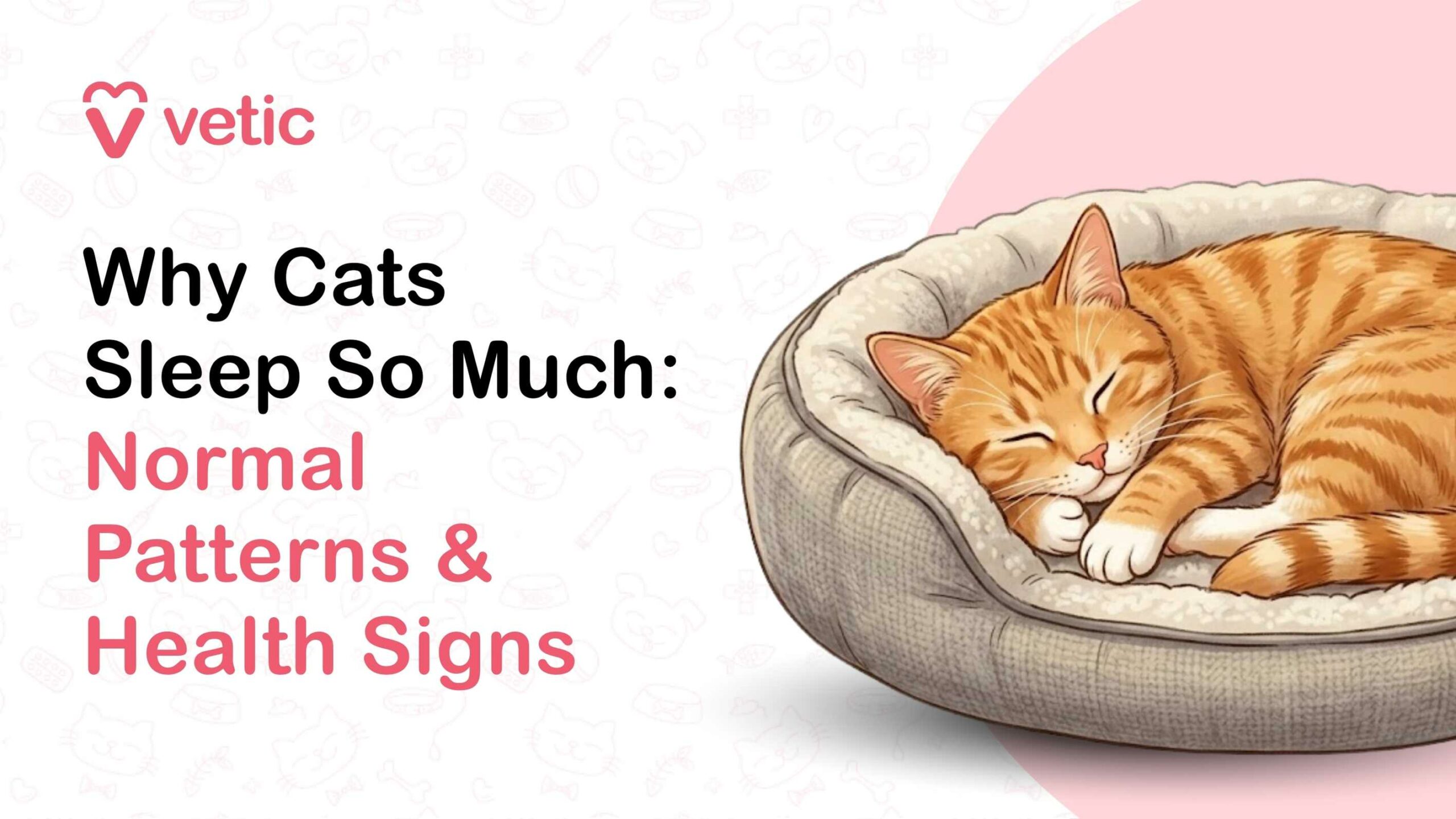
If you have ever wondered why cats sleep so much, you are not alone. Many pet parents look at their peacefully curled-up companion and question whether all that rest is normal. Questions like why does my cat sleep so much, or why is my cat sleeping all day are among the most common concerns raised during veterinary visits.
The reassuring truth is that cats are biologically wired to sleep more than humans. However, while extended sleep is often completely normal, sudden or extreme changes can sometimes signal an underlying issue. Understanding what is typical and what is not can help you respond appropriately and keep your cat healthy.
How Many Hours a Day Do Cats Usually Sleep and Why It Varies
Cats are natural predators, even when they live comfortably indoors. Their sleep pattern is shaped by their evolutionary role as hunters that conserve energy between bursts of activity.
On average, cats sleep between 12 and 16 hours a day, and some may sleep up to 18–20 hours depending on age and lifestyle. If you have been asking why domestic cats sleep so much, or why do house cats sleep so much, the answer lies in this evolutionary energy conservation mechanism.
Average sleep duration for adult cats, kittens, and seniors
- Kittens: Often sleep 18–20 hours per day. This is required for their growth and neurological development.
- Adult cats: Typically sleep 12–16 hours daily. They cycle between light sleep and short periods of deeper sleep.
- Senior cats: May return to longer sleep periods, sometimes 16–20 hours daily, due to slower metabolism and reduced activity.
Differences between indoor and outdoor cats’ sleeping patterns
Indoor cats often sleep more consistently because:
- Food is readily available.
- There are fewer environmental challenges.
- Physical exertion is limited.
Outdoor cats, on the other hand, may spend more time patrolling territory, hunting, or reacting to environmental stimuli, which can reduce total sleep duration but still include frequent rest periods.
Suggested Read: Decoding the Cat Nap: What Do Your Cat’s Sleeping Positions Mean?
Understanding the Main Reasons Cats Sleep Excessively
Cats are crepuscular animals, meaning they are most active at dawn and dusk. Much of their “sleep” during the day is actually light resting, during which they can wake instantly if needed.
Here are the main reasons cats appear to sleep excessively:
- Energy conservation: Hunting requires explosive bursts of activity. Even indoor cats retain this biological programming.
- Age-related needs: Kittens and senior cats naturally sleep longer.
- Temperature regulation: Cats tend to sleep more in colder weather to conserve body heat.
- Boredom or low stimulation: If an indoor environment lacks enrichment, a cat may nap more frequently.
- Digestive patterns: Cats often sleep after meals as part of their natural rhythm.
However, there is an important distinction between healthy sleep and lethargy. Healthy sleep means your cat wakes easily, eats normally, plays when stimulated, and shows normal grooming behaviour.
When to Worry: Signs That Excessive Sleep Could Signal a Health Problem
While it is natural to question your cat’s long sleeping hours, true concern begins when increased sleep is accompanied by other changes. If your cat seems difficult to wake, eats less, hides more, or shows signs of discomfort, this may indicate more than normal rest. In such cases, a veterinary evaluation is advisable to rule out underlying health issues.
Lethargy beyond normal sleep patterns
Lethargy is different from sleep. A lethargic cat may:
- Be difficult to rouse
- Show minimal response to sounds or interaction
- Appear weak or disoriented
Conditions such as infections, anaemia, heart disease, liver disease, or endocrine disorders (like hyperthyroidism in early stages or rarely hypothyroidism) can contribute to abnormal tiredness.
Changes in appetite, drinking, or litter box habits
If increased sleep is paired with:
- Reduced appetite
- Increased or decreased water intake
- Vomiting or diarrhoea
- Changes in urination
This warrants veterinary attention. Systemic illnesses often affect both energy levels and appetite simultaneously.
Respiratory or mobility issues accompanying sleep
Watch for:
- Labored breathing
- Coughing
- Limping
- Reluctance to jump
Pain or respiratory distress may cause a cat to lie down more frequently, which can look like excessive sleep.
Behavioural changes such as hiding or aggression
If a usually social cat begins hiding constantly or reacts aggressively when touched, pain or stress may be involved. Cats are masters at masking illness, so subtle changes matter.
Suggested Read: Bored Cat: Signs, Symptoms, and How to Tell If Your Cat Is Bored
How to Monitor Your Cat’s Sleep Patterns for Early Detection of Illness
Early detection is key in feline medicine. Monitoring patterns over time can help distinguish normal sleep from a developing problem.
Keeping a daily log of sleep and activity
You do not need complex tools. Simply note:
- Approximate hours asleep
- Playtime duration
- Appetite levels
- Bathroom habits
This is especially useful for senior cats or those with chronic conditions.
Noting subtle changes in energy and behaviour
Ask yourself:
- Does my cat still respond to their favourite toys?
- Is grooming behaviour normal?
- Has there been a gradual decrease in activity?
Gradual shifts often precede more obvious symptoms.
Sharing observations with your veterinarian
Specific examples help veterinarians immensely. Instead of saying “my cat sleeps too much,” you can report:
- “She used to play twice daily but now ignores toys.”
- “He is sleeping longer and eating less.”
This detail allows for more accurate diagnostic planning.
Tips for Helping Your Cat Stay Healthy and Stimulated While Sleeping Normally
Even if your cat’s sleep is normal, environmental enrichment supports physical and mental well-being.
Providing interactive toys and safe climbing spaces
- Wand toys for short daily play sessions
- Puzzle feeders
- Cat trees or wall shelves for vertical exploration
Short bursts of activity mimic natural hunting cycles.
Establishing a consistent routine
Cats thrive on predictability. Feeding and play sessions at similar times daily help regulate circadian rhythms.
Ensuring proper nutrition and hydration
Balanced diets support energy metabolism. Adequate hydration is essential for kidney health, especially in senior cats.
Creating cosy and secure resting spots
Provide:
- Soft bedding
- Elevated resting areas
- Quiet corners away from household noise
Secure resting spots allow restful sleep without stress.
Key Points
- Cats typically sleep 12–16 hours daily; kittens and seniors may sleep up to 20 hours.
- Light sleep is common; true lethargy is different and concerning.
- Sudden changes in sleep patterns should be evaluated.
- Sleep accompanied by appetite or behavioural changes requires veterinary attention.
- Monitoring patterns over time helps detect illness early.
- Enrichment and routine support healthy sleep cycles.
Frequently Asked Questions About Cats Sleeping Too Much
How many hours a day is too much sleep for a cat?
Most cats sleep 12–16 hours daily. Sleeping up to 18–20 hours can be normal for kittens or seniors. Concern arises when excessive sleep is paired with lethargy, appetite changes, or behavioural shifts.
Do older cats naturally sleep more?
Yes. Senior cats often sleep longer due to reduced metabolism and lower activity levels. However, excessive sleep combined with weight loss, confusion, or mobility issues should be evaluated.
Can a cat recover from illness through extra sleep?
Sleep supports immune function and recovery. During mild illness, increased rest is normal. However, persistent lethargy or worsening symptoms require medical evaluation.
How do kittens’ sleep patterns differ from those of adult cats?
Kittens sleep significantly more because growth, brain development, and muscle formation demand energy. Their sleep often alternates rapidly between active play and deep rest.
Should I wake my cat if it sleeps all day?
If your cat wakes easily, eats well, and behaves normally, there is no need to interrupt sleep. If your cat is difficult to rouse or seems unresponsive, seek veterinary advice.
References:
Quimby, J., Gowland, S., Carney, H. C., DePorter, T., Plummer, P., & Westropp, J. (2021). 2021 AAHA/AAFP feline life stage guidelines. Journal of Feline Medicine and Surgery, 23(3), 211–233. https://doi.org/10.1177/1098612X21993657 (Full text available on PubMed Central)
Link: https://pmc.ncbi.nlm.nih.gov/articles/PMC10812183/
Zoran, D. L. (2002). The carnivore connection to nutrition in cats. Journal of the American Veterinary Medical Association, 221(11), 1559–1567. https://doi.org/10.2460/javma.2002.221.1559 (Feline nutritional background relevant to energy and behaviour.)
Link (PubMed): https://pubmed.ncbi.nlm.nih.gov/12479324/
Isparta, S., et al. (2025). Lateralized sleeping positions in domestic cats. Current Biology, 35(R587–R600). https://doi.org/10.1016/j.cub.2025.00507-X
Wallenfeldt, J. (n.d.). Why do cats sleep so much? Encyclopaedia Britannica. https://www.britannica.com/story/why-do-cats-sleep-so-much