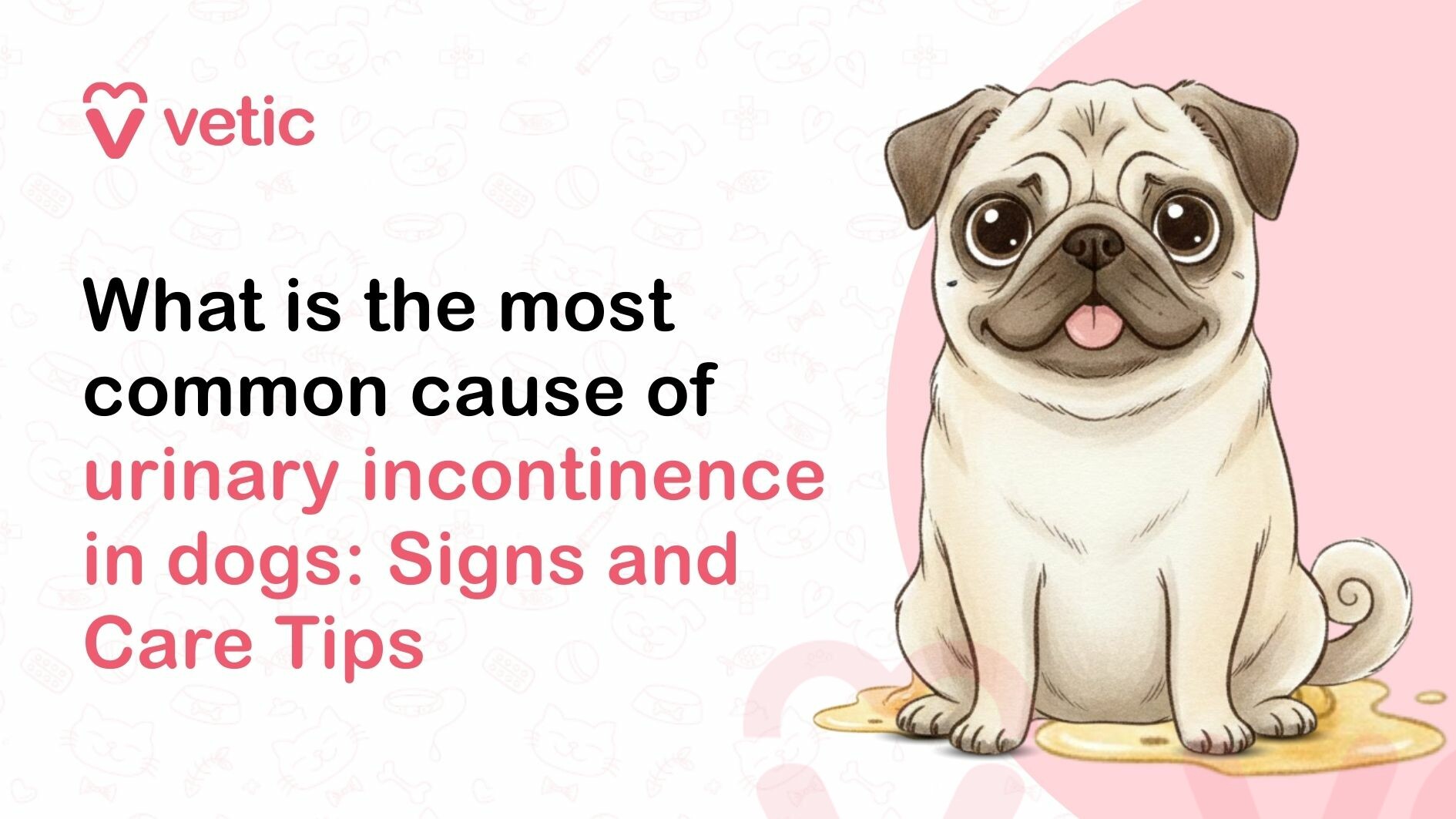
Urine leakage can be messy, stressful, and embarrassing for both pets and pet parents, but it’s often a medical issue, not “bad behaviour.”
Dog urinary incontinence means a dog leaks urine involuntarily, often while resting or sleeping. The good news: many cases are treatable, and almost all are manageable with the right diagnosis and care plan.
What Is Urinary Incontinence in Dogs
Dog incontinence (also called canine urinary incontinence or bladder incontinence in dogs) is the involuntary leakage of urine. Common patterns include:
- Dribbling urine while asleep or relaxed
- Wet spots where your dog was lying
- Damp fur around the vulva/prepuce or hind legs
- Skin irritation or urine scald in chronic cases
This differs from purposeful urination (like marking) because the dog usually doesn’t realize it’s happening.
Causes of Urinary Incontinence in Dogs
There are multiple causes of canine incontinence, and the “most common” one depends on age and sex. Let’s understand this first-
Urethral sphincter mechanism incompetence (USMI) is the most common cause of urine leakage in dogs, especially in spayed female dogs.
Think of the bladder like a balloon with a tight valve at the bottom. This valve (called the urethral sphincter) keeps urine inside the bladder until your dog goes outside to pee.
In dogs with USMI, this valve becomes too weak to stay tightly closed. As a result, a small amount of urine may leak, especially when your dog is relaxed, lying down, or sleeping.
This happens more often in spayed female dogs because hormone changes and natural ageing can weaken the muscles that control the bladder.
Suggested Read: Haematuria in Dogs
Other important causes
- Urinary tract infection (UTI): urgency, frequent urination, accidents that can look like incontinence
- Bladder stones or crystals: irritation on the bladder walls that can lead to frequent urination/straining
- Ectopic ureters (often in younger dogs): congenital abnormality; continuous dribbling can occur
- Neurologic/spinal disease: nerve disruption affecting bladder control for dogs
- Hormonal/endocrine issues: e.g., Cushing’s disease can increase urine volume and contribute to accidents
- Weak bladder (detrusor) function or overflow incontinence (less common)
- Medication side effects or excessive water intake (polyuria)
A proper workup matters because treatment varies a lot depending on the cause.
Some causes of urinary incontinence may need urgent care; visit our dog emergency care.
Symptoms of Urinary Incontinence in Dogs
Common signs and symptoms of incontinence in dogs include:
- Urine dribbling (often when sleeping)
- Wet bedding or “mystery puddles” where your dog rested
- Licking the genital area more than usual
- Urine scald (redness/irritation) around the groin
- Recurrent UTIs (sometimes secondary to leakage)
If you also see straining, frequent small urinations, blood in urine, fever, vomiting, or lethargy, think along the lines of “bladder disease” or infection, not simple sphincter leakage.
Diagnosis and Treatment of Urinary Incontinence in Dogs
Diagnosis
Typical diagnostic steps include:
- History, along with physical examination (timing of leaks, spay/neuter status, water intake)
- Urinalysis, and urine culture if needed (rule out infection)
- Bloodwork (kidney function, systemic disease)
- Imaging (X-ray/ultrasound) if stones, masses, or structural issues are suspected
- Sometimes, advanced tests (contrast studies, cystoscopy) are used in complex cases
Treatment
Treatment depends on the cause:
For USMI (most common):
- Phenylpropanolamine (PPA): increases urethral tone/closure pressure
- Estrogen therapy (e.g., estriol) in spayed females; sometimes combined with PPA if needed
- If meds don’t work: procedures like urethral bulking agents or surgical options (selected cases)
If UTI/stones/neuro disease are involved:
- Antibiotics guided by culture (UTI)
- Stone management (dietary dissolution if appropriate or surgery)
- Address neurologic cause and bladder emptying strategies when needed
For proper diagnosis and treatment of urinary incontinence in dogs, check our dog diagnostics.
Types of Dogs More Likely To Have Urinary Incontinence
Dogs at higher risk include:
- Spayed females, especially medium–large breeds (common association with USMI)
- Older dogs (age-related changes + higher UTI/bladder disease risk)
- Certain breeds are reported more often in studies (risk varies by population)
- Dogs with a history of neurologic/back issues
How Can You Tell the Difference Between Urinary Incontinence and Behavioural Accidents in Dogs?
Not all indoor urine accidents mean your dog is incontinent. Some dogs urinate indoors due to anxiety, excitement, marking, or medical urgency. Understanding the difference is important because the treatment approach is very different.
Signs that point to urinary incontinence
Your dog may be experiencing urinary incontinence if:
- Urine leaks while your dog is sleeping or resting
- You find wet patches where your dog was lying down
- Your dog seems unaware that urine has leaked
- The leakage happens without squatting or lifting a leg
- Accidents occur even though your dog is otherwise well trained
In these cases, the urine loss is involuntary, meaning your dog has no control over it.
Signs that point to behavioural or voluntary urination
Your dog may be having behavioural accidents if:
- They intentionally squat or lift their leg indoors
- Accidents happen when your dog is excited, anxious, or stressed
- Urination occurs in specific spots, such as walls or furniture
- Your dog is asking to go out more frequently than usual
- There are signs of discomfort while urinating, such as straining or frequent attempts
These situations are often linked to training, anxiety, marking behaviour, or urinary tract irritation rather than true incontinence.
If you are unsure whether it is incontinence or a behavioural issue, visit our dog clinic
Management of Urinary Incontinence in Dogs
Even with treatment, management makes daily life easier and reduces complications.
Practical tips:
- Take your dog out more frequently, especially before bedtime
- Use waterproof bedding, washable covers, and easy-clean areas
- Keep the groin area clean and dry to prevent urine scald
- Consider dog diapers/belly bands for short periods (change frequently)
- Track patterns (time of day, sleep-related leaks) to help your vet adjust therapy
- Follow-up visits: dose adjustments are common with incontinence meds
Key takeaways
- Dog urinary incontinence is usually involuntary leakage, often during rest.
- The most common cause is USMI, especially in spayed female dogs.
- UTIs and stones can mimic incontinence, which is why testing matters.
- First-line treatments for USMI commonly include PPA and/or estrogen therapy.
- Management (hygiene, frequent breaks, waterproof bedding) improves comfort while treatment is optimized.
Suggested Read: Fluid in the Abdomen of Dogs
FAQs
How to help a dog with urinary incontinence?
Treat the underlying cause (don’t rely only on diapers), give meds exactly as prescribed; report side effects (restlessness, high BP concerns with some drugs), ask your vet about skin-barrier creams if urine scald develops and keep weight in a healthy range; extra weight can worsen mobility and hygiene
What is the most common cause of urinary incontinence in dogs?
USMI (urethral sphincter mechanism incompetence), especially in spayed female dogs, is the most commonly cited cause of functional urinary incontinence.
What are the three early warning signs of bladder disease?
Common early red flags include, increased frequency/urgency, straining or discomfort while urinating, blood in urine or unusually strong-smelling urine (any of these warrants a vet check to rule out UTI/stones).
What do vets give dogs for incontinence?
For Urethral Sphincter Mechanism Incompetence (USMI), vets commonly use phenylpropanolamine (PPA) and/or estrogen therapy (such as estriol); combination therapy may be used if single therapy isn’t enough.
What is the best home remedy for incontinence?
There isn’t a true “home remedy” that fixes incontinence, because it’s usually medical. The best at-home support is, frequent potty breaks, hygiene and waterproof bedding, and prompt vet evaluation for diagnosis and proper treatment
References:
Byron, J. K. (2017). Urethral sphincter mechanism incompetence in 163 neutered female dogs: Diagnosis, treatment, and outcomes. Journal of Veterinary Internal Medicine. https://pmc.ncbi.nlm.nih.gov/articles/PMC5354041/
Kendall, A., et al. (2024). ACVIM consensus statement on diagnosis and management of urinary incontinence in dogs. Journal of Veterinary Internal Medicine. https://pmc.ncbi.nlm.nih.gov/articles/PMC10937496/
Merck Veterinary Manual. (2025). Pharmacotherapeutics in urinary incontinence in dogs and cats. https://www.msdvetmanual.com/pharmacology/systemic-pharmacotherapeutics-of-the-urinary-system/pharmacotherapeutics-in-urinary-incontinence-in-dogs-and-cats
Merck Veterinary Manual. (2025). Disorders of micturition in dogs and cats. https://www.msdvetmanual.com/urinary-system/noninfectious-diseases-of-the-urinary-system-in-small-animals/disorders-of-micturition-in-dogs-and-cats
VCA Animal Hospitals. (2023). Urinary incontinence (urethral incontinence) in dogs. https://vcahospitals.com/know-your-pet/urethral-incontinence-in-dogs
VCA Animal Hospitals. (2023). Phenylpropanolamine. https://vcahospitals.com/know-your-pet/phenylpropanolamine