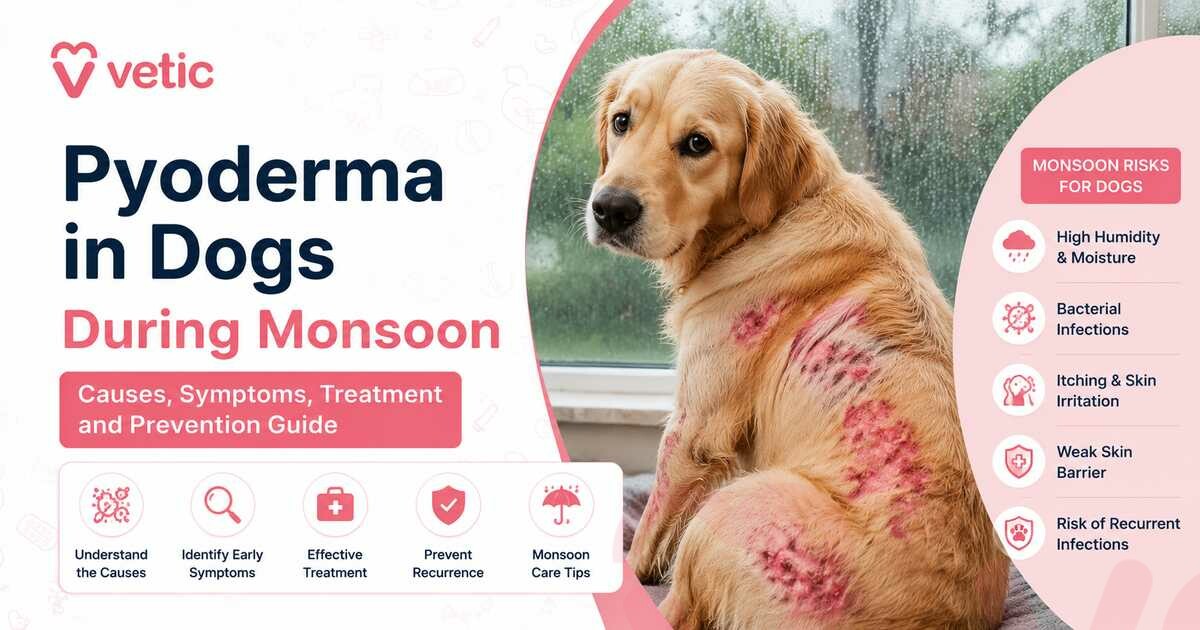
Monsoon season brings a sharp increase in skin problems, especially bacterial infections such as pyoderma in dogs. Humid weather often causes itchy skin, foul odour, rashes, infected skin folds, and hot spots in dogs of all breeds.
Early recognition and proper skin care during rainy weather are extremely important. This is because untreated infections often worsen quickly in humid conditions.
What Is Pyoderma in Dogs?
Pyoderma is a bacterial skin infection that affects the outer or deeper layers of a dog’s skin. The condition commonly develops when bacteria normally present on the skin multiply excessively after the skin barrier becomes damaged or inflamed.
Pyoderma in dogs may result from allergies, excess moisture, scratching, parasites, hormonal disease, and poor skin hygiene. The infection may remain superficial or spread deeper into hair follicles and skin tissue.
Why Do Skin Infections Become Common During Monsoon?
Monsoon weather creates ideal conditions for dog skin infections because humidity prevents the skin and coat from drying properly.
During rainy weather:
- Fur remains damp longer
- Skin folds trap moisture
- Mud and dirt accumulate easily
- Bacterial growth increases
- Yeast multiplies rapidly
Prolonged humidity combined with poor ventilation commonly worsens underlying allergies and skin diseases during the monsoon season.
How Does Humidity Trigger Dog Skin Problems?
Healthy dog skin acts as a protective barrier against bacteria, fungi, and environmental irritants. Constant moisture weakens this barrier and softens the skin surface, making infection more likely.
Humidity contributes to trapped oil and moisture, increased friction in skin folds, irritation beneath thick coats, and the growth of bacteria and yeast.
When dogs scratch their itchy skin repeatedly, microscopic skin damage allows bacteria to enter deeper layers more easily.
What Are the Common Signs of Pyoderma in Dogs?
Common signs of pyoderma in dogs include red skin, itching, hair loss, pus-filled bumps, crusts or scabs, foul odour, sticky skin, excess licking or chewing, and darkened skin in chronic cases.
Some dogs develop circular lesions with flaky edges, while others develop painful, moist skin patches.
In deeper infections, swelling and pain may become severe enough to affect the dog’s comfort and activity.
What Is the Difference Between Hot Spots and Pyoderma in Dogs?
Hot spots and pyoderma in dogs are related but not identical conditions.
Hot spots in dogs, also called acute moist dermatitis, are rapidly developing, inflamed skin lesions. Hot spots are caused by intense licking, scratching, or moisture accumulation. They often appear suddenly and become extremely painful within hours.
Pyoderma refers more broadly to bacterial skin infection in dogs. It may involve hair follicles, superficial skin layers, and deep tissue infection.
Many hot spots in dogs eventually develop secondary bacterial infection and become superficial pyoderma.
Can Fungal and Yeast Infections in Dogs Look Similar to Pyoderma?
Yes, fungal and yeast infections in dogs can closely resemble bacterial pyoderma.
Yeast infections in dogs commonly cause intense itching, greasy skin, brown discolouration, strong odour, and thickened skin. Fungal infections in dogs, such as ringworm, may cause circular hair loss, scaling, and crusting.
Because these conditions often overlap, vets may perform diagnostic testing at a dog diagnostics centre. It helps determine whether bacteria, yeast, fungi, allergies, or parasites are contributing to the skin problem.
Why Do Dogs Itch More During the Rainy Season?
Several monsoon-related factors increase itchiness in dogs. These include humidity, flea infestation, tick bites, fungal overgrowth, environmental allergies, and damp skin irritation.
Dogs with underlying allergic skin disease often experience major flare-ups during the monsoon. This is because moisture and allergens worsen skin inflammation.
Which Dogs Are More Prone to Monsoon Skin Infections?
High-risk groups include dogs with skin folds, obesity, allergies, and hormonal disorders.
Long-haired and double-coated breeds, such as Golden Retrievers, Labradors, Pugs, Shih Tzus, and Bulldogs, are particularly vulnerable. This is because dense fur traps moisture near the skin surface.
Dogs with hypothyroidism or weakened immunity may also experience recurrent pyoderma.
How Do Vets Diagnose Pyoderma and Skin Infections in Dogs?
Vets diagnose pyoderma in dogs through clinical examination and skin testing. Diagnostic methods may include skin cytology, tape impression tests, skin scraping, fungal testing, and, in severe cases, bacterial culture.
Chronic or recurrent infections may require investigation for underlying causes such as allergies, hormonal disease, or immune dysfunction.
What Are the Treatment Options for Pyoderma in Dogs?
Treatment of pyoderma in dogs depends on infection severity, depth, and underlying cause.
Veterinary treatment may include medicated shampoos, antibiotics, antifungal medication if needed, anti-itch therapy, skin barrier support, and parasite control.
How Can You Prevent Dog Skin Infections During Monsoon?
Helpful preventive skin care strategies include:
- Towel drying the coat thoroughly after walks
- Using cool-air blow drying if tolerated
- Regularly brushing out trapped oil & moisture
- Keeping skin folds clean
- Trimming excess fur around paws and skin folds
- Controlling fleas and ticks
- Checking skin daily for redness or odour
Final Thoughts: About Pyoderma in Dogs During Monsoon
Pyoderma in dogs become extremely common during humid monsoon months. Regular grooming, proper coat drying, parasite control, and prompt veterinary care for itchy skin significantly reduce the risk of severe monsoon skin disease. Dogs with recurrent skin infections may also require evaluation for underlying medical conditions.
FAQ: About Pyoderma in Dogs During Monsoon
What does pyoderma look like in dogs?
Pyoderma in dogs may present with red skin, hair loss, pus-filled bumps, crusts, itching, foul odour, or moist, infected lesions.
Why do dogs get skin infections during the monsoon?
Humidity, damp fur, bacterial overgrowth, allergies, and poor skin drying all increase the risk of skin infections in dogs.
Are hot spots and pyoderma the same thing?
Not exactly. Hot spots in dogs are rapidly inflamed, moist skin lesions. Pyoderma refers more broadly to bacterial skin infection in dogs.
Can yeast infections make dogs itchy?
Yes, yeast infections in dogs commonly cause intense itching.
How can I prevent skin infections in dogs during the rainy season?
Dry the coat thoroughly after exposure to rain and seek veterinary care early for itching or redness.
References
Brooks, W. (n.d.). Hot Spots (Pyotraumatic Dermatitis) in Dogs and Cats. VIN. https://veterinarypartner.vin.com/default.aspx?pid=19239&catId=102903&id=4952981
Mehta, P. (2021, December 23). What Is Pyoderma in Dogs? WebMD. https://www.webmd.com/pets/dogs/what-is-pyoderma-in-dogs
Moriello, K. A. (n.d.). Pyoderma in Dogs. Veterinary Manual. https://www.msdvetmanual.com/dog-owners/skin-disorders-of-dogs/pyoderma-in-dogs
Purina. (2023). Yeast Infection in Dogs: Common Causes, Symptoms & Treatment. https://www.purina.com/articles/dog/health/skin-fur-ears/yeast-infection-in-dogs
VIN. (2026). Pyoderma in Dogs. https://veterinarypartner.vin.com/default.aspx?pid=19239&id=4951996&f5=1