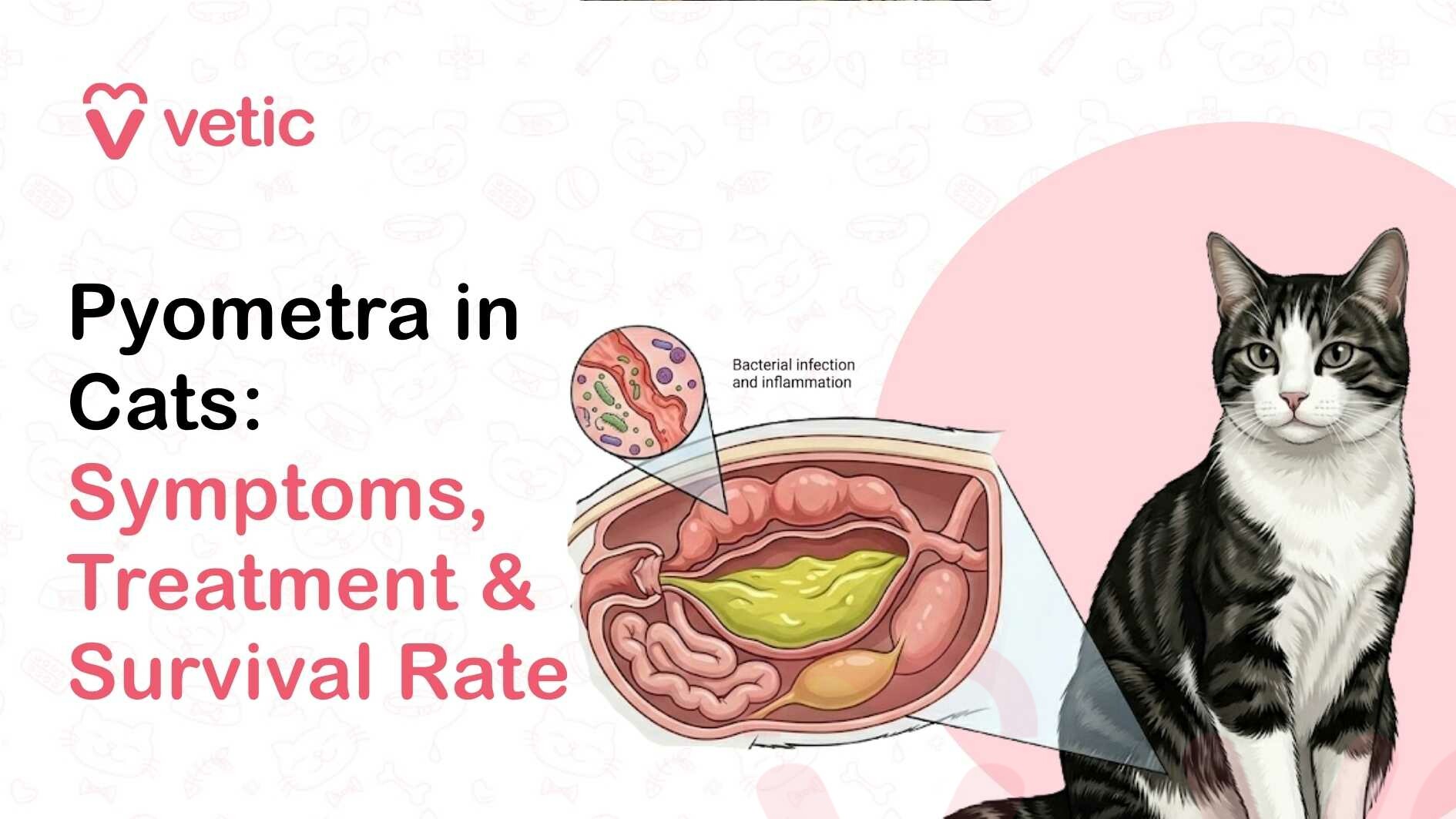
Pyometra is a serious, life-threatening uterine infection that affects unspayed female cats. It is less common in cats than in dogs. But when it does occur, it progresses quickly and requires urgent veterinary care. Many cases are missed early because the symptoms can appear vague at first, especially in cats that hide illness well.
This blog explains what pyometra is, why it happens, how to recognise symptoms early, treatment options including spay surgery, survival rates, and how to prevent it, so cat parents know exactly when to act.
Understanding Pyometra in Cats and Why It Happens
Pyometra is a condition in which the uterus fills with pus due to a bacterial infection. This usually happens following hormonal changes associated with the heat cycle. The infection causes inflammation, toxin release, and, in severe cases, sepsis (a reaction to an infection) and organ failure.
Although pyometra is more frequently diagnosed in dogs, cats are not immune, particularly intact (unspayed) females.
The Difference Between Open and Closed Pyometra in Cats
Feline pyometra occurs in two forms:
Open pyometra
- The cervix remains partially open
- Pus drains from the uterus through the vagina
- Discharge may be visible around the vulva or tail
- Often detected earlier because discharge is noticeable
- Symptoms may appear less severe initially because pressure is relieved
Closed pyometra
- The cervix is completely closed
- Pus is trapped inside the uterus
- No visible discharge
- More dangerous due to rapid toxin buildup and uterine rupture risk
Closed pyometra carries a significantly higher risk of death if not treated immediately.
How Hormonal Cycles and Bacterial Infections Lead to Pyometra
Pyometra develops as a result of hormonal changes combined with bacterial contamination:
- After a heat cycle, progesterone levels remain elevated.
- Progesterone thickens the uterine lining to prepare for pregnancy.
- It also suppresses uterine contractions and immune defences.
- Over time, the lining becomes cystic and fluid-filled.
- Bacteria (commonly E. coli) ascend from the vagina into the uterus.
- The uterus fills with infected material.
Cats are induced ovulators, meaning ovulation typically occurs after mating. However, spontaneous ovulation can occur. This allows progesterone to rise even without pregnancy, creating the conditions for pyometra in cats.
Suggested Read: 20 Most Common Cat Diseases According to Gender, Neutering Status and Age
Early Signs and Symptoms That Indicate Your Cat May Have Pyometra
Early recognition can dramatically improve survival rates in cats with pyometra. Symptoms may appear weeks after a heat cycle.
Behavioural Changes Such as Lethargy, Hiding, or Irritability
One of the earliest signs is a behaviour change:
- Sleeping more than usual
- Hiding or avoiding interaction
- Reduced grooming
- Becoming unusually tired
- Irritability or aggression when handled
Because cats are masters at masking pain, these signs are often mistaken for stress or ageing.
Physical Signs Including Vaginal Discharge, Abdominal Swelling, and Fever
More obvious symptoms of pyometra in cats may include:
- Creamy, bloody, or foul-smelling vaginal discharge (open pyometra)
- Matted fur under the tail
- Swollen or painful abdomen
- Fever (though some cats may have low body temperature in severe cases)
- Dehydration
- Pale gums
In closed pyometra, discharge is absent, making abdominal swelling and pain more important warning signs.
Changes in Appetite, Drinking Habits, and Urination Patterns
Systemic infection affects the whole body, leading to:
- Loss of appetite
- Increased thirst (polydipsia)
- Increased or decreased urination
- Weight loss
- Vomiting or diarrhoea in advanced cases
These changes occur because bacterial toxins affect kidney function and overall metabolism.
Contact the nearest 24-hour cat emergency care if you notice any combination of these signs in an unspayed female cat.
Causes and Risk Factors That Make Cats Susceptible to Pyometra
Several factors increase the risk of feline pyometra:
- Being unspayed
- Multiple heat cycles without pregnancy
- Middle-aged to older cats (though younger cats can be affected)
- Use of hormonal treatments that suppress heat (e.g., progesterone-based drugs)
- Previous uterine disease or infection
- Cystic endometrial hyperplasia (thickened uterine lining)
How Veterinarians Diagnose Pyometra in Cats and Assess Severity
Diagnosis is based on a combination of:
- Physical examination (abdominal palpitation, temperature check)
- Medical history (heat cycles, breeding status)
- Imaging and laboratory testing
Common diagnostic tools include:
- Ultrasound to visualise a fluid-filled uterus
- X-rays in advanced cases (May show enlarged uterine horns)
- Blood tests showing infection, inflammation, or organ stress
- Urinalysis to assess kidney involvement
Prompt diagnosis greatly improves survival rates in cats with pyometra.
Treatment Approaches for Pyometra in Cats: Surgery and Medical Options
Treatment of feline pyometra depends on the cat’s condition, breeding status, and infection severity.
Emergency Spay Surgery and What to Expect During Recovery
Ovariohysterectomy (spay surgery) is the gold standard and most effective treatment of feline pyometra.
The procedure involves:
- Removal of the infected uterus and ovaries
- Elimination of the infection source
- Prevention of recurrence
Surgery is considered an emergency because the infected uterus can rupture at any time.
Post-surgery, cats typically require:
- Hospitalisation for monitoring
- IV fluids
- Antibiotics
- Pain management
When performed early, spay surgery has a high success rate.
Suggested Read: Cat Probiotics: Benefits, Uses, and the Best Probiotics for Cats and Kittens
Antibiotic Therapy and Hormonal Treatments for Select Cases
Medical management of feline pyometra may be considered only in very specific situations when:
- The cat is stable
- The cervix is open
- The cat is intended for breeding
- The parent accepts the recurrence risk
This approach includes:
- Antibiotics
- Prostaglandins or progesterone blockers (to open the cervix and expel the uterine contents)
- Careful monitoring
However:
- Success rates are lower
- Recurrence is common
- The risk of uterine rupture remains
Medical treatment is not recommended for closed pyometra.
Risks, Success Rates, and When Medical Management Is Appropriate
Surgery:
- Has highest survival rates in cats with pyometra if treated early
- Has lower survival rates if septic shock develops
- Is a permanent solution
- Removes recurrence risk
Medical management:
- Has a higher relapse risk
- Requires intensive monitoring
- Is not suitable for most cats
Medical therapy is typically reserved for high-value breeding cats under specialist feline care.
Recovery After Pyometra Treatment and How to Support Your Cat at Home
Post-Operative Care, Pain Management, and Monitoring for Complications
At home, care includes:
- Restricting activity
- Preventing licking of the incision (use an e-collar)
- Administering prescribed medications
- Monitoring incision daily
Watch for redness or swelling, discharge from the incision, loss of appetite, vomiting, and if lethargy returns.
Most cats begin improving within 24-72 hours after surgery.
Nutrition, Hydration, and Environment for Optimal Healing
Recovery is supported by:
- Easily digestible, high-quality food
- Fresh water at all times
- A warm, quiet recovery space
- Minimising stress and noise
Appetite usually returns gradually as the infection resolves. Some cats may need temporary appetite stimulants.
Follow-Up Veterinary Visits and Long-Term Health Monitoring
Most cats require:
- Recheck appointment within 7-14 days
- Suture removal if non-dissolvable stitches were used
Follow-up visits ensure:
- Incision healing properly
- Infection fully resolved
- No secondary complications
Once recovered, cats typically return to a normal, healthy life.
Preventing Pyometra in Cats and Maintaining Reproductive Health
The single most effective preventive measure is early spaying of cats.
Spaying:
- Eliminates the uterus and ovaries
- Prevents pyometra entirely
- Reduces the risk of mammary cancer
- Prevents unwanted litters
- Decreases roaming and heat behaviours
Spaying before the first or second heat cycle dramatically reduces the risk of reproductive diseases.
If breeding is planned, routine veterinary monitoring and strict hygiene practices are essential.
Final Thoughts: About Pyometra in Cats
Pyometra in cats is a medical emergency, not a condition to monitor at home. Early recognition and rapid treatment save lives. While the diagnosis can be frightening, prompt surgical care offers an excellent chance of full recovery.
The safest approach is prevention. Spaying eliminates the risk and protects your cat from one of the most dangerous reproductive conditions it can face.
Frequently Asked Questions: About Pyometra in Cats
How can I tell if my cat is developing pyometra?
Watch for lethargy, appetite loss, increased drinking, abdominal swelling, or vaginal discharge in an unspayed female cat, especially after a heat cycle.
Is surgery the only effective treatment for pyometra?
For most cats, yes. Surgery is the safest, most reliable, and best long-term treatment. Medical therapy exists but carries higher risk and recurrence rates.
Can pyometra be life-threatening if not treated promptly?
Absolutely. Untreated cats can develop sepsis, kidney failure, uterine rupture, and death. Delays significantly reduce the survival rates in cats with pyometra.
What is the typical survival rate after surgery?
With prompt surgery and proper care, survival rates are very high, often over 90%. It is also high when intervention occurs before the onset of systemic shock. Prognosis worsens if treatment is delayed or complications arise.
Are there options for cats that may need to breed in the future?
Medical management may preserve fertility in select cases of open pyometra. But it carries higher risks and a higher risk of recurrence. Medical management also affects future fertility. Breeders should consult a veterinary reproduction specialist.
References
Brooks, W. (2017). Veterinary Partner. VIN.com. https://veterinarypartner.vin.com/default.aspx?pid=19239&id=4951464
Little, S. (2015). The Feline Estrous Cycle and Investigation Infertility in the Queen. VIN.com. https://www.vin.com/apputil/content/defaultadv1.aspx?pId=11165&id=3848665&print=1
Memon, M. A. (n.d.). Reproductive Disorders of Female Cats – Cat Owners. Veterinary Manual. https://www.msdvetmanual.com/cat-owners/reproductive-disorders-of-cats/reproductive-disorders-of-female-cats
Nascimento, J., Santos, L. C., & Silva, J. F. (2024). Molecular Factors Involved in the Pathogenesis of Pyometra in Domestic Cats (Felis catus). Animals, 14(20), 2987–2987. https://pubmed.ncbi.nlm.nih.gov/39457917 VIN. (2019, March 8). Understanding Pyometra: Part II. Diagnosis, Treatment and Prognosis. Vin.com. https://www.vin.com/apputil/Project/DefaultAdv1.aspx?pid=99&id=11377028