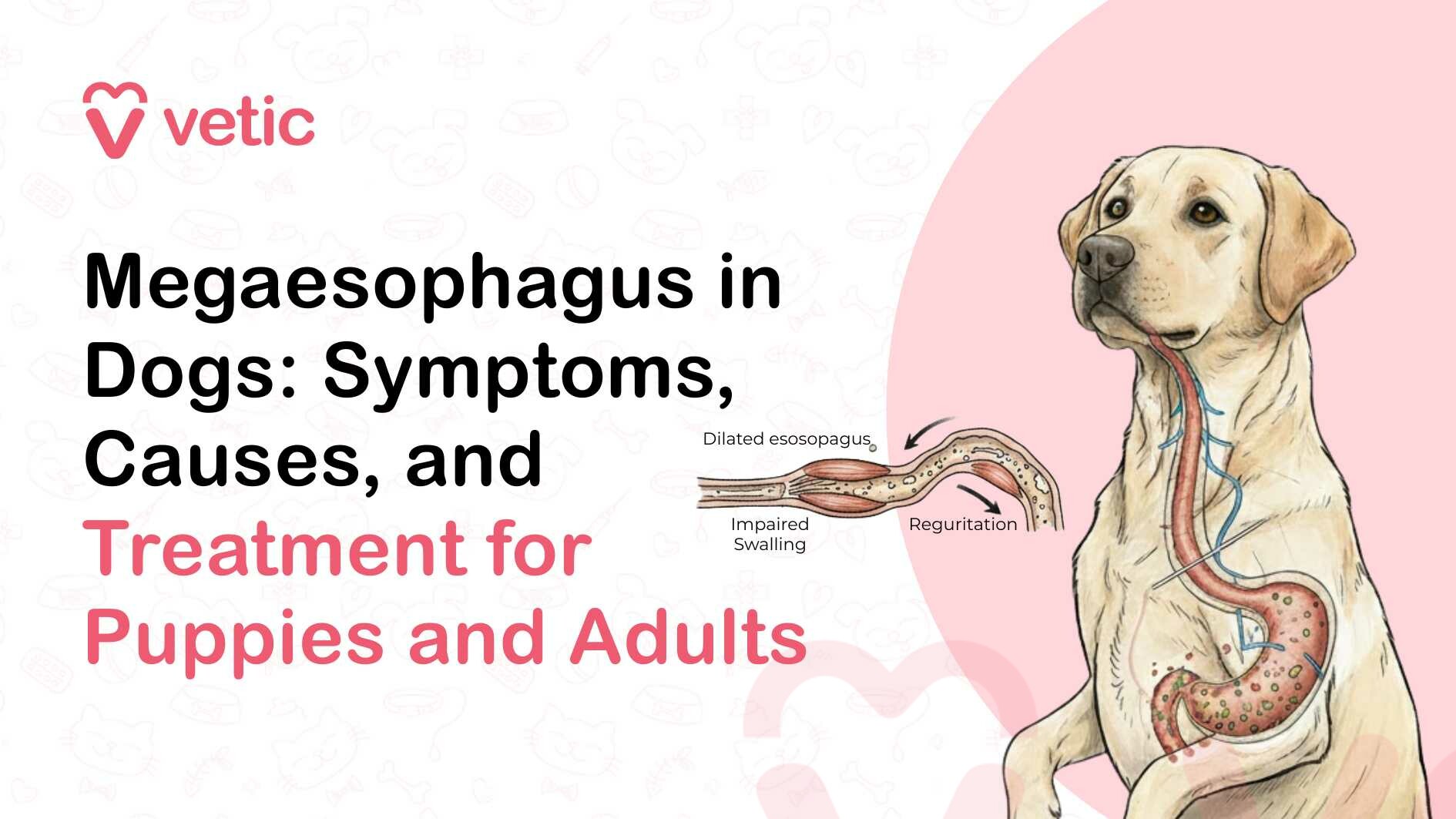
Seeing your dog bring up food after eating can be worrying and confusing. When this happens repeatedly, it may point to a condition called megaoesophagus in dogs. In this condition, the tube that carries food to the stomach does not work properly, so meals do not move down as they should. Instead, food stays in the throat and comes back up, making it hard for the dog to stay nourished and healthy.
What Is Megaoesophagus in Dogs?
Megaoesophagus means that the oesophagus, which is the tube that carries food from the mouth to the stomach, becomes abnormally wide and weak.
In a healthy dog, the muscles of the oesophagus squeeze in a coordinated way to push food down into the stomach. In dogs with megaoesophagus, these muscles lose their strength and do not contract properly.
As a result, food and water are not pushed into the stomach as they should be. Instead, they collect inside the enlarged oesophagus and are often brought back up shortly after eating. This is why dogs with this condition frequently regurgitate their meals.
How Does Megaoesophagus Affect Digestion and Swallowing?
Swallowing is a coordinated process that depends on strong muscle movement in the oesophagus and help from gravity to move food into the stomach. In dogs with megaoesophagus, the oesophageal muscles are weak and cannot push food downward effectively; as a result, food and water often remain stuck in the oesophagus instead of reaching the stomach. This affects digestion and prevents the body from absorbing enough nutrients and fluids.
As a result, dogs with megaoesophagus may experience:
- Poor digestion because food does not reach the stomach properly
- Weight loss despite having a normal or increased appetite
- Dehydration due to difficulty keeping water down
- Frequent regurgitation after meals
- Weakness and reduced energy levels
Even though these dogs may seem eager to eat, their bodies are not getting the nourishment they need, which is why careful feeding and management are essential.
Suggested Read: Understanding Dog Breed Groups
Is Megaoesophagus the Same as Vomiting?
No. Regurgitation and vomiting in dogs are different. Vomiting involves stomach contractions and nausea. Regurgitation happens without effort. Food comes back up undigested, often soon after eating. This difference helps vets identify canine megaoesophagus.
Is Megaoesophagus a Serious Condition in Dogs?
Yes, megaoesophagus is a serious condition because it can interfere with normal nutrition and breathing. When food does not move properly into the stomach, the dog may not absorb enough nutrients, which can lead to malnutrition and weight loss over time.
There is also a risk that food or liquid can accidentally enter the airways instead of the stomach. This can cause a lung infection known as aspiration pneumonia, which can become life-threatening if not treated quickly.
However, with early diagnosis, proper feeding methods, and close monitoring, many dogs with megaoesophagus are able to stay comfortable and enjoy a good quality of life.
For serious cases like megaoesophagus, See our dog emergency care.
What Causes Megaoesophagus in Dogs?
Megaoesophagus can be present from birth or develop late, with oesophageal muscles that are underdeveloped, preventing food from moving normally into the stomach. In adult dogs, megaoesophagus often results from another health problem that affects the nerves or muscles involved in swallowing. In some cases, even after testing, no clear cause can be identified.
Megaoesophagus may develop due to:
- Weak or poorly developed oesophagus muscles in puppies
- Nerve disorders that affect swallowing
- Hormonal conditions that interfere with muscle function
- Muscle diseases that reduce normal oesophageal movement
- Unknown causes where no underlying disease is found
Which Dogs Are at Higher Risk for Megaoesophagus?
Large breed dogs and puppies are at higher risk. German Shepherds, Labrador Retrievers, Great Danes, and Irish Setters are more commonly affected. Older dogs can also develop this condition due to nerve or immune disorders.
Suggested Read: Degenerative Myelopathy in Dogs
Signs and Symptoms of Megaoesophagus in Dogs
Early signs of megaoesophagus in dogs are often subtle and may be mistaken for simple stomach problems. Pet parents may first notice mild regurgitation after meals, slower eating, or increased drooling.
Some dogs may cough after eating, especially if food or liquid enters the airway. Over time, as the condition progresses, weight loss may become more noticeable even if the dog seems eager to eat.
As the condition worsens, common symptoms may include:
- Regurgitation of undigested food or water
- Gradual or sudden weight loss
- Excess drooling
- Bad breath
- Coughing or gagging, especially after meals
- Weakness or low energy
- Nasal discharge
Without proper management, these signs tend to become more frequent and more severe over time.
Complications of Megaoesophagus
The most serious complication is aspiration pneumonia. This happens when food enters the lungs. It causes coughing, fever, and breathing difficulty. Repeated infections can be fatal if untreated.
Understanding complications starts with proper tests at our dog diagnostics.
How Is Megaoesophagus Diagnosed in Dogs?
Megaoesophagus is usually diagnosed using imaging tests that allow the veterinarian to see the shape and size of the oesophagus. Chest X-rays are most commonly used and can clearly show a widened oesophagus that may be filled with air, food, or fluid.
In some cases, a special type of X-ray called a contrast study may be performed. For this test, the dog is given a safe liquid or food mixed with contrast material, which makes the oesophagus visible on X-rays. This helps show how well food moves down and whether there is a blockage or abnormal widening.
Blood tests are also important because they help identify possible underlying causes of megaoesophagus.
Identifying Underlying Causes
Megaesophagus in dogs can be congenital or acquired. Congenital cases may result from genetic factors or structural defects such as a vascular ring anomaly. Acquired causes include neuromuscular disorders like myasthenia gravis, thymoma, dysautonomia, polymyositis, infectious diseases (botulism, tetanus, neosporosis, distemper), toxin exposure, esophageal inflammation or foreign bodies, and unmanaged Addison’s disease. In some dogs, no cause is identified, and the condition is considered idiopathic.
Is Megaoesophagus Treatable in Dogs?
There is no simple cure for most cases. Canine megaoesophagus treatment focuses on managing symptoms and preventing complications. If an underlying disease is found, treating it can improve swallowing.
Treatment Options for Megaoesophagus in Dogs
Treatment for megaoesophagus focuses on managing symptoms and preventing complications rather than providing a single cure. The exact plan depends on whether an underlying cause is found and how severe the condition is.
Treatment may include:
- Medications to help stomach emptying, which can reduce the amount of food that comes back up and lower the risk of reflux
- Antibiotics are used if pneumonia occurs, especially if food or liquid has entered the lungs and caused infection
- Treatment of underlying conditions, such as hormone disorders or nerve diseases, which may improve swallowing function
- Supportive feeding methods, including feeding in an upright position and changing food texture to help gravity move food into the stomach
Together, these approaches form the main strategy for dog megaoesophagus treatment and aim to improve comfort, nutrition, and overall quality of life.
Suggested Read: Lethargy in Dogs
Feeding Strategies for Dogs With Megaoesophagus
Dogs must eat in an upright position. Gravity helps food reach the stomach. A Bailey chair is commonly used for dogs with megaesophagus. Dogs should remain upright for 15–30 minutes after meals.
Diet for Dogs With Megaoesophagus
Soft or blended food often works best. Food may be rolled into small balls or mixed with water. Small, frequent meals are easier to manage than large meals.
Long-Term Management of Megaoesophagus in Dogs
Lifelong feeding changes are needed. Regular vet visits help monitor weight and lung health. Owners must watch closely for coughing or breathing changes.
Prognosis for Dogs With Megaoesophagus
The prognosis varies. Dogs without pneumonia do better. Dogs with repeated lung infections have a poorer outlook. Some dogs live for years with proper care.
Can Dogs Live a Normal Life With Megaoesophagus?
Many dogs can enjoy life with strict feeding routines and careful monitoring. Activity and play are possible once eating is managed safely.
Differences in Prognosis for Puppies vs Adult Dogs
In some puppies, megaoesophagus is present from birth and is linked to immature nerve control of the oesophagus. As these puppies grow, their nervous system may continue to develop, which can improve how well the oesophagus muscles work. As a result, a small number of puppies show partial or full improvement in swallowing over time.
In adult dogs, megaoesophagus usually develops later in life due to another health problem that affects the nerves or muscles involved in swallowing. In most adult cases, the condition does not go away on its own and requires lifelong management.
While improvement is possible in some puppies, all dogs with megaoesophagus benefit from consistent feeding routines and regular veterinary monitoring.
Can Megaoesophagus Be Prevented?
There is no proven prevention. Early diagnosis helps prevent lung infections and weight loss. Feeding carefully from the start reduces risk.
When Should You Contact a Veterinarian?
Seek help if your dog:
- Has trouble breathing
- Coughs after meals
- Stops eating
- Becomes weak
- Has fever
These may indicate pneumonia.
FAQs: About Megaoesophagus in Dogs
Is regurgitation the same as vomiting?
No. Regurgitation happens without effort and brings up undigested food soon after eating. Vomiting involves nausea, stomach contractions, and partially digested food, and is usually preceded by gagging or restlessness.
Can megaoesophagus be cured in dogs?
In most dogs, megaoesophagus cannot be fully cured. However, it can often be managed with special feeding positions, diet changes, and treatment of any underlying disease, helping improve comfort and quality of life.
How long can a dog live with megaoesophagus?
Some dogs can live for years with proper care, feeding routines, and close monitoring. Others may decline more quickly, especially if they develop aspiration pneumonia or struggle to maintain body weight.
What is a Bailey chair, and does my dog need one?
A Bailey chair is a specialised feeding chair that keeps dogs upright while they eat. This allows gravity to move food into the stomach and helps reduce regurgitation in many dogs with megaoesophagus.
Is megaoesophagus painful for dogs?
Megaoesophagus itself is not usually painful. However, repeated regurgitation can cause irritation, and complications like aspiration pneumonia can be uncomfortable or serious if not treated promptly.
Can puppies outgrow congenital megaoesophagus?
Some puppies show improvement as their nervous system matures and swallowing control develops. However, many puppies continue to need special feeding methods and long-term care as they grow older.
When is megaoesophagus an emergency?
Megaoesophagus is an emergency if a dog shows difficulty breathing, a persistent cough, fever, extreme weakness, or sudden loss of appetite, as these may indicate aspiration pneumonia or severe dehydration.
References:
Brooks, W. (2024, August 26). Vestibular disease in dogs and cats. Veterinary Partner. Veterinary Information Network (VIN). https://veterinarypartner.vin.com/default.aspx?pid=19239&id=4951444
VCA Animal Hospitals. (2024). Megaoesophagus in dogs.
https://vcahospitals.com/know-your-pet/megaoesophagus