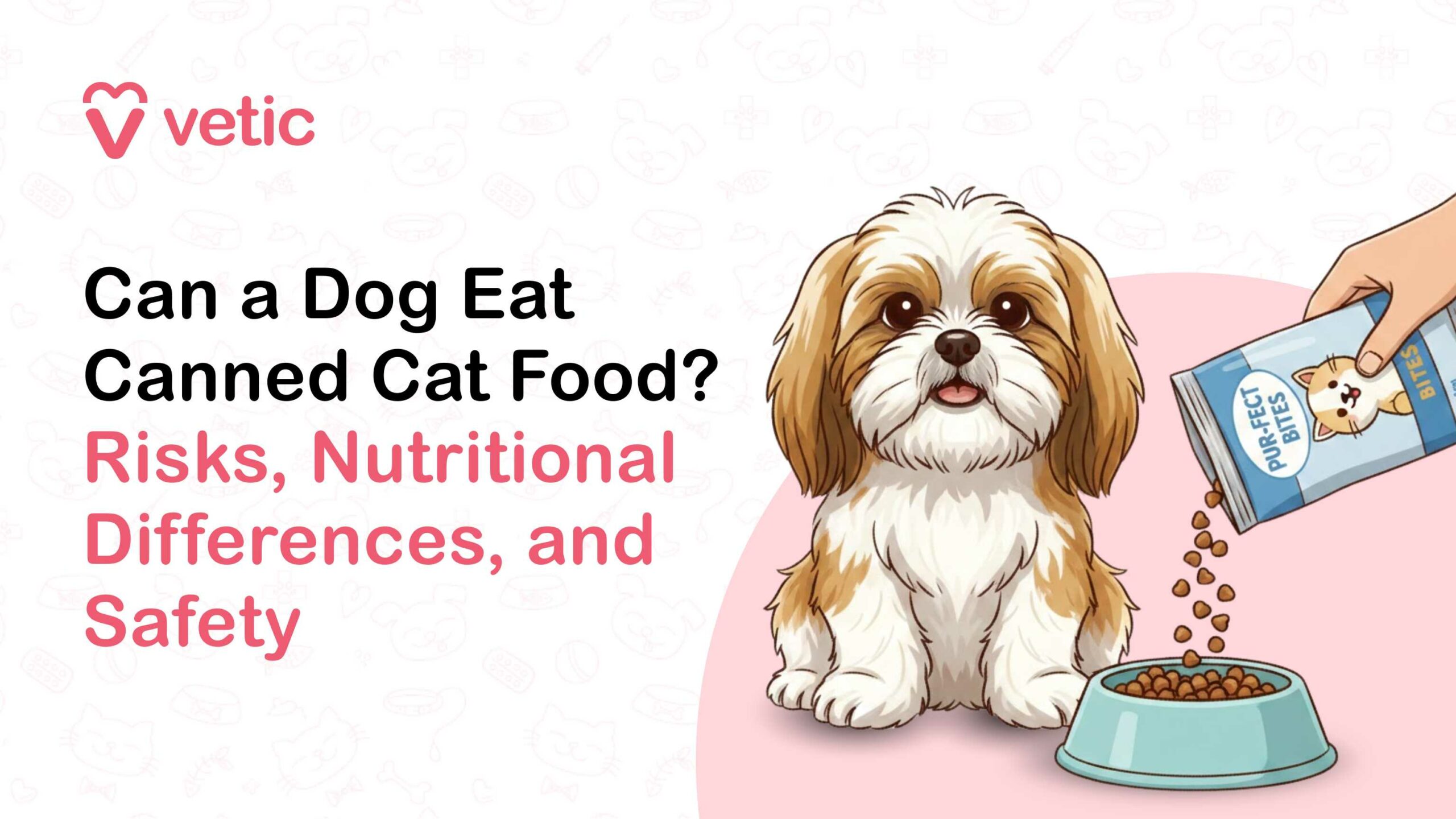
Dog parents often catch their pets sneaking into the cat’s bowl, especially when it comes to canned cat food. Canned cat food tends to smell stronger and taste richer than dog food. This raises a common concern: Can a dog eat canned cat food safely?
The short answer is that an occasional bite is unlikely to be dangerous. But cat food, especially wet cat food, is not suitable for dogs as a regular or long-term diet. This is due to fundamental nutritional differences between dogs and cats. Repeated exposure also poses potential health risks such as vomiting and diarrhoea in dogs.
This blog explains how dog food and cat food differ, when accidental consumption may be acceptable, the dangers of dogs eating cat food, and what to do if your dog keeps seeking it out.
What are the Main Differences Between Dog Food and Cat Food
Dog food and cat food are formulated for very different biological needs. Feeding one species the other’s food regularly can create nutritional imbalances over time.
Protein Content Differences
Cat food contains significantly higher protein levels than dog food. Cats are obligate carnivores (meat-only eaters) and require a protein-rich diet to survive. Dogs, while omnivorous, do not require such high protein concentrations.
If dogs eat cat food, the excess protein from cat food:
- Places extra strain on a dog’s liver and kidneys
- Can worsen existing kidney or liver disease
- Is unnecessary for most healthy dogs
Fat and Calorie Differences
Canned cat food is typically higher in fat and calories than dog food. This makes it more palatable, but also riskier, for dogs.
If dogs repeatedly eat canned cat food, it may lead to:
- Weight gain and obesity
- Pancreatitis, especially in small or sensitive breeds
- Chronic digestive upset
Vitamin and Mineral Variations
Cat food contains nutrients that dogs do not need in the exact amounts, such as:
- Higher levels of vitamin A
- Added taurine (essential for cats, not dogs)
- Different mineral ratios
When dogs eat too much cat food, these imbalances may lead to nutritional excesses or deficiencies over time.
Long-term dietary concerns should be evaluated with proper testing at our dog diagnostics.
Situations Where Dogs Can Eat Cat Food Safely
There are limited scenarios where you can give cat food to dogs, and it may not be immediately harmful.
In a Pinch or Temporary Situation
If your dog’s regular food is unavailable, a small amount of cat food is unlikely to cause harm. For instance, during travel or emergencies, cat food can serve as a short-term substitute. The key is limiting the amount and duration to avoid digestive upset.
As an Occasional Treat
Many dogs enjoy the taste of cat food. In moderation, giving a dog a bite or two of cat food as a treat is usually safe. Treats should never replace a balanced diet.
If Your Dog Needs High-Calorie Food
Dogs can eat canned cat food short-term for its high-calorie content. This is especially helpful in specific veterinary-supervised situations, such as severe weight loss or recovery from illness.
However, in most cases, puppy food is a more appropriate option than canned cat food. Puppy formulas are specifically designed for growth and higher energy needs. They are calorie-dense, easier to digest, and nutritionally balanced for dogs. Because of this, vets often recommend puppy food over cat food when a dog temporarily requires additional calories.
Always consult your veterinarian before making dietary changes, especially for dogs recovering from illness or dealing with underlying health conditions.
Potential Risks of Feeding Cat Food to Dogs
Dogs can sometimes eat canned cat food. But making it a regular part of their diet can lead to health problems.
First, the high fat content increases the likelihood of pancreatitis in dogs, a painful and potentially serious condition. Second, dogs may develop chronic diarrhoea, vomiting, or gas due to difficulty digesting the richer formulation.
Third, repeated exposure to cat food in dogs can lead to nutritional imbalance, particularly excesses of vitamin A and fat-soluble nutrients. Over time, this may affect bone health, metabolism, and organ function.
Finally, dogs that become accustomed to cat food often begin refusing their own balanced dog food. This leads to picky eating habits and long-term feeding challenges in dogs.
Is a dog eating cat food regularly? Book a vet consultation near you to prevent pancreatitis and nutrition issues!
What to Do If Your Dog Eats Cat Food Accidentally
If your dog has eaten canned cat food only once, stay calm. In most cases, no treatment is needed.
Monitor for Digestive Upset
Watch for vomiting, diarrhoea, or changes in appetite. Most healthy dogs tolerate small amounts without serious effects, but persistent gastrointestinal issues require attention.
Provide Water and a Bland Diet If Needed
If your dog experiences a mild stomach upset, offer fresh water. Return to your dog’s regular food once symptoms have settled. A temporary bland diet may help if advised by your vet.
Contact a Vet If Symptoms Persist
Seek veterinary care if a dog that has eaten canned cat food shows vomiting, diarrhoea, abdominal pain, or refuses to eat for more than 24 hours. Puppies, senior dogs, and dogs with pre-existing health conditions should be evaluated immediately.
How to Prevent Dogs from Eating Cat Food at Home
In multi-pet households, prevention is key to keeping dogs from eating canned cat food.
Effective strategies include:
- Feeding your cat in a separate room with a closed door.
- Using elevated feeding stations for cats that dogs cannot reach.
- Using microchip-activated feeders for cats
- Picking up cat bowls immediately after meals
- Training your dog with commands like “leave it” to reinforce boundaries.
Consistency is key; dogs are quick learners when food rewards are involved.
Suggested Read: Rice for Dogs vs Chapati for Dogs
Healthier Alternatives to Cat Food for Dogs
If your dog repeatedly eats canned cat food because it is tastier or richer, safer alternatives include:
- High-quality wet dog food
- Veterinary-approved high-calorie recovery diets
- Cooked, plain animal protein (as advised by a vet)
- Dog-safe food toppers
These options meet a dog’s nutritional needs without the risks associated with cat food.
Signs Your Dog Is Experiencing Problems from Cat Food
Contact your veterinarian if your dog shows:
- Repeated vomiting or diarrhoea
- Abdominal pain or bloating
- Sudden weight gain
- Loss of appetite for dog food
- Lethargy or behavioural changes
Early intervention prevents minor issues from becoming serious.
Dog vomiting after eating canned cat food? Visit a 24/7 dog emergency care near you today!
Conclusion
Canned cat food is not toxic to dogs, but it is not appropriate for regular or long-term feeding. Dogs have different nutritional requirements. Repeated exposure to cat food can lead to digestive problems, obesity, and metabolic strain in dogs. Occasional accidental ingestion of canned cat food in dogs is usually harmless. But consistent prevention and proper diet selection are essential for long-term health.
Frequently Asked Questions: About Dogs Eating Cat Food
Can dogs eat dry vs. wet cat food?
Both dry and wet cat food contain more protein and fat than dog food. Wet cat food is more calorie-dense and may cause faster digestive upset. But occasional small amounts of either type are generally tolerated by healthy dogs.
Can dogs eat cat food regularly?
No. Regular consumption can lead to obesity, digestive problems, and nutrient imbalances. Dog food is formulated to meet canine nutritional needs safely.
Can I mix cat food into dog food safely?
Occasionally, mixing a tiny amount as a treat is generally safe, but it should not become a habit. If done often, it can upset your dog’s nutrient balance.
Can a dog die from eating cat food?
A single exposure is not fatal. However, long-term feeding can contribute to severe health conditions if left unaddressed.
What should I do if my dog wants to eat only cat food?
Gradually transition back to dog food and restrict access to cat food. Seek veterinary advice if refusal to eat dog food persists.
References
Golder, C., Weemhoff, J. L., & Jewell, D. E. (2020). Cats Have Increased Protein Digestibility as Compared to Dogs and Improve Their Ability to Absorb Protein as Dietary Protein Intake Shifts from Animal to Plant Sources. Animals, 10(3), 541. https://pmc.ncbi.nlm.nih.gov/articles/PMC7143243/ MSD Veterinary Manual. (n.d.). Nutritional Requirements of Small Animals – Management and Nutrition. MSD Veterinary Manual. https://www.msdvetmanual.com/management-and-nutrition/nutrition-small-animals/nutritional-requirements-of-small-animals#Energy_v3328508