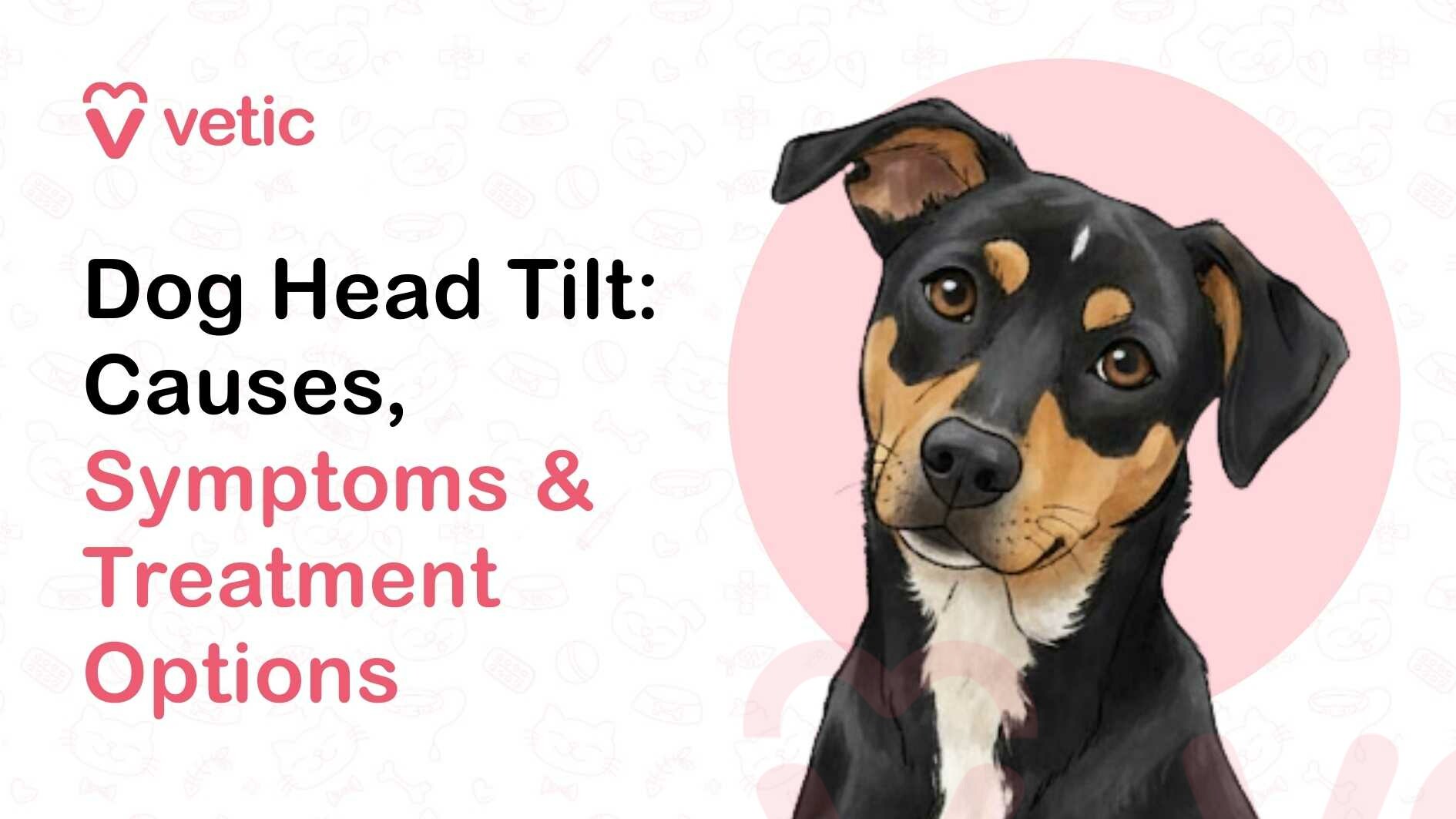
Seeing your dog walking with their head tilted to one side can be worrying. For many pet parents, a head tilt immediately raises questions about balance, neurological diseases, or even ear infections in dogs. While head tilt in dogs can look dramatic, the underlying cause can range from mild and treatable to serious and urgent, depending on the situation.
This blog explains what head tilt in dogs means, how it appears, common causes, warning signs, diagnostic steps, treatment options, and recovery expectations, so you know when to monitor at home and when to seek veterinary care.
What Head Tilt in Dogs Means and How It Affects Balance and Movement
A head tilt happens when a dog consistently holds its head at an abnormal angle, usually leaning to one side. The vestibular system is responsible for maintaining balance and spatial orientation. It involves parts of the inner ear and specific areas of the brain.
When the vestibular system is affected, dogs may struggle to:
- Maintain balance
- Walk in a straight line
- Coordinate head and body movement
Because balance is disrupted, affected dogs often look dizzy or disoriented. Some may be reluctant to walk, while others may pace anxiously.
The head tilt itself is not a disease. It’s a clinical sign pointing to an underlying issue.
Common Ways Head Tilt in Dogs Appears at Home
Head tilt does not look the same in every dog. Some dogs show only a subtle lean, while others develop more obvious balance problems.
Dog Head Tilted to One Side
This is the most common presentation. The head consistently leans left or right, often toward the affected ear or side of the nervous system. It can happen even when resting.
Dog Tilting Head Back or Backwards
If a dog tilts their head upward or backward, this may suggest pain, neurological dysfunction, or issues affecting the neck or brainstem. This presentation is less common but often warrants urgent veterinary evaluation.
Dogs Tilting Their Heads While Walking or Standing
Some dogs only show the tilt when moving, while standing normally at rest. Others tilt continuously, even when lying down. You might also see:
- Circling in one direction
- Swaying
- Falling to one side
- Difficulty standing without support
Head Tilt in Puppies and Why It Can Be Different From Adult Dogs
In puppies, head tilt may be linked to:
- Congenital inner ear defects (since birth)
- Early-onset ear infections
- Trauma
- Exposure to toxins
- Severe parasitic or viral infections
- Rare developmental neurological conditions
Puppies may compensate less effectively than adult dogs. So even mild vestibular problems can appear dramatic. Schedule a primary pet health check for early assessment to rule out congenital or progressive issues in your dog.
Ear-Related Causes of Head Tilt in Dogs
Ear disease is one of the most common and treatable causes of head tilt in dogs.
Ear Infections and Inflammation Affecting Balance
Severe outer ear infections can spread deeper, especially if untreated. Inflammation may extend into the middle or inner ear, disrupting balance signals.
Common clues include:
- Head shaking
- Scratching at one ear
- Redness or swelling in the ear canal
- Discharge
- Odour from the ear
- Pain when the ear is touched
Inner and Middle Ear Problems
The inner ear contains structures critical for balance. Otitis media (middle ear infection) and otitis interna (inner ear infection) are strongly associated with head tilt in dogs. When bacteria, yeast, or inflammation reach this area, dogs can develop:
- Persistent head tilt
- Loss of balance
- Nausea or vomiting
- Nystagmus (rapid eye movements)
Dog Head Tilt: Ear Infection Treatment Expectations
With appropriate treatment, often involving antibiotics, anti-inflammatory medications, and ear care, many dogs improve significantly. However, in some cases, a residual head tilt may remain even after the infection resolves. This is especially true if nerve damage occurred.
Vestibular Disease as a Major Cause of Canine Head Tilt
One of the most common causes of sudden head tilt in older dogs is vestibular disease, sometimes called “old dog vestibular syndrome.” It directly affects the balance system. It is a leading cause of sudden head tilt, particularly in older dogs.
Idiopathic vestibular disease (meaning no specific cause is identified):
- Appears suddenly
- Can look severe at first
- Often improves within days to weeks
Dogs may show:
- Severe head tilt
- Loss of balance, stumbling, or falling
- Rapid eye movements
- Nausea
- Refusal to stand
Despite the dramatic appearance, idiopathic vestibular disease often has a good prognosis.
Neurological Conditions Linked to Head Tilt in Dogs
Head tilt can also result from problems within the brain itself. Possible neurological causes include:
- Brain inflammation
- Tumours
- Stroke-like events
- Infections affecting the brain
- Congenital brain abnormalities
Central causes are more likely if head tilt in dogs is accompanied by:
- Weakness on one side
- Behaviour changes
- Seizures
- Abnormal mental awareness
Injuries, Trauma, and Toxins That Can Trigger Sudden Head Tilt
Canine head tilt may develop suddenly after:
- Head trauma or falls
- Bite wounds near the ear or skull
- Exposure to toxins affecting the nervous system
- Certain medications (especially those affecting the ears)
Trauma can damage the inner ear or brain structures responsible for balance. Toxins may disrupt nerve function, leading to neurological symptoms.
In these cases, the tilt may worsen rapidly and require urgent evaluation at the nearest dog hospital.
Additional Symptoms That Often Occur With Head Tilt in Dogs
Canine head tilt rarely appears alone. Watch for:
- Loss of balance or falling
- Circling
- Nausea, drooling, or vomiting
- Rapid eye movements
- Reluctance to eat
- Anxiety or confusion
- Facial paralysis
Facial paralysis can present as drooping lips, inability to blink, or decreased tear production on one side.
The number and severity of accompanying symptoms often help determine urgency.
Signs That Indicate Head Tilt in Dogs Is an Emergency
Seek immediate veterinary care if a head tilt in dogs is accompanied by:
- Sudden lethargy or collapse
- Severe disorientation
- Sudden inability to stand
- Continuous rolling or falling
- Persistent vomiting
- Seizures
- Rapid worsening over hours
- Signs of severe pain
Rapid evaluation is essential to rule out life-threatening conditions like brain hemorrhage or severe infection.
How Veterinarians Determine the Cause of Head Tilt in Dogs
Diagnosis begins with a detailed history and physical examination. Your veterinarian will assess:
- Ear canals and eardrum integrity
- Eye movements
- Reflexes
- Coordination
- Mental awareness
Diagnostic tests may include:
- Ear examination and cytology
- Blood pressure measurement
- Neurological evaluation
- Blood tests
- Cerebrospinal fluid analysis
- Imaging such as X-rays, CT, or MRI
- Advanced ear diagnostics if inner ear disease is suspected
Distinguishing between peripheral (ear-related) and central (brain-related) causes is critical for treatment planning.
Treatment Options Based on the Underlying Cause of Head Tilt
Treatment varies depending on diagnosis.
Medications and Supportive Care
Dogs with vestibular disease or mild inflammation may receive:
- Anti-nausea medications
- Anti-inflammatory drugs
- IV fluids (if dehydrated)
- Appetite stimulants
Dogs with severe balance issues may need to be confined to a safe, padded area to prevent injury.
Treating Infections and Inflammation
Ear infections in dogs may require:
- Targeted antibiotics
- Antifungal therapy
- Ear cleaning under veterinary supervision
- Long-term follow-up
Managing Neurological Causes
If the head tilt in dogs is due to:
- Brain tumors: Treatment may include surgery, radiation, or palliative care
- Inflammatory brain disease: Immunosuppressive medications may be prescribed
- Stroke: Supportive care and monitoring are typical
Prognosis varies widely depending on the condition.
Recovery Timeline and Long-Term Outlook for Dogs With Head Tilt
Recovery depends on the cause:
- Ear infections often improve within weeks
- Idiopathic vestibular disease usually improves within days to weeks
- Neurological causes vary widely
Some dogs retain a mild, permanent head tilt even after recovery, but still live normal, happy lives.
How Pet Parents Can Support Dogs During Head Tilt Recovery
At home, supportive care matters:
- Keep your dog in a quiet, low-stimulation environment
- Prevent falls with non-slip flooring and blocking off stairs
- Assist with eating and drinking
- Elevate food and water bowls
- Keep routines calm and predictable
- Follow medication instructions carefully
Gentle reassurance and patience go a long way. Many dogs feel disoriented and may be anxious during recovery.
Final Thoughts: About Head Tilt in Dogs
Head tilt in dogs is a sign, not a diagnosis. While it can look alarming, many causes are treatable, and some improve on their own with supportive care. The key is recognising when head tilt is mild and stable versus when it signals an emergency.
If your dog develops a sudden or worsening head tilt, especially with other symptoms, prompt veterinary evaluation gives the best chance for recovery and long-term comfort.
Frequently Asked Questions: About Head Tilt in Dogs
Can a dog’s head tilt be a sign of neurological issues?
Yes. While many cases are ear-related, neurological causes are possible and require veterinary evaluation.
What are the symptoms of vestibular head tilt in dogs?
Head tilt, loss of balance, circling, nausea, and rapid eye movements are common signs.
Why is my dog leaning their head to one side and falling over?
This usually indicates vestibular dysfunction affecting balance and orientation.
Can a dog recover from a head tilt completely?
Many dogs recover fully or nearly fully, depending on the cause. Some retain a mild permanent tilt.
Is a head tilt in puppies dangerous?
It can be dangerous, especially if it is congenital or rapidly worsening. Puppies should always be evaluated promptly.
References
Gibeault, S. (2017). Why Do Dogs Tilt Their Heads? American Kennel Club. https://www.akc.org/expert-advice/advice/why-do-dogs-tilt-their-heads/
MSD Manual. (2026). Head tilt, otitis media and interna, dog. MSD Veterinary Manual. https://www.msdvetmanual.com/multimedia/image/head-tilt-otitis-media-and-interna-dog
Padley, H. F., Volckaert, V., & Smith , P. M. (n.d.). What Is Your Neurologic Diagnosis? AVMA . https://avmajournals.avma.org/view/journals/javma/255/5/javma.255.5.529.xml
Paul Pion, D. V. M., & Spadafori, G. (2017). Vestibular Disease in Dogs and Cats. VIN.com. https://veterinarypartner.vin.com/default.aspx?pid=19239&id=4951444Purina. (2024). Why Do Dogs Tilt Their Heads? Purina.com. https://www.purina.com/articles/dog/behavior/understanding-dogs/why-do-dogs-tilt-their-heads