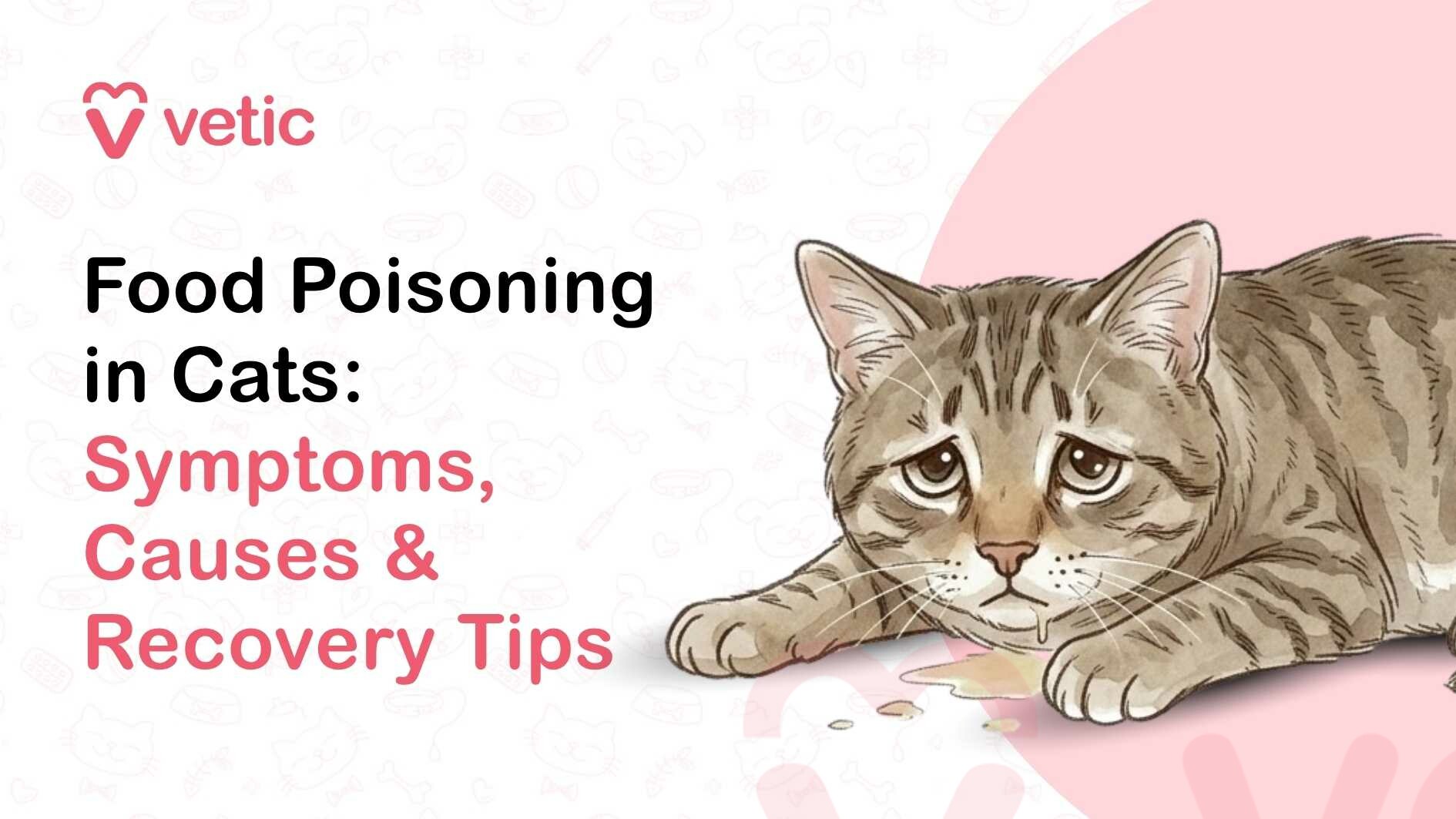
Food poisoning in cats refers to illness caused by eating contaminated or toxic food. It can occur when a cat ingests harmful bacteria (like Salmonella, E. coli, Listeria, or Campylobacter) or poisonous substances in food.
Cats are natural carnivores with very acidic stomachs, so they often tolerate minor dietary indiscretions. However, potent pathogens or toxins can overwhelm their defenses.
What Is Food Poisoning in Cats and Why It Happens
Food poisoning in cats occurs after ingestion of contaminated or toxic food. It can lead to rapid gastrointestinal and systemic illness.
- Caused by bacterial contamination or toxic substances in food.
- Common sources: raw/undercooked meat, spoiled pet food, garbage scraps, unsafe human foods.
- Small amounts of rotten meat or raw eggs can contain high bacterial loads.
- Toxic foods include chocolate, onions, garlic, grapes, and raisins.
- Causes gastrointestinal inflammation, resulting in vomiting and diarrhoea.
- Severe cases may allow toxins or bacteria to enter the bloodstream and affect organs.
- Considered a veterinary emergency due to potential rapid progression.
Suggested Read: Toxic Food for Cats: 10 Dangerous Foods You Should Never Feed Your Cat
Fungal, Bacterial and Toxin Mechanisms
Food poisoning occurs through two main mechanisms: infection by pathogens or direct poisoning by chemicals.
In bacterial cases, germs like Salmonella or E. coli attach to the intestinal lining and release toxins, triggering severe inflammation and diarrhoea. For example, if a cat ingests a harmful E. coli strain, they can develop vomiting, cramps, and watery diarrhoea; in severe cases, this infection can spill into the bloodstream.
In toxin cases, substances in the food directly damage the GI system or other organ systems. Chocolate contains theobromine and caffeine that depress the nervous system and kidneys.
Common Symptoms of Food Poisoning in Cats You Should Watch For
Food poisoning causes rapid and severe gastrointestinal upset. The most common signs are in the digestive tract, often accompanied by general sickness. Owners should watch closely for any combination of the following symptoms, especially after a cat eats something unusual:
Vomiting, Diarrhoea, and Dehydration
- Cats will frequently vomit clear fluid, bile or food material. This may begin within hours of eating bad food.
- Diarrhoea usually follows, which can be watery or even bloody. Both vomiting and diarrhoea cause the cat to lose fluids quickly.
- Dehydration sets in when fluid loss outpaces intake. Look for sunken eyes, dry gums, and lethargy. Dehydration can be dangerous in just 24 – 48 hours, so it is critical to offer water or electrolytes frequently (veterinary ORS only).
Tip: Even if diarrhea isn’t present yet, repeated vomiting alone can dehydrate a cat rapidly. Contact your vet if vomiting persists.
Suggested Read: How to Stop Your Cat from Vomiting Hairballs
Lethargy, Weakness, and Loss of Appetite
- Lethargy: Cats may lie around more than usual, move slowly, or sleep excessively.
- Weakness: Lack of energy or muscle weakness can develop.
- Loss of Appetite: Most cats with food poisoning will refuse to eat. Even bland favourite treats are often ignored. Not eating for more than 12–24 hours can itself cause serious complications.
- Fever: Cats may have an elevated temperature if the cause is infectious.
Drooling, Abdominal Pain, and Unusual Behaviours
- Drooling/Salivation: Severe nausea can trigger drooling or foaming at the mouth.
- Abdominal Pain: A cat in abdominal pain may posture with a hunched back, stretch as if trying to relieve cramps, or cry out when the belly is gently pressed. They may also “knead” at the ground or curl tightly.
- Unusual Behaviours: Any abrupt change in behaviour is concerning. This can include hiding, irritability, or aggression.
Top Causes of Food Poisoning in Cats
Food poisoning in cats can stem from different sources. The main categories are:
Bacterial Contamination: Salmonella, E. coli, Listeria, Campylobacter
Many cases of food poisoning in cats are caused by bacterial contamination. Common pathogens include:
- Salmonella spp.: Found in raw poultry, eggs, or contaminated treats; causes vomiting, diarrhoea (sometimes bloody), and fever. Severe cases may lead to sepsis.
- E. coli (toxigenic strains): Can cause acute gastroenteritis with vomiting, watery diarrhea, dehydration, and systemic illness.
- Listeria monocytogenes: Uncommon but serious; linked to raw meat or dairy and may cause intestinal and neurological signs.
- Campylobacter spp.: More common in kittens; causes acute, often bloody diarrhea and dehydration.
These bacteria are typically acquired from contaminated raw food or spoiled pet food and may also pose a zoonotic risk.
Suggested Read: Pica in Cats: Causes, Symptoms, and How to Manage Chewing Disorders Safely
Toxic Foods: Chocolate, Onions, Garlic, Grapes, Raisins
Certain everyday foods are toxic to cats:
- Chocolate: Contains theobromine and caffeine; even small amounts can cause vomiting, tremors, rapid heart rate, or seizures within hours.
- Onions and garlic: Damage red blood cells, leading to anemia; signs may appear 1–3 days later.
- Grapes and raisins: Can trigger acute kidney failure, even in small quantities.
- Alcohol, caffeine, xylitol, and raw dough: May cause neurological signs, low blood sugar, liver damage, or severe gastrointestinal distress.
These cause poisoning rather than infection and require immediate veterinary attention if ingestion is suspected.
Spoiled or Improperly Stored Cat Food
Proper storage is essential. Wet food, open kibble bags, raw diets, or expired food can allow bacteria like Salmonella, E. coli, and Listeria to multiply. Opened cans should be refrigerated and discarded within 1–2 days. If multiple cats become ill after eating the same food, contamination should be suspected.
Household Hazards and Human Foods
Besides obvious food items, cats may encounter hidden toxins around the home. This includes:
- Human Snack Foods: Chips or deli meats contain high salt and spices; onions, garlic or chives used in cooking can sneak into a cat’s reach. Grapes/raisins used in baking or school snacks are common hazards.
- Household Ingredients: Batters, doughs, and pet treats can harbor pathogens. Raw meat used for family meals or pet treats (chicken jerky) pose similar risks.
- Other Toxins: While not “food”, substances like pesticides, and medications are also poisons – they should be kept far away as any ingestion is life-threatening.
How Cats Usually Get Food Poisoning
Cats commonly develop food poisoning through:
- Contaminated commercial pet food: Rarely, kibble or canned food may be tainted during production. Raw or freeze-dried diets and some treats carry higher bacterial risk.
- Access to human food or garbage: Scavenging table scraps, spoiled leftovers, chocolate, onions, or high-fat foods can lead to toxin ingestion or bacterial exposure.
- Spoiled leftovers or raw meats: Food left out too long or raw fish, poultry, and eggs may contain Salmonella, E. coli, or other pathogens.
Veterinarians often trace illness back to recent dietary indiscretions. Preventing access to unsafe food is key to reducing risk.
Diagnosing Food Poisoning in Cats: How Veterinarians Determine the Cause
Diagnosing food poisoning in cats can be difficult because symptoms resemble other conditions. Veterinarians rely on history, examination, and targeted tests to reach a diagnosis.
- History: Questions about recent diet, raw food intake, garbage access, or exposure to toxic foods.
- Physical exam: Assessment of hydration, abdominal pain, fever, gum color, and neurological status.
- Blood tests: CBC and biochemistry to detect infection, anemia, dehydration, or organ involvement.
- Fecal testing: Culture or PCR to identify bacteria such as Salmonella or Campylobacter.
- Imaging: X-rays or ultrasound to rule out obstruction or other causes of vomiting and diarrhea.
There is no single confirmatory test; diagnosis is based on combining clinical signs, exposure history, and laboratory findings.
Treatments for Food Poisoning in Cats: What Your Vet May Recommend
Treatment depends on severity and focuses on removing toxins, supporting the cat, and controlling symptoms.
- Rehydration: Subcutaneous fluids for mild cases; intravenous fluids for severe dehydration, electrolyte imbalance, or shock.
- Stabilization: Oxygen, warming, pain relief, and anti-nausea medications to control vomiting.
- Nutrition: Early nutritional support with easily digestible diets; feeding tubes may be used if the cat is not eating.
- Medications: Antibiotics if bacterial infection or systemic illness is confirmed; gastrointestinal protectants and probiotics may be added.
- Outpatient care: Mild cases may be managed at home with prescribed medication, fluid support, and close monitoring.
When Hospitalization Is Necessary
Cats require hospitalization when signs are severe, including:
- Severe dehydration or shock (sunken eyes, pale gums, weakness)
- Persistent vomiting or diarrhea lasting over 12–24 hours
- High fever, very low body temperature, or seizures
- Refusal to eat for more than 24 hours
- Confirmed ingestion of a dangerous toxin
Hospital care includes IV fluids, injectable medications, nutritional support, and close monitoring. Severe cases, such as sepsis, may require several days of intensive treatment. Follow-up visits are important to ensure full recovery, which may take days to weeks depending on severity.
Preventing Food Poisoning in Cats: Practical Tips for Pet Owners
Preventing food poisoning focuses on limiting exposure to unsafe foods and maintaining proper hygiene.
- Secure food and trash: Store human food safely and use tightly sealed trash bins.
- Avoid raw diets: Do not feed raw meat, eggs, or dough; these carry higher bacterial risk.
- Cook and store properly: Offer only fully cooked foods and refrigerate leftovers promptly.
- Choose quality pet food: Check expiration dates, recalls, and discard spoiled food.
- Limit outdoor scavenging: Supervise outdoor cats to prevent hunting or garbage access.
- Maintain hygiene: Wash hands, clean bowls daily, and separate sick pets if needed.
- Avoid unsafe treats: Do not give table scraps or unapproved novelty treats.
Consistent food safety and hygiene practices significantly reduce the risk of food poisoning in cats.
Frequently Asked Questions About Food Poisoning in Cats
How long does it take for a cat to show symptoms after eating something bad?
Onset depends on the cause. Bacterial infections may appear within hours to a few days (e.g., Salmonella within 8–72 hours). Toxins like chocolate or onions often cause signs within hours. Seek veterinary advice promptly if exposure is suspected.
Can cats recover from food poisoning at home safely?
Very mild cases may improve with hydration and bland food. However, repeated vomiting, weakness, refusal to drink, or worsening signs require veterinary care. Cats dehydrate quickly, so caution is advised.
What foods are most dangerous for cats to eat?
Chocolate, onions, garlic, grapes, raisins, alcohol, caffeine, xylitol, and raw dough are highly toxic. Even small amounts can cause anemia, kidney failure, neurological signs, or severe gastrointestinal distress.
How do I know if my cat needs to see the vet urgently?
Seek immediate care for persistent vomiting or diarrhea, weakness, pale gums, fever, seizures, refusal to eat or drink, or signs of dehydration. Rapidly worsening symptoms always require urgent attention.
Is food poisoning contagious to other pets or humans?
Some bacterial causes are zoonotic and can spread through feces or vomit. Practice strict hygiene, disinfect bowls and litter trays, and isolate the sick cat to reduce risk.
References:
Cornell University College of Veterinary Medicine. (2026). Poisons – Cornell Feline Health Center. Retrieved from https://www.vet.cornell.edu/departments-centers-and-institutes/cornell-feline-health-center/health-information/feline-health-topics/poisons
Vanderhoof, C. (2024). Food poisoning in cats: Causes, signs, and treatment. Cats.com. Retrieved from https://cats.com/food-poisoning-in-cats
Cortinovis, C., & Caloni, F. (2016). Household food items toxic to dogs and cats. Frontiers in Veterinary Science, 3, 26. https://doi.org/10.3389/fvets.2016.00026
Giacometti, F., Magarotto, J., Serraino, A., & Piva, S. (2017). Highly suspected cases of salmonellosis in two cats fed with a commercial raw meat-based diet: Health risks to animals and zoonotic implications. BMC Veterinary Research, 13, Article 224. https://doi.org/10.1186/s12917-017-1143-z