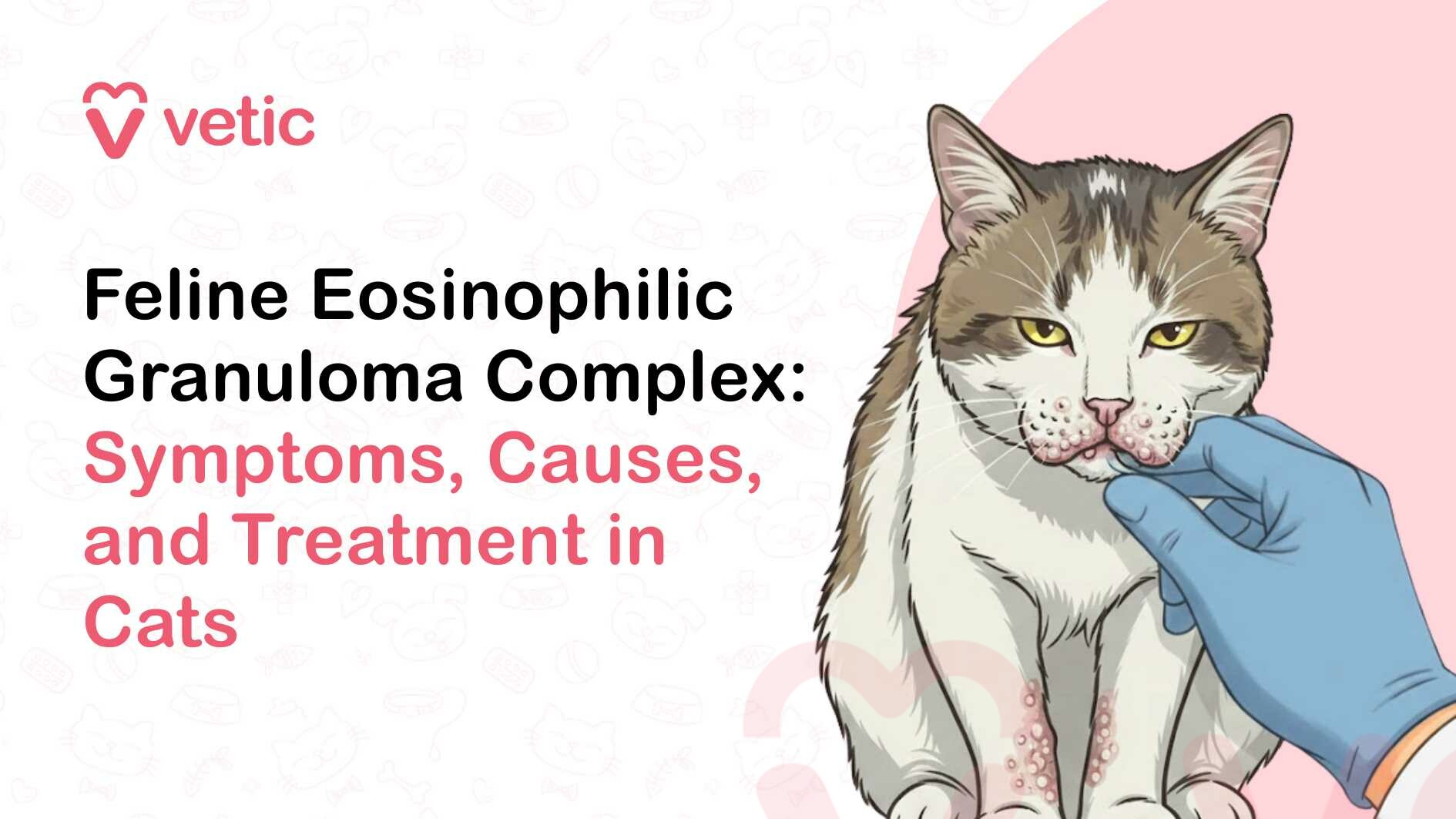
Feline Eosinophilic Granuloma Complex (EGC) is a group of inflammatory skin and mouth conditions. It causes sores, ulcers, or raised patches on the skin, lips, or inside the mouth. These lesions happen when a cat’s immune system overreacts, usually due to allergies.
EGC is not one single disease. It is a group of three related conditions that look different but share the same underlying cause, i.e., inflammation caused by eosinophils (a type of white blood cell involved in allergic reactions).
EGC is not contagious, and most cats do well with proper treatment and long-term care.
What Is Eosinophilic Granuloma Complex in Cats?
EGC happens when eosinophils, a type of white blood cell involved in allergic reactions, build up in the skin or inside the mouth. These cells release substances that irritate and damage the surrounding tissue. This causes visible skin and mouth changes, such as:
- Red patches, which may look inflamed or raw
- Ulcers, especially on the lips or inside the mouth
- Thickened or raised areas, which feel firm or swollen to the touch
These changes usually occur because the cat’s immune system is reacting to something it sees as a threat. Common triggers include flea or insect bites, certain foods, and environmental allergens like dust, pollen, or mold. Even a small exposure to these triggers can start the reaction in sensitive cats, leading to the typical lesions seen with eosinophilic granuloma complexes.
Suggested Read: Cough and Cold in Cats
Is Eosinophilic Granuloma Complex an Allergic Condition?
Yes. EGC is most often related to allergies. Common triggers include:
- Flea or mosquito bites – even one bite can cause an allergic reaction
- Food allergies – certain proteins like fish or chicken can cause allergies
- Environmental allergens – dust, pollen, or mold are strong allergens
Sometimes, the exact cause cannot be identified, but the disease still behaves like an allergy-based condition.
Is Eosinophilic Granuloma Complex Contagious?
No. EGC cannot spread from one cat to another. It is not caused by bacteria or viruses. Each affected cat develops lesions due to its own immune response.
Is Eosinophilic Granuloma Complex Painful for Cats?
Some lesions are uncomfortable, while others are not very painful:
- Lip ulcers often look severe, but usually do not hurt much
- Skin plaques and granulomas are usually itchy and irritating
Cats may lick, scratch, or bite these areas, which can make the skin worse or lead to infection.
A cat consultation can help determine pain and treatment needs.
Types of Eosinophilic Granuloma Complex in Cats
EGC includes three main lesion types:
- Eosinophilic Plaques: Red, raised, moist patches of skin. Plaques are often round or oval and shiny (sometimes called “moist hives”). They typically occur on the belly, inner thighs, chest, or neck of cats. Plaques are very itchy and often ulcerate or ooze if scratched.
- Eosinophilic (Linear) Granulomas: These are firm, circumscribed nodules or linear streaks on the skin. They can be pink-to-yellow in color and often have a “cobblestone” or smooth texture. Common sites include the back of the thighs, chin, lips, footpads, and oral cavity.
- Indolent (Rodent) Ulcers: Well-defined ulcers on the upper lip of a cat. These are circular or fissured sores with raised edges. Despite their raw appearance, indolent ulcers often don’t hurt as much as they look (they usually are not significantly painful). They can bleed or discharge slightly, and over time, they can enlarge if untreated.
These three lesion types all share the feature of having many eosinophils in the tissue, but their appearance, location, and symptoms differ.
Suggested Read: 20 Most Common Cat Diseases
Common Signs of Eosinophilic Granuloma Complex in Cats
You may notice:
- Sores on the lips or mouth
- Red patches on the belly or thighs
- Swelling of the lips or chin
- Hair loss over the affected area
- Constant licking or scratching
- Drooling or difficulty eating (if mouth is involved)
Recognizing signs starts with proper testing at our cat diagnostics
Can EGC Affect the Mouth, Lips, or Tongue?
Yes. EGC commonly affects the:
- Upper lip
- Gums
- Roof of the mouth
- Tongue
Mouth lesions can make eating uncomfortable. Any sore in the mouth that does not heal should be examined by a veterinarian.
What Causes Eosinophilic Granuloma Complex in Cats?
The most common causes are:
- Flea and insect bite allergy
- Food allergies
- Environmental allergies
- Genetic tendency in some breeds
- Unknown immune reaction
Even indoor cats can develop EGC if exposed to insects or allergens.
Suggested Read: Minoxidil Toxicity in Cats
Risk Factors for Developing EGC in Cats
Cats are at higher risk if they:
- Are young
- Belong to breeds like Siamese or Sphynx
- Have a history of allergies
- Are exposed to fleas or mosquitoes
- Go outdoors or live in multi-pet homes
How Is Eosinophilic Granuloma Complex Diagnosed?
There is no single test for Eosinophilic Granuloma Complex. Diagnosis is usually made by combining your cat’s history, physical findings, and test results.
1. Physical examination
The veterinarian examines the skin, lips, mouth, and paws for typical EGC lesions such as ulcers, raised plaques, or thickened areas. Their appearance and location provide important clues.
2. Skin or lesion sample
A small sample may be taken from the lesion and examined under a microscope. Finding many eosinophils (allergy-related white blood cells) supports the diagnosis.
3. Blood tests
Blood work may show increased eosinophils and help assess your cat’s overall health before treatment.
4. Food or allergy trials
Because EGC is often linked to allergies, your vet may suggest a special diet trial or strict flea control to identify possible triggers.
5. Ruling out other diseases
Tests may be done to exclude infections and cancers that can look similar to EGC, especially for mouth lesions.
Conditions That Mimic Eosinophilic Granuloma Complex in Cats
Some diseases can look similar, such as:
- Skin cancer
- Ringworm
- Bacterial infections
- Mite infestations
- Autoimmune skin diseases
That is why proper testing is important.
Some mimicking conditions may require urgent attention at our cat emergency care.
How Is Eosinophilic Granuloma Complex Treated in Cats?
Treatment for Eosinophilic Granuloma Complex focuses on three main goals: reducing inflammation, healing the affected skin or mouth, and identifying and removing the trigger (usually an allergy).
Common treatments include:
- Steroids: These are the main treatment and help reduce the immune system’s overreaction and control redness, swelling, and itching.
- Antibiotics: These are used if the lesions become infected with bacteria due to licking or open sores.
- Cyclosporine: This may be prescribed for cats that need long-term control or cannot tolerate steroids.
- Special diets: A strict hypoallergenic or novel-protein diet may be recommended if a food allergy is suspected.
- Topical treatments: Creams or gels may be applied directly to localized lesions to reduce inflammation and promote healing.
With proper treatment and trigger control, most cats improve well, although some may need long-term management.
Suggested Read: Managing Stress in Cats
Does EGC Come Back to Cats?
Yes. EGC often returns if the trigger is still present. Many cats need long-term or repeated treatment to control flare-ups.
Prognosis for Cats With Eosinophilic Granuloma Complex
The outlook is usually good. Most cats respond well to treatment and live normal lives. The condition is rarely life-threatening but may require lifelong care.
Long-Term Management of EGC in Cats
Important steps include:
- Year-round flea control
- Feeding prescribed diets
- Preventing licking or scratching
- Regular vet checkups
- Keeping the environment clean
Can Eosinophilic Granuloma Complex Be Cured?
There is usually no permanent cure, but the disease can be controlled. Many cats stay symptom-free for long periods with proper management.
FAQs: About Eosinophilic Granuloma Complex in Cats
What does eosinophilic granuloma look like in cats?
It may appear as lip ulcers, red patches on the skin, or raised swellings on the legs or face. The lesions are usually hairless and red or yellowish in color.
Are eosinophilic ulcers painful for cats?
They usually are not very painful, but they can become uncomfortable if infected or scratched frequently.
Can food allergies cause EGC?
Yes. Food allergies are a common trigger. Cats may need a special diet for several weeks to confirm this.
Is EGC life-threatening?
No, but untreated lesions can lead to infection and discomfort.
How long does treatment for eosinophilic granuloma in cats take?
Lesions may improve in days to weeks, but long-term management is often needed to prevent relapse.
Can EGC go away on its own?
Sometimes mild cases improve, but most cats need treatment to prevent worsening and recurrence
References:
Cornell University College of Veterinary Medicine. (n.d.). Eosinophilic granuloma complex. Cornell Feline Health Center. https://www.vet.cornell.edu/departments-centers-and-institutes/cornell-feline-health-center/health-information/feline-health-topics/eosinophilic-granuloma-complex
Buckley, L. M. (2012). Feline eosinophilic granuloma complex(ities). Journal of Feline Medicine and Surgery, 14(1), 1–10. https://pmc.ncbi.nlm.nih.gov/articles/PMC10822386/
VCA Animal Hospitals. (n.d.). Feline eosinophilic granuloma complex in cats. https://vcahospitals.com/know-your-pet/feline-eosinophilic-granuloma-complex-in-cats
MSD Veterinary Manual. (n.d.). Eosinophilic granuloma complex in cats (Cat owners). https://www.msdvetmanual.com/cat-owners/skin-disorders-of-cats/eosinophilic-granuloma-complex-in-cats
PDSA. (n.d.). Feline eosinophilic dermatitis (eosinophilic granuloma complex). https://www.pdsa.org.uk/pet-help-and-advice/pet-health-hub/conditions/feline-eosinophilic-dermatitis