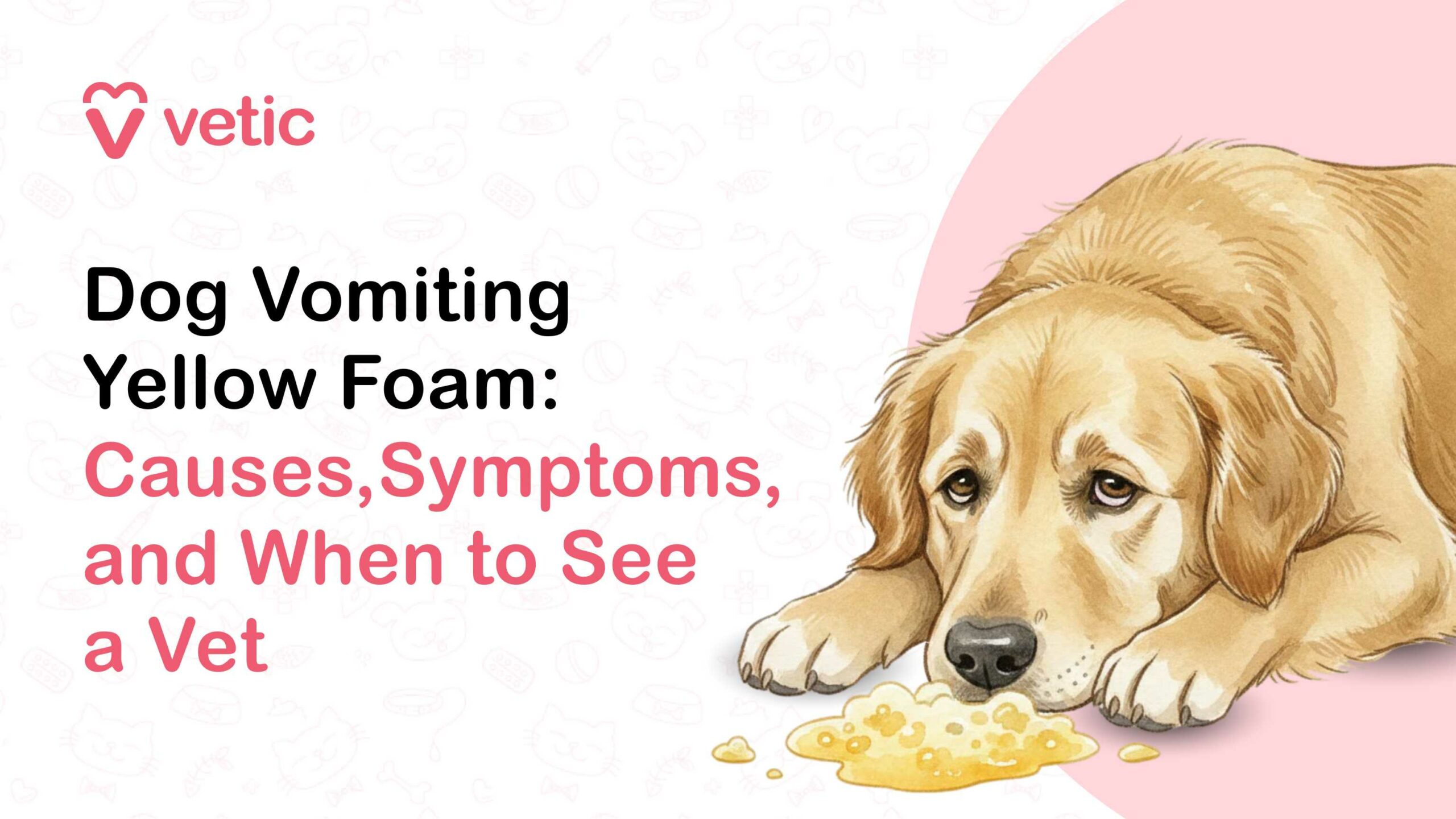
Seeing your dog vomit yellow foam can be alarming, especially when it happens suddenly or repeatedly. Occasional yellow vomit may be linked to minor digestive issues. But it can also signal underlying systemic or gastrointestinal conditions that require attention.
Yellow foam vomit usually contains bile, a digestive fluid produced by the liver. Understanding why bile appears in vomit, when it is harmless, and when it indicates a more serious problem is essential for timely care.
This blog explains the causes of yellow foam vomiting in dogs, associated symptoms, immediate home care steps, dietary management, and when veterinary evaluation is necessary.
Why do Dogs Vomit Yellow Foam?
Dogs vomit yellow foam primarily when bile enters the stomach and irritates the stomach lining. This most often occurs when the stomach is empty for extended periods. It allows bile to reflux backwards from the intestine into the stomach.
While a single episode may not be dangerous, recurrent or persistent vomiting of yellow foam should never be ignored. It may reflect digestive dysfunction, inflammation, or systemic illness.
What Is Yellow Bile and How Does It Affect a Dog’s Digestive System
Bile is a yellow-green fluid produced by the liver and stored in the gallbladder. Its primary role is to help digest fats once food enters the small intestine.
Under normal conditions:
- Bile moves from the liver → gallbladder → intestine
- It does not remain in the stomach
When the stomach is empty or irritated, bile can flow backwards into the stomach. This causes nausea and vomiting. Bile is also acidic and irritating. This is why it can trigger foamy, yellow vomit even when no food is present.
Common Causes of Yellow Foam Vomiting in Dogs
Yellow foam vomiting is not a diagnosis. It is a clinical sign with multiple possible causes.
Bilious Vomiting Syndrome in Dogs
A common cause in otherwise healthy dogs. This is true especially for those who vomit early in the morning or late at night. It occurs due to bile irritation when the stomach remains empty for extended intervals.
Indigestion and Empty Stomach Syndrome in Dogs
Skipping meals, irregular feeding schedules, or long overnight fasts can lead to bile buildup and vomiting.
Gastritis and Acid Reflux in Dogs
Ingesting inappropriate foods, stress, infections, medications, or chronic acid reflux may trigger inflammation of the stomach lining.
Pancreatitis in Dogs
Inflammation of the pancreas can cause repeated vomiting, abdominal pain, and yellow bile vomit. This condition requires urgent veterinary care.
Intestinal Blockages in Dogs
Foreign objects, bones, toys, or masses can obstruct the digestive tract. This can lead to the dog throwing up yellow foam, abdominal discomfort, and worsening illness.
Addison’s Disease in Dogs
Addison’s disease (hypoadrenocorticism) in dogs is a hormonal disorder. It can cause vomiting, lethargy, weakness, and electrolyte imbalances. Dog puking yellow foam may be one of several signs.
Allergies and Systemic Illness in Dogs
Food allergies, inflammatory bowel disease, or liver disease may also cause a dog to throw up yellow, foamy vomit.
Accurate diagnosis of yellow foam vomiting requires assessment by an experienced dog doctor.
Bilious Vomiting Syndrome in Dogs: Why It Happens and How to Recognise It
Bilious Vomiting Syndrome (BVS) is one of the most common non-emergency causes of yellow foam vomiting in dogs.
Typical features include:
- A dog throwing up yellow foamy vomit on an empty stomach
- Episodes often occur early in the morning
- The dog appears otherwise normal after vomiting
- Appetite returns quickly
Dogs with BVS often benefit from dietary timing adjustments, rather than medication alone.
Suggested Read: Pancreatitis in Dogs
Digestive Disorders That Can Lead to Yellow Foam Vomiting in Dogs
Chronic gastritis, acid reflux, and motility disorders can disrupt normal digestion. In these cases:
- Vomiting may occur multiple times per week
- Appetite may fluctuate
- Weight loss or stool changes may be present
These dogs require veterinary diagnosis, as long-term stomach irritation can worsen.
Is your dog vomiting yellow foam regularly? Book a professional dog checkup at Vetic to diagnose underlying issues!
Serious Health Conditions That Cause Yellow Vomit, Including Kidney Diseases
Yellow foam vomiting accompanied by:
- Severe lethargy
- Loss of appetite
- Dehydration
- Bad breath or increased thirst and urination
may indicate kidney disease or kidney failure. When the kidneys cannot properly filter toxins from the blood, nausea and bile vomiting can occur. Kidney disease can be life-threatening if left untreated. It should be diagnosed promptly through blood work, urine testing, and imaging.
Allergies, Toxins, and Other Less Common Causes of Vomiting Yellow Foam
Some dogs vomit yellowish liquid due to:
- Food allergies or intolerance
- Ingestion of toxins or plants
- Medication side effects
- Liver or gallbladder disease
These cases often involve additional symptoms, such as itching, behavioural changes, or jaundice in dogs.
Symptoms and Warning Signs to Watch for When Dogs Vomit Yellow Foam
Seek closer monitoring if vomiting is accompanied by:
- Loss of appetite
- Repeated vomiting in one day
- Abdominal pain or bloating
- Diarrhoea
- Fever
- Weight loss
- Behavioural changes
Vomiting that persists beyond 24 hours or worsens requires veterinary assessment.
Immediate Steps to Take at Home If Your Dog Throws Up Yellow Foam
After a single episode:
- Withhold food for 8-12 hours (unless advised otherwise)
- Allow small sips of water or ice cubes
- Observe energy levels and behaviour
Do not administer human medications without veterinary approval.
How to Help Settle Your Dog’s Stomach After Vomiting
Once your dog stops throwing up yellow foam:
- Reintroduce food gradually
- Use bland foods such as boiled chicken and white rice (short-term only)
- Avoid treats or fatty foods
If vomiting resumes, stop feeding and consult your veterinarian.
Dietary Adjustments That Can Reduce Yellow Foam Vomiting in Dogs
For dogs prone to bile vomiting:
- Feed smaller, more frequent meals
- Add a bedtime snack
- Avoid long fasting periods
- Use easily digestible diets
- Avoid high-fat foods
Dietary management is often the most effective long-term solution for bilious vomiting syndrome.
Suggested Read: 12 Causes of Loose Motions in Dogs
When to Seek Veterinary Care: Red Flags and Emergency Situations
Immediate veterinary care is required if:
- The dog is puking yellow foam frequently or persistently
- Blood is present
- The dog appears weak or in pain
- Vomiting is accompanied by diarrhoea or fever
- A puppy or a senior dog is affected
- Your dog vomits every time they drink water or is unable to keep fluids down
Is your puppy puking blood or showing weakness? Visit Vetic’s 24/7 dog emergency care near you immediately!
Diagnostic Tests and Treatments Your Vet May Recommend
Depending on the case, your vet may recommend:
- Blood tests
- Abdominal ultrasound or X-rays
- Fecal examination
- Diet trials
- Medications to reduce acid or improve motility
Treatment depends entirely on the underlying cause, not on the colour of the vomit alone.
Preventing Yellow Foam Vomiting in Dogs: Routine Care and Feeding Tips
Prevention focuses on:
- Consistent feeding schedules
- Balanced nutrition
- Avoiding table scraps
- Regular veterinary checkups
- Parasite control
- Keep toxic substances out of reach
Dogs with chronic digestive sensitivity benefit from proactive management rather than reactive treatment.
Regular testing through our dog diagnostics supports prevention and early detection.
Managing Chronic Vomiting: Long-Term Solutions for Dogs Prone to Yellow Foam
Dogs with recurring bile vomiting may need:
- Prescription gastrointestinal diets
- Feeding schedule modification
- Long-term medical management
- Monitoring for underlying disease progression
Early intervention improves outcomes and comfort.
Conclusion
Occasional yellow foam vomiting in dogs is often caused by an empty or irritated stomach. It may be managed with simple feeding adjustments. However, frequent vomiting or symptoms like lethargy, pain, or appetite loss can signal a more serious issue. When in doubt, consult your vet. Early care is the best way to keep your dog healthy and comfortable.
Frequently Asked Questions: About Dogs Vomiting Yellow Foam
Can I give my dog water after vomiting yellow foam?
Yes, small sips are usually safe unless your dog keeps vomiting yellow foam.
Should I be concerned if my dog occasionally vomits yellow foam?
An occasional episode of a dog vomiting yellow foam may not be harmful. But repeated episodes warrant evaluation.
Is it safe to feed my dog after vomiting yellow foam?
Yes. Only after the dog stops vomiting yellow foam, and if appetite returns. Start with small, bland meals.
Why is my puppy throwing up yellow foam?
Puppies can vomit bile due to hunger, parasites, infections, or dietary issues. Puppies should be evaluated promptly.
How can I prevent recurring yellow foam vomiting in my dog?
Regular meals, avoiding long periods of fasting, and veterinary guidance are key.
References
Purina. (2023). Types of Dog Vomit & What it Means. Purina.com. https://www.purina.com/articles/dog/health/digestion/types-of-dog-vomit Veterinary Partner. (2025). Bilious Vomiting Syndrome in Dogs and Cats. Vin.com. https://veterinarypartner.vin.com/default.aspx?pid=19239&catId=254092&id=12296225