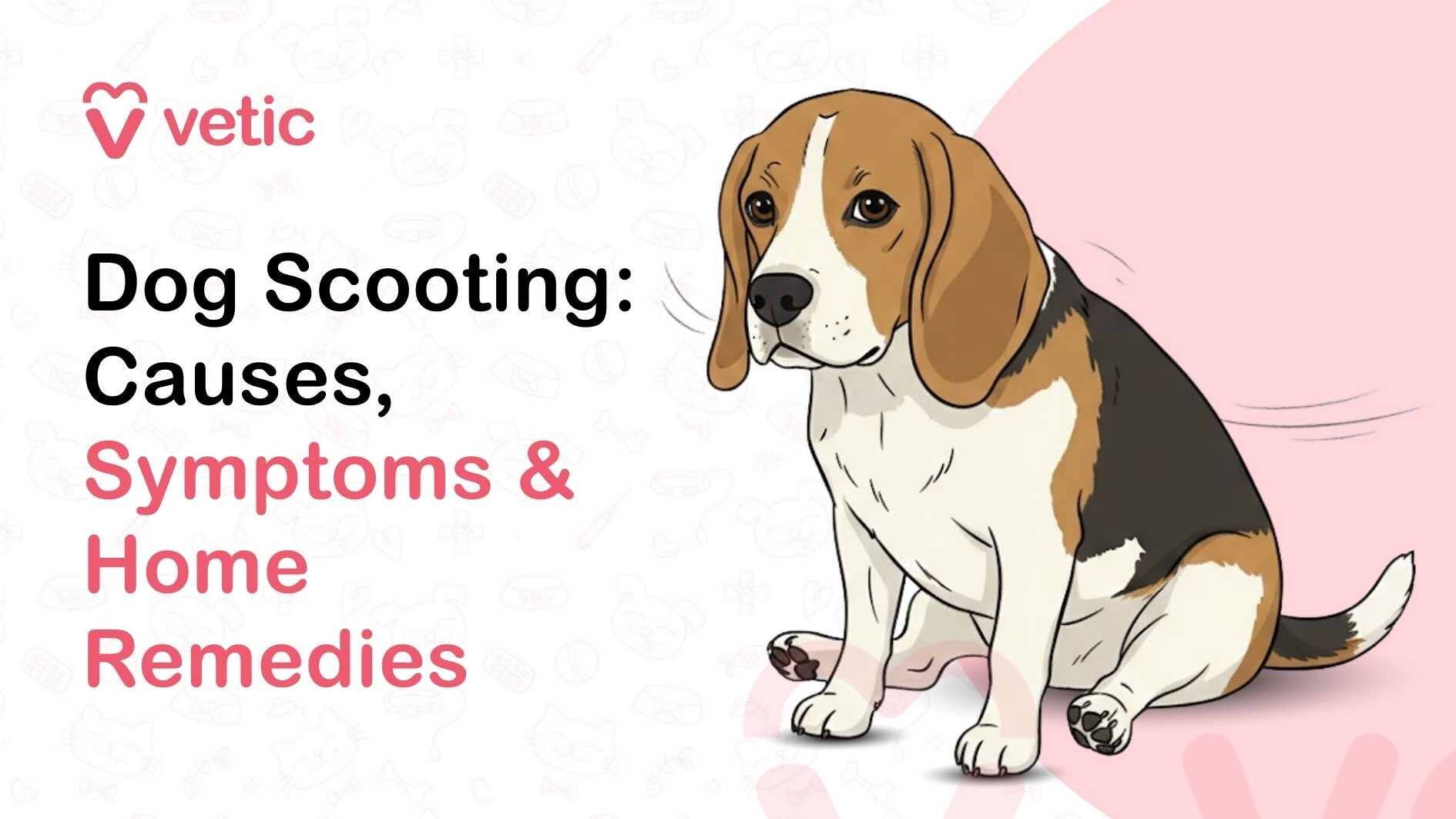
If you’ve ever seen your dog suddenly drop their rear to the floor and drag themselves across the carpet, you’ve witnessed your dog scooting. While it can look funny (and maybe a little embarrassing if you have guests over), scooting is usually a sign that something is irritating your dog’s bottom.
Occasional scooting isn’t always a sign of an emergency in pets. However, frequent or intense dragging of the rear end can indicate anal gland problems, parasites, allergies, infections, or other health concerns in dogs. Understanding why dogs scoot, what symptoms to watch for, and when home care is appropriate versus when veterinary help is needed can prevent pain, infection, and complications.
What Dog Scooting Means: Why Dogs Rub Their Bottom on the Floor
Dog scooting happens when a dog sits down and drags their hind end along the floor to relieve discomfort. The behaviour is typically a response to itching, irritation, pain, or pressure around the anus.
Dogs don’t have hands to scratch that hard-to-reach area, so they use the floor instead. The carpet, grass, or pavement becomes their “scratch pad.”
Scooting is not a disease by itself. It is a symptom that something in the anal, digestive, skin, or parasite-related system is bothering your dog.
Some dogs scoot briefly and stop. Others scoot frequently, lick excessively, or seem uncomfortable when sitting.
Common Reasons Dogs Scoot or Drag Their Butt on the Floor
Full or Irritated Anal Glands in Dogs
The most common cause of scooting in dogs is a problem with the anal glands (also called anal sacs). Dogs have two small glands located just inside the anus. These glands produce a strong-smelling fluid that is normally expressed during bowel movements.
When they do not empty properly, they can become:
- Overfilled
- Impacted
- Inflamed
- Infected
This creates pressure and discomfort, leading your dog to rub its bottom on the floor to relieve the feeling. If left untreated, impacted glands can become infected or form abscesses, which are painful and may rupture.
Small-breed, overweight, and soft-stool dogs are more prone to anal gland issues.
Suggested Read: What Causes Rashes in Dogs, and How Are They Diagnosed and Treated?
Worms or Parasites Causing Itching in Dogs
Intestinal parasites, especially tapeworms, can irritate the rectal area in dogs. This can trigger dragging, rubbing, or an itchy bum in dogs. Signs include:
- Scooting
- Licking the rear
- Small rice-like segments near the anus or in stools
Other signs of parasites can include weight loss, diarrhoea, or a dull coat. Regular deworming and faecal exams are important for prevention.
Allergies Leading to an Itchy Bum in Dogs
Food allergies or environmental allergies can cause inflammation and itchiness around the bum in dogs. Dogs with allergies may show:
- Scooting
- Excessive licking of paws or rear
- Red, inflamed skin
- Ear infections
Chronic allergies can also contribute to recurring anal gland issues in dogs by affecting stool quality and gland emptying.
Skin Infections or Irritation Around the Rear in Dogs
Bacterial or yeast infections can develop in warm, moist skin folds around the anus, especially in dogs with:
- Long hair
- Obesity
- Chronic moisture or diarrhoea
Sometimes, diarrhoea can leave residue that irritates the skin, prompting temporary scooting. These infections cause redness, odour, pain, and itching, which can lead to scooting in dogs.
Less Common Causes of Canine Scooting Pet Parents Should Know
While anal glands and parasites are common causes, dog scooting can also be linked to:
- Rectal prolapse (a portion of the rectum protrudes outside the anus)
- Rectal polyps or masses
- Anal fissures or tears
- Constipation or painful bowel movements
- Foreign material stuck in fur or near the anus
- Trauma to the tail or pelvis
- Pain from arthritis affects posture during defecation
These conditions are far less common but can be serious.
Persistent canine scooting combined with unusual swelling, bleeding, or pain warrants prompt veterinary evaluation at the nearest dog hospital.
Signs That Dog Scooting Is Linked to Anal Gland Problems
Anal gland issues are the leading cause of scooting. Thus, it’s helpful to recognise the specific signs that point to this problem.
Behavioural Signs Like Licking or Chasing the Tail
Dogs with anal gland discomfort may:
- Lick or chew excessively on their rear end
- Suddenly turn and look at or chase their tail
- Whine when sitting or act restless
- Sit uncomfortably or frequently shift positions
- Avoid sitting altogether
These behaviours often appear alongside canine scooting.
Physical Signs Such as Swelling, Redness, or Discharge
Visible signs around the anus may include:
- Red or swollen tissue
- Foul-smelling discharge
- Moist or matted fur
- Sensitivity when touched
These signs suggest impaction or infection of the gland in dogs.
Warning Signs of More Serious Health Issues
Seek urgent care if you notice:
- Bleeding
- Open sores
- Fever
- Lethargy
- Sudden severe pain when sitting or defecating
These may indicate the formation of abscesses or deeper infections in dogs.
Other Symptoms That May Appear With a Dog Rubbing Behind on the Floor
Dog scooting often does not occur alone. Watch for:
- Changes in stool consistency
- Straining during bowel movements
- Excessive flatulence
- Strong fishy odour
- Sudden behaviour changes
- Reduced appetite
Pay attention to patterns. For example, if a dog scoots alongside chronic ear itching, allergies may be the root cause. If it follows diarrhoea, irritation from loose stool may be responsible.
What to Do If Your Dog Keeps Scooting at Home
If your dog occasionally rubs its butt on the floor, monitor them closely. Gently check the area for visible irritation, faecal matter, or foreign material. Trim any matted fur carefully if necessary.
However, if scooting:
- Happens repeatedly
- Continues for more than a day or two
- Is accompanied by licking, swelling, or discharge
It’s time to contact the best pet clinic near you.
Home Remedies for Dog Scooting and When They May Help
Home remedies for scooting in dogs only help mild cases. They should never replace veterinary care for persistent scooting.
Possible supportive measures include:
- Increasing dietary fiber (with veterinary guidance)
- Ensuring proper hydration
- Keeping the rear area clean and dry
- Trimming excess hair around the anus
These steps may prevent recurrence. But it will not treat infections or impacted glands in dogs.
Treatments Commonly Used for Dog Scooting Based on the Cause
Treatment of canine scooting depends entirely on the cause of the irritation.
Treating Full or Impacted Anal Glands in Dogs
Veterinary treatment may include:
- Manual gland expression
- Anti-inflammatory medications
- Antibiotics if infection is present
Avoid attempting to express anal glands at home unless you have been trained by a veterinary professional. Improper expression can cause injury or infection.
Managing Infections, Abscesses, or Inflammation in Dogs
Infections may require:
- Oral antibiotics
- Pain relief medications
- Warm compresses
In severe or chronic cases, surgical drainage or removal of the anal glands may be considered. Early treatment prevents rupture and complications.
Suggested Read: Anal Glands in Dogs: The Signs, Treatment and Prevention of Anal Sac Disease in Dogs
Addressing Allergies and Food Sensitivities in Dogs
If allergies are suspected, treatment may involve:
- Diet changes
- Allergy management plans
- Anti-itch medications
- Medicated shampoos
- Immunotherapy
Reducing inflammation often stops scooting.
Treating Worms or Parasites in Dogs
Parasite-related dog scooting resolves with:
- Appropriate deworming medications
- Environmental hygiene
- Follow-up testing
Regular parasite prevention helps prevent the dog from dragging its butt on the floor.
Should Dogs Keep Scooting After Anal Glands Are Expressed?
Most dogs experience relief within 24 to 48 hours after proper anal gland expression. Occasional mild dog scooting may occur briefly after expression due to temporary sensitivity. However, continued scooting after treatment is not normal and may indicate:
- Infection
- Incorrect diagnosis
- Incomplete gland emptying
- Underlying allergies or skin disease
Persistent symptoms should always be reassessed to identify the underlying reasons for dog scooting.
When Dog Scooting Requires a Veterinary Visit
Seek veterinary care if:
- Scooting happens daily or frequently
- There is redness, swelling, or discharge
- Your dog shows pain or lethargy
- Scooting does not improve with basic care
Early treatment prevents serious complications like abscesses.
How to Prevent Dog Scooting and Recurring Bottom Irritation
Prevention strategies include:
- Feeding a balanced, fiber-appropriate diet
- Maintaining a healthy weight
- Regular parasite prevention
- Routine veterinary check-ups
- Grooming around the rear
Dogs with chronic anal gland issues may require long-term management.
Final Takeaway: About Dog Scooting
Dog scooting is more than just an embarrassing habit. It is a clear indication of discomfort. While mild cases may resolve with supportive care, persistent scooting requires veterinary evaluation.
Early attention keeps your dog comfortable, prevents infections, and protects long-term health.
Frequently Asked Questions: About Dog Scooting
Why is my dog dragging their butt on the floor?
The most common reason is discomfort from full or irritated anal glands. Other causes include parasites, allergies, skin infections, and diarrhoea-related irritation.
Can dog scooting go away on its own?
Occasional mild scooting may resolve if caused by temporary irritation. However, persistent scooting usually requires treatment to address the underlying issue.
Are home remedies for dog scooting safe?
Some supportive measures, such as increasing fiber intake or gently cleaning the area, may help with mild cases. But never attempt anal gland expression at home without training.
How often should anal glands be checked?
Most dogs do not need routine manual expression. Glands typically empty naturally during bowel movements. Dogs with chronic problems may require more frequent checks, as advised by a veterinarian.
Can diet changes help stop dog scooting?
Yes, in some cases. Improving stool quality with appropriate fiber or managing food allergies can reduce anal gland problems and irritation.
References
Brooks, W. (2023). Emptying a Dog or Cat’s Anal Sacs. Vin.com. https://www.vin.com/apputil/content/defaultadv1.aspx?pId=17256&catId=93574&id=4951501
Fries, W. C. (n.d.). Why Is My Dog Dragging Its Bottom? WebMD. https://www.webmd.com/pets/dogs/dog-dragging-bottom
MSD Manual. (n.d.). Disorders of the Rectum and Anus in Dogs – Dog Owners. Veterinary Manual. https://www.msdvetmanual.com/dog-owners/digestive-disorders-of-dogs/disorders-of-the-rectum-and-anus-in-dogs
Nelson, J. (n.d.). Why Is My Dog Scooting? Learn Why Dogs Scoot Bottoms Across Floors. American Kennel Club. https://www.akc.org/expert-advice/health/why-is-my-dog-scooting/
Purina. (2025). Why Do Dogs Scoot? Their Behaviour Explained. Purina India. https://www.purina.in/care-and-advice/dog/health/why-dogs-scoot