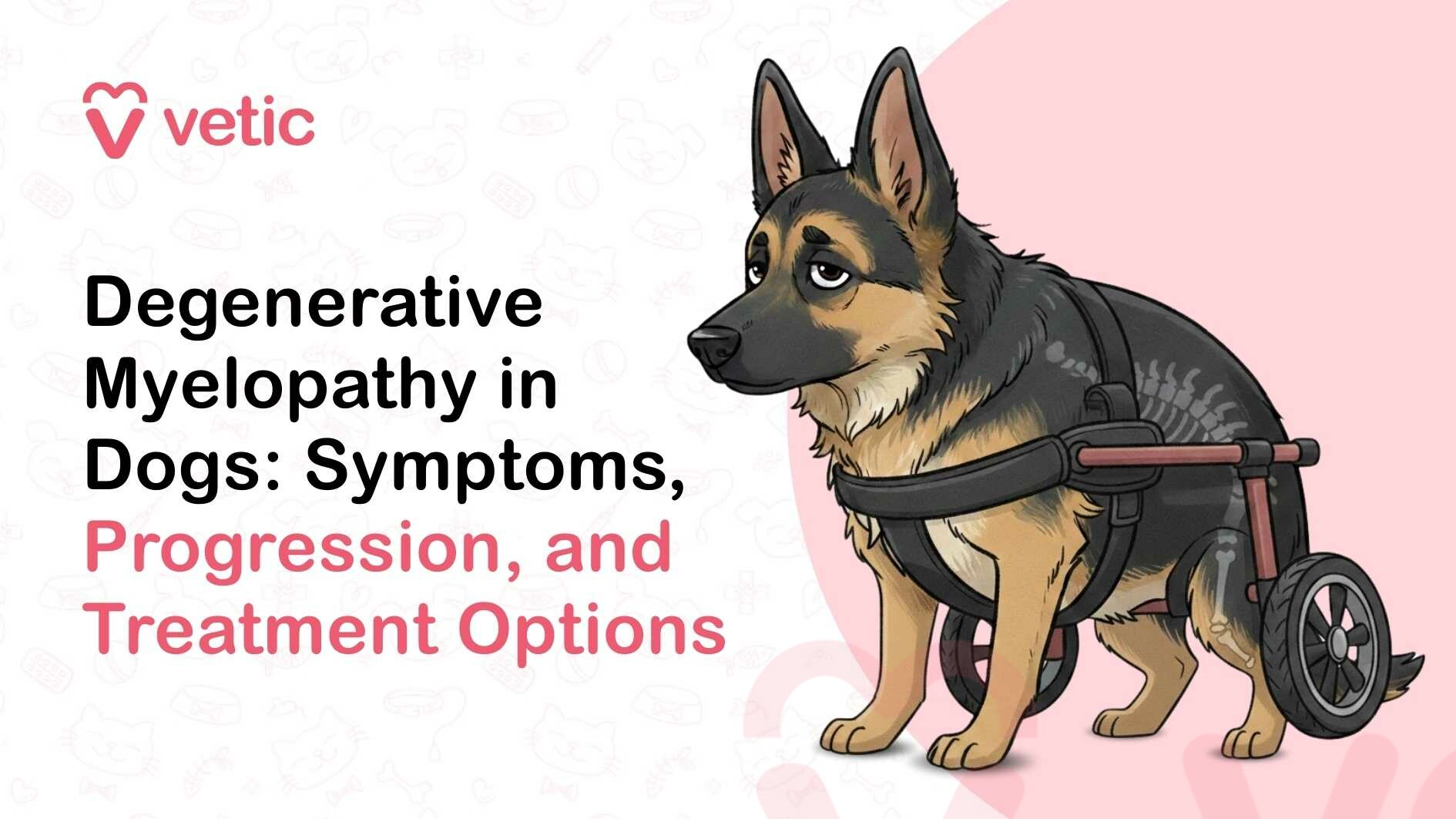
Degenerative myelopathy in dogs (DM) is a progressive neurological disease that affects the spinal cord. It leads to weakness, loss of coordination, and eventual paralysis of the hind limbs. While it is not painful in most cases, it significantly affects mobility and quality of life over time.
Often compared to amyotrophic lateral sclerosis (ALS) in humans, canine degenerative myelopathy develops slowly and worsens gradually. Although there is no cure, early recognition and proper supportive care can help dogs remain comfortable and active for as long as possible.
What Is Degenerative Myelopathy in Dogs?
Degenerative myelopathy is a disease of the spinal cord in which nerve fibers slowly deteriorate. This damage interferes with the signals that travel between the brain and the limbs. As the disease progresses, dogs lose the ability to coordinate their back legs and eventually become unable to walk on all fours.
The condition mainly affects the thoracic portion of the spinal cord.
Is Degenerative Myelopathy Common in Dogs?
DM is not extremely common, but it is well recognized in certain breeds like German Shepherds, Labradors, and Boxers. It usually appears in middle-aged to older dogs and is more frequently diagnosed today due to better awareness and genetic testing.
Stages of Degenerative Myelopathy in Dogs
Degenerative myelopathy progresses in predictable stages:
- Early stage: Mild hind-limb weakness and dragging of paws
- Middle stage: Loss of coordination, knuckling, difficulty standing
- Late stage: Paralysis of hind limbs
- End stage: Loss of bladder and bowel control, and weakness in the front limbs
Suggested Read: Managing Joint Health in Dogs
Is Degenerative Myelopathy the Same as IVDD or Arthritis?
No. Degenerative myelopathy is not the same as IVDD or arthritis. While symptoms may appear similar, these conditions are different.
IVDD (intervertebral disc disease) involves disc herniation and is often painful.
Arthritis affects joints and causes stiffness and discomfort. Degenerative myelopathy affects the spinal cord and is usually not painful.
Distinguishing between them is important because their treatments differ.
What Causes Degenerative Myelopathy in Dogs?
DM is linked to a genetic mutation in the SOD1 gene, which affects nerve cell function. This mutation leads to the gradual degeneration of spinal cord tissue. Environmental and immune factors may influence how quickly the disease progresses, but genetics plays the primary role.
Understanding what causes degenerative myelopathy starts with proper tests at our dog diagnostics.
Dog Breeds at Higher Risk of Degenerative Myelopathy
Breeds with higher risk include:
- German Shepherd
- Pembroke Welsh Corgi
- Boxer
- Rhodesian Ridgeback
- Chesapeake Bay Retriever
- Bernese Mountain Dog
- Pug
Mixed-breed dogs can also develop DM.
Suggested Read: 20 Family & Kid-Friendly Dog Breeds in India
At What Age Does Degenerative Myelopathy Usually Start?
Most dogs show signs between the ages of 8 and 14 years. Rarely, younger dogs may be affected if genetically predisposed.
Early Signs of Degenerative Myelopathy in Dogs
Early signs and symptoms of degenerative myelopathy in dogs include:
- Dragging of hind paws
- Worn nails
- Mild wobbling
- Difficulty rising
- Occasional knuckling
These signs are often mistaken for arthritis.
For assessment of early signs, schedule a dog consultation.
Progressive Symptoms of Degenerative Myelopathy
As the disease advances:
- Hind legs cross while walking
- Dogs stumble or fall
- Muscle loss develops
- Balance worsens
- Tail movement weakens
Advanced-Stage Symptoms of Degenerative Myelopathy
In late stages:
- Complete hind-limb paralysis
- Loss of bladder and bowel control
- Weakness spreads to the front limbs
- Difficulty breathing (rare but severe cases)
How Is Degenerative Myelopathy Diagnosed in Dogs?
Diagnosis is based on:
- Neurological examination
- Genetic testing (SOD1 mutation)
- Imaging (MRI) to rule out other diseases
- Exclusion of disc disease or tumors
There is no single definitive test, so diagnosis is usually presumptive.
Suggested Read: Hip Dysplasia in Dogs
Treatment Options for Degenerative Myelopathy in Dogs
There is currently no cure for degenerative myelopathy in dogs. Treatment focuses on slowing progression and helping dogs stay mobile and comfortable for as long as possible.
Treatment may include:
- Physical therapy to maintain muscle strength and coordination
- Controlled exercise, such as short walks or swimming
- Assistive devices like rear-support harnesses or wheelchairs
- Managing infections and pressure sores that can develop as movement declines
Supportive Care for Dogs With Degenerative Myelopathy
Supportive care is essential for maintaining quality of life as the disease progresses. Simple home adjustments can make daily movement safer and easier.
Supportive care includes:
- Non-slip flooring to reduce slipping and falls
- Harnesses or slings to assist with standing and walking
- Frequent position changes to prevent stiffness and pressure sores
- Skin care to avoid wounds and infections
- Bladder management to reduce discomfort and urinary infections
Suggested Read: Joint Supplements for Dogs
Nutrition and Supplements for Degenerative Myelopathy
Nutritional support may help protect nerve and muscle health and slow functional decline when used alongside physical care.
Some veterinarians may recommend:
- Antioxidants to reduce oxidative stress
- Omega-3 fatty acids to support nerve function
- Vitamin B complex for nerve metabolism
- Balanced protein intake to maintain muscle mass
Supplements do not cure DM but may help support overall strength and mobility.
How Fast Does Degenerative Myelopathy Progress?
The rate of progression varies between dogs. In most cases, degenerative myelopathy advances gradually over 6 months to 3 years from the first noticeable signs to severe mobility loss. Some dogs decline faster, while others progress more slowly with consistent care and physical therapy.
Life Expectancy of Dogs With Degenerative Myelopathy
Life expectancy depends on care and progression speed. Many dogs live 1–3 years after diagnosis with good supportive care.
When to Consider Quality of Life Decisions
Quality of life should be evaluated when:
- Mobility is severely limited
- Pain or infections develop
- Incontinence becomes unmanageable
- The dog no longer enjoys daily activities
Decisions should focus on comfort, dignity, and the dog’s happiness.
Suggested Read: Why is your dog not eating
FAQs: About Degenerative Myelopathy in Dogs
What are the first signs of degenerative myelopathy in dogs?
Early signs of degenerative myelopathy include weakness in the hind legs, dragging of the back paws, scuffing or wearing down of the nails, and a mild wobble when walking. Dogs may also stumble or have trouble standing up after resting.
Is degenerative myelopathy painful?
Degenerative myelopathy itself is usually not painful because it affects nerve pathways rather than joints. However, secondary problems such as muscle strain, joint stress, pressure sores, or urinary infections can cause discomfort if the disease progresses.
How long can a dog live with degenerative myelopathy?
Most dogs live between one and three years after diagnosis. Survival time depends on how quickly the disease progresses and how well supportive care, physical therapy, and mobility assistance are provided throughout the illness.
Can physical therapy slow DM progression?
Physical therapy can help maintain muscle strength, balance, and coordination for longer periods. While it does not stop the disease, regular controlled exercise and rehabilitation can slow functional decline and improve a dog’s ability to move independently.
Is degenerative myelopathy the same as arthritis?
No, degenerative myelopathy and arthritis are different conditions. Arthritis affects the joints and causes pain and stiffness, while degenerative myelopathy affects the spinal cord and leads to weakness, loss of coordination, and eventual paralysis without joint pain.
When should I consider a wheelchair for my dog?
A wheelchair can be considered when hind-limb weakness makes walking difficult, but the dog remains mentally alert and enjoys daily activities. Using a wheelchair can improve mobility, prevent falls, and help maintain quality of life.
References:
Coates, J. R., & Wininger, F. A. (2010). Canine degenerative myelopathy. Veterinary Clinics of North America: Small Animal Practice, 40(5), 929–950. https://doi.org/10.1016/j.cvsm.2010.05.001
Merck Veterinary Manual. (2024). Degenerative myelopathy in dogs. https://www.merckvetmanual.com
Awano, T., Johnson, G. S., Wade, C. M., Katz, M. L., Johnson, G. C., Taylor, J. F., Perloski, M., Biagi, T., Baranowska, I., Long, S., March, P. A., Olby, N. J., Shelton, G. D., Khan, S., O’Brien, D. P., Lindblad-Toh, K., & Coates, J. R. (2009). Genome-wide association analysis reveals a SOD1 mutation in canine degenerative myelopathy that resembles amyotrophic lateral sclerosis. Proceedings of the National Academy of Sciences of the United States of America, 106(8), 2794–2799. https://doi.org/10.1073/pnas.0812297106