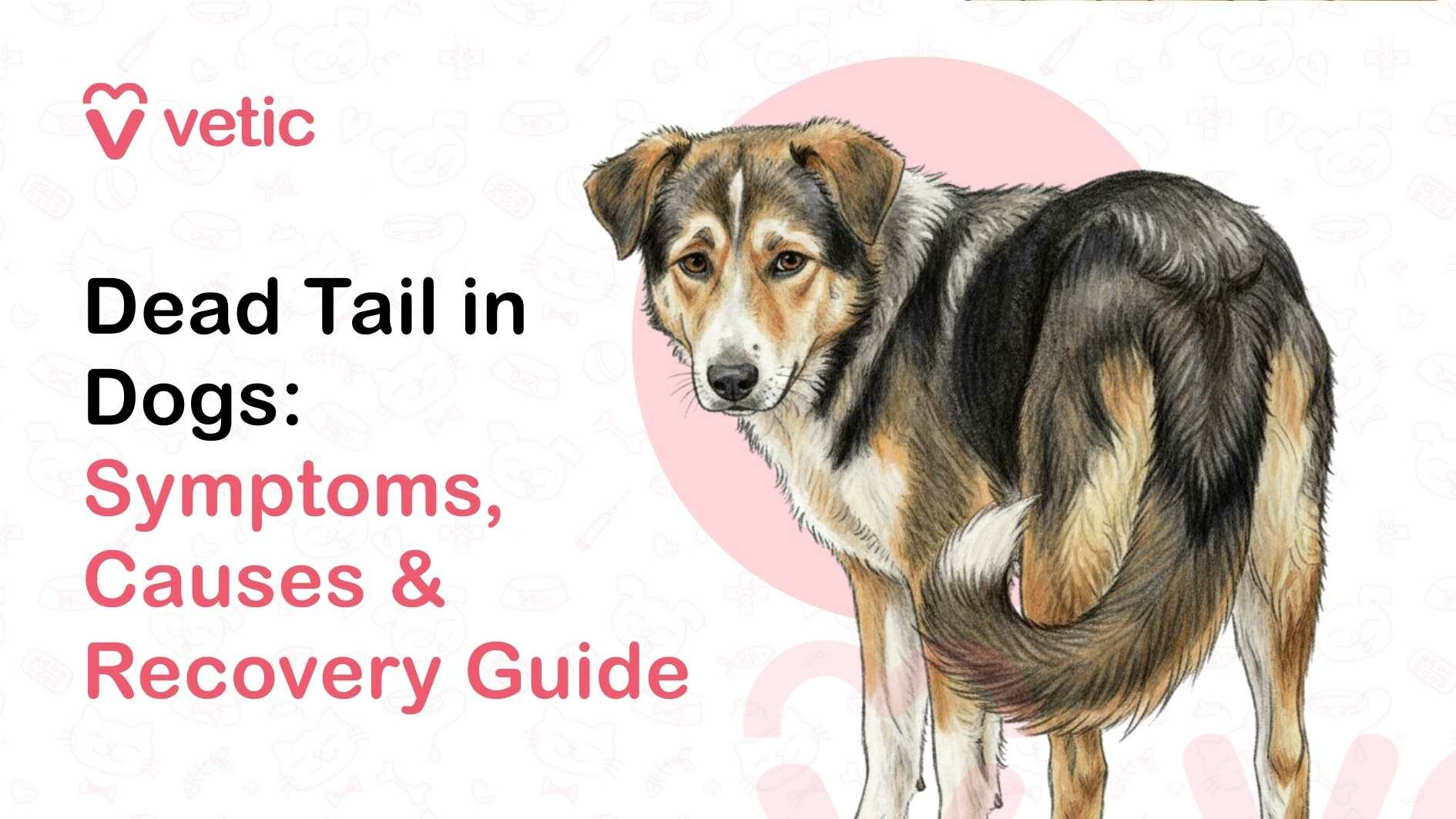
Dead tail syndrome is a sudden, painful condition that can alarm dog parents, especially when a normally happy, wagging tail becomes limp and motionless overnight. It is also known as limber tail, cold tail, broken wag, or rudder tail. This condition is most often seen in active and working dogs. But it can affect any breed under the right circumstances.
The good news is that dead tail syndrome is usually temporary and treatable with proper care. Understanding why it happens, how to recognise the signs of an emergency early, and what to do during recovery can help your dog heal faster and prevent future episodes.
What Is Dead Tail Syndrome in Dogs and Why Does It Happen Suddenly
Dead tail syndrome is an acute muscle and nerve injury affecting the muscles at the base of a dog’s tail. These muscles control tail movement and are heavily involved in balance, swimming, and communication.
The condition often appears suddenly. This is because it is typically triggered by overuse, strain, or cold exposure, leading to inflammation of the tail muscles. Once inflamed, these muscles become painful and temporarily unable to function normally, causing the tail to droop or hang limply.
Importantly, dead tail syndrome is not caused by a broken bone, despite one of its common nicknames. The tail bones are usually intact; the issue lies in the surrounding soft tissues.
Common Causes of Dead Tail Syndrome in Dogs
Dead tail in dogs is usually linked to physical stress, overexertion, or environmental factors.
Overexertion After Intense Exercise or Hunting
One of the most common triggers is sudden, intense physical activity, especially in dogs that are not conditioned for it. Examples include:
- Long hunting sessions
- Extended fetch sessions
- Agility training
- Multi-hour hikes
- First vigorous play after a sedentary period
- Excessive tail wagging during excitement or training
Working and sporting breeds such as retrievers, pointers, and setters are particularly vulnerable. This is because they rely heavily on tail movement for balance, communication, and signalling. During field work, a dog may wag continuously for hours, especially when tracking scent or flushing game.
Swimming in Cold Water or Sudden Temperature Exposure
Swimming, especially in cold water, is a major risk factor. The tail acts like a rudder during swimming, helping with steering and balance. Its prolonged use can strain the tail muscles. Cold temperatures can cause:
- Muscle stiffness
- Reduced blood flow
- Increased risk of strain
Dogs that swim for extended periods without breaks or that swim early in the season before being physically conditioned are at higher risk. Water-resistant breeds such as Labrador Retrievers often push themselves hard in water, which increases repetitive tail use.
Additional contributing factors include:
- Wet fur combined with wind exposure after swimming
- Rapid temperature changes (warm car to cold water)
- Lack of proper drying and warming afterwards
Cold muscles are less flexible and more vulnerable to injury, which is why the dead tail is sometimes referred to as “cold tail.”
Suggested Read: Summer Dog Grooming at Home – Expert Tips
Poor Physical Conditioning or Sudden Activity Increase
Dogs that are not regularly active but suddenly participate in vigorous exercise are at higher risk.
For example:
- A family pet that goes on a long weekend camping trip
- A dog that hasn’t exercised much during winter
- A dog returning to field work after months off
- A newly adopted dog participating in high-energy play
Other contributing factors include:
- Obesity, which adds strain to muscles and joints
- Ageing muscles that recover more slowly
Just like humans, dogs need gradual conditioning to avoid muscle injury.
Crate Transport and Restricted Tail Movement
Extended time in a crate, particularly during long car trips, may contribute to dead tail syndrome. Restricted movement combined with stress and excitement afterwards can lead to:
- Muscle stiffness
- Strain once released
- Sudden over-wagging
This is why some hunting dogs develop symptoms after travelling to a field location.
Recognising the Symptoms of Dead Tail Syndrome in Dogs
Limp, Drooping, or Motionless Tail
The hallmark sign is a tail that:
- Hangs straight down or slightly away from the body
- Appears limp or “dead”
- Does not wag normally
Often, the tail may stick out stiffly for a few centimetres at the base and then droop completely.
Pain or Sensitivity Near the Base of the Tail
Dogs with dead tail syndrome often show pain when:
- The base of the tail is touched
- Sitting or lying down
- Trying to wag
They may flinch, whine, or turn to look when the tail area is handled.
Difficulty Sitting or Wagging the Tail
Because tail muscles are connected to the lower spine and pelvis, affected dogs may:
- Struggle to sit comfortably
- Avoid certain positions
- Appear stiff in the hindquarters
- Have trouble defecating comfortably
- Show stiffness when standing
Behavioural Changes Linked to Discomfort
Pain can cause subtle but noticeable behaviour changes, including:
- Reduced activity
- Irritability
- Decreased appetite
- Reluctance to play or interact
- Changes in posture or gait
An otherwise energetic dog may seem unusually subdued.
Suggested Read: Depressed Dog: Signs, Symptoms, Causes, and How to Treat Canine Depression
How Veterinarians Diagnose Dead Tail Syndrome in Dogs
A veterinarian typically diagnoses dead tail syndrome through:
- A detailed history (recent swimming, exercise, or travel)
- Physical examination of the tail and hindquarters
Your vet may gently palpate the tail base to assess pain and muscle tone.
In most cases, imaging such as X-rays is not required, unless there is concern about fractures, spinal injury, or other conditions that can mimic dead tail syndrome (such as anal gland disease or nerve damage).
Treatment Options for Dead Tail Syndrome in Dogs
Rest and Activity Restriction for Tail Recovery
Rest is the most important part of treatment. Your dog should:
- Avoid vigorous exercise
- Avoid swimming
- Avoid rough play
- Have limited tail-wagging stimulation (if possible)
Leash walks for bathroom breaks are normal, but avoid high-energy activities.
Most dogs need several days to a week of reduced activity.
Pain Relief and Anti-Inflammatory Medications
Veterinarians may prescribe:
- Non-steroidal anti-inflammatory drugs (NSAIDs)
- Pain relief medications
- Anti-inflammatory therapy
These help reduce inflammation and make your dog more comfortable. Never give human pain medications without veterinary guidance. These can be toxic to dogs.
Home Care Tips to Support Healing
At home, you can help by:
- Keeping your dog warm and dry
- Providing soft bedding
- Avoiding cold exposure
- Encouraging calm, low-impact activity
Some dogs benefit from gentle warmth applied near (not directly on) the tail base, if recommended by a pet doctor.
Recovery Time for Dead Tail Syndrome and What to Expect
Most dogs begin to improve within 3 to 7 days. Full recovery typically occurs within 1 to 2 weeks. During recovery:
- Tail movement gradually returns
- Pain decreases steadily
- Normal posture resumes
In mild cases, improvement may be seen within just a few days. Severe cases may take slightly longer, but still have an excellent prognosis.
If symptoms last longer than 1-2 weeks, worsen, or include neurological signs (such as hindlimb weakness), a veterinary pet health check is necessary.
How to Prevent Dead Tail Syndrome in Active and Working Dogs
Prevention focuses on conditioning and awareness:
- Gradually increase activity levels
- Warm up before intense exercise
- Limit swimming time, especially in cold water
- Dry your dog thoroughly after swimming
- Provide breaks during long activity sessions
For working and sporting dogs, proper conditioning before peak seasons is essential.
When to See a Vet for a Dead Tail in Dogs
You should contact your veterinarian if:
- Your dog shows significant pain
- Symptoms do not improve within a few days
- There is visible swelling, discharge, or bruising
- The tail appears broken or crooked
- Your dog cannot urinate or defecate normally
- Your dog cannot move its hind legs normally
These signs may indicate a different or more serious condition, such as a tail dislocation, nerve damage, or spinal cord trauma.
Final Takeaway: About Dead Tail in Dogs
Dead tail syndrome may look dramatic. But it is a temporary muscle injury with an excellent recovery outlook when managed properly. Early recognition, rest, and appropriate veterinary care are key to relieving pain and restoring normal tail function. With preventive steps and gradual conditioning, most dogs can return to their active lifestyles without long-term issues.
FAQs: About Dead Tail Syndrome in Dogs
How long does dead tail syndrome last in dogs?
Most cases resolve within 3 to 7 days. Mild cases may improve in as little as 48 hours, while more severe muscle strain can take up to two weeks.
Can dead tail syndrome come back?
Yes. Dogs that participate in intense activity, especially hunting or swimming in cold water, may experience recurrence if preventative measures aren’t taken. Proper conditioning significantly reduces recurrence risk.
Is dead tail syndrome painful for dogs?
Yes. It is typically painful, especially at the base of the tail. The level of discomfort varies depending on the severity of the muscle strain. Pain relief prescribed by a veterinarian can greatly improve comfort during recovery.
Can dogs swim again after dead tail syndrome?
Yes, but swimming should be reintroduced gradually, and cold-water exposure should be limited. If your dog has had multiple episodes, discuss preventive strategies with your veterinarian.
Is dead tail syndrome an emergency?
It is not usually an emergency. But a veterinary evaluation is recommended to confirm the diagnosis and rule out other causes. This is because fractures and spinal injuries can appear similar.
References
American Kennel Club. (n.d.). Sporting Group. https://www.akc.org/dog-breeds/sporting/
Gibeault, S. (2023, July 31). Swimmer’s Tail in Dogs: What Is It and How Do You Treat It? American Kennel Club. https://www.akc.org/expert-advice/health/swimmers-tail-what-to-know/
Johnstone, G. (n.d.). Study Finds That Dogs Use Their Tails Mainly to Communicate. American Kennel Club. https://www.akc.org/expert-advice/news/new-study-what-do-dogs-use-tail-for/
Purina. (2026). Labrador Retriever Dog Breed Information. Purina.in. https://www.purina.in/find-a-pet/dog/breed-library/labrador-retriever Riley, E. (2026). Swimmer’s Tail in Dogs. Vin.com. https://veterinarypartner.vin.com/default.aspx?pid=19239&catId=254100&id=9802889