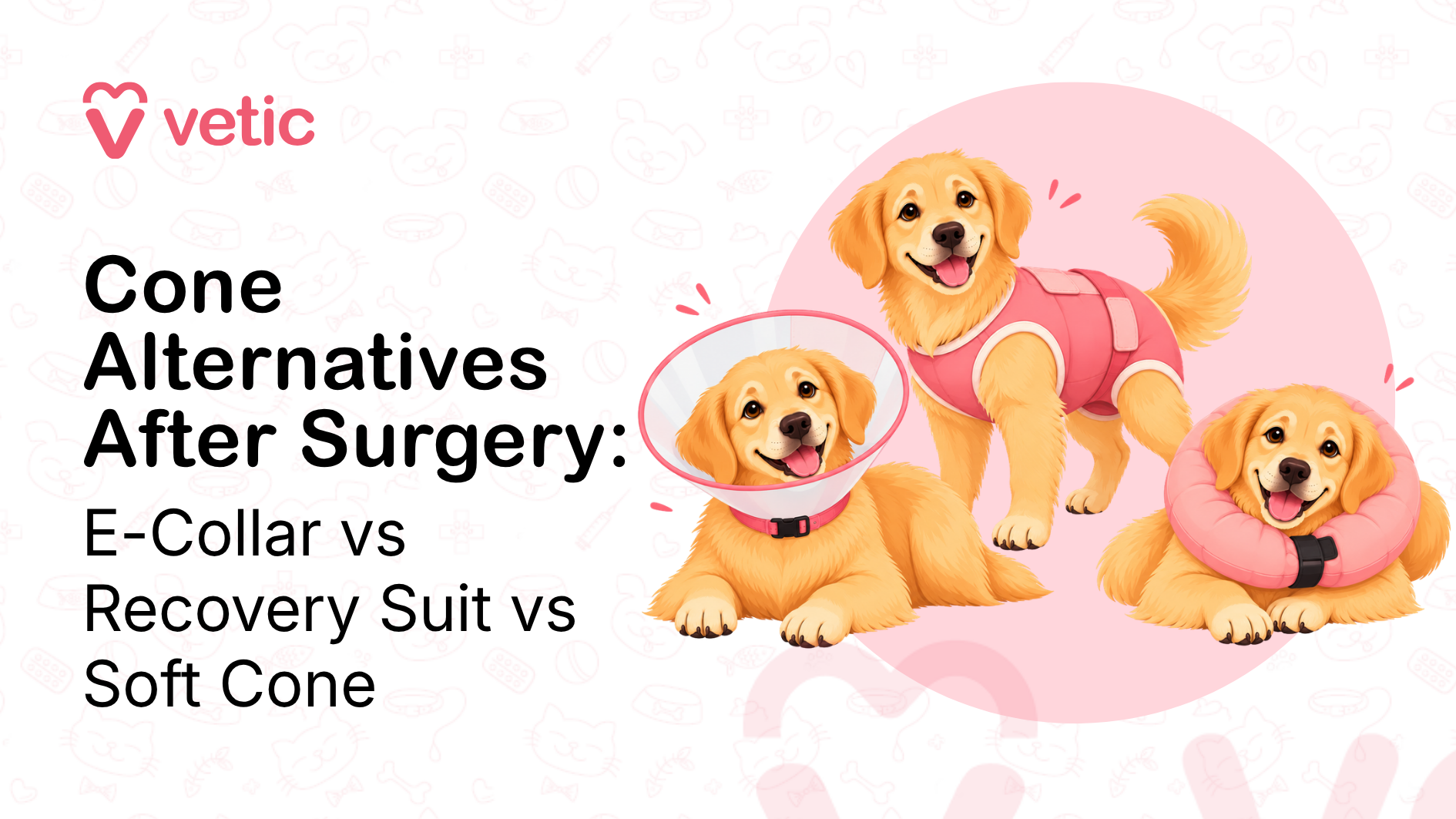
Watching your dog bump into doorways in a cone or struggle to eat and drink comfortably can be heartbreaking, especially when they’re already recovering from surgery. The good news is that, for some dogs, alternatives such as recovery suits or soft cones may offer a more comfortable fit while protecting the healing wound. The right choice depends on where the wound is, your dog’s behavior, and your vet’s advice.
This guide compares rigid e-collars, recovery suits and soft cones to help you choose a suitable option with your vet.
Which Option Is Best for Your Dog?
The best choice depends on the wound location, your dog’s temperament and your vet’s advice.
When Should You Choose a Rigid E-Collar for Dogs?
A rigid e-collar is often the most reliable option for wounds on areas such as the head, face or eyes, and may be needed for some leg or paw wounds where other options do not prevent access. A rigid e-collar may be particularly useful for dogs that persistently try to lick, chew or scratch their wound.
When Should You Choose a Recovery Suit for Dogs?
A recovery suit may suit wounds on the chest, belly or flank, such as spay incisions.
Can an Old T-Shirt or Cloth Wrap Work After Spay Surgery?
In some cases, a clean, well-fitted T-shirt may help cover a spay incision, but only if your vet approves it as a suitable alternative to a recovery suit or cone. Ordinary clothing can shift, expose the incision or trap moisture, so it may not provide reliable protection for every dog.
If your vet approves a fabric covering:
- Make sure it covers the incision without pressing on the stitches or restricting movement or breathing.
- Keep it clean and completely dry, and change it promptly if it becomes wet or soiled.
- Check the incision regularly for redness, swelling, discharge or opening, following your vet’s instructions.
- Ensure your dog cannot lick or chew the wound through the fabric or around its edges.
Do not use a tight cloth wrap or improvise a bandage over the incision. If the covering shifts or your dog can still reach the wound, use the protection recommended by your vet instead.
For spay surgery, ask your veterinary team whether a purpose-made recovery suit or a cone is the safest option for your dog.
When Should You Choose a Soft Cone?
A soft or inflatable cone may suit calm dogs who cannot easily reach the wound. Some dogs can still bend around them.
Why Is a Dog Cone Used After Surgery?
A correctly fitted dog cone helps prevent licking, chewing and scratching, which can disrupt healing and increase the risk of wound complications. Shenoda and colleagues, writing in the journal Animals, describe these collars as a common way to prevent self-trauma.
How Do E-Collars, Recovery Suits, and Soft Cones Compare?
Each option has strengths and limits.
Which Option Provides the Most Reliable Wound Protection?
Rigid e-collars often provide the most reliable protection when they are correctly fitted and appropriately sized for the wound location.
Which Is Most Comfortable?
Comfort varies by dog and by the design and fit of the protection. In a 2020 survey of 434 pet parents, Shenoda and colleagues found that 77.4% reported a poorer quality of life while their pet wore an Elizabethan collar. Around 60% reported difficulty drinking, and approximately one in four reported a collar-related injury, most commonly itching or irritation. These were owner-reported findings from a survey, not a controlled comparison of recovery options.
To help your dog eat and drink comfortably, use a bowl that is easy to reach and provide enough space to manoeuvre with the collar on. In hot weather, check that your dog is drinking normally. If the cone prevents drinking, contact your vet promptly for advice. Only remove it temporarily for eating or drinking if your vet says this is safe, and supervise your dog throughout.
Which Is Easiest for Daily Routines?
Some dogs may find recovery suits less disruptive to eating, drinking and sleeping, depending on the design and fit.
Which Protection Works Best by Incision Location?
| Wound location | Option to discuss with your vet |
| Head, face, ears or eyes | Rigid e-collar |
| Legs or paws | Rigid e-collar, if needed to prevent access |
| Chest, belly or flank | Recovery suit or rigid e-collar, depending on fit and whether your dog can reach the wound |
The best option depends on the exact incision, your dog’s behaviour and whether the device reliably prevents access to the wound.
How Long Should a Dog Wear a Cone?
Keep your dog’s cone or vet-approved alternative on for as long as your vet recommends. For many routine procedures, protection is needed for around 10–14 days, often until the follow-up appointment. Some dogs need it for longer, depending on the procedure and how the wound heals.
When Can You Safely Remove the Cone?
Follow your vet’s instructions and keep the cone or approved alternative on until your vet confirms that the wound has healed sufficiently. If your dog has a stitch-removal or follow-up appointment, use that visit to confirm when protection can stop. Some stitches dissolve and do not need removal.
It can be hard to see your dog struggling with a cone, but removing it too early can allow licking or chewing that damages the incision, introduces bacteria or pulls out stitches. If your dog cannot eat, drink or rest comfortably, ask your vet about adjusting the fit or switching to a suitable alternative rather than leaving the wound unprotected.
What If the Wound Doesn’t Look Right?
Contact your vet if the wound becomes increasingly red or swollen, starts bleeding or discharging, opens up, or if stitches are missing. Also seek advice if your dog seems unwell or keeps reaching the wound despite wearing protection. You can find a Vetic clinic near you for guidance on post-surgery care.
Can Dogs Sleep with a Cone On?
Yes, most dogs can sleep while wearing protection.
How Can You Set Up Safe Sleep?
Provide a soft bed with space for the cone. Remove obstacles your dog may bump into at night.
When Is Night-Time Removal Unsafe?
Removing the cone overnight may allow licking while you sleep. Only remove it if your vet advises that it is safe, and supervise your dog closely throughout the period without protection.
How Do You Use a Recovery Suit for Dogs?
A well-fitted suit can protect body wounds while allowing more normal movement.
How Should a Recovery Suit Fit?
The suit should fully cover the wound without pressing on it, rubbing the skin, or restricting normal movement or toileting. Check that it does not rub under the legs or restrict breathing.
Can Dogs Pee with a Recovery Suit On?
In hot or humid weather, sweat, rain and moisture can leave a recovery suit damp against your dog’s skin. Choose a lightweight, breathable suit that fits comfortably without rubbing or pressing on the incision. If possible, keep a spare suit so you can change into a clean, dry one while the other is being washed. Always let the washed suit dry completely before reusing it.
Check the incision and the skin underneath the suit at least twice daily, or as directed by your vet. Look for increasing redness, swelling, discharge, an unpleasant smell or any opening of the wound. If the suit becomes wet or soiled, change it promptly and inspect the area. Contact your vet if you notice any concerning changes, and follow their instructions for keeping the incision protected.
When Is a Recovery Suit Not Enough?
A recovery suit may be unsuitable for wounds on the head, paws, legs or tail, depending on its design and whether it can fully prevent access. Some dogs may also chew through or lick at the fabric. A cone alternative for dogs should only be used if it keeps the wound fully protected.
When Should You Call Your Vet?
Contact your vet if the wound becomes increasingly red or swollen, bleeds, develops discharge or an unpleasant smell, opens up, or if stitches are missing. Also seek advice if your dog seems unwell or keeps reaching the wound despite wearing protection. Don’t remove the cone or recovery suit simply because the incision looks healed.
If your dog needs a post-surgery check, an at-home vet visit may be a convenient option when travel is stressful. Vetic offers at-home veterinary treatment in Bengaluru, including post-operative wound checks and recovery monitoring. Check service availability for your address when booking.
Conclusion
A few days in a cone can feel long for both of you, but protecting the wound helps your dog heal safely. Extra cuddles, patience and the right recovery gear can make this stage easier. Whether you choose a rigid e-collar, soft cone or recovery suit, follow your vet’s advice and keep the incision protected until they confirm it is safe to stop.
Need advice on post-surgery care? Explore Vetic’s veterinary services and check the consultation options available near you.
FAQs
Is a Recovery Suit Better Than a Cone?
It can be more comfortable for body wounds. A cone usually protects the head and legs better.
What Is the Most Comfortable Cone for a Dog to Wear After Surgery?
Soft or inflatable cones are often more comfortable, if they still keep your dog away from the wound.
What Can I Do If My Dog Won’t Wear a Cone?
Ask your vet about alternatives. Raised bowls and extra space may help your dog adjust.
How Do I Stop a Dog from Licking Without a Cone?
A recovery suit may help for body wounds, if your vet agrees. Supervise your dog closely.
Can I Wrap My Dog’s Wound Instead of the Cone?
Do not bandage a wound unless your vet advises it, as tight wraps may cause harm.
Can a Dog Lick Through a Recovery Suit?
Some dogs can lick or chew through fabric. Check the suit and wound regularly.
References
Shenoda, Y., Ward, M. P., McKeegan, D., & Fawcett, A. (2020). “The cone of shame”: Welfare implications of Elizabethan collar use on dogs and cats as reported by their owners. Animals, 10(2), 333. https://doi.org/10.3390/ani10020333
VCA Animal Hospitals. (n.d.). Care of surgical incisions in dogs. https://vcahospitals.com/4-paws/know-your-pet/care-of-surgical-incisions-in-dogs