What Are the Symptoms of Tracheal Collapse in Dogs?
Signs may start mild and become more noticeable over time. They are often triggered by excitement, exercise, pulling on a collar, eating or drinking.
What Does the Characteristic Cough Sound Like?
Affected dogs commonly develop a persistent, dry, honking cough. Other signs include noisy breathing, gagging after coughing and reduced tolerance for exercise.
Which Breathing Signs Are an Emergency?
A WSAVA review on VIN notes that some dogs have sudden episodes of airway obstruction that need emergency treatment. Seek emergency care if your dog shows:
- Severe difficulty breathing
- Blue or grey gums or tongue
- Collapse or fainting
- Open-mouth breathing at rest, especially with obvious breathing difficulty
Select Vetic clinics offer 24/7 pet emergency care, and all Vetic 24/7 emergency clinics provide oxygen therapy. If your dog is struggling to breathe, has blue or grey gums, or collapses, seek emergency veterinary care immediately. Call Vetic’s emergency helpline at +91 89290 43121 for guidance while travelling to the clinic.
What Is Tracheal Collapse and Why Does It Happen?
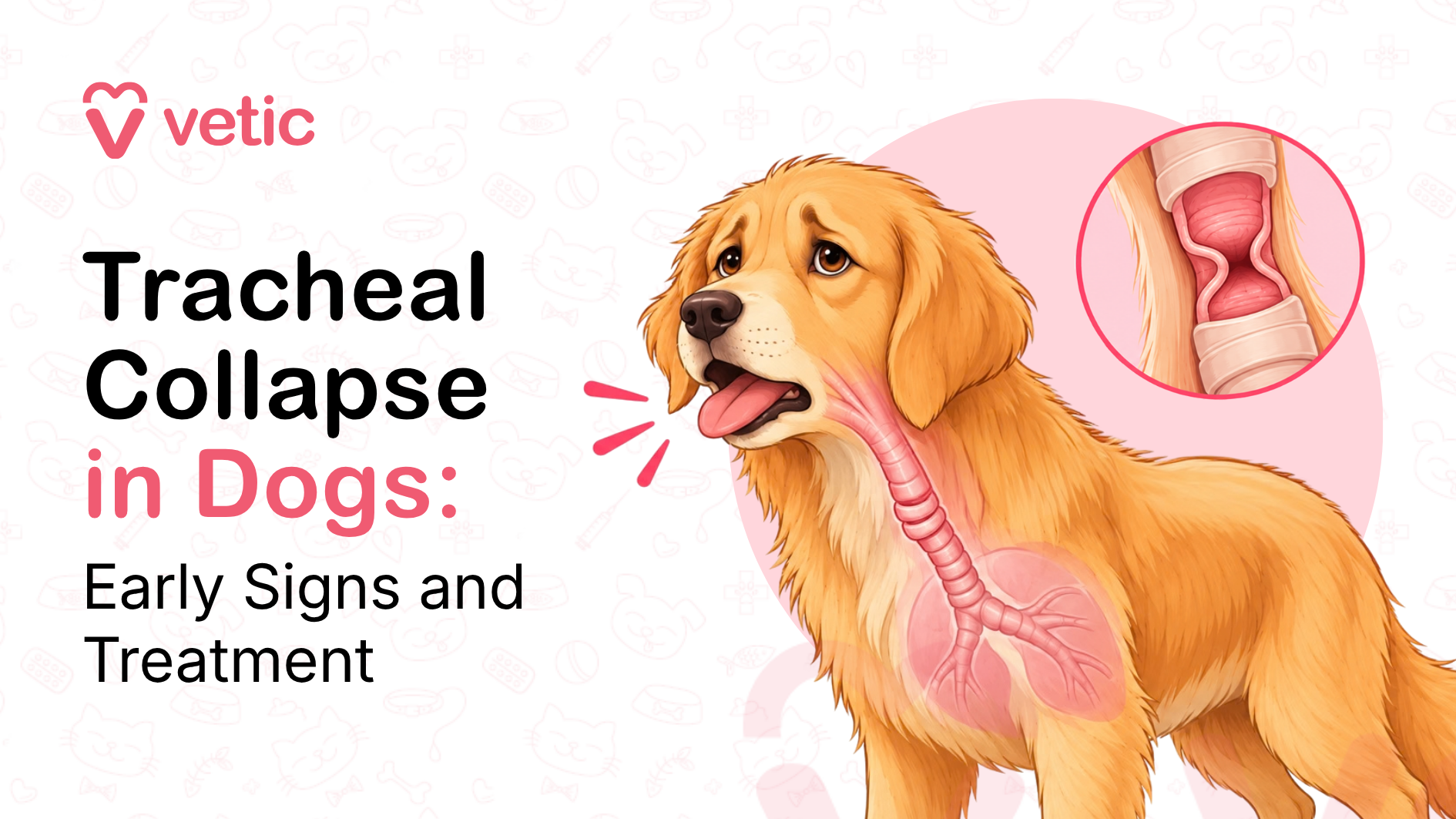
The trachea, or windpipe, is supported by C-shaped cartilage rings. In tracheal collapse, these rings weaken and flatten, narrowing the airway. According to the MSD Veterinary Manual, the exact cause is unknown.
How Does the Airway Change and Which Dogs Are at Higher Risk?
According to the MSD Veterinary Manual, tracheal collapse is most common in toy and miniature breeds, including Yorkshire Terriers, Pomeranians and Poodles, although it can occasionally affect larger breeds. Affected dogs are often middle-aged or older. The condition is more common in overweight dogs, and heart or other respiratory conditions may occur alongside it and contribute to coughing or breathing difficulties.
What Should You Do During a Coughing or Breathing Episode?
Most coughing episodes settle once the dog calms down. However, it is important to know when an episode needs urgent help.
How Can You Keep Your Dog Calm and Know When Home Care Is Not Enough?
During an episode, stay calm and speak gently to your dog. Remove any pressure from the neck, such as a collar, and move your dog to a cool, quiet place. Avoid picking your dog up if this seems to worsen the coughing. If your dog is struggling to breathe, has blue or grey gums, collapses or does not recover promptly after an episode, seek emergency veterinary care immediately.
How Do Vets Confirm a Collapsing Trachea?
Vets diagnose it based on your dog’s history, a physical examination, and imaging. Your vet may also check whether heart or lung conditions are contributing to your dog’s signs.
What Examinations and Imaging May Be Used?
X-rays are often the first step. However, a WSAVA review on VIN notes that X-rays may not detect every case. The airway can change shape with each breath. Fluoroscopy, a moving X-ray, may show the airway collapsing during breathing or coughing. A camera examination of the airway, called tracheobronchoscopy, allows the vet to view the inside of the trachea directly.
How Is Severity Assessed?
Airway narrowing can range from mild to severe and can occur in different parts of the trachea. Your vet will consider how much the airway narrows, where it happens and how strongly the signs affect daily life.
How Is Tracheal Collapse Treated in Dogs?
Treatment usually starts with medication and lifestyle changes. These can help control signs in many dogs, although the response depends on the severity of the condition and any other health problems.
What Medicines and Lifestyle Changes Can Help?
According to the MSD Veterinary Manual, medicines may include cough suppressants, bronchodilators and anti-inflammatory drugs. Antibiotics may be prescribed if an infection is present. Your vet will decide which medicines are appropriate for your dog. Weight loss is important for overweight dogs, and reducing excitement, stress and strenuous exercise may also help.
When Are Procedures or Surgery Considered?
Procedures may be considered for dogs whose signs are not controlled with medication. Options include placing an intraluminal stent or, in selected cases, external prosthetic rings to support the trachea. These procedures are usually performed at specialist centres, and your vet can explain whether referral may be suitable.
Living with Tracheal Collapse: Home Care and Outlook
The outlook for tracheal collapse in dogs varies with the severity of the collapse and any other health conditions. Many dogs continue to enjoy a good quality of life with ongoing management.
How Can You Reduce Flare-Ups and Support Daily Comfort?
Helpful steps may include:
- Using a well-fitted harness instead of a collar
- Keeping your dog at a healthy weight
- Avoiding smoke, dust and strong scents
- Keeping your dog cool in hot, humid weather
In selected cities, Vetic’s Vet at Home service can support follow-up checks. A home visit spares a coughing dog the excitement and stress of travel.
Conclusion
Tracheal collapse in dogs is usually a lifelong condition. However, many dogs can be managed well with medication and changes at home. Early veterinary assessment can help identify the cause of persistent coughing and guide treatment to control signs. If your dog has a persistent honking cough, book a consultation at your nearest Vetic clinic for an assessment.
FAQs
How Long Can a Dog Live with a Collapsed Trachea?
This varies with the severity of the condition and any other health problems. Many dogs live comfortably for years with good management.
Can Tracheal Collapse Cause Sudden Death?
It’s uncommon, but in severe cases a sudden breathing crisis can be life-threatening. Knowing the emergency signs, such as blue gums or collapse, helps you act quickly.
Can a Dog Recover from Tracheal Collapse?
The structural changes of tracheal collapse are generally not reversible, but signs can often be managed.
Should a Dog with Tracheal Collapse Wear a Harness?
A well-fitted harness is generally recommended instead of a collar. It avoids pressure on the neck, which may trigger coughing.
How Do I Help My Dog with Tracheal Collapse Naturally?
Weight control, a harness, a calm routine and avoiding smoke or dust may help. These steps should support, not replace, the treatment your vet recommends.
Are Dogs with a Collapsed Trachea Suffering?
Dogs with mild signs often live comfortably. Frequent coughing or breathing difficulty can cause distress, so it is important to work with your vet to control signs.
Is It Necessary to Euthanise My Dog If He/She Has a Collapsed Trachea?
In most cases, no. Many dogs are managed well for a long time. If severe signs do not respond to treatment, your vet will discuss your dog’s comfort and quality of life.
References
Dunn, M. (2019). Tracheal collapse: To stent or not to stent? In Proceedings of the World Small Animal Veterinary Association Congress. Veterinary Information Network. https://www.vin.com/doc/?id=9382981
Kuehn, N. F. (2024, September). Tracheal collapse in dogs. MSD Veterinary Manual. https://www.msdvetmanual.com/dog-owners/lung-and-airway-disorders-of-dogs/tracheal-collapse-in-dogs